
Translated material
Darling, I didn't kill
How women in Russia try to prove the innocence of their men accused of cruel crimes
Russia is in fifth place in the number of prisoners in prisons and colonies. Most of these people are men, and care for them, while they are behind bars, often falls on the shoulders of women. For many of them, the arrest of a partner becomes a decisive event: women have to become both the keepers of the family and psychologists, and often even activists who are trying to draw the attention of others to the unjust, in their opinion, accusations and the arbitrariness of the security forces. The special corner of the “cold” Olesya Ostapchuk tells the stories of women whose life has completely changed after their partners were accused of murder.
In order not to miss the main materials of the "cold", subscribe to our Instagram and telegram .
On the morning of April 2, 2020, Sonya Reschikova was called the investigator.
The 28-year-old resident of Novosibirsk was not surprised. A few weeks before that, along with her boyfriend, she returned from a long journey through Europe, and then fell ill and became one of the first people in the Novosibirsk region with suspicion of Covid. Almost every day she was called from different instances, interested in her condition. When the investigator asked where Reschikov was located, she joked: "I go to Lenin Square and I sneeze." In fact, she lay in a special department of the hospital for coronavirus patients.
“I thought, since the investigator is calling, then they are already mocking me at all,” Reschikova recalls in a conversation with the “cold”. But the investigator was seriously configured. He asked if she was familiar with Anatoly Gomzyakov. Reschikova, of course, knew him: Gomzyakov was her boyfriend, it was with him that she traveled around Europe. “Then I do not remember that the investigator said exactly, everything is like in a fog,” continues Reschikova. “That was Tolya in an apartment of such a person, now this person is not alive.” The girl asked to call her back and scored her boyfriend. He confirmed: he was interrogated because of the death of a neighbor in the residential complex "Clear Bank" Alexei Khrebtov.
The night before, two men drank moonshine at the house at Khretov. On that day, they met for the first time in their lives: the ridges shortly before that on the air of Instagram invited Gomzyakov to visit. Both actively led social networks: a 32-year-old marketer of ridges on Instagram talked about “business, life, cores and adventures of the hedonist”, and the programmer Gomzyakov-about work, life and travel. When it turned out that they live nearby, they decided to meet. In the last video recorded at two in the morning, Gomzyakov pours moonshine into glasses in the frame and says : “He gave this role to me because I really understand the distillates.”
When Reschikova asked Gomzyakov what had happened, he said that at some point he was cut down under the influence of drinking, and when he woke up, he realized that he was alone in a foreign apartment, and went home. There the police found him. It turned out that the next morning, under the windows of the 26-storey building, where the men drank, they found the body of the ridge. At that time, it was not clear whether he ended with himself or killed him. Having searched Gomzyakov’s apartment, the police left for dinner, without bringing to Gomzyakov any accusations - he just stayed at home. “I have already calmed down, said to him:“ Do not worry, they will figure it out, understand what happened. We have nothing to do with it, ”Remchikova recalls. “At that time I still believed in our beautiful law enforcement system.”
The next two months Gomzyakov from time to time called for interrogations to the Investigative Committee as a witness. Reschikova was worried, but thought that the authorities would figure it out: “In principle, we have no surroundings of people who would have encountered [criminal cases],” she explains. “In the news, maybe I heard such stories, but I thought ... I probably was a little indifferent, I didn’t understand how it all worked.”
On June 10, Reschikova was waiting for a boyfriend from the next interrogation near the SK building, but he never got out of there: Gomzyakov was detained. At first he was accused of causing grievous bodily injuries, then in the murder . “They ended the terms of the preliminary investigation, and in these two months they, in fact, investigated nothing,” says Reschikova. “But we did not even suspect that they could arrest him.”
Sonya was shocked and disappointed, but even the thought of parting did not even occur to her. Moreover, she was convinced that her boyfriend was innocent, and decided that she would fight for him to the last. Over the next few months, she learned to understand the materials of the case, appeal to accurate numbers and examinations, write complaints and petitions, and her second work became activism: Reschikova actively conducted social networks in support of her beloved, published open letters, went to single pickets in support of Gomzyakova herself and invited her friends to their support.

The story of the resort is not unique. Both social anthropologists and the employees of the Rus Sitting organization, which helps prisoners and their families, indicate: women tend to support men who are in prison, much more than men - women. “Relatives who help prisoners are almost always women, men there are at least,” says former prosecutor, and now the lawyer and writer Alexei Fedyarov, who has been working with the “sitting Russia” for many years. - I can say in my practice. For example, I went to Novosibirsk: 50 people in a colony with a transfer, of which 45 are women. ” In his book “Sitting Man”, Fedyarov writes that when a relative is taken to a pre -trial detention center, “men leave to drink and cry in the kitchen, and women go to look for lawyers and collect programs.” “It doesn’t matter what happened the day before the dragon arrives - and what will happen after the return of the abducted - the woman goes to protect. Demand, threaten, pray. ”
I will sleep as I finish with business
On October 21, 2020, Sonya Reschikova entered one of the small rooms in the pre -trial detention center - investigative actions usually take place in these. “You are very lucky,” said the convoy. “There is no glass in your office, and you can even kiss.” For the first time in a long time, Sonya held her beloved man hands: on this day in a pre -trial detention center they played a wedding. Now, recalling how she got married in prison, Reschikova is crying.
By the time Gomzyakov’s arrest, they met a little over three years-although they met back in 2012, when Sonya was a student. “Tolya is so socially active, he organized all kinds of youth events in Novosibirsk,” says Reschikova. - We crossed at the event, exchanged social networks. Then they corresponded, followed each other's pages on Instagram. He went on a trip - I wrote: “Oh, how cool!” I left - he wrote. " In the winter of 2017, they agreed to ride snowboards at the Sheregesh ski resort - and since then they have not parted. However, Reschikov did not think about the marriage: "There was nowhere to rush."
Everything changed when Anatoly was in a pre -trial detention center. As Reschikova says, the investigator fundamentally did not give them a date before the marriage: for the first time they saw each other only a few months later - there was double glass between them, and they had to speak with the help of a telephone tube. Sonya understood that the official marriage would improve the situation with dates, and it would be easier for her beloved person: it is important for the prisoner to realize that the partner would not leave him and would not leave him.
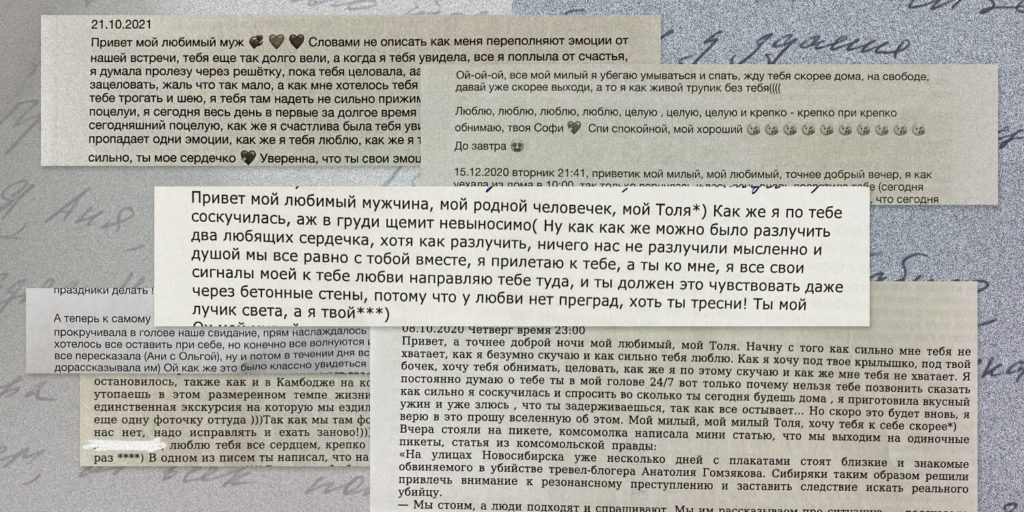
While Gomzyakov was in a pre -trial detention center, his girlfriend (and then his wife) generally tried to make it easier for him to make it easier. Especially important in this sense were letters that at first were the only way to maintain contact. Anatoly and Sonya were very fond of traveling - and Reschikova came up with at the end of each letter to tell and show where they were on this day of one of the previous years.
“I go to my photo film and see that on August 9, 2020 we were in Lisbon,” says Sonya. “And I describe to him what we did that day, I add photos.” On October 7, 2020, Reschikova threw a letter into the mailbox in the mailbox about how exactly a year ago they, traveling by car, were stuck under Marseilles. On January 12, 2021-about how on the same day in 2019 they left the ski resort in Italy Madonna Di Campillo, were late for the lift and returned to the hotel by bus, watched the game of the sun with the top of Mount Matterhorn, and in the evening they took wine and cheeses in the local department store and went to sleep for parking. And so - almost every day.
She finished some letters late at night - and also told her husband about it. “Time 4:08. I just finished the letter - wow! I hope that tomorrow I won’t fall asleep on the road to a pre -trial detention center or to a notary public, ”wrote Reschikova. - In the afternoon I will definitely sleep as I finish with business. I love you, my dear. Soon we will be together, and I will run next to you and hum “la-la-la”. ”
“Of course, I fell out of life, that is, I did not live fully. I didn’t want anything, ”Sonya recalls these months. - One day you went to a picket, to another - to take the gear. While in line I defended while you made the purchase while you unpacking all these sweets, cigarettes - a full -fledged day is spent on gearing. And I actively worked with lawyers, constantly some kind of activity aimed at the liberation of the felts. ”
According to Sonya, when Anatoly was arrested, their love only intensified. At the court hearing in the Gomzyakov case, she came to pregnant. The first trimester was walking, and the doctors said that she could not be nervous, but she could not go to court. The fetus was not injured: “The female body is amazing,” says Reschikova. “He was going.”
Hugged - and all
Engaged in the support of her husband, Sonya Reschikova plunged into all the nuances of the criminal case. And she only assured that Gomzyakov was innocent.
The version of the investigation sounds like this . Somewhere after two in the morning, the ridges with Gomzyakov quarreled, after which the guest decided to kill the owner: he took a sharp flat object and hit them with the ridge on the head, and then somehow carried it to the balcony and threw it out into the street.
Reschikova after her husband indicates that there are many inconsistencies in this version. Gomzyakov’s phone at the moment when, presumably, the murder occurred, was in his pocket and recorded that he was sleeping. There were no traces of the struggle on Gomzyakov, although the ridge was beaten before his death. Gomzyakov was easier than the deceased by 11 kilograms and simply could not raise his body and throw it over the fence of the balcony so that it falls almost seven meters from the house. In addition, the body was found under the windows of the neighbors. DNA and traces of unknown shoes were found in the apartment and entrance, whom the investigation did not establish; They did not find a “sharp flat object”, which hit the ridge. Gomzyakov and his wife indicate that, according to the protocol, from the door of Khrebov’s apartment to the next door there was a blood path, but the investigation did not find out whether the neighbors could be under the windows of which they found the body, involved in the crime.
Gomzyakov believes that even blood drops found on his clothes speak of his innocence, since the examination found that they fell from top to height of less than 15 centimeters at an angle of 90 degrees. “The prosecutor, no matter how hard he tried, could not explain how these drops could appear there in the process of a fight,” he said . “As I said, I was asleep, and, apparently, the ridges tried to wake me up, leaned over, and from somewhere-from his hand, maybe a drop of blood fell from his nose.”
“We asked: just conduct a normally consequence, humanly, and not so that a person is packaged,” says Reschikova. Every two months she believed and hoped that the police would do their job, figure it out and let Gomzyakov be released; Every two months, the court extended him a preventive measure. This lasted a year and a half-until December 28, 2021, when Anatoly was unexpectedly released under house arrest. “I was so happy incredibly,” Rubschikova recalls and cries. - I did not miss a single court, but the escorts never allowed to approach him, we could only wave each other at a distance. And then I immediately hugged him - and that’s all, did not want to let go. "
The jury was judged by Gomzyakov - and on May 13, 2022 he was acquitted . “We believed that everything, we finally won, everything will be fine now,” says Reschikova. - But so that in Russia the acquittals to officially enter into force, I do not know what should happen. It turned out that the prosecutor’s office constantly writes complaints and says that there were some formal procedural violations. It comes to the point that the prosecutor’s office itself violates the procedure, then to complain about these violations. Such nonsense and madness. " The decision of the court of first instance was really canceled. The second time Gomzyakov was judged in the fall of 2022 - by that time, Sonya had already given birth to her son.
“There was a feeling that the prosecutor's office found out that we gave birth to a child, and decided to emotionally exhaust us,” she recalls. - We almost did not sleep for two weeks, and our meetings were every day from morning to evening without breaks. As if they had a strategy so that we were squeezed and could not think anything. It is sad that the same people do it. I am looking at my child now - he is so small, there is still no anger, aggression in him, and I think where they come from in people? ”
The second process in the Gomzyakov case lasted only two weeks. The jury again justified him.
Wives of the Decembrists
A lot of women are faced with the arrest of a partner. In Russia, there is a little more than 300 thousand men behind bars; As researchers Judith Pallot and Elena Katz write in the book “Waiting at the Prison Gate. Women, identity and the Russian correctional system ”, every fifth Russian family has or had a sitting relative - that is why the image of the“ wife of the Decembrist ”, who follows her husband for hard labor, remains so recognizable and relevant.
When a partner goes to jail, a woman’s life is often radically changing. In 2007, on charges of economic crimes, financial journalist Olga Romanova was detained by her husband; She began to fight for him, and a community of prisoners' wives gathered around her. Since 2008, Romanova has been headed by the movement “Rus Sitting”, which helps convicts and their families. In an interview with Pallot and Katz, the journalist described the emotions that she was then worried: “In fact, these are complex feelings. Firstly, you simply cannot believe that it happened to you. Secondly, you sit, analyze the situation and say to yourself: “Investigators will figure it out.” They will figure it out soon. We hug, laugh at this ridiculous mistake and call each other for the New Year. Of course, this is a stupid mistake! Lord, soon they will understand it. ”
When it becomes clear that investigators will not figure it out, women are mobilized and continue to protect men and help them when they are already in prison. “Men become nobody needs, but near these black holes there are always their women who enter the dusk, although they are scared and more than a whole week, and the last money has gone for three blocks of cigarettes,” Alexei Fedyarov writes in his book. According to the study by Pallot and Katz, women who are in lines of colonies with heavy bags, loaded food and cigarettes, play a key role in ensuring the survival of Russian prisoners. In another study, it is noted that even the FSIN employees expect that the male partner will rather abandon the woman who was sent to the colony, and at the same time normalize the concern for the male prisoners as the responsibility of their close women.
This is not a specific Russian situation: everything is arranged in a similar way, for example, in the UK and the USA (this country is the world champion in the number of prisoners). The British researcher Angela Devlin, who interviewed the families of prisoners, in the book “Social Men / Twin souls: History of prison relationships” came to the conclusion that such an imbalance often rests against traditional values: women more often share the idea that the family is above all and that their main task in life is to be a good wife.
Paradoxically, the prison sometimes even helps to extend and revive relations.
For most Russian women of those with whom Pallot and Katz spoke, the idea of strong love overcoming adversity was a sufficient basis not to break the alliance with a partner. They often perceived the man as a victim: “It is precisely against the backdrop of the general distrust of society to the system of criminal justice that Russian women justify their decision to invest in relations with the criminal,” Pallot and Katz write.
Moreover, many women said that men in prison are often more noble and more pleasant than men at large. Researchers explain this by the fact that due to the brutal atmosphere in the colony and from the boredom of a man, communicating with women at large, who largely help them survive, become exemplary sensitive companions, more susceptible to their beloved romantic fantasies. Perhaps this is partly explained by the phenomenon of the so -calledcorrespondence men - women who get acquainted with the correspondence prisoners and make relations with them at a distance.
Зачастую, как указывают исследователи, женщины склонны нормализовать поведение своего партнера, чтобы не считать его девиантным. Они могут перекладывать ответственность со своего мужчины на внешние силы («его заставили», «сделали козлом отпущения»), на факторы среды (на преступление толкнула бедность или безработица) или на особенности характера (незрелость, психологические проблемы).
В России нет статистики, которая указывала бы количество женщин, продолжающих отношения с мужчинами в тюрьме. Проанализировав сообщения на форумах родственников заключенных, Пэллот и Кац пришли к выводу, что частота расставаний в таких отношениях возрастает после пяти лет заключения мужчины, о том же им говорили сотрудники колоний. Однако существуют и женщины, которые ждут мужчину на воле несколько десятков лет. Тяжесть преступлений, похоже, не препятствует этим отношениям. Исследуя жен бандитов и воров в законе, Пэллот и Кац отмечали, что многие женщины не романтизируют воровской кодекс и понимают, что тюрьма оставит отпечаток на их муже, но любовь, продолжение отношений и сохранение статуса жены для них оказываются важнее.
Ребенок на обыске, муж в тюрьме
В августе 2021 года 35-летняя Ирина Давыдова поехала в отпуск без своего гражданского мужа Виталия Бережного: у него не получилось взять отпуск на работе. Отдыхая с подругой в Краснодаре 25 августа, она вдруг узнала, что в ее квартире проходит обыск, а ее 17-летнего сына забрали в детский дом, потому что с ним не было законных представителей.
Выяснилось, что партнера Давыдовой подозревают в изнасиловании и убийстве Насти Муравьевой — пропавшей девятилетней девочки, которую не первый месяц искала вся Тюмень. Давыдова попыталась дозвониться до Бережного, но он не взял трубку, а через несколько часов «уже все СМИ писали, что он дал признательные показания». «Было очень страшно и тяжело, — вспоминает Давыдова. — Я и вылететь оттуда не могла, авиабилетов не было. У ребенка забрали телефон, не давали отвечать даже на мои звонки. Отношение к ребенку было отвратительное, они с ним разговаривали через мат. Я, естественно, вся на нервах, переживала очень, потому что ребенок на обыске, муж в тюрьме. It was terrible. "
Приехав в Тюмень на следующий день, Давыдова забрала ребенка, но домой не поехала: к тому моменту их адрес, номер машины и персональные данные активно распространяли в интернете. Бережного, а заодно и всех, кто с ним связан, возненавидел весь город. Когда обыскивали квартиру, в которой он жил до переезда к Давыдовой и где, по версии следствия, он изнасиловал и убил Настю Муравьеву, рядом собралась толпа соседей. Когда выяснилось, что его вывели подальше от разъяренной толпы через черный ход, одна из них понимающе сказала: «Ну понятно, мы бы иначе его разорвали». Давыдова забрала из своей квартиры напуганных кошек и отправилась вместе с сыном жить к знакомым.
В виновность партнера она не верила — как и в то, что он искренне признался в убийстве. «Когда я увидела, как ему задают вопрос, понимает ли он, в чем его обвиняют, а он не своим вообще, замученным голосом отвечает, я поняла, что его либо били, либо мучили — в общем, что-то с ним сделали», — рассказывает Давыдова. К тому же она хорошо помнила день, когда пропала девочка: накануне они вместе отмечали на природе день рождения подруги, потом Бережной звонил ей с работы, и ничего подозрительного она не заметила ни тогда, ни потом, проанализировав свои воспоминания и переписку с мужем. «Я хорошо знала Виталия и знала, что он никогда не обидит ребенка, — уверенно говорит Давыдова. — И на первом официальном свидании в СИЗО я ему сказала: “Мы с тобой были на связи, ты находился на работе, и не могло этого случиться и произойти именно с тобой. Возможно, кто-то другой это совершил, а ты не мог”».
По версии следствия, 40-летний Бережной, ветеран войны в Чечне и бывший помощник участкового, работавший в одном из тюменских мебельных цехов, вечером 29 июня 2021 года выпил и употребил наркотики, а потом включил порно, в частности видео, где насиловали девочек. Находился Бережной в этот момент в съемной квартире в тюменской многоэтажке (такие в городе называют «пансионат») — он съехал туда после очередной размолвки с Давыдовой, которой не нравилось, что он выпивает. Как указывали следователи, утром, выходя на работу, Бережной встретил Настю Муравьеву, которая приходила в «пансионат», чтобы ловить бесплатный вайфай на телефоне. Он сказал девочке, что ему нужна помощь с тем, чтобы поймать забежавшего в квартиру котенка. Когда Муравьева зашла в квартиру, Бережной напал на нее, связал ей руки скотчем, заклеил рот, изнасиловал и задушил. Потом упаковал тело в пакет, обмотал пленкой, чтобы не пахло, и спрятал — в его квартире оно находилось следующие 50 дней.
После этого Бережной должен был переехать обратно к Давыдовой и вернуть жилплощадь хозяйке; следствие утверждает, что 17 августа он отнес спрятанный в коробку труп девочки к берегу озера неподалеку от «пансионата». Там его и обнаружили косцы через два дня. Следователи вышли на Бережного через коробку: она была из мебельного цеха, где он работал. Как говорится в материалах дела, когда у Бережного, как и у других сотрудников цеха, брали биоматериалы, он сопротивлялся силовикам и пытался бежать. Молекулярно-генетическая экспертиза установила наличие следов спермы Бережного в теле Насти Муравьевой.
Несмотря на все эти ужасающие подробности, Давыдова отказывалась верить в виновность мужа. Она приносила ему в СИЗО еду и одежду, ездила за ним во время следственных действий, чтобы увидеть его хотя бы издалека. И хотя еще за несколько месяцев до того Давыдова расставалась с Бережным из-за того, что он выпивал после работы, теперь бросать его она не собиралась. Она была уверена, что все доказательства, которые есть в деле — результат генетической экспертизы, биллинг и обнаруженные в квартире следы, — сфальсифицированы (так же думала и адвокат Бережного).
По словам Давыдовой, в декабре 2021 года ей удалось ненадолго остаться с мужем во время свидания и Бережной сказал, что его заставили признаться в убийстве и пытали током. После этого она начала бороться за мужа публично: создала петицию в поддержку Бережного, пыталась доказать , что экспертиза ДНК была поддельной. На стенах в Тюмени появились надписи: «Бережной невиновен», «Остановите судейский беспредел», «Педофил на свободе», «Суд несправедлив» (Давыдова говорит, что не имеет к ним отношения).
Связь с человеком, которого обвинили в жестоком убийстве девятилетней девочки, и его публичная поддержка принесли Давыдовой много проблем. Ее уволили из спа-салона, где она была мастером по наращиванию ресниц; теперь она вынуждена принимать клиентов дома. Сообщество во «ВКонтакте», которое она создала в поддержку мужа, заблокировали в России по требованию Росмолодежи.
Подобные ситуации исследовательницы Джудит Пэллот и Елена Кац называют «вторичной тюрьмой»: женщина, оставаясь на свободе, испытывает множество сложностей, связанных с тем, что ее партнер в тюрьме — от потери дохода до социальной стигматизации и психологических проблем. В своей книге Пэллот и Кац рассказывают, как их собеседницы подвергались дискриминации из-за ареста партнера: их увольняли с работы, с ними прекращали общение друзья или члены семьи, они сталкивались с жестоким обращением со стороны тюремного персонала. Связь с заключенными «портила» идентичность женщин и меняла ее навсегда.
«Усталость у меня, конечно, есть от всех этих событий. Но ей противостоит обостренное чувство справедливости, — говорит Давыдова. — Все-таки это не чужой человек, а родной, любимый, и оставить его в такой ситуации я не могу. Честно сказать, я бы не оставила его в этой ситуации совсем без помощи и поддержки, даже если бы на 150% была доказана его виновность». По ее словам, знакомые мужчины часто восхищаются тем, как она поступила в этой ситуации, и говорят: «Вот бы мне такую жену».
Постепенно Давыдова стала помогать не только мужу, но и другим заключенным и их родственникам. «Бывает, кто-то просит передать посылку или отправляет деньги из других городов, чтобы я здесь, в Тюмени, купила продукты и передала, — рассказывает она. — Когда Виталий содержался в СИЗО, там рядом была женская колония. Он узнал, что там родились дети и им нужны вещи, просил меня принести им. Я еще тогда над ним посмеялась: ты, говорю, “маньяк, педофил”, “жестоко убил ребенка” — и беспокоишься о другом дитяти. Как-то у меня не складывается».
Поняв, как и многие другие женщины в похожих ситуациях, что на следствие рассчитывать не приходится, Давыдова начала надеяться на суд. Как и в случае с Анатолием Гомзяковым, определить вину Бережного предстояло присяжным.
Надежда всегда остается
Суд присяжных появился в России в 1993 году, но в последние 15 лет его полномочия постоянно сокращают — возможно, потому что присяжные оправдывают обвиняемых в 100 раз чаще , чем судьи. После 2008 года присяжных постепенно лишили права рассматривать дела о массовых беспорядках, терроризме, вооруженном мятеже, госизмене, взяточничестве, а также преступлениях против правосудия и половой неприкосновенности. «Борьба с присяжными сегодня, как и полтора века назад, целиком и полностью связана с желанием государства сажать побольше и наподольше», — говорят в российском правозащитном проекте «Первый отдел». По словам адвокатов, силовики нередко вмешиваются в работу присяжных: например, давят на них, пытаются подкупить или внедряют в коллегии своих людей; отмены вердиктов судов присяжных тоже обычное дело.
Когда Виталий Бережной потребовал, чтобы его судили присяжные, быстро начались проблемы. Сначала кандидатов в коллегию долго не могли набрать; когда наконец получилось и они вынесли вердикт, суд не оглашал его три дня, а после заявил , что была нарушена тайна совещательной комнаты. После этого дело передали в суд в Москву — там присяжных стали собирать заново.
Осенью 2022 года судья Наталья Жукова, ранее рассматривавшая дело Бережного, взяла самоотвод . Параллельно адвокат Бережного Елена Шихова покинула Россию, заявив, что из-за ее работы по делу мужа Давыдовой ей постоянно угрожали силовики. Шихова завела телеграм-канал и начала публиковать в нем материалы дела, пытаясь доказать, что обвинение в адрес Бережного сфальсифицировано. После этого на нее завели уголовное дело и объявили в розыск.
В итоге Бережного судил Московский городской суд. «Надежда всегда остается на лучшее, — говорила Ирина Давыдова “Холоду” 21 мая 2023 года. — Я всегда думаю о том, что скоро вернется домой, будем жить вместе, что все будет хорошо. Докажем невиновность, и судебного беспредела не будет, не будет приговора, который основан на погонах, наградах и звездочках». На следующий день присяжные признали Бережного виновным; его приговорили к пожизненному заключению в колонии особого режима.
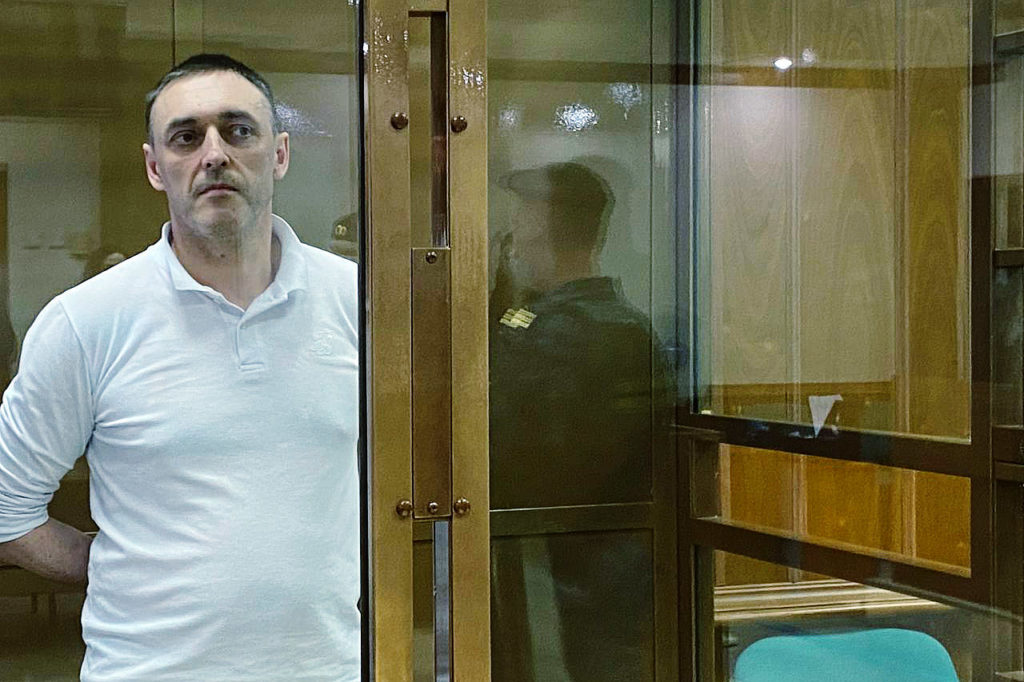
Услышав вердикт, Бережной обратился к Давыдовой: «Любименькая, только ты знаешь: я никого не убивал».
Анатолий Гомзяков и Соня Резчикова сейчас живут вместе в своей новосибирской квартире и воспитывают сына — недавно ему исполнилось полгода. «Спасибо тебе, Толя, ты лучший батя — и как важно, чтобы папа был рядом и был эмоционально задействован в воспитании ребенка! — писала Резчикова во “ВКонтакте” в конце мая. — C рождением Одиссейки я стала еще больше ценить каждый момент этой прекрасной жизни».
Вернуться к своим любимым путешествиям Гомзяковы пока не могут — и дело не только в возрасте ребенка. В феврале 2023 года Новосибирский областной суд отменил второй оправдательный приговор Гомзякову. В третий раз новая коллегия присяжных начала рассматривать дело об убийстве Алексея Хребтова 4 июля 2023 года.