
Translated material
The first elections after Putin: what they might be like
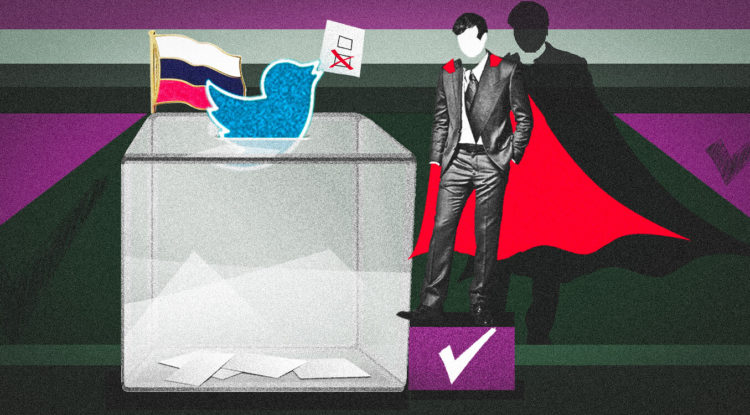
In order for the voting to be fair, it must be properly organized, political scientist Grigory Golosov is sure
"Cold" continues the cycle of the leading Russian political scientist Grigory Golosov, dedicated to the political structure of Russia after the change of regime. Sooner or later, elections will be held in the country in which Vladimir Putin will not participate. Even if this fact does not guarantee, but at least admits the possibility that these elections will be free. But who and how should carry them out? What principles of representation should be taken into account? Golosov answers these and other questions in a new column.
In order not to miss the main materials of "Cold", subscribe to our instagram and telegram .
In the previous article in the series, I wrote that the holding of free elections will most likely not become a priority at the initial stage of liberalization or even democratization in Russia. However, to exclude this option, even if not optimal, is still not worth it. Therefore, already now we need to think about the rules by which these elections should be held.
Let me emphasize right away that, while maintaining the current political conditions, it is pointless to correct the Russian elections by improving the rules. These elections are held mainly to keep those who already have power in power; to some extent - in order to ensure the rotation of deputies when the authorities find it appropriate. The role of elections as a platform that opens up opportunities for the opposition has almost been reduced to zero.
Naturally, in the context of political changes, elections will be called upon to fulfill their main role - to ensure the change of power in such a way as to take into account the preferences of the people to the maximum extent possible. What those preferences will be, we don't know right now. They will be shaped by the same political process that will make free elections a real possibility.
Much depends on the players involved in this process and their resources. But if the preferences of the people are not taken into account, then they will form a feeling of deep disappointment with the results of the elections. This was the case after the presidential elections of 1996, honest compared to what happened in the 2000s and 1900s, but remembered by the citizens of the country as a hoax. Already in the medium term, this has caused enormous damage to the cause of democratization in Russia. Indeed, on an intuitive level, even the most politically distant citizens share the basic position of the liberal-democratic theory that if the power that does not cope with its duties does not change as a result of elections, then something is wrong with democracy .
Of course, the preferences of the people can be correctly expressed only when it is clear on what principles they can be expressed in elections. If there is no such understanding, then it is better not to elect officials and deputies, but to replace these positions by lot, as was done in the ancient city-states. But modern democracy is representative, which means that it is necessary to formulate the principles of representation. They are embodied in two main types of electoral rules: majoritarian and proportional type. It is possible to combine these types, creating mixed electoral systems.
Let me remind you that under majoritarian systems, elections are held in districts with a small number of seats, voters vote for individual candidates, and those who receive the largest number of votes (relative majority) or more than half of the votes (absolute, or simple, majority) are recognized as winners. Under proportional systems, as a rule, elections are held in districts with a large number of deputies, voters vote for party lists, and seats are allocated in more or less rough proportions to the shares of seats received by these lists. It is clear that in elections where only one person can be elected to a position (such as presidential or gubernatorial), only majoritarian systems are applicable. There are exceptions to these rules, but we will not go into details now.
Regarding the principle of representation, which is basic for majoritarian systems, there is an opinion in wide circles of the politicized public that their main advantage is that they allow voting not for parties, but for “specific people”. This obvious feature is also noted in the scientific and expert literature. However, in Russian political discussions of the past, when they were substantive and practically oriented, this feature was often presented as the main feature of majoritarian systems, their decisive advantage. And I am sure that all the myths and prejudices inherited from the 1990s will immediately surface as soon as the question of free elections really arises. Therefore, the topic deserves to dwell on it in more detail.
In fact, there are also such proportional electoral systems that provide the opportunity to vote "for specific people." This will be discussed a little below. In general, however, it is undeniable that majoritarian systems provide such voting, scientifically referred to as "personal", in the most consistent way. The question is not whether there is such a feature, but whether it is an advantage in terms of representation.
If we are talking about elections, the purpose of which is to fill a position that can only be occupied by one person (say, the president or governor), then the answer to this question should be yes. It must be said that at the dawn of American electoral studies, from the late 1940s to the mid-1960s, scholars tended to regard "personal voting" even in such elections as a clear manifestation of the political incompetence (or, simply put, stupidity) of voters. Then it was believed that a truly competent voter should make his choice based on the programmatic or ideological positions of the candidates, and taking into account their personal qualities is the lot of simpletons. But since then scientific views on this subject have changed.
"Personal voting" in presidential and other similar elections has been and remains a mass phenomenon. Moreover, it does not decline with the growth of political awareness and voter interest. It is clear that the Americans, who did not get out of the twitters of Obama and Trump, were more interested in politics than other fellow citizens. But it is also clear that their interest in the politicians themselves was largely personal. People - and by no means just simpletons - were certainly interested in the personal qualities of Obama and Trump no less than their programmatic positions.
This is understandable, and it's not just that there was no Twitter before to follow the torrent of politicians in real time. Early electoral studies were distracted from the fact that in presidential and other similar elections, people support not only and not so much those politicians who formulate positions close to people, but, above all, those who are able to prove that they will put these positions into practice when they are in power. . And from this point of view, the personal qualities of a politician are of considerable importance. If a candidate for ruler says absolutely the right thing, but at the same time looks like a clown, a weakling, or a fraud, or simply nothing is known about him, then refusing to vote for him is a completely rational choice, not at all stupid. And they don't vote for him. There is no need to look far for examples: this is evidenced by the entire experience of the “technical candidates” who have been nominated against Putin in the presidential elections in Russia since 2000.
However, in those elections where only one person can win, the proportional system cannot be used. Only majoritarian-type systems can be used in such elections. Then let's reformulate the question: is what I wrote about personal voting in presidential and other similar elections true, in relation to the elections of large assemblies, such as parliaments?
In such elections, in mature democracies, both majoritarian systems (in the USA, Great Britain and France) and proportional rules (in most European countries) are used. It is quite possible that those creators of election laws are right, who allow voters to vote "for specific people" here too. However, it is possible to recognize the correctness of such a conclusion only on the condition that the personal qualities of the candidates in the parliamentary elections are important for the voters themselves.
In fact, this condition is not met. This can be proven in several ways. I'll start with general considerations. Presidential elections are extremely important. Therefore, the enormous attention of voters is concentrated on them. If they are at least to some extent interested in politics, they are willing to spend time collecting and comprehending information about the main candidates. It's easy: the media provides such information in abundance. Other elections, in which one seat is at stake, may be less important. However, the criterion of information accessibility also applies to them, so that voting "for a particular person" becomes quite achievable. For example, a candidate for municipal elections in a small settlement may not be known to anyone outside his village, but this is not necessary: in the village itself, he is known to everyone as flaky.
In all countries where presidents wield real power, and are not purely symbolic figures, parliamentary elections are rightly considered less important than presidential elections. This manifests itself both directly in the perception of voters, who pay less attention to them, and in the availability of information about individual candidates. In other words, in parliamentary elections, "personal voting" is less useful than in presidential elections, because their outcome is less important, but it is more laborious, since it requires more time for information preparation. In such circumstances, the voter will focus not on the personal qualities of the candidates, but on other, less laborious, ways to make a meaningful choice.
Now let's see if voting "for a particular person" is the predominant motive of voters in parliamentary elections in those countries where majoritarian systems make it technically possible. Let's start with the USA. Despite the significant scale of personal voting, the main reason why American voters vote for one or another candidate in the elections of members of Congress is their partisanship. For voters with weak party preferences, this is not the case, but they often vote for an incumbent member of Congress, regardless of his personal qualities. The fact that British voters vote predominantly on the basis of the party principle does not need to be particularly spread.
One of the proportional systems where voting "for specific people" is possible is the so-called open-list system. Under such a system, as a rule, the voter is given the opportunity to vote either for the party as a whole or for an individual candidate from its list. Such a system has existed in Italy for decades, so there is considerable experience in its application. This experience shows quite unequivocally that if people choose between voting "for a specific person" and voting for a party, then the majority prefer the latter. Forcing them to vote "for a particular person" is possible only when there is no option to vote for a party, as is the case in Finland.
From what has been said above, it does not follow that majoritarian systems are bad in themselves, but only that their advantage is not that they open up expanded opportunities for personal voting. They have other advantages, but there are also disadvantages compared to proportional systems. This will be discussed in future articles.