
Translated material
Day of the day: Isaac Babel
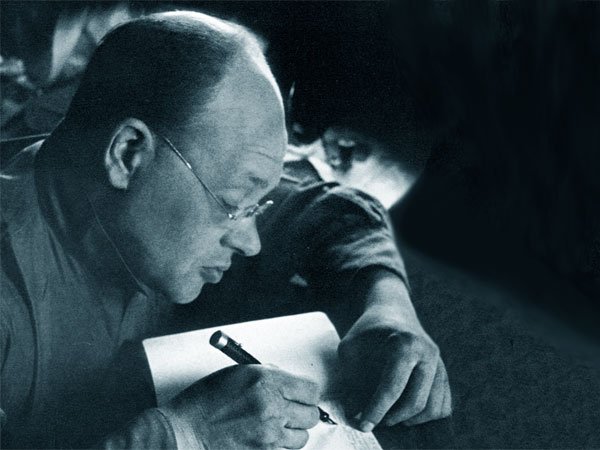
On July 12, 1894, the writer Isaac Babel was born.
Personal business
Isaac Emmanuilovich Babel (1894 - 1940) was born in Odessa in the family of a merchant. When he was one and a half years old, the family moved to Nikolaev, where his father served in the Burnbaum company in trade in agricultural vehicles. In 1901, in Nikolaev, Isaac went to an elementary school. He recalled: “At the insistence of his father, he studied the Jewish language, the Bible, and the Talmud until sixteen. It was difficult to live at home, because from morning to night they forced to engage in many sciences. I rested at school. " Two years later, he passed the introductory exams to the Nikolaev commercial school named after S. Yu. Vitte, but was not accepted "for the lack of vacancies." The next year I passed the exams a second time and entered. In 1905, the family returned to Odessa and Isaac Babel began to study at the Odessa Commercial School. He graduated from it in 1911, after which he studied at the Kiev Commercial Institute.
He began to write stories in the school. In 1913, in Kyiv, he published the story "Old Shlome." In 1915, Babel arrived in St. Petersburg, although he did not have the right to reside behind the Pale of Settlement. He was enrolled in the fourth year of the Bekhterev neuropsychiatric Institute.
The editors of the capital's magazines refused to accept the stories of the young author. Finally, he met Maxim Gorky, who published the Chronicle magazine at that time. Babel's stories “Eli Isaakovich and Margarita Prokofievna” and “Mom, Rimma and Alla” were printed there. They wanted to bring the author to criminal liability under Article 1001 (pornography). But during the February Revolution, the building of the district court burned down with the case of pornography.
In 1917, Babel served in the army for several months on the Romanian front, but soon deserted and returned to Petrograd.
In 1918, Babel works as a correspondent of the new life newspaper, then becomes a translator in the foreign department of the Cheka, then he returns to Odessa, where he works in the State Publishing House of Ukraine.
In the spring of 1920, on the recommendation of Mikhail Koltsov, Babel, under the name of Kirill Vasilyevich Lyutov, was sent to the First Horse Army as a military correspondent of the South Rost. He participated in the war with Poland, published notes in the newspaper Red Cavalry, kept a diary. The events that occurred during this period are reflected in the cycle of stories "Konarmia".
In 1921 - 1922 he worked as a reporter in Odessa and Tiflis. During these years, Babel begins to write “Odessa Stories”. It is printed in the Odessa publications "Lava", "Sailor", then in the magazines "Lef" and "Red Nov". In 1925, the book “Stories” was published, next year - “Konarmia”. Since 1924, Babel lived in Moscow. In the late 20s and in the 30s, he wrote little. On May 15, 1939, Babel was arrested at the cottage in Peredelkino on charges of “anti -Soviet conspiratorial terrorist activity” and espionage. Sentenced to death and shot in Lefortovo Prison on January 27, 1940.
What is famous
The outstanding master of the story, Isaac Babel influenced the work of many contemporaries and descendants. Already in 1927, critic A. Lezhnev wrote: “Babel was not like any of his contemporaries. But there was a short period - contemporaries begin to walk a little on a woman. His influence on literature is becoming more and more obvious. ”
In total, Babel wrote about eighty stories, two plays ("Sunset", 1927 and "Maria", 1935), five cinemas. The stories make up three cycles: Odessa, Konarmey and more preserved stories about collectivization and civil war.
What you need to know about
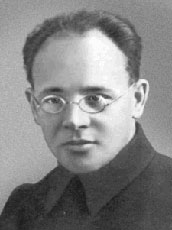 Isaac Babel
The publication of the Konarmia cycle caused a lively discussion in the Soviet press, in which not only critics, but also military leaders took part. The differences between the Konarmans in the stories of Babel from their image, which sought to create official propaganda, turned out to be too great. The stories also found excessive cruelty and naturalism. Offended by the way the First Horse Army was shown in the stories, Semyon Budyonny published the article “Babism of Babel in Red Novi”. The Konarmia and Klim Voroshilov negatively spoke. Gorky, who supported the woman, in response to the criticism of Budyonny, advised him not to judge the literature from the height of his horse, and also wrote: “The reader is attentive, I do not find anything“ caricature-focus ”in the Babel’s book, on the contrary: his book excited the fighters of Konarmia, and respect, showing them really heroes, they are deeply felt, they feel deeply. The greatness of his struggle. " Viktor Shklovsky wrote: "Babel saw Russia as it could see its French writer, seconded to Napoleon’s army." From 1927 to 1936, eight publications of Konarmia were published.
Direct speech
“Outwardly, he was least like a writer. He told in the essay “Beginning”, as, having arrived for the first time in St. Petersburg (he was twenty -two years then), he rented a room in an engineer’s apartment. Looking carefully at the new tenant, the engineer ordered to lock the door from the Babel room to the dining room, and remove the coat and galoshes from the front. Twenty years later, Babel settled in the apartment of an old Frenchwoman in the Parisian suburb of Neui; The hostess locked him for the night - she was afraid that he would cut her. But there was nothing terrible in the guise of Isaac Emmanuilovich; He just puzzled many: God knows what kind of man and what he is doing ... ” - Ilya Ehrenburg.
“From my youth, I perceived the works of some writers as witchcraft. After the story “King”, I realized that another sorcerer came to our literature and that everything written by this person would never be colorless and sluggish. In the story "King" everything was unusual for us. Not only people and motives of their actions, but also unexpected positions, unknown life, energetic and picturesque dialogue. In this story there was a life that was no different from a grotesque. In every little thing, the writer’s piercing eye was noticeable. And suddenly, like an unexpected blow of the sun through the window, some exquisite excerpt or a melting phrase similar to a translation from French invaded the text-sung in measured and magnificent. It was new, unusual. In this prose, the voice of a man, spilled in the campaigns of the horse army and at the same time possessed all the wealth of a past culture - from Bokkaccio to Lilya de Lily and from Vermaur Delfta to Alexander Blok, ” Konstantin Paustovsky.
“Despite the fact that the author was in the ranks of the glorious horse army, although in the rear, he did not notice, and this passed by his ears, eyes and understanding, neither its heroic struggle, nor its terrible inhuman suffering and deprivation. Being naturally small and ideologically alien to us, he did not notice her gigantic scope of the struggle. Citizen Babel tells us about the horse’s horse army gossip, rummages in Baby Barakhle-Belne, with horror in Baby tells that the hungry Red Army soldier took a loaf of bread and chicken somewhere; It invents fables, douses the best commanders-communist commanders, fantasizes and just lies. The author’s loud name, obviously, was needed to stun the reader, to force him to believe in old fairy tales that our revolution was made not by a class that grew up to understanding its class interests and a direct struggle for power, but by a bunch of bandits, robbers, robbers and prostitutes, forcibly and impudently seized this power, ” the recall of S. Budyonny about the Konarmia cycle.
Who was Babel? Veil and inventor,
Writer and talker,
A ball of soap foam blowing
Light, light ball.
Who was Babel? Curious
In a fire, in war.
Waset and cut, bit and torture
Babel is very close to me.
Very expensive, very clear
And no bit is old
Not accidental, not in vain
This Babel Gift
Boris Slutsky
“The name of our conference is“ The riddle of Isaac Babel ”. Perhaps this is a “puzzle covered with a mystery and located inside the riddle”, if we quote Winston Churchill. This assessment of the situation seems very correct. After all, so much is not enough: there are almost no traces of buildings or apartments left, where Babel worked for a long time: neither in Russia, nor in Ukraine, nor in Paris. His works were still not found, confiscated during his arrest in 1939. In the end, because there were 15 folders with manuscripts, 11 folders with finished books, not to mention correspondence. Among those manuscripts should be three of his main works: “Kolya Topuz”, about an entrepreneur and a criminal who tried to survive in communist times, probably a book about the NKVD and a book with new short stories. How can one judge the writer and describe his life if you are familiar only with part of his work? It is absolutely clear that it is necessary to conduct a comprehensive journalistic study, ” Rainhard Krumm.
10 facts about Isaac Babel
- Initially, the writer’s last name was “Bobel”. In 1916-1917, he used the pseudonym Bab-El.
- Babel wrote the first stories in French.
- In 1927, Babel among 25 famous writers took part in the creation of a collective novel (“Roman-Burim”) “Big Fires”, which, on the initiative of Koltsov, was published in the journal “Ogonyok”.
- In 1936, together with Eisenstein, Babel writes the film score "Bezhin meadow". The shooting of the Eisenstein film according to this scenario was suspended after watching in draft installation in the Main Directorate of Cinematography. The film was destroyed by the hit of the German bomb during the Great Patriotic War. About eight meters of film have been preserved from the film.
- The ashes of Isaac Babel is buried in a common grave No. 1 in the Donskoy cemetery.
- In 1954, Isaac Babel was posthumously rehabilitated. In the USSR, the works of Babel after his arrest were first published in 1957 thanks to Paustovsky and Ehrenburg.
- The words “I feel with a disastrous enthusiasm: I disappear, disappear” in Vysotsky’s song “Horses Fasted” are a hidden quote from Babel’s story “Death of Dolgushov”.
- In 1967, a mountain peak on Pamir was named in honor of Babel.
- Asteroid 5808, opened in 1987, was named after Babel.
- The play by Babel “Maria” was first delivered in 1994 by director M. Levitin on the stage of the Hermitage Theater.
Materials about Isaac Babel
Article about Isaac Babel on Russian Wikipedia
An article about Isaac Babel in the Encyclopedia "Circumspices"
Article about Isaac Babel in the electronic Jewish Encyclopedia
Site dedicated to Isaac Babel
Life Chronology Isaac Babel
Works in the Library of Moshkov