
Translated material
Raising feelings
On July 12, Milan Kunderi was gone. Remember his thoughts and books
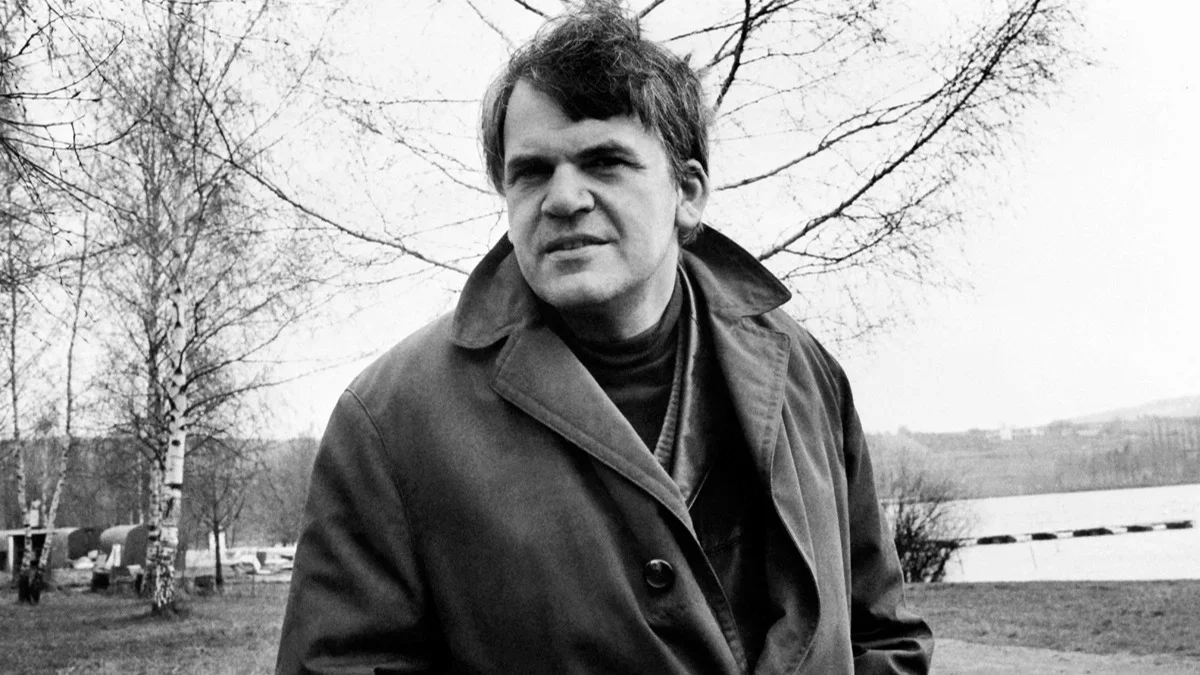
Milan Kunder. October 1973. Prague. Photo: AFP / East News
On July 12, Milan Kunder died. In one of the numerous necrologues published in the past three days, the thought flashed: you can either fall in love with the Kunder right away and love him for the rest of his life, or at once and for life to hate. And although it is really so (for example, its texts are as physiological disgust as physiological as these texts themselves are physiological), even those who do not tolerate the Kunder to the spirit cannot but admit: he, ninety -age, as the writer was incredibly young. And this youth is not only and not so much in what sex played in his work, but in the fact that creativity this very voluminous reflects today.
This advantage allows, in particular, to read the Kunder politically - and such a point of view on his texts can clarify today and predict tomorrow. Politics is one way or another in every novel - a blurry background, vague subtext, "triumph of insignificance." His policy is most often ridiculous and ridiculed: either Stalin's associates are discussing state affairs in the men's toilet, then the townspeople protest against the commissioning of Soviet troops into Czechoslovakia with public kisses with each person they meet. In other words, his policy is most often insignificant - and nevertheless, in each of his text the Kunder brings a lifelong pain from the Soviet invasion of 1968, to which his main novel “The Unbearable Easy of Being” is dedicated.
And here, I think, the most tangible crushing of the Kunders is manifested: he spoke on behalf of the man who lost his house because of the Russian “special operation”, although many years ago. It is quite obvious that quite soon the literature will hear more than one such vote, but still this is the most distinct. And the most loudly he sounded in the famous polemic with Brodsky on The New York Times -
The polemic, which, on the one hand, is incredibly similar to the discussion about the “cancellation of Russian culture”, and on the other, it is strikingly clearly shows the main confrontation: the dispute of the “imperialist” with the victim of imperialism.
Strictly speaking, Brodsky turned it into polemic: the Kunder simply printed in the Times of the Essay “The Preface to Variation”, dedicated to the thoughts of the formation of a novel genre with intersperses of some personal reasons of the culture in general, the Russian mentality and creativity of Dostoevsky in particular. He wrote about how, after the suppression of the “Prague Spring”, he was left without work and received an order to write a play based on Dostoevsky’s novel “Idiot”:
QUOTE
“I re -read the“ idiot ”and realized that even if I had to starve, I could not do this work. The world of Dostoevsky, with its shores, with gestures, muddy depths and aggressive sentimentality pushed me away. <...> What was most annoyed in Dostoevsky is the atmosphere of his novels: a world where everything turns into senses. In other words, the world where feelings are erected to the rank of higher value and truth. ”
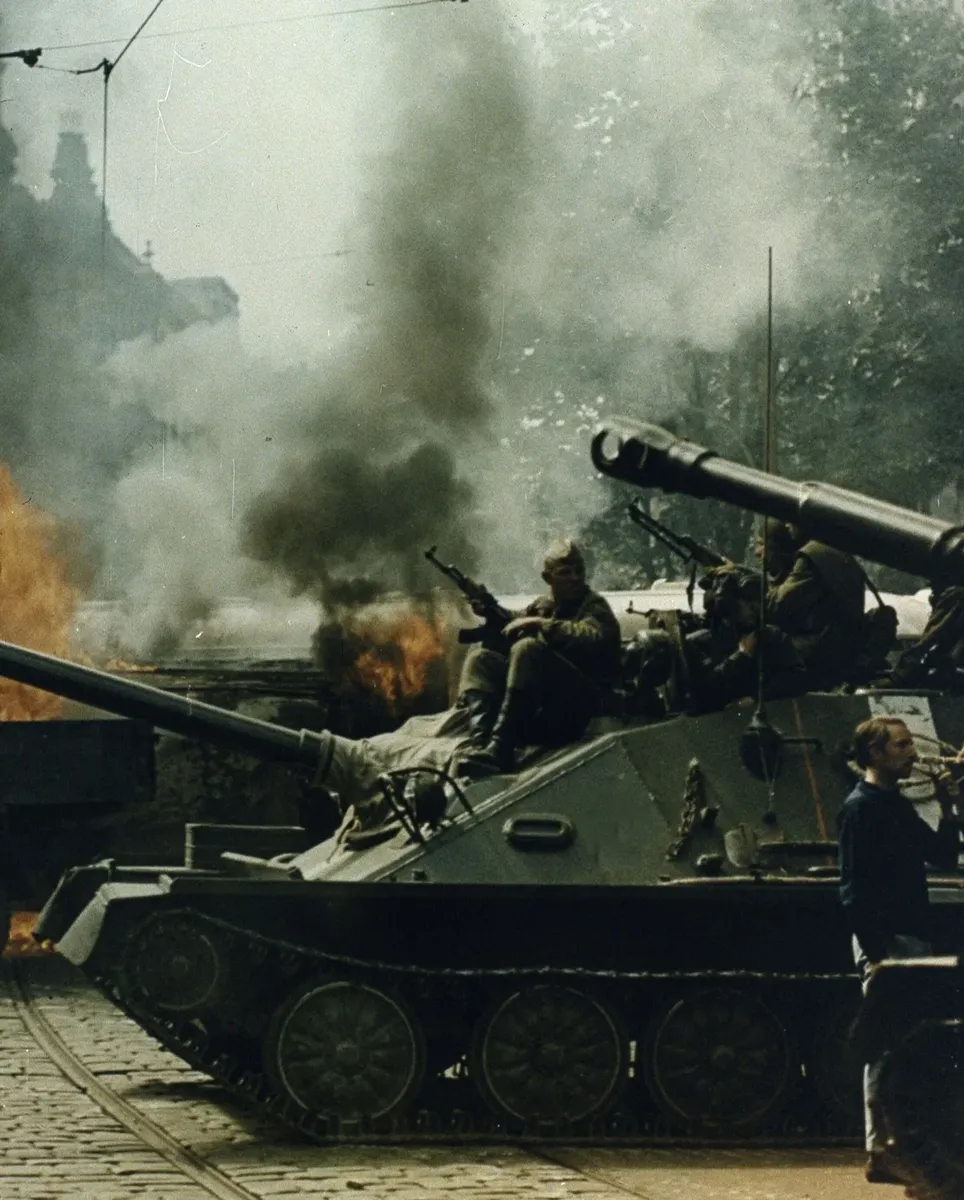
Immediately, Kunder recalls an episode that explains a lot in his hostility to excessive sensuality: on the third day of the occupation along the way from Prague in Budeiovitsa, Russian soldiers stopped and began to search it. When this procedure ended, the one who gave the order to start it asked: "How do you feel?" - In the sense of "How do you feel?" His question was neither evil nor ironic. Against. “All this is a great misunderstanding,” he continued, “but everything will be corrected. You must understand: we, Chekhov, love you. We love you! "
Kunder writes:
QUOTE
“The area has been ruined by thousands of tanks, the future of the country has been compromised for centuries, the leaders of the Czech government are arrested and stolen, and an officer of the occupation army expresses your love to you. Please understand me: he did not feel the desire to condemn the invasion, nothing similar. They all said more or less, their attitude to what was happening was not based on the sadistic pleasure of the rapist, but on a completely different archetype - unrequited love. Why are these Czechs (whom we love so much!) Refuse to live with us according to our laws? What a pity that we have to use tanks to teach them, which means: love! ”
This is the main claim of the Kunders to the construction of feelings - or, if translated into the terminology of special operational reality, resentification - to the rank of state ideology:
A feeling affirmed as truth, as a guide to action, an unbridled desire to force yourself to love, all the more perceived as a political program, very quickly turns into an occupation.
Here, in general, everything is unpleasant, which Kunder managed to say regarding Dostoevsky and Russia as a whole. Adding that the essence of the “mysterious Russian soul” lies precisely in the inability to maintain a balance between feeling and mind. However, this little extremely hurt Brodsky-on the pages of the same The New York Times, his response article appeared, in which he in every possible way defends both Dostoevsky and Russian culture-as if someone in fact, someone wants to “bended”.
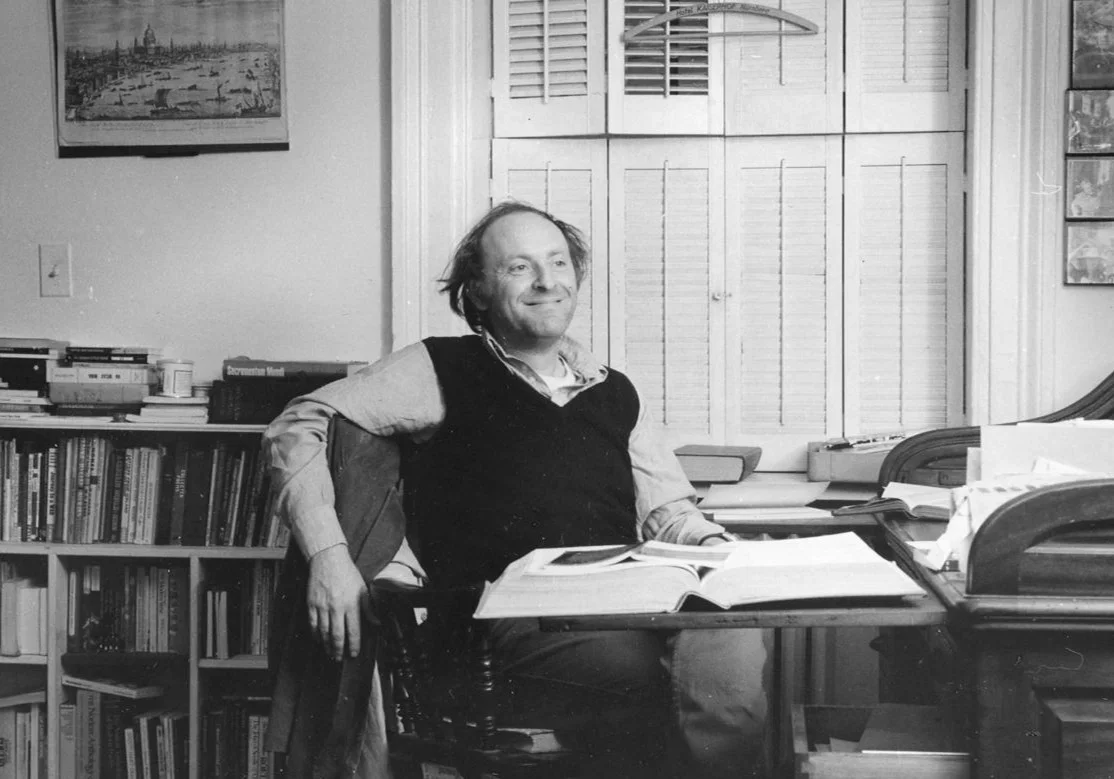
Brodsky, who, in general, has nothing to divide with the kunder (he is also an emigrant, also suffered from the regime, also hates the entry of troops in the 68th), very very polite in relation to the writer. Brodsky accuses Kunder of hasty generalizations:
QUOTE
“He is able to inspire even the venerable author that the stop of his car by the soldier of the occupation forces is his personal clash with history - this, apparently, was the reaction of Milan Kunders in Czechoslovakia in 1968. This causes sympathy, but only until the moment when he begins to embark on generalizations on the topic of this soldier and culture, for the representative of which he takes him. <...> Indeed, tanks and troops arrive in the Fatherland of Milan Kunders from the east with tiring regularity; But his belief that the type of man, described by Dostoevsky, only in Dostoevsky’s homeland lives, indicates that the West to this day did not give a writer equal to the dug up to the depths of Dostoevsky. ”
As you can see, there is nothing new under the sun: it is tended to look for a bomb from all representatives of the nation who destroyed his house to a person who destroyed him. To some extent, this is the eternal law of wartime, but the problem is that this law is imprinted in the souls of the victims for life.
However, in the souls of the invaders, a complex of guilt is also preserved forever - and it is he who forces any imperial (even an exile, even a resident of a deaf province by the sea, with all his heart this empire of the despising), with the slightest disrespectful nod towards his culture, rush to its defense.
In this newspaper polemic, it seems that no one was fatal, no one was completely right - neither right nor guilty are not guilty. There are only two types of writers, or rather, two types of nations - occupied and occupied, who will argue for many more years in a row - already other, living voices.
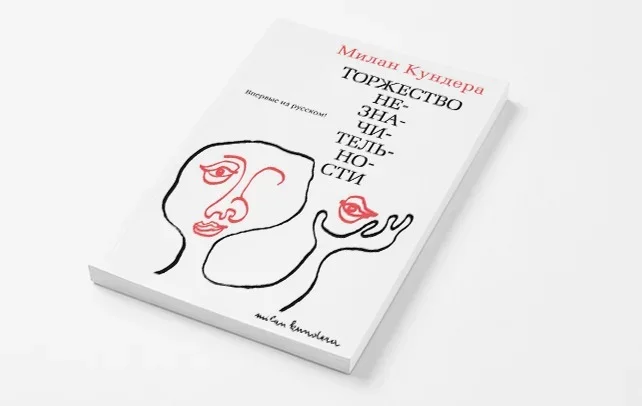
A quote from the novel “Triumph of Insignificance”, reminiscent that politics, especially totalitarian, is still a funny matter
At the end of a long, tiring day, Stalin liked to sit with his associates for some time and relax, telling them stories from his life. Here's one, for example.
Once he decides to go hunting. He pulls the old jacket, puts on skis, takes the gun and runs thirteen miles in the snow. And right in front of him he sees a tree, and partridges are sitting on the branches. He stops and counts them. Twenty four. What an annoyance! He has only twelve rounds with him! He shoots, kills twelve partridges, then turns around, runs back thirteen miles, and takes a dozen cartridges at home. Again runs thirteen miles and sees that partridges are still sitting on the same tree. Then he kills the rest ...
- Well, how do you like it? Charles asked Caliban, and he laughed:
- If Stalin himself told me this, I would have applauded him! Where did you get this story from?
- The teacher gave me Khrushchev’s “memoirs”, the book was published in France for a very long time. Khrushchev sets out this story with partridges as Stalin told them. But, according to Khrushchev, no one reacted like you. No one laughed. Of course, to everyone, Stalin's story seemed absurd and was disgusting from his lies. But everyone was silent, and only one Khrushchev gained courage and told Stalin that he was thinking about it. Listen!
Charles opened the book and slowly read aloud: "Then I even asked him:" How, everyone is sitting all? " “Yes,” he answers, “everything.”
But the story did not end there, let it be known that at the end of the day everyone gathered in a spacious toilet room. Imagine: on the wall a long row of pussuar, on the opposite wall washbasins. Pussuari earthenware, in the form of shells, bright, with floral ornaments. Each member of the Stalin clan has its own pusser, made and signed by a specific master. Only Stalin did not.
- And where then did Stalin write?
- in a separate toilet, in another part of the building; And since he always wrote alone, and not with his employees, those in their toilet felt divinely free and dared to finally say aloud what they were forced to be silent in the presence of the main. As on the day when Stalin told the story about twenty -four partridges. Again I will quote Khrushchev: “When they left and, preparing to leave, went to the toilet, they literally spit there: (...)“ Well, shave! ” We had no doubt about this. ”
- And Khrushchev is who?
- After the death of Stalin, he became the head of the Soviet Empire.
After a pause, Caliban said:
- You know what it seems to me incredible in this whole story: no one understood that Stalin was joking.
“Well, yes,” Charles answered and put the book on the table. “After all, no one next to him knew what a joke was.” And it seems to me that it was then that the new great period of history informed his appearance.