
Translated material
They are to blame for everything ... non -payments
An independent researcher from Glasgow Anatoly Chubais published an article in the scientific journal about the economic phenomenon of the 90s in Russia. This is interesting
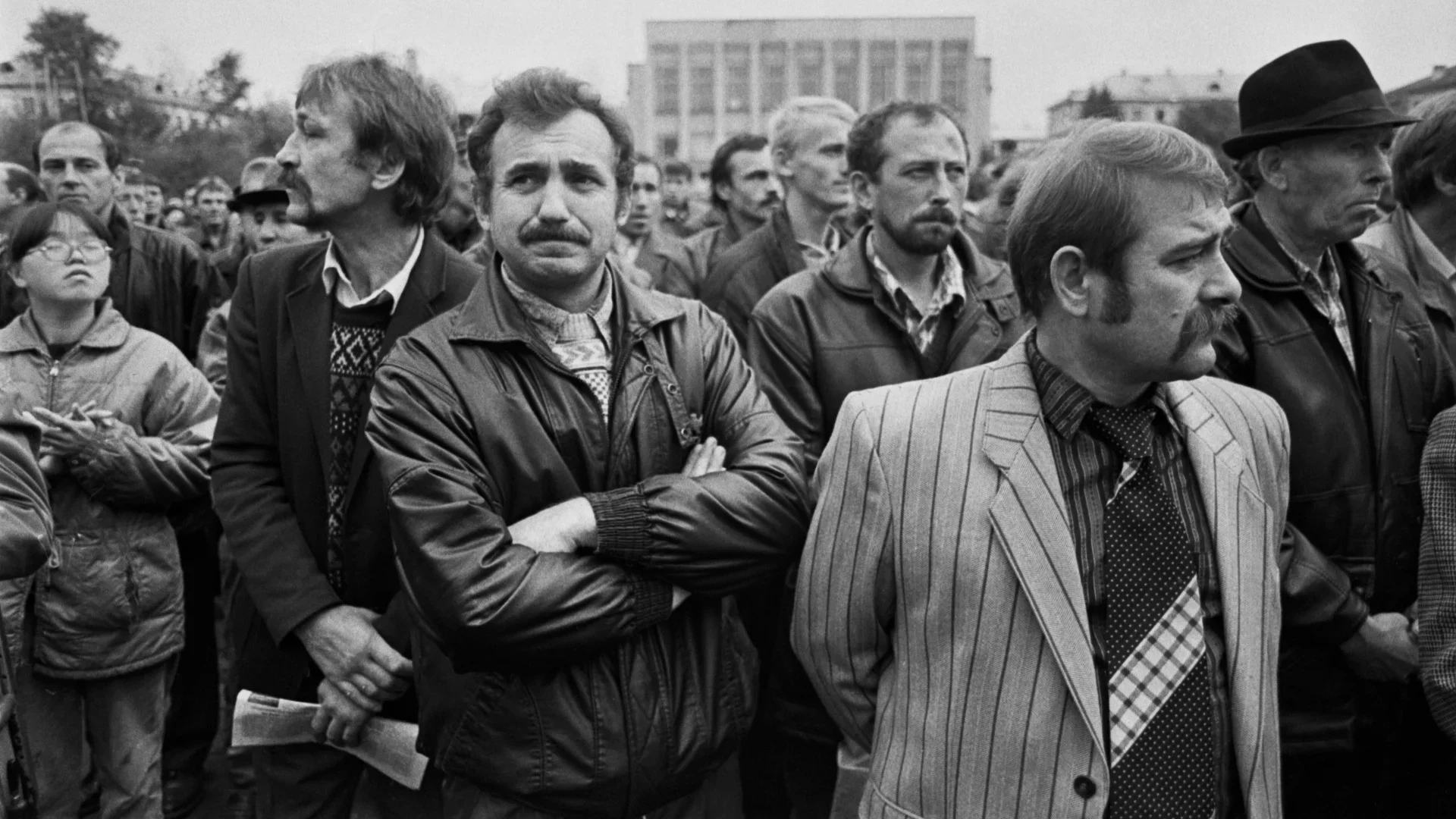
Miners demand to pay off wage arrears and free the coal industry of Kuzbass from federal taxes. 1995. Photo: Kuzyarin Anatoly / Photokhronika TASS
“Among the large-scale processes that have caused the greatest damage to the economy and the population of Russia in the 1990s and significantly undermined the prestige of the reformers, non-payments occupied a special place”-with such words Anatoly Chubais, “Independent Researcher from Glasgow”, as he imagined himself, begins his article “Non-payments in the Russian economy of the 1990s: an unforeseen institute”, published by the published magazine "Questions of Economics".
The unfulfilled hopes of the reformers
Before starting reading the article, it is necessary to recall that in the early 1990s the transition to the market was supposed to be as a kind of Darwin process of natural selection, in which only those enterprises were supposed to survive that could transform into competitive businesses.
QUOTE
“The Soviet Directorship Corps has been brought up for decades for decades that the main thing in the activities of any enterprise was the implementation of the plan for the supply of products in kind ... The Soviet director could not dismiss bad financial results, and the risk of dismissal for the disruption of the supply plan of finished products was quite real,” writes Anatoly Chubais.
It was expected that when the old Soviet industrial structure will be shocked by the termination of centralized planning and the subsequent launch of reforms, including mass privatization and cancellation of obvious subsidies, economic agents (that is, managing enterprises) will be forced to change their behavior in order to become competitive in the conditions of a market economy.
It was assumed that the directors of enterprises who received the opportunity to independently set prices for their products will be able to quickly find the balance between profit and costs: the one who set too high prices will not be able to sell their products and go broke, respectively, the one who will sell their products too cheap will go up ...
But something went wrong.
Enterprises continued to produce their products and ship it to partners in chains of economic ties built back in the USSR ... But ... they "did not pay" for it!
QUOTE
“Mass non -payments led to the complete opacity of the economy of enterprises, accompanied by uncontrolled discounts in barter chains, which, in turn, created the prerequisites for mass criminalization of economic processes. So, according to RAO UES, in mid -1998, the share of payments “live money” in the electric power industry was 17%, and the volume of semi -criminal monetary surrogates exceeded $ 3.5 billion per year ... ”writes Anatoly Chubais.
Destructive "Director of Igor"
“In order to realize all the destructiveness of this phenomenon [non -payments], one should first analyze its influence on the behavior of enterprises,” explains Anatoly Chubais. According to an independent researcher, the “most adequately ” was done by the American economists Clifford Gaddy and Barry Ikes, who formulated the so -called Igor’s rules (Igor is the general director of one of the large industrial enterprises surveyed by them).
The first “Igor’s rule”: sell something to the federal government to solve the problems of the offset on federal taxes.
The second “Igor’s rule”: Sell something to the regional government to ensure the set-off on regional taxes.
The third “Igor’s rule”: make something for barter with gas suppliers and electricity.
The fourth “Igor’s rule”: put something for export to get “live money”.
The fifth “Igor’s rule”: never show profit, because it will be taken from your tax debt.
QUOTE
“It is obvious that this approach is far from the real satisfaction of consumer demand when minimizing expenses, which should be the main task of the market economy at the micro level. The generally accepted goals of the activities of enterprises are so distorted that this can question the very meaning of the existence of the economy in which they are forced to act in this way, ”continues Anatoly Chubais.
Directors or owners
Anatoly Chubais sees the key causes of non -payments in the actions of the directors of non -reflected enterprises. “The long-term preservation of non-payments in the Russian economy in the 1990s was predetermined by the fact that its main business entities-enterprises-were in the power of directors whose motivation passed from the state plan and Soviet industry ministries,” Chubais explains.
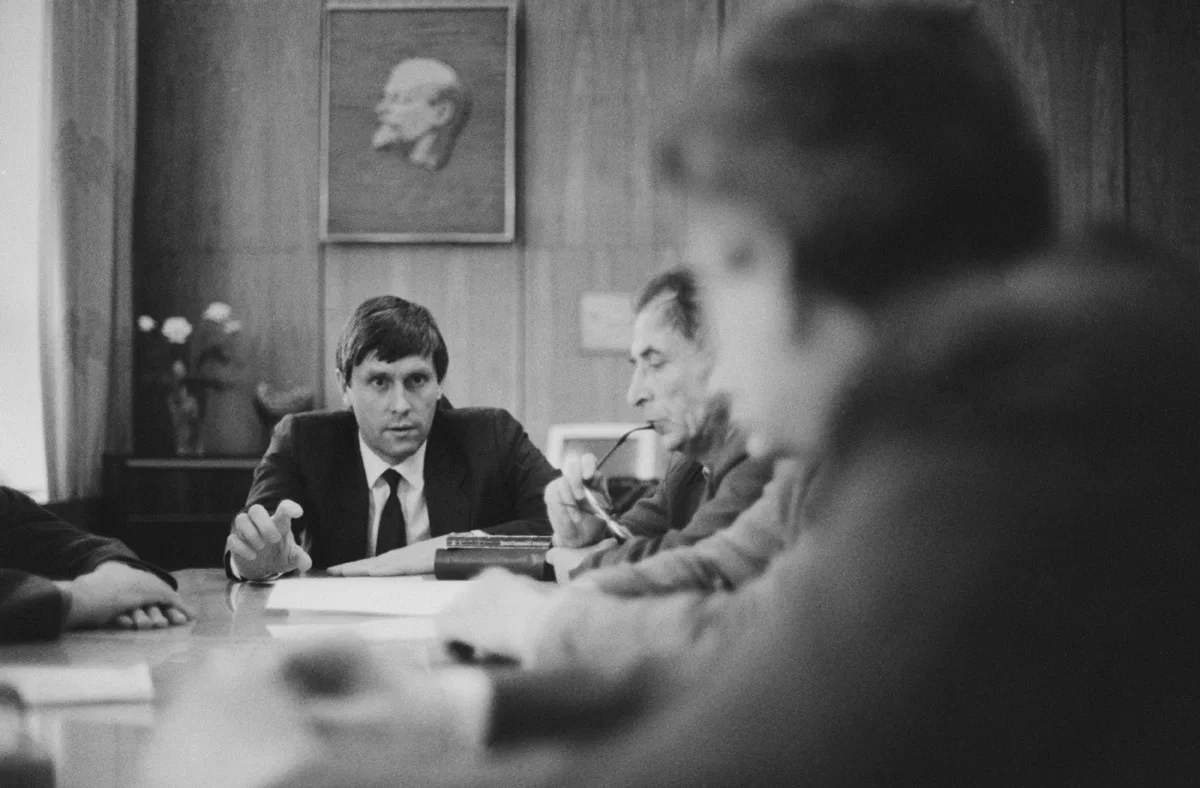
The main motivation of the director, according to Anatoly Chubais, was the "production of products regardless of financial results." The logic of the owner was exactly the opposite - maximizing income and the profit of the enterprise. Directors of enterprises were actively contributing to the growth of non -payments, as they sought to fulfill the order, despite its loss -making for the owner.
But, Chubais writes, in 1997, as a result of the transfer of the largest owners of “command heights” in the Russian economy, a turning point in the ratio of directors and owners for the forces of directors and owners occurred.
Then the whole process of privatization, the purpose of which was to create an institution of private property in Russia, became irreversible. The non -payments conflict with the interests of the owners who defeated directors in the historical competition for power over enterprises at the micro level.
Anatoly Chubais notes that in the success of reformers, in the process of eliminating the problems of non -payments, the key played three factors:
ruble devaluation;
anti -crisis management;
Government measures to combat budget non -payments.
According to Chubais, the ruble devaluation ensured a triple increase in living money from export, which increased the share of legal payment funds in the Russian economy.
Anti -crisis management in the restoration of real payments coming from the energy sector was important in overcoming a vicious circle of non -payments, and direct government measures ensured the ban on bills and barter as a means of calculation with the federal budget.
But the decisive role in overcoming the vicious circle of non -payments was played by “anti -crisis management in the restoration of payments coming from the energy sector. The core of this process was the cessation of unpaid electricity leave and the restoration of payments in the Russian electric power industry. ”
As a result, the former head of the RAO UES, if the share of payment “live money” for electric power products in mid -1998, as already mentioned, was 17%, then by the 3rd quarter of 2000 it reached 100%. Accordingly, the share of payments “living money” and power engineers to their suppliers - Gazprom, oil workers and coal miners grew up.
The other side of the unpaid coin
However, the phenomenon of non -payments was, paradoxically, and the positive side, writes Anatoly Chubais.
QUOTE
“Enterprises that produced vital products, continuing production in catastrophic non -payments, ensured the preservation of consumer viability: industrial enterprises, social spheres and the population. In other words, non -payments, on the one hand, destroyed or at least slowed down the creation of the foundations of market behavior at the micro -level, and on the other hand, supported the performance of key production chains in the process of market transition. In this sense, non -payments can be considered as a naturally born, albeit extremely dangerous regulator of the speed of transition to a market economy. Such a mechanism, creating high risks for the transition process itself, at the same time contributed to the functioning of production chains at the stage when market mechanisms could not do this yet. ”
The most important element
In the conclusion of his article, Anatoly Chubais sums up the study of the phenomenon of non-payments and their structural influence on the economic crisis in the 1990s:
QUOTES
“In the original concept <...> there were three basic elements: liberalization, financial stabilization and privatization. Now it becomes clear that the full -fledged fourth element should be overcoming (and ideally - prevention) of non -payments. ”“Unfortunately, we have to admit that the developers of the concept of reforms, including the author of this article, could neither predict the appearance of this destructive institution, nor to give his scientific explanation in a timely manner, nor quickly overcome it in practice,” Chubais concludes.
"One hundred friends" instead of "One hundred rubles"
And here, perhaps, the economist Clifford Gaddy, which he mentioned by him, will not agree with the “independent researcher”, who proposed the term “Russian virtual economy”. According to Gaddy's conclusions, the “crisis of“ non -payments ”hid much more complex and fundamental processes that occurred in a reformed economy.
The virtual economy is a system of informal distribution of rent, which arose in post-Soviet Russia in the 1990s, when non-viable processing production of the Soviet era sought to protect themselves from market discipline, says Gaddy.
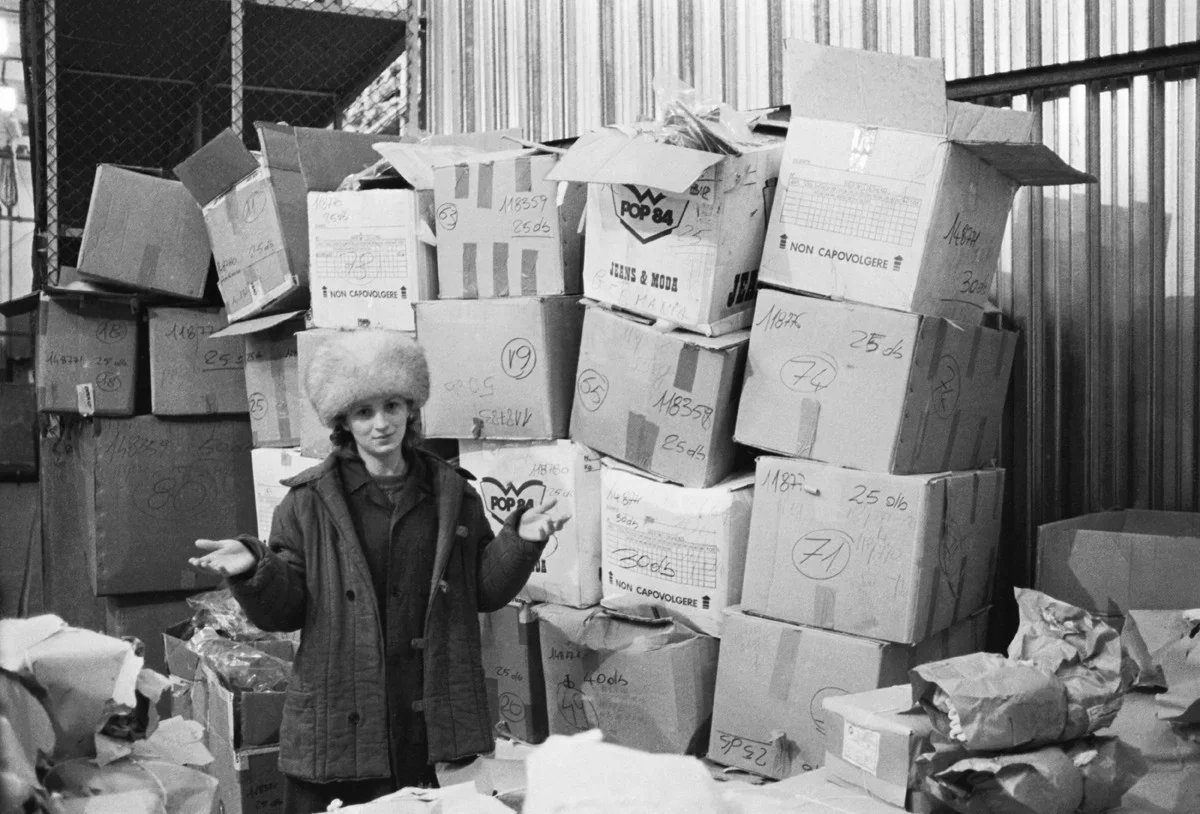
The heads of enterprises and their allies throughout the economy (including government officials) have entered into a conspiracy to use non -market prices and various forms of non -nmonational exchange, such as barter, to transfer value (Value) from raw material sectors to manufacturing industries.
In essence, Gaddy explains, the “virtual economy” in its Russian version was a kind of distribution system of rent. The main means by which economic agents made claims to receive rents was “production” .
The virtual economy was a set of informal institutions that contributed to the production of goods with a deduction of value, that is, less than the cost of resources used for their production.
Enterprises could engage in such production, because they had recipients who were ready to agree with the fictitious (non -and -free) prices of goods at the levels that masked their lack of profitability.
Buyers and sellers conspired to hide the fictitious nature of pricing. In the classical form of the virtual economy, they did this, avoiding money, instead of which they used barter and other forms of non -monetary exchange, as well as even more sophisticated tricks.
Since the “cost” was destroyed as the system was operating, there should have been a source of value. The final “cost pump” in Russia was the fuel and energy sector, first of all, a single company Gazprom, a gas monopolist of Russia.
In exchange for the right to preserve what he earned in export, Gazprom “pumped the cost” to the system, supplying gas for free (or, in a more general sense, at a price that was low enough to maintain the work of enterprises). The subsidies of Gazprom, which then led to overdue debts to the state, were the main way to support the company's losses in Russia.
The virtual economy developed and preserved because it satisfied the needs of so many subjects of the economy.
Workers and managers of industrial enterprises won because the virtual economy postponed the “final reckoning for inefficiency” for unprofitable firms.
The government, especially at the regional level, where most important actions took place, won because the virtual economy system supported the employment and provision of social services. Gazprom also won, as the transfer of value to a virtual economy gave him the right to assign a huge rent from exports.
The roots of the virtual economy mechanisms lie in the Soviet system, especially in production relations that have developed under the Soviet team economy. These relations were a special type of assets, the “capital of ties”, which complemented the ordinary physical and human capital of the enterprise.
Thanks to this capital, the policy of market reforms did not necessarily force the company to restructure to be able to compete in market conditions. Enterprises were chosen between becoming more competitive in the market, investing in physical and human capital, or it is better to protect themselves from the market, investing in the "capital of the connections".
Thus, Clifford Gaddy concludes, the “system of non -payments” was an integral part of the processes of turning “common” ownership into “private”.