
Translated material
An attempt to recoup
They tried not to let the organizer against Putin in Serbia go to the country. We explain what happened and loomed the threat over Russian relayers in Serbia
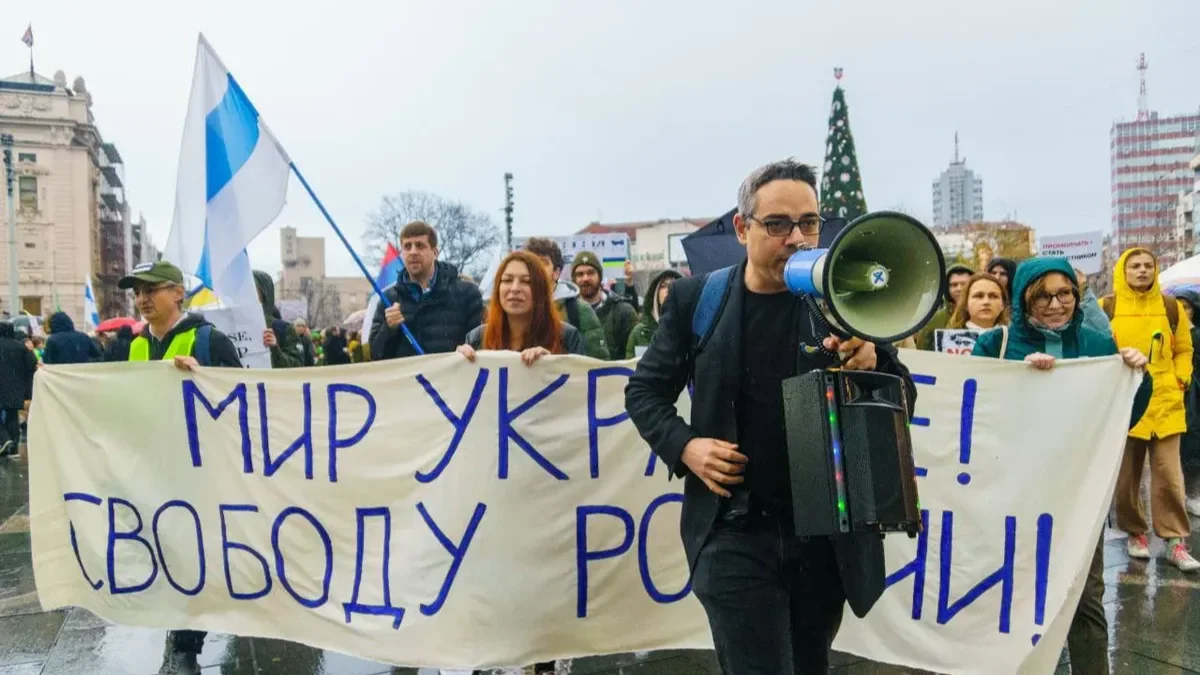
Anti -war activist, organizer of protests Peter Nikitin during a rally. Photo: Telegram
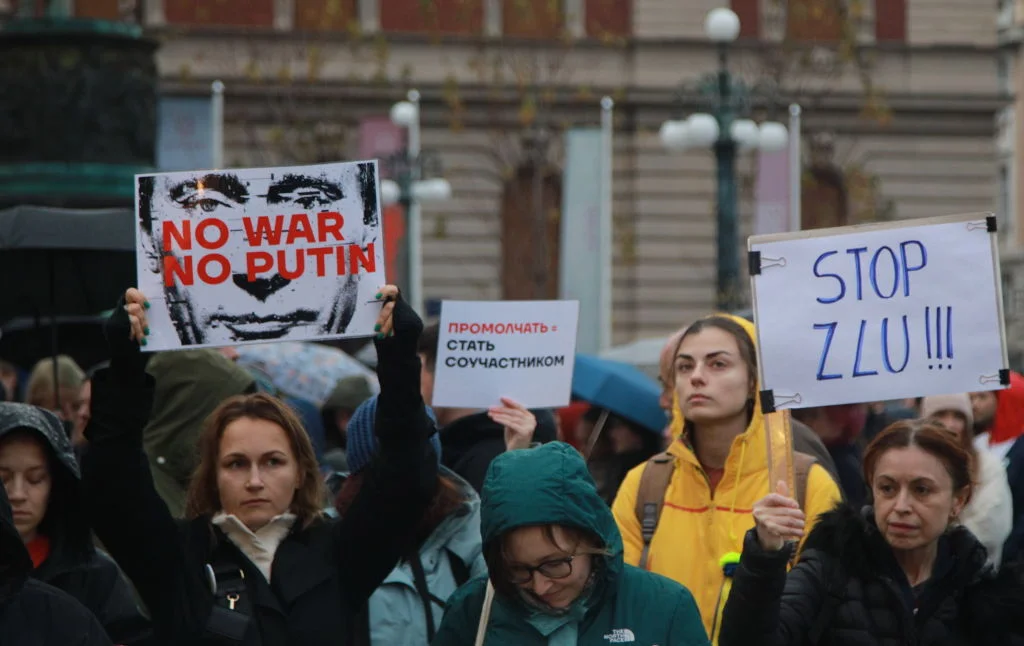
After the start of the Russian invasion of Ukraine, Serbia became one of the centers where the Russians were actively relocated. Among the emigrants were political activists opposing the regime of Vladimir Putin and his decision to invade Ukraine. Until now, such emigrants could feel safe: cases when Serbia punished the Russians for their political position, as it happened more than once, for example, in Georgia or Kyrgyzstan.
The situation changed on July 13, when Peter Nikitin was refused an anti -war activist, the organizer of anti -Putin protests in Belgrade. And although two days later the activist was allowed into the country, confidence in Serbia as a safe place for anti -war Russians was seriously undermined. Especially for Novy-Europe, political scientist Aleksandar Dzhokich explains why Serbia authorities first tried not to let Nikitin into the country, and then changed their minds and how an activist could become a random victim of large political processes in Serbia and Western Balkans as a whole.
IMPORTANT
We remind you that the “new newspaper Europe” is recognized as undesirable. Do not refer to us in social networks if you are in Russia.
Sanctions for breaking up with Russia
In recent months, the President of Serbia Alexander Vuchich has been between the hammer and the gravity - the protests of the liberal opposition, which stubbornly continued in the country for eleven weeks, and new negotiations on the resolution of the Kosovsky crisis that have reached their peak this summer.
The current Kosovo process is much wider than the dispute between Belgrade and Protina about the status of territories: now this is the only way to integrate the whole region of the Western Balkans in the EU and NATO, whose priority has sharply increased after the start of the Russian war in Ukraine. Negotiations about the status of Kosovo are risky for any political leader of Serbia, and Wucic understands this.
However, the West, actively involved in the Kosovo process, does not always act as Wucic expects. An unforeseen event for the leadership of Serbia was the introduction of US personal sanctions against a close associate of Vucich Alexander Vulin on July 11.
Vulin is now the head of the analogue of the Serbian FSB - the Agency for Security and Information, and in previous years he held the posts of the head of the Ministry of Defense and the Ministry of Internal Affairs. For many issues, Vulin can be considered the right hand of Vucich. It is not popular with the electorate, but is a representative of the current president in various non -public issues.
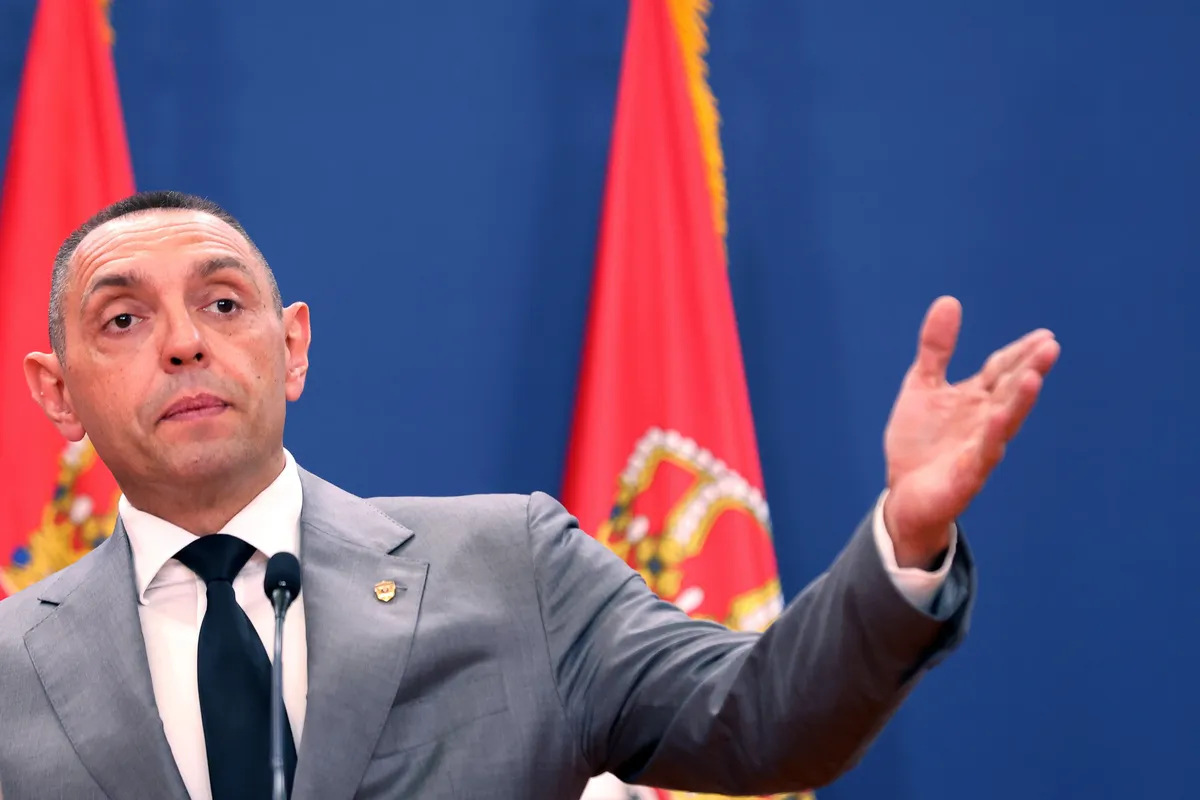
In the substantiation of the introduction of US sanctions, Wulin's activities are directly associated with the promotion of Russia's interests in the region. “Alexander Vulin is involved in transnational organized crime, illegal drugs with drugs and abuse of official position. [...] Vulin used his position to support Russia, contributing to its malicious actions, which undermine security and stability in the Western Balkans, ”the document says .
The idea of sanctions clearly is to personally send an unambiguous signal to the president that the Kosovo process, or rather its completion, will also mean a breakdown of Serbia’s relations with Russia, without an interruption of the relations of the United States with Serbia and Wucic.
The US Ambassador to Belgrade Christopher Hill explained that, against the backdrop of the changes in the relationship between Belgrade and Profita, the United States tends to improve relations with Serbia, but Vulin, that is, Russian influence interferes with them.
Hero of "Terminal"
The very next day after the introduction of sanctions, early on the morning of July 12, one unexpected event happened, at first glance, with the sanctions against Wulin and this historical process was not connected: the anti -war activist Peter Nikitin, not a well -known broad Serbian and Russian public, was denied in the entrance to Serbia, where he has been living since 2016 on the basis of a residence permit. Nikitin was awarded an unintelligible decision , it is not clear which instance or the department was issued, according to which he was prohibited from entering Serbia without explanation.
Nikitin is a citizen of the Netherlands , where he, together with his parents, emigrated from Russia in 1993 . Therefore, the Serbian authorities were going to send him not in the Russian Federation, but back to German Frankfurt , from where he flew to the Belgrade airport. Over the next two days, Nikolai Tesla Airport in Belgrade was the likeness of the American tragicomedy Terminal, where the hero of Tom Hanksu was forced to live in the transit zone of the airport.
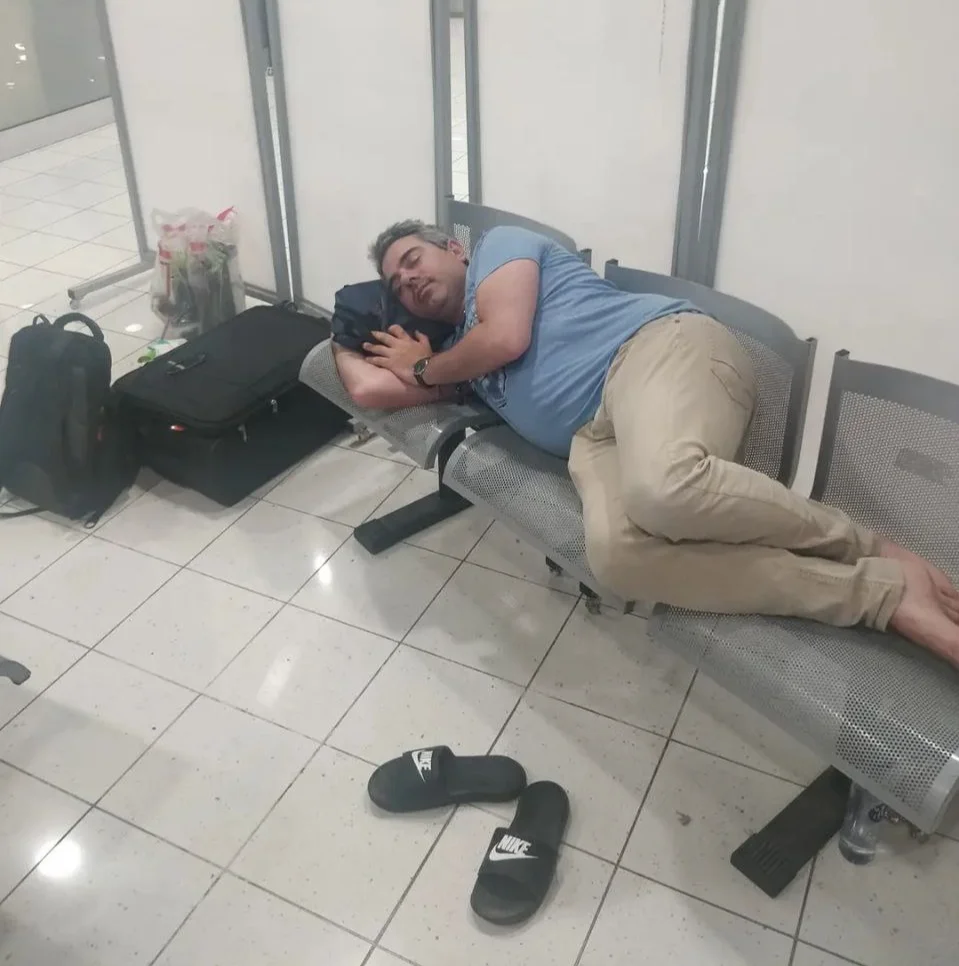
But two days later, on July 14, Nikitin was let into Serbia as if nothing had happened. And although there can be no specific documents and direct evidence in this situation, it is most likely that Nikitin abandoned the Entrance to Serbia, the agency of Wulin who fell under the sanctions.
Immediately after the decision of Serbia became known publicly, Serbian NPOs and the liberal opposition stood up for Nikitin. The Belgrade Human Rights Center promised to turn to international institutions. The deputy of the Serbia Parliament from the liberal and opposition democratic party Sdzhan Micolievich even came to the airport to visit Nikitin, but announced to the press that he was not allowed to the transit zone.
Miliyevich made a statement that behind all this is the Vulin department, which he described as the "main instrument of anti -European policy of Alexander Vucic."
Nikitin himself and his lawyer explained the ban on entering the intervention of the Russian state. This version does not sound completely convincing, since over a year and a half of the war, Nikitin failed to unite a sufficient number of activists from Russian emigrants in Serbia in order to really attract the attention of the Kremlin. In addition, Nikitin himself is a citizen of the Netherlands, and in Russia no administrative or criminal cases are opened against him. In his own statements, Nikitin did not blame Alexander Vucic, but emphasized that he was pursued by Vulin with Putin. And this, along with the support of the Serbian liberals, turned out to be the right strategy in order to achieve restrictions and get to the country.
There is no threat
In reality, a scenario is more likely to be more likely, according to which the Serbian authorities wanted to recoup on someone to introduce American sanctions against Wulin in order to demonstrate force to his own nationalist and anti-Western electorate.
Nikitin seemed ideal prey: he is not known to the average resident of Serbia, while he is a citizen of the Western state, engaged in political activism on an ongoing basis, criticizing Putin, and attends anti -government protests in Belgrade. Obviously, the Serbian authorities did not expect that such a media noise would rise in connection with the ban on entering Nikitin's country, and if this happened, they were backward, expecting that the entire incident would be forgotten quickly enough.
The case of Nikitin rather proves that Russian citizens living in Serbia and engage in anti -war activism are unlikely to seriously threaten political persecution.
The authorities of Serbia, on the contrary, lead a double game: for the sake of good relations with the West, they do not interfere with anti -war protests in Serbia, and for the sake of attracting their electorate, they do not interfere with the missile protests of Serbian nationalists.
Since the leadership of Serbia cannot break the connection either with the West or with its electorate, it will try to continue to adhere to this strategy.
As for the fate of Wilin himself, Milos Vachievich, the Minister of Defense and the man whom Vucich declared his successor as president of the Serbian progressive party, said that the future of Wulin as the head of the intelligence agency of Serbia will decide the National Security Council. It would be better for Vuchich to just remove Wulin from this post, but not to open criminal prosecution against him. So he will save his close associate and at the same time send the US signal.
The only problem for Vuchich is that the liberal opposition also wants to change the change of Wilin - this is one of the requirements of anti -government protests. Therefore, if Vucich takes such a step, it can show him to the opponents within Serbia that the president’s control over the country is weakening. Vuchich will look for ways in any way so as not to destroy his relationship with the United States, and not to show his weakness before the opposition. As a result, probably, Vucich, trying to keep his face, will go to some other significant concession to the United States, but will leave Wulin at the post.