
Translated material
Without grain in the head
Why is the “grain initiative” this is a deal, and what Russia has lost, participating in it
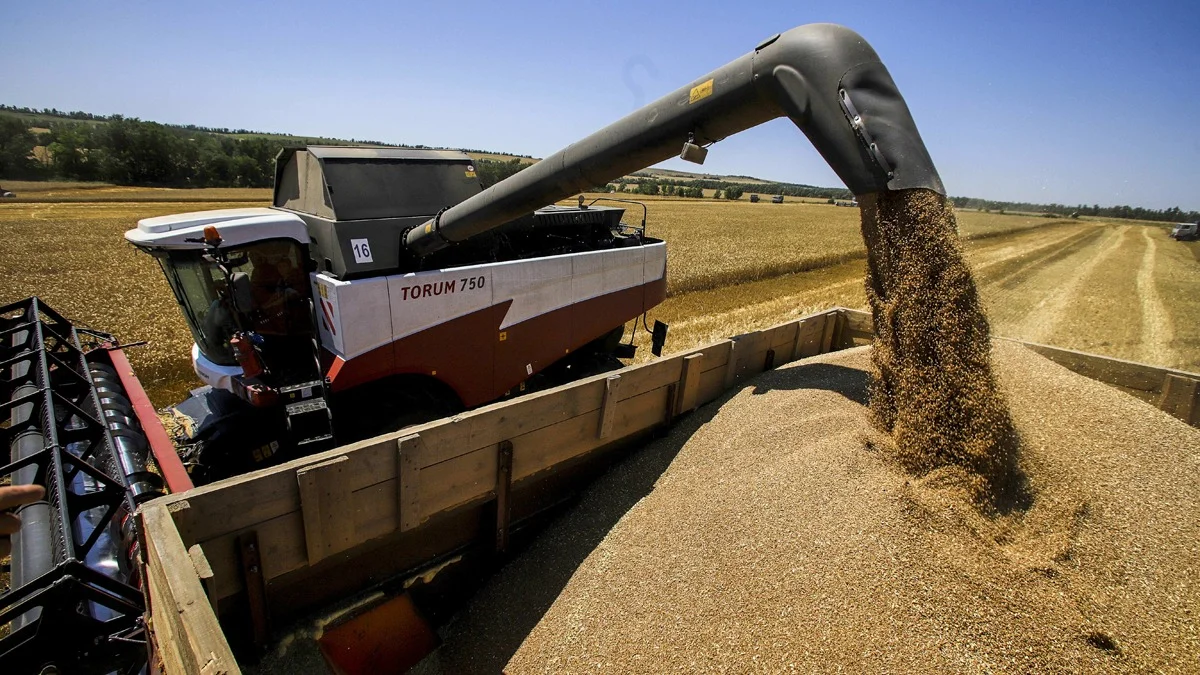
Photo: AA / ABACA / ABACA / EAST News
18+. This material (information) was produced, distributed and (or) sent by foreign agent Borukhovich (Tumakova) Irina Grigoryevna or concerns the activities of foreign agent Borukhovich (Tumakova) Irina Grigoryevna.
The last day of the “grain transaction”, which lasted less than a year, was July 17. By default, she had to extend for 120 days. But a few hours before, Russia announced that she was leaving the agreement, explaining this like this: she fulfilled all the terms of the partners, and no one fulfilled obligations to her. “In fact, the Black Sea agreements have ceased their effects today,” said Presidential press secretary Dmitry Peskov. - Unfortunately, the part related to Russia has not yet been fulfilled these Black Sea agreements. Therefore, its action ceases. ” Before that, on the night of July 17, a sabotage was committed on the Crimean bridge, but Peskov added that the refusal of the transaction was not connected. Russia, he noted, will certainly return to agreements as soon as its (Russia) conditions are met.
The fact that Moscow is not inclined to renew the “deal” was known earlier: on July 4, a “message for the media” appeared on the website of the Ministry of Foreign Affairs, which sets out Russian claims against partners by agreement:
The “Black Sea initiative”, the purpose of which was to assist the needy countries of Africa, Asia and Latin America, turned into a purely commercial export of Ukrainian food into “well -fed” countries. Of the 32.6 million tons of cereals exported from August 1, 2022 from the ports of Odessa, Chernomorsk and South, most of the 26.2 million tons, or 81% - was sent to countries with high and higher income levels. The poorest states (Ethiopia, Yemen, Afghanistan, Sudan and Somalia) received only 862 086 tons, or 2.6% of cargo. On average, during the year of the Black Sea initiative, only 2 vessels of the World Food Program (VPP UN) and 90 commercial grain grains became its participants.
At the same time, the report said, “The situation with the normalization of Russian food supply and fertilizers to world markets ... continued to degrade” because the West introduces new and new anti -Russian sanctions. And the “five systemic tasks” that could “eliminate obstacles” have not been resolved. This:
“Rosselkhozbank reconnecting to SWIFT;
spare parts for agricultural machinery;
Reanimation of the Ammonia -pipeline "Togliatti - Odessa";
transport logistics and insurance;
"Defrosting" of assets. "
Therefore, there is no reason to continue the continuation of the transaction after July 17.
Western politicians began to blame Russia for now, because of it, world food prices could again jump. “This is a repetition of blackmail that Putin spent a year ago,” said Norbert Rettgen on the air of the German radio expert on foreign policy. - He takes hostages of the starving inhabitants of Africa to achieve a political transaction with the West in order to extort a political ransom. Second: if grain prices grow around the world, this is a good business for Russia, because it is a large grain exporter. In the end, it will still turn out that he is a benefactor of the whole world. ”
Fear of hunger does not occur from scratch. Until 2022, Russia and Ukraine supplied approximately 13% of all calories consumed in the world. A quarter of all the world exports of wheat, 20% of barley exports and corn, 50% of the export of sunflower oil came from Ukrainian and Russian manufacturers. In 2021, Russia ranked first in the world in the export of grain crops, Ukraine - the fifth. In 2010, due to the drought, and the crop failure of Russia introduced the embargo to export wheat, and world food prices jumped so that this is called one of the prerequisites for the Arab Spring. With the beginning of the Russian special operation, world trading chains associated with food supply were destroyed, and this again led to an increase in prices.
In March 2022, Russia also announced the embargo for the export of its wheat to the EAEU countries, to trade grain with other countries introduced quotas and increased export duties. Dmitry Medvedev wrote deputy chairman of the Security Council of the Russian Federation in Telegram: “We will supply food and agricultural culture only to our friends (we have a lot of them, and they are not at all in Europe and not in North America). We will sell both for rubles and for their national currency in the coordinated proportions. ”
But Russia did not manage to sell. In addition to their own Russian prohibitions and quotas, Western sanctions prevented.
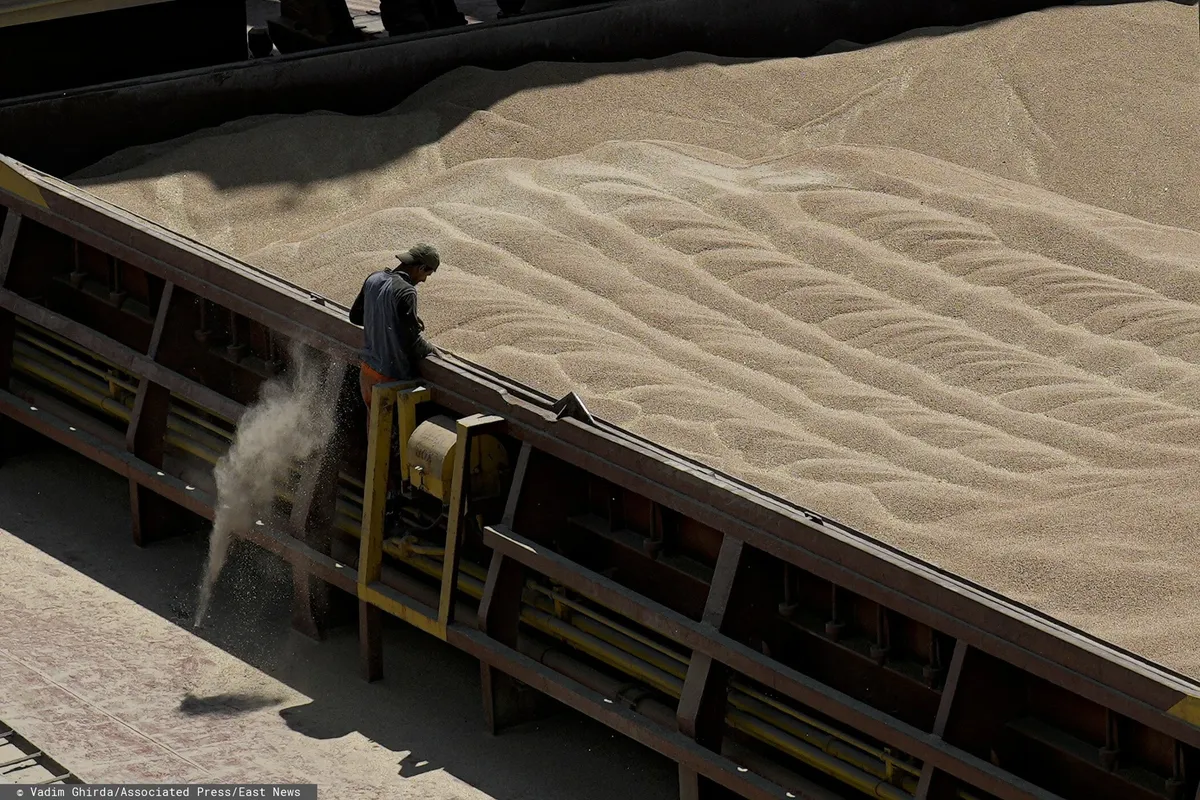
“Russia could not take out grain,” says entrepreneur Dmitry Potapenko. - It was a classic of overproduction: on the one hand, we have an export duty, on the other - sanctions for export. Two Korean companies agreed to insure vessels with the Russian cargo, and without insurance the price of transportation rose. And there is a fundamental problem: how do you pay for this grain and how will you get money from buyers?
At the same time, Russia blocked Ukrainian ports on the Azov and Black Seas. Prior to the special operation, Ukraine exported more than 45 million tons of grain and oil crops annually. By the beginning of the blockade in its warehouses, 18 million tons remained from the last harvest, another 60 million tons of Ukrainian farmers were expected to be assembled in 2022. Due to the fact that the crop that was not exported in the storage remained, the new one was simply nowhere to put. It was impossible to replace sea transportation by rail.
Prices for wheat, according to Finams, flew up in February 2022. They began to grow back against the background of pandemia, but then they jumped to a record values. The UN spoke about hunger, which threatens the poorest countries due to high cost.
In June 2022, prices began to decline. There were negotiations on the future “grain transaction”, which was supposed to allow food from Ukrainian ports.
What is a "grain transaction"
The official name of the document signed on July 22, 2022 in Istanbul is the “initiative for safe transportation of grain and food from Ukrainian ports”. Representatives of Russia, Turkey and Ukraine with the participation of the UN signed under the obligations. The goal is called “Ensuring safe navigation for grain export and related food and fertilizer products, including ammonia, from Odessa ports, Chernomorsk and South (“ Ukrainian ports ”).”
The parties give "maximum guarantees for a safe and reliable environment for all vessels participating in the initiative." In Istanbul, under the auspices of the UN , a joint coordination center (SKC) is created with the participation of representatives of each side. He controls compliance with the terms of the transaction, he also approves the schedule of court entering the Ukrainian ports and leaving them. The inspection groups, which include representatives of all parties, check ships in the ports of Ukraine and Turkey and in the Bosphorus for "lack of unauthorized goods and personnel on board."
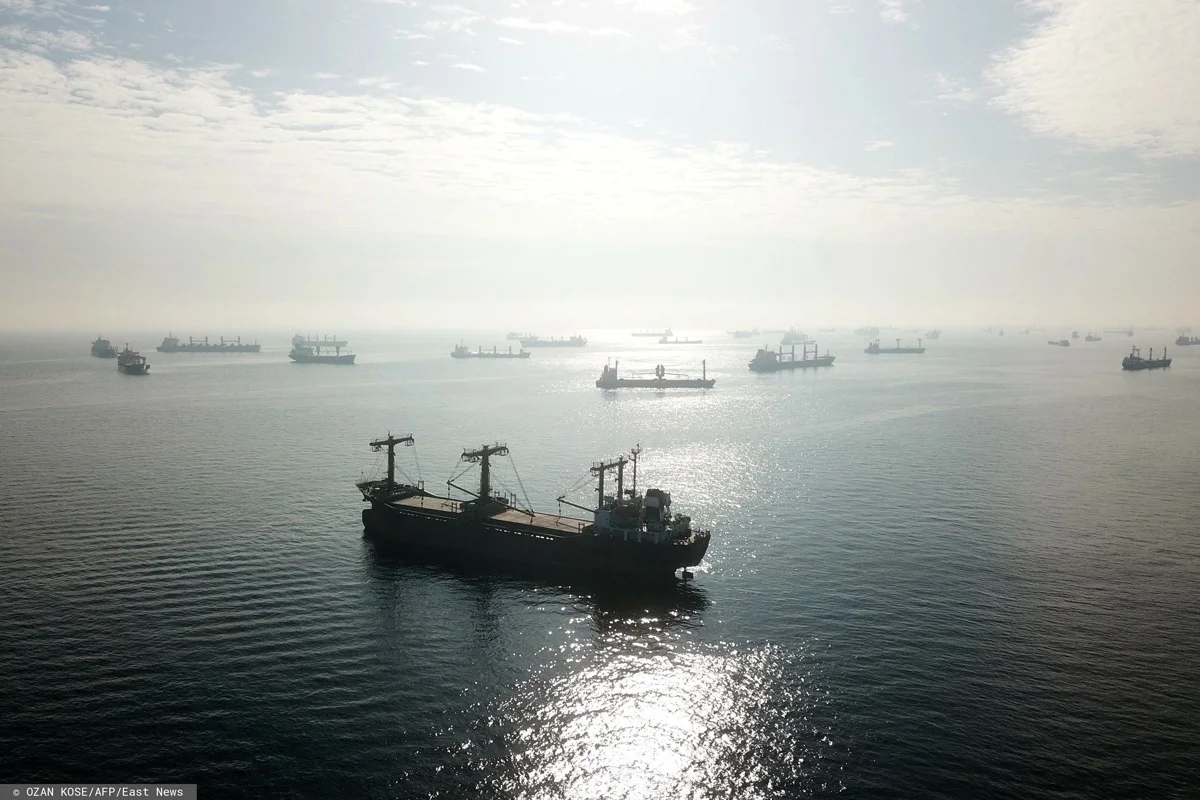
Both Russia and Ukraine undertake "not to take any attacks on merchant and other civilian vessels and port structures involved in the initiative." Ships with grain go along the "sea humanitarian corridor, coordinated by the parties," throughout the way they are "under technical control" of the SCC. “No warships, planes, unmanned aerial vehicles (UAVs) can approach the sea humanitarian corridor closer than a distance coordinated by the SKC.” In the event of any danger, the parties are obliged to "provide the necessary assistance to the crew."
Why is it called a deal
Initially, Russia interpreted the Black Sea initiative as a concession on its part, a gesture of goodwill, in exchange for which it has the right to demand something. So, apparently, the word “deal” appeared. At the same time, as we see, in the document under which Russia signed, there is not a word about any of its requirements. Here, we add, there is not a word about who exactly should be a buyer of Ukrainian grain.
On the same day, in Istanbul, on the initiative of Russia, another paper was signed - a memorandum of mutual understanding . Russia considers it as part of a certain “package transaction”, but this is an independent document under which there are no signatures of Ukraine, Turkey, and even more so any Western countries that Russia accuses of violation of agreements. The First Deputy Prime Minister of the Russian Federation Andrei Belousov and UN Secretary General Antoniu Guttalsch signed under it. On the website of the Russian Foreign Ministry, the document was published in September.
The Preambul Memorandum Parties emphasize the human right “to decent food”, note that “food is not just a product”, they say about the need for an urgent solution to the “growing global problem of the lack of food security in connection with the increase in food prices and fertilizers in world markets”. After a long and difficult entry, the essence is described in two points:
Russia will be able to continue “commercial supplies of food and fertilizer to countries that need this product”, if at the same time it has obstacles, the UN Secretariat informs about them. At the same time, she "will contribute to the unhindered export of food, sunflower oil and fertilizers from ports controlled by Ukraine in the Black Sea."
The UN Secretariat, for its part, will make efforts “to promote transparent and unhindered supplies of food and fertilizer, including raw materials, for their production (including ammonia) coming from the Russian Federation to world markets.” We are talking about obstacles "which may arise in the areas of finance, insurance and logistics." He (the secretariat) “will strive to work with the competent authorities and the private sector in order to achieve specific exceptions for food and fertilizer, including raw materials for their production (including ammonia) made in the Russian Federation, from the action of measures taken in relation to the Russian Federation, according to the principle that these measures do not apply to food and fertilizers.”
Translated, this means:
Russia stipulates for itself the possibility of commercial supplies, the UN helps it bring out this trade from sanctions, and Ukraine, so be it, will be allowed to carry grain to the poorest countries.
In fact, there are no specific requirements and conditions in the document, there is only an expression of readiness to “make efforts to assist”. A separate paragraph indicates: "This memorandum is not an international treaty and does not establish any rights or obligations under international law."
What violations does Russia see
Talking about the “package transaction” and violation of its conditions, Russia began shortly after signing the documents. In October 2022, when the first 120 days expired and the question of extending the agreement stood, the Ministry of Foreign Affairs said that for some reason the goals of the Ukrainian supplies were not humanitarian, but commercial ones, half "accounted for the European Union and developed countries as Great Britain, Israel and South Korea", and "in need of states ... received only 3% of food." In fact, the first recipient of Ukrainian grain is China, Türkiye is in third place, but for some reason the Foreign Ministry is silent about them. The same countries are considered the most interested in the “grain initiative”, for Turkey, participation in it is also a political weight. The United Kingdom, which is accused of eating grain, is in the list of buyers, but strongly behind Yemen, Libya and Bangladesh.
Russian companies say further in the message, “so far they cannot not only carry out commercial supplies of fertilizers, but even transfer about 300 thousand tons of products to the poorest countries,” but all due to “unilateral sanctions”, which the West has not canceled. About what on earth the West should generally think about the “transaction”, under which he did not sign, not a word.
After the attack on Sevastopol on October 29, Moscow announced that she was leaving the initiative.
Turkish ships without the participation of Russian simply held Ukrainian ships along the entire route - and no one dared to interfere with them. Even then, it became clear that, in principle, the “deal” can be continued without Russia.
And on the Russian side there were oral requirements, which are not in any document: to the west - to connect the Rosselkhozbank to SWIFT, to Ukraine - to resume the work of the Togliatti -Odessa ammonia, stopped at the beginning of the special operation. The President of Zelensky was ready to launch the ammonium in response to the exchange of prisoners according to the “Everyone on All” formula, but this did not suit Russia (on June 8, the pipe was blown up in the territory controlled by Ukraine, which made the operational fulfillment of Russia's requirements technically impossible). In general, Erdogan called Putin and found some words so that Russia returned to the “deal”.
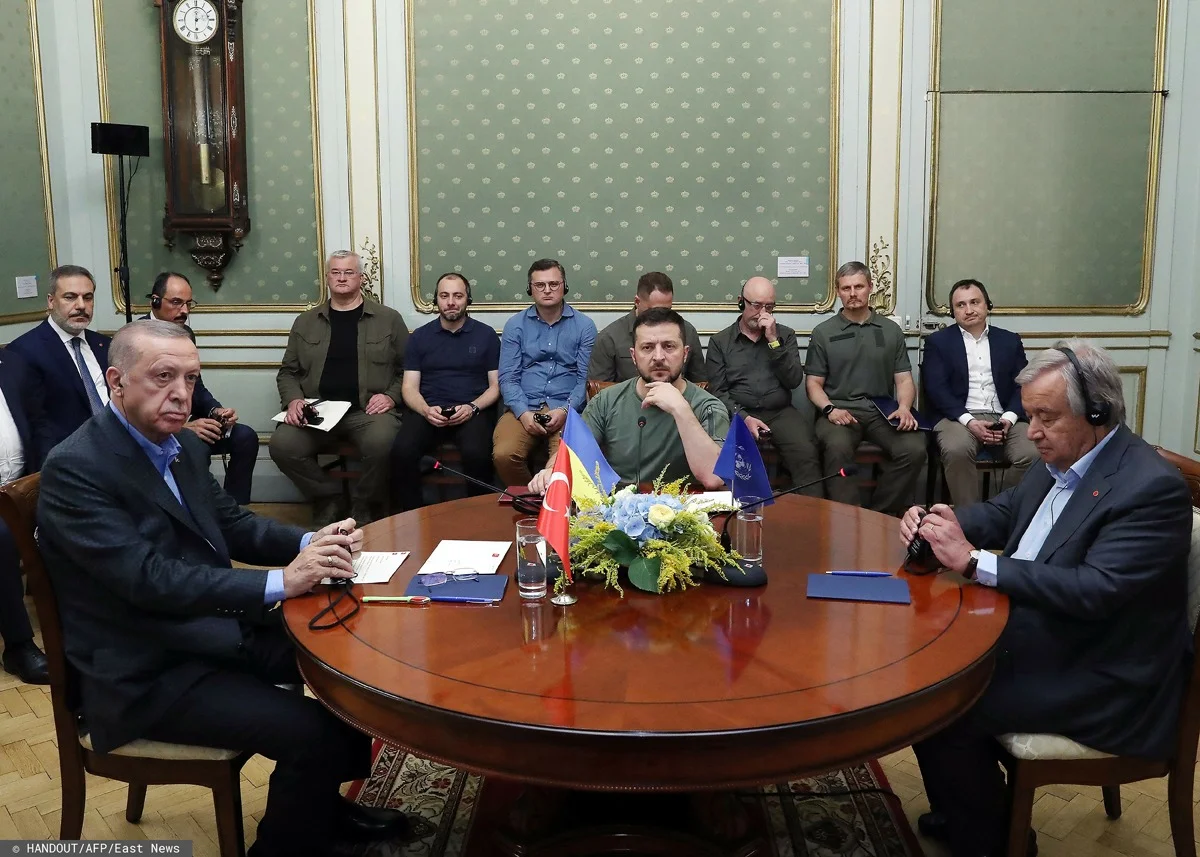
In March, when a new 120-day period was approaching, Russia again recalled : Ukraine sells grain with Europe, and the poorest countries take less than 3%. The ammonium wrap (then not yet blown up) does not work, the Rosselkhozbank sits without SWIFT and cannot make international payments. The "deal" was still extended , but not for 120 days, but "only by half the term - 60 days." In July, this period has expired.
How the "deal" actually worked
The Director of the Department of Corporate Finance of the Iva Partners Investment Company Artem Tuzov believes that neither Russia nor Ukraine is in the termination of the “transaction”.
“The consequences will be minimal,” he says. - Ukraine actively supplied grain not only by water transport, but also through land boundaries by trucks. She will continue to do it. From Russia, the grain also went without taking into account this transaction, it will continue to go. From the point of view of the poorest countries, the situation is ambiguous, they buy grain in Europe, in Russia, Turkey, and they will continue to purchase it - with or without a deal. Perhaps the grain will rise in price, then it will be more difficult. It has already begun to rise in price, but these are still not the jumps that were last year, while it was quite a market history.
According to the Office for the Coordination of Humanitarian issues (UKGV) of the UN, the movement of ships within the framework of the Black Sea initiative began on August 3, 2022. The first vessel with grain for the poorest countries of Africa left the Ukrainian port of Yuzhny a month after signing the agreement: the Brave Commander dry cargo, captured the UN, was driving 23 thousand tons of grain in Djibuti. Prior to this, 14 courts went to customers, to whom Ukrainian suppliers had obligations.
In total, during the existence of the transaction, Ukraine managed to export 32.9 million tons of grain: corn, wheat, sunflower, barley, raps and soybeans. Among the consignees in the first place China, Spain and Türkiye. In addition to European countries, goods went to Egypt, Bangladesh, Kenya, Tunis, Sudan, Yemen, Algeria, Lebanon, Djibuti and other countries of Asia and Africa. More than 40% of the total grain went to the poorest countries, the rest - to those customers with whom the Ukrainian suppliers had contracts.
Nowhere in the agreement it is said that Ukraine undertakes to feed starving Africa for free.
According to the UN food and agricultural organization, after the start of the Black Sea initiative, world food prices began to decline, which was the goal of the “transaction”, and not humanitarian shipments of corn and sunflower from Ukraine to Dzhibuti.
In October 2022, the UN Conference on Trade and Development issued a report in which it noted: most of the corn from Ukraine "went to developed countries", where grain "can be processed or re -exported to other countries." Wheat "mainly goes to developing countries", 20% - "in the least developed countries with a vulnerable population served by the World Food Program."
Russian manufacturers, despite the sanctions and other obstacles mentioned on the website of the Ministry of Foreign Affairs, in 2023 collected an unprecedented grain harvest and exports were also increased - to a record 59 million tons. This year, the share of Russian wheat in the world market will be 13%-against 11% in 2018.
The European neighbors of Ukraine (Bulgaria, Hungary, Poland, Romania and Slovakia) signed a declaration calling for the European Commission to extend the ban on the import of Ukrainian grain, the Polish minister said.
The current prohibition expires on September 15. In Poland, they said that they will independently extend the ban if the European Commission does not do this. In this case, land transit is preserved.
The countries that signed the Declaration say that in this way they protect national farmers from the influx of cheap agricultural products from Ukraine.