
Translated material
The gospel from Bogomolov
The power is good, those who left are bad, war - what war? The rules of life of director Konstantin Bogomolov - former liberal, and now the apologet of the regime
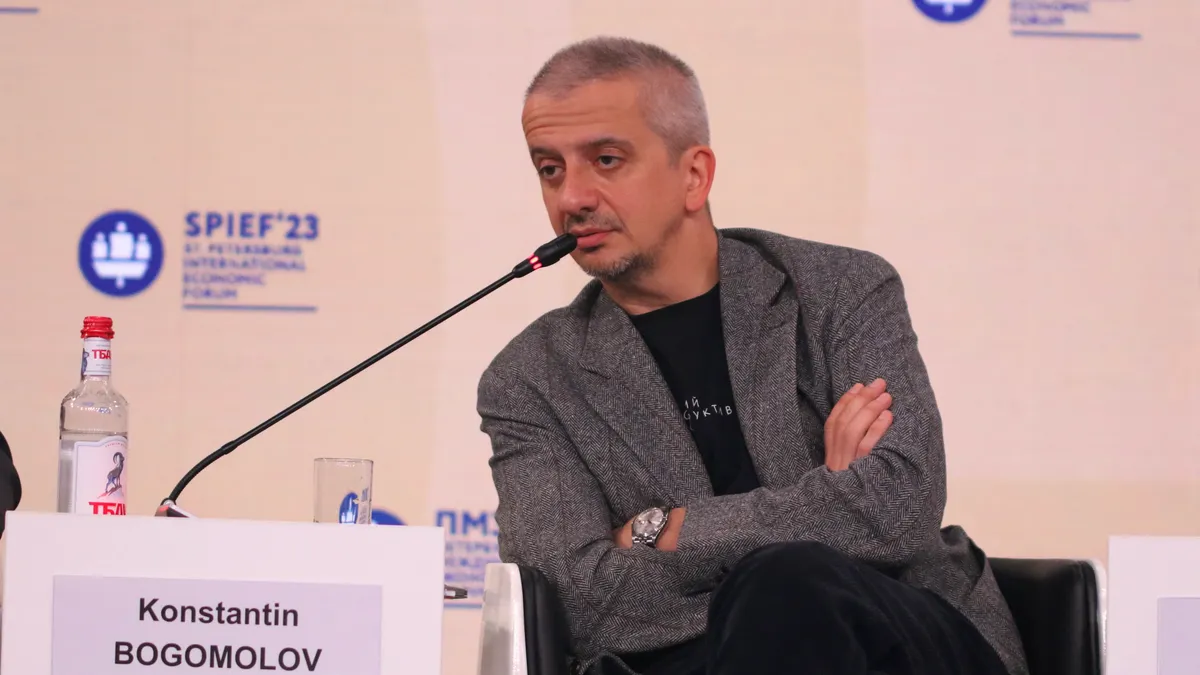
Konstantin Bogomolov at the St. Petersburg Economic Forum. Photo: Maksim Konstantinov/Getty images
This year Konstantin Bogomolov managed to be noted by a series of columns in RIA Novosti, and a visit to the St. Petersburg International Economic Forum, and moderating plenary discussion at the Russian creative week with the participation of federal ministers and employees of the presidential administration. He is one of the brightest theatrical directors who not only decided to stay in Russia, but also actively supports the state. Now Bogomolov is a little like the spiritual leader - conservative, of course. His last article in RIA Novosti that emigration is a spiritual death, that the elite accustomed to luxury does not hear and despises his own people, and the true artist does not think of himself without the homeland.
Novyevropa studied the political path of director Bogomolov, who led him to the current position of the pro-government public intellectual.
The first stage. Scandalist and liberal
“Brothers. While we are one - we are invincible! We will not share! There will still be time to fight! " -No, these are not lines from the column of Konstantin Bogomolov about death in exile, these are words from his post on Facebook of 2011 with an appeal to go to Bolotnaya Square. Then the 36-year-old director was one of the participants in the protest movement. The son of the famous film critic Yuri Bogomolov, who began as a poet, he found a place in the theater, studying on a director in GITIS. At that time, his theatrical career only went uphill: Konstantin Bogomolov worked in the Tabakerka Theater, was the laureate of the Oleg Tabakov Foundation Prize, and his performances “Elder Son” and “Wonderland-80” were nominated for the Golden Mask federal prize.
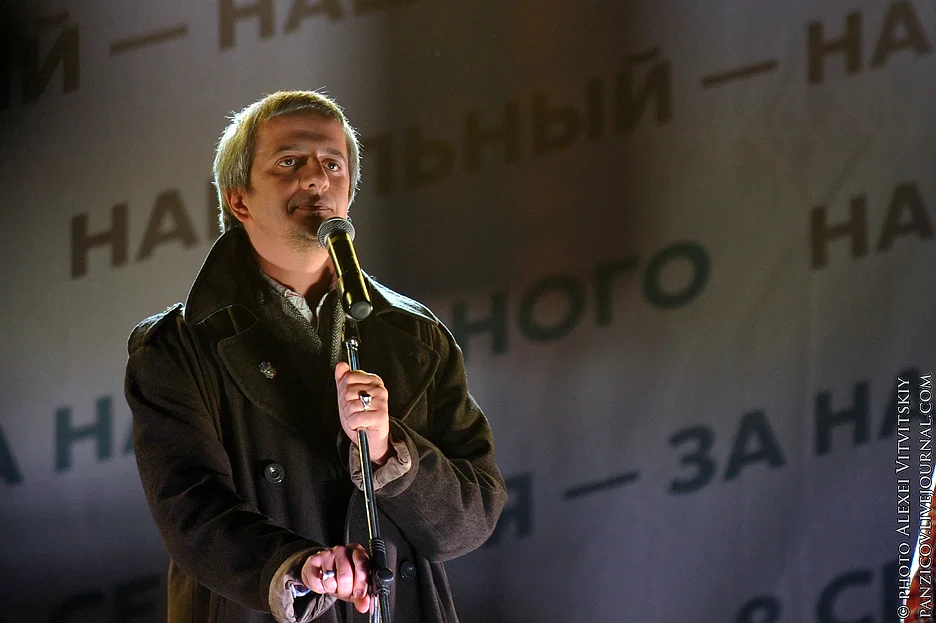
Although the “swamp” protests were largely caused by the “castling” of Dmitry Medvedev and Vladimir Putin and the understanding that the latter was returning to the presidential chair again, a special situation remained in Moscow. Words about the importance of modernization, about freedom, which is better than a lack of freedom, and about the fight against corruption have been perceived with hope. Finally, these hopes will collapse only in 2014, when “traditional values” will come to the place of modernization ideas for a long time. But then the specific state liberalism, not only allowed, but also supporting contemporary art, flirting with the progressive intelligentsia, was ready to meet its requests. And at a time when it was not so shameful to cooperate with the authorities, Konstantin Bogomolov was in the opposition. At a rally Navalny after the victory of Sergei Sobyanin in 2013, the director said :
“It is important that everyone who came to the polling station believes: his voice is important. We were offended by the fact that they took away the voices. We must fight for them. ”
Then the audience shouted: “Return!”, Without accepting the new mayor, the former head of the presidential administration. Konstantin Bogomolov himself then still believed that the theater could directly affect politics: “Everything affects the drop, including dissatisfaction with power. [...] And the theater is one of the factors that can influence. ”
However, in the opposition, Konstantin Bogomolov was not only in the central government, but also to most of the theater community. If the enlightened critic was ready for the director’s experiments, then the audience and publicists were not. For example, the play “King of Lear” in 2011 in the St. Petersburg “Comedian shelter”, where the director transferred the action to the Stalinist USSR, received in response to a review with the following names: “The king is naked. The director castrated Shakespeare ” and “ Naked King ” . And if the first name is an article in the newspaper “Neva Time”, then the second is the review of the magazine “Theater questions”, which publishes the State Institute of Art of Art.
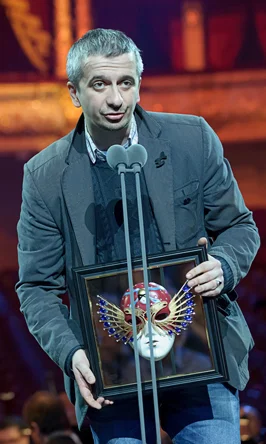
The take -off of Konstantin Bogomolov’s career was largely connected with Oleg Tabakov, in whose theater he released the first noticeable works, so it is logical that the talented director ended up in the Moscow Art Theater, where his master was an artistic director. In 2013, Bogomolov released the play “The Perfect Husband”, which is still going on. Having taken the story canvas from the work of Oscar Wilde, the director transferred the scene to modern Russia. Instead of the English nobility, former bandits who have become part of high society. In parallel, the history of the Kremlin ruler, who entered into an agreement with the artist, is developing. He must draw a portrait of the ruler, thereby ensuring immortality to him. Already in the year of the premiere, Orthodox activists tried to disrupt the performance because of the episode, where the actress with bare breasts, suspended above the stage, depicts the crucified Christ. Offended believers, led by Dmitry Enteo, even threatened Bogomolov with a criminal case. However, the production continued to live, making a good cashier to the theater.
But the scandal scandal is different. In the same 2013, Konstantin Bogomolov announced the departure from the post of assistant artistic director of the Moscow Art Theater. The reason is the new performance “The Karamazov Brothers”, in which, according to the director, the theater leadership required unacceptable changes. What kind of adjustments to Tabakov proposed is unknown, during the conflict he refused to comment. Bogomolov himself even allowed the abolition of the shows of a new production, but this did not happen. Soon, Bogomolov made peace with Tabakov and worked his assistant until his death in 2018.
In the theater environment, many believed that it was Bogomolov who could become one of Oleg Tabakov’s successors as the Moscow Art Theater Scudrued - perhaps Oleg Pavlovich himself was preparing for this role.
The second stage. Cautious conservative
For many “cultural figures”, the third term of Vladimir Putin was a time of disappointment and desire to be deceived. The hopes for changes collapsed after the annexation of Crimea, sanctions and tightening of the regime. The motto of cultural policy was the phrase of the Minister of Culture Vladimir Medinsky: “Let all the flowers grow, but we will only water those that we like.”
At the same time, the authorities, especially in the capital, continue to build the image of a European developed country. The mayor of Moscow Sergei Sobyanin, in the framework of the new urban planning policy, is reconstructing historical buildings, the improvement of the streets, lays the notorious bike paths. Zelfir Tregulov is appointed to the post of general director of the Tretyakov Gallery in 2015. Back in 2013, the head of the Pushkin Museum became Marina Loshak, and Kirill Serebrennikov opened the Gogol Center.
The state created all the conditions for public individuals to continue to work. After all, if you have something to lose, for example, a theater or museum, then you will take less risk. And why at all to take risks if Moscow is on the way to become one of the main European capitals?
The career of Konstantin Bogomolov at this time is developing a little strange. From a professional point of view, it is difficult to call this period unsuccessful for the director. In 2014, his “perfect husband” received the first “Golden Mask” in his career. Bogomolov’s performances, even if they remain scandalous, are attracting an increasingly diverse audience. Most of the productions are commercially successful. Bogomolov becomes fashionable in the secular environment. At the same time, the director himself sometimes talks about the creative crisis, that he puts performances by inertia, because he simply knows how to do it. Speaking of his desires, Konstantin Bogomolov says that he dreams of leaving for the sea and engage in literature.
The social position of Bogomolov was not so sharply contrary to the principles of past years, rather it became less obvious. The director makes less direct statements with the criticism of the authorities, the formulations are more evasive. There remains a neglect of the authorities, primarily to officials from culture. However, this did not prevent Bogomolov in 2017 from stating : “I do not feel any censorship, because I think that a person is free as he is striving and ready to be free. Only your own fear makes you not free. ”
Something else is replaced by democratic ideals - a chanting of professionalism. Each person has work, purpose. And the most important thing is to do what it should, and politics is where it should not fit. This idea will remain with Konstantin Bogomolov for a long time. And the point is not in the sincere faith in it, but in the fact that it makes it possible to negotiate with the authorities. The most striking example of how this logic works is the director’s position in the “Seventh Studio” case, where one of the accused was his colleague Kirill Serebrennikov. In an interview with the "Rules of Life", Bogomolov said as follows :
"Many liberal journalists begin to write about me in capital letters:" Why is he silent? " And because if a person is taken hostage, then he must be rescued by negotiations, and not by carpet bombing. Or do you want to put him more deeply? "
Later, Konstantin Bogomolov wrote a letter to the Minister of Culture of Lyubimova with an appeal to terminate the case of the Seventh Studio due to the lack of reason.
But non -interference in politics turned out to be selective. The official power of Bogomolov had other relations. Suddenly, for many colleagues, Konstantin Bogomolov became a confidant of Sergei Sobyanin in the election of the mayor of Moscow. The public image of the candidate from power was simple: the mayor of all Muscovites. He is supported by the creative intelligentsia, and ordinary hard workers, and residents of the center, and recently settled on the outskirts. Konstantin Bogomolov became part of this symphony of the city government and society. True, he became not only a trustee, but also an agitator, telling in all social networks that Sergei Sobyanin is a worthy mayor of Moscow. In 2019, in an interview with Rain, Bogomolov said that he sees how the opposition “Energy and Talent leaves”, and flaunted the fact that he went to the Valdai forum.
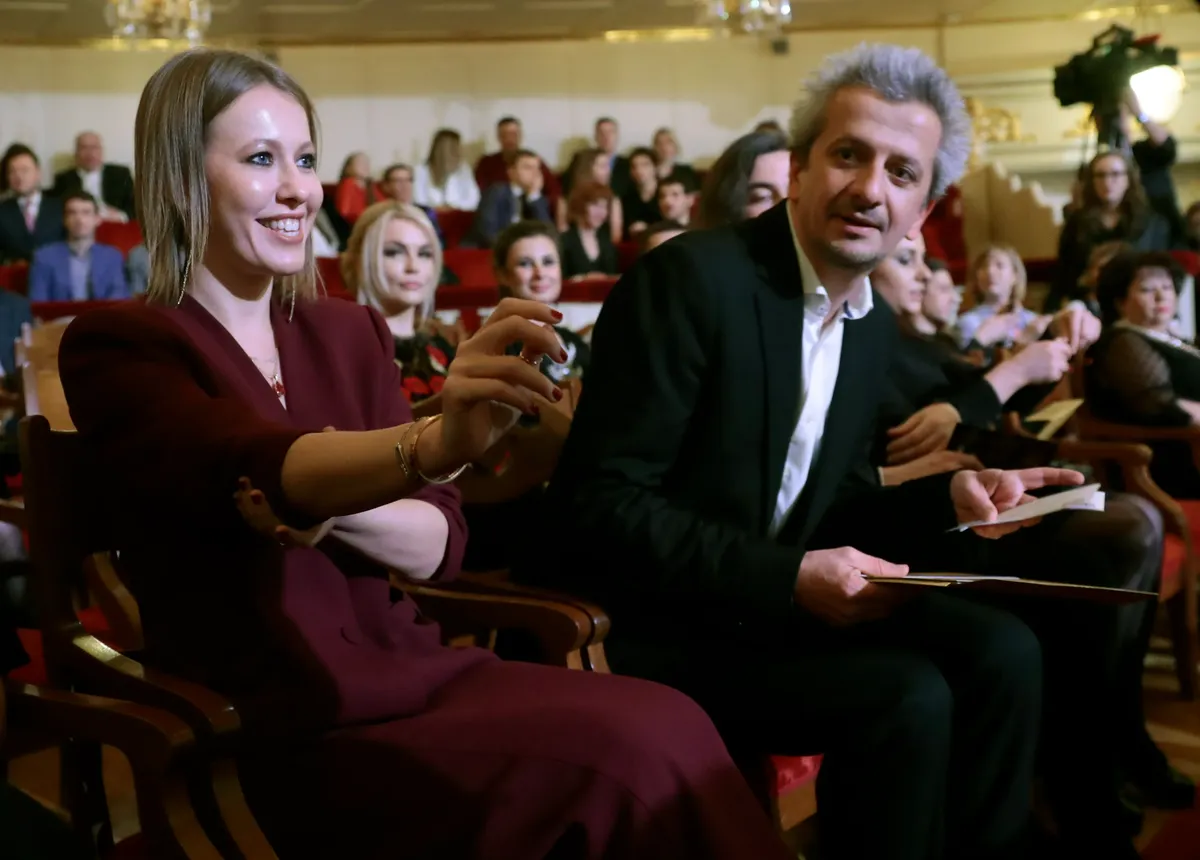
The question of the director’s sincerity in his support for the mayor is not very interesting. In the end, we can’t get into the head of Konstantin Bogomolov. Moreover, it is impossible to assess the degree of influence from the side that the wedding with Ksenia Sobchak had on this transformation. More importantly another: for the culture of the 2010s, such a deal is the ability to work in exchange for declarative political loyalty-typical. Someone went to her for charity, such as Chulpan Khamatov and Nyuta Federmeser, someone for art. Sincerity can be played at will. Moreover, the deal turned out to be winning: a year after the mayor's elections, the mantis received the position of the head of the theater in Malaya Bronnaya. The director cannot refuse managerial skills: the theater support fund was created, and dozens of new performances appeared in the repertoire, which regularly collect full halls.
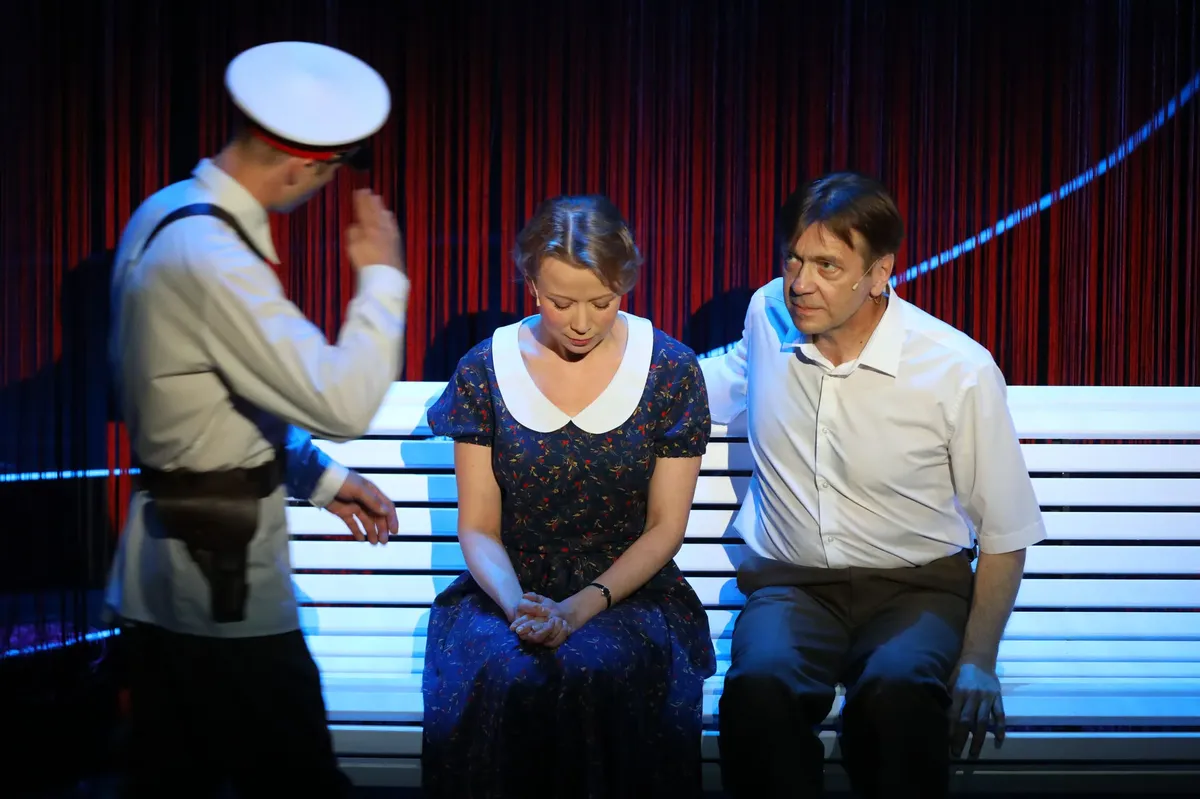
The scandal around Sobyanin’s support was not the most long -playing in the biography of Bogomolov. At the end of 2018, on the stage of the St. Petersburg BDT, Konstantin Bogomolov staged the play “Glory” based on the play of the Stalinist playwright Viktor Gusev. The plot is a typical conflict for the canons of that time between the good and the best heroes who are eager to save the hydroelectric power station in the distant city. The director collapsed theatrical critics for the justification of Stalinism. A popular characteristic of the performance was the review of Anton Khitrov’s critic: “There are no ironic quotes in the play, this is an honest social realism, but high -quality, modern, without archaic. The director does not wink at you, expecting you to wink yourself. " The Golden Mask festival officially refused to show the "glory" of Bogomolov. The reason is not enough explicit ethical condemnation of the crimes of Stalinism. Other critics saw in the work of the director just intellectual analysis, and not support for nostalgia for Stalin. For example, Dmitry Renansky wrote :
“The“ Glory ”set in the genre of a sociological experiment is needed as a reason for a large-scale sociocultural study, in which the public has two roles at once-a focus group and an independent observer.”
But even in the framework of this scandal, the Bogomolov held the position of "professionalism above politics." In many ways, anticipating the accusations, in an interview with 2018, the director noted : “I told the actors that it seems to me to be highly vulgar and vulgar to scribble in the fields of the plays of remarks like:“ And at that time in the Gulag ... ”or“ so many years have been shot so much ”. We said that our task is to create a clean product. That we have an old mechanism, dusty, rusted, and we must take this mechanism, repair it, clean it - and get it to earn it. ”
If in the early 2010s Konstantin Bogomolov is an oppositionist and a scandalous director, then by the beginning of the 2020s he had already become a completely respectable artist and a successful leader of the theater. He has his own audience, quite large, attention of colleagues, respect for the authorities. It turned out that for this it was only necessary to abandon political ambitions and work.
The third stage. Public intellectual
- Ten years ago, when you worked at the Moscow Art Theater, we started a conversation with Ostap Bender's question: “Your political credo?”
“And what, interesting, I answered?”
- What are you advocated for personal freedom. Everywhere.
- It is unlikely that I will repeat it now. Not because I am opposed to freedom, no. But the priorities have changed. It is important to work today. Here is my current political credo. Work!
This quote from an interview with TASS with Konstantin Bogomolov of 2023, at first glance, once again confirms what the director learned over the previous decade. But this will be a wrong interpretation. A deliberate refusal to participate in politics and professional conformism cannot exist in a vacuum: at some point, he has to look for new ways to justify himself. And at that moment, so as not to continue to participate in politics, she has to deal with. This is the key difference between the new stage in the public career of Bogomolov, which began with the publication of the Manifesto of Europe 2.0 from those times when he supported Sobyanin in Novaya Gazeta.
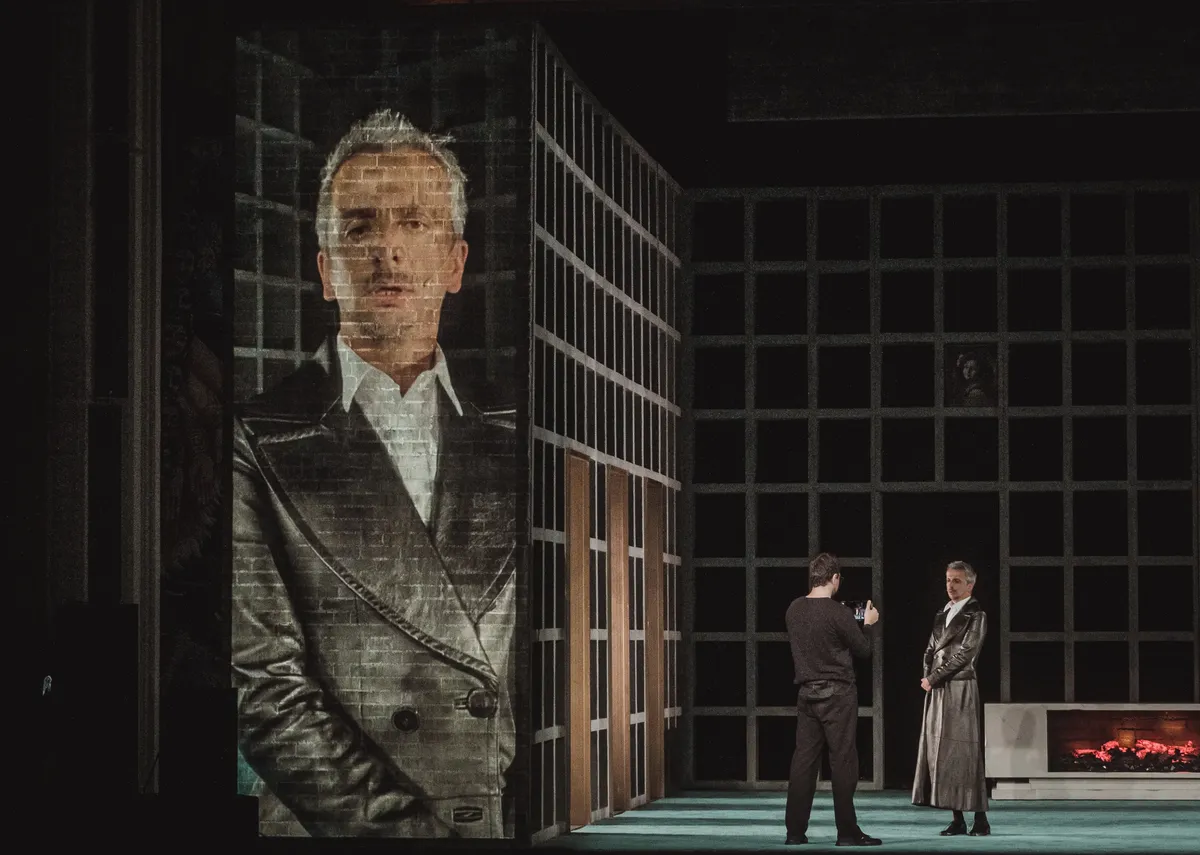
To support the mayor, it is enough to participate once in his PR campaign, but in order to become the leader of opinions and maintain its privileges, politics has to be engaged constantly. So Konstantin Bogomolov became a militant defender of “professionalism”, looking for political, moral and historical foundations for this.
To retell the texts of Konstantin Bogomolov, which he wrote during this time, makes no sense. Partly they are already by ear. The Pandemia of Coronavirus, and then the war pushed scandals in art into a distant plan. More importantly another: Bogomolov is now pronouncing his career and journalism, and maybe forms a social contract between creative intelligentsia and power. The director’s position gives him such an opportunity. He is one of the largest theatrical artists who remained in Russia, an intellectual, a media person, recognized as the state, and besides, the head of the theater, that is, in a sense, has an “administrative resource”. In the last performances of Bogomolov, before the war, both the Moscow intelligentsia and Dmitry Peskov sat in one hall. And in the play “On any sage” in the final, the heroes said that “there is no Ukraine, everything is Russia”. True, with the outbreak of war, the director removed these phrases from the production, supposedly fearing accusations of the conjuncture. The current Bogomolov contract with the authorities can be described in three words: professionalism, conservatism, formalism.
We have already said a lot about professionalism. We only add that this idea of Konstantin Bogomolov is greatly connected with the concept of the “God -chosen” of the artist. He costs above public problems, morality, and sometimes the law. Its main task is to realize the divine gift, his purpose. It is noteworthy that with the beginning of the full -scale war of Russia with Ukraine, the mantis persistently began to show that he remained in Moscow and was not going to leave. Reacting to the article by Anton Khitrov about the director Andrei Molich, Bogomolov directly said :
“The artist’s power is a gift. This is talent. Its absence is pushing into the sociality and ideology of serving the agenda. Its presence pushes alone. ”
In other words, the old division of people into a crowd and artists for Bogomolov is quite relevant. Such a formulation of the question logically leads us to the idea of a “complex person” and to the values of conservatism.
The first software text of Bogomolov, “The abduction of Europe 2.0”, just became the manifesto of conservatism. Europe was mired in attempts to create an absolutely safe society and destroyed a creative personality. Russia should become genuine Europe, where freedom of spirit and a complex person will win. Funny, but already with the outbreak of war, journalist Andrei Pertsevwrote that there are similar ideas in the presidential administration. However, immediately after the publication of the manifesto of Bogomolov , Vyacheslav Surkov was suspected of his authorship . Сам экс-идеолог администрации президента на текст Богомолова ответил немногословно: «Костя теперь против Навального. And this is the main thing. И это очень хорошо».
Ничего ужасного в самом слове «консерватизм» нет. Но в интерпретации Богомолова буквально уничтожается любая возможность политического существования. Оно прямым текстом отменяется за ненадобностью. Например, уже в статье «Диетическое горе»2023 года Константин Богомолов пишет: «Надо отбросить презрение к своей стране и своему народу и услышать гул истории и голос людей». Положение художника в таких условиях он проговорил в следующей статье «Я умру, а вы останетесь?» , объясняя пагубность эмиграции: «Для художника это омертвение таланта. Он всегда и неизбежно питается соками родной речи и родной культуры, родных пространств и пейзажей, звуков и запахов».
История в таком понимании — это рок, с которым можно только смириться. Это мистическое оправдание конформизма как раз и растет из предпосылки, что агрессивный профессионализм, не замечающий ничего кроме своей работы, становится единственной точкой зрения.
Фатализм и защита власти вполне предсказуемо подталкивают и к следующему шагу, к формализму. Я имею в виду подход к искусству, где эксперимент со средствами выражения становится ключевым, а его задачи просто ситуативны. Вот отрывок из выступления Богомолова на петербургском экономическом форуме о фильме «Александр Невский»:
«Эйзенштейн получил возможность делать кино так, как он его чувствует. По заказу государства? Yes. Неся определенные ценности? Yes. Но при этом ему была предоставлена абсолютная свобода формотворчества, и он выдавал грандиозный контент».
С государством несложно договориться: достаточно просто сделать в произведении ясное читаемое верноподданническое содержание. Но ведь для художника главное работать, получить «свободу формотворчества». Тогда и несложно пойти на сделку с государством.
Такая сцепка идей — вполне продуманное предложение для артистов, оставшихся в России. Оно избегает многих противоречий, моральных вызовов, но при этом не связывает себя напрямую с агрессивной повесткой сегодняшнего дня и войной. Скорее оно предлагает способ продолжать успешно жить в таких условиях. Эффективность ее измерить пускай и сложно, но легко поверить, что такое предложение будет востребовано. Константин Богомолов во многом стал типичным представителем культурной индустрии: в молодости был оппозиционером, а теперь работает на больших государственных проектах, боится «культуры отмены» и верит в роль «великого художника».