
Translated material
Stalker state: how authorities use the facial recognition system against dissenters and what the ECHR thinks about it
Publication date: 07/21/2023
On July 4, 2023, the European Court of Human Rights issued a ruling expressly condemning Russian police's use of facial recognition against dissent. However, Russian authorities are increasing the pace of repressive use of technology, and Russian courts, unlike the ECHR, do not see any violations in this. We tell you how Russia justifies surveillance of activists and why the ECHR considers such a practice unacceptable.
OVD-Info is aware of 595 cases of using the facial recognition system (FRS) against dissenters, of which 141 were used for preventive detention. The SRL was also used to search for those subject to mobilization. In addition, they are now planning to equip cameras at the Russian borders with a similar function. In the spring of 2023, it became known that Kyrgyzstan had also joined the system: now, if Russia has put a person on the CIS wanted list, then he can be tracked there too.
City video surveillance cameras, cameras at entrances or on metro turnstiles, and even some portable video recorders can be equipped with a facial recognition function.
On July 4, the ECHR issued a ruling in the case of Glukhin v. Russia. The court found that the use of the system to detain a picket participant violates the right to privacy and freedom of expression. The applicant, “Unlimited Protest” activist Nikolai Glukhin, was detained by police in a Moscow metro car in August 2019. According to them, Glukhin was wanted, which SRL informed employees about.
At the police department, Glukhin learned that he was detained because a few days earlier he was traveling on the subway with a life-size figure depicting political prisoner Konstantin Kotov with a poster describing his criminal case. Police officers qualified Glukhin's actions as an uncoordinated single picket with a prefabricated structure and drew up a protocol on an administrative offense under Part 5 of Article 20.2 of the Administrative Code.
From the case materials, it became known that employees of the Center for Combating Extremism (CPE), “during monitoring the Internet,” found a video in one of the Telegram channels in which Glukhin was holding the figure of Kotov in his hands. Then, to establish the identity and location recorded on the video, the CPE officers carried out operational search activities (which ones were not specified). They further demanded CCTV footage to track the movement of the complainant.
In the Russian courts, the applicant drew attention to the fact that the use of operational investigative measures in his case violated even Russian legislation: according to Federal Law dated August 18, 1995 No. 144-FZ “On operational investigative activities,” such actions can only be carried out to identify, suppression and detection of crimes, but not administrative offenses. The CPE staff committed an unjustified invasion of privacy.
Russian courts did not agree with Glukhin’s arguments, and he appealed to the ECHR. The Prosecutor General's Office submitted its objections to the European Court, in which it confirmed that Glukhin was not wanted, but still insisted on the legality of the operational search activities.
The ECHR sided with Glukhin and noted that in Russia there is no legal framework limiting the use of facial recognition technology. The court found that the state violated the applicant’s right to expression by using excessive means of surveillance using a facial recognition system against the participant in the peaceful picket.
Despite the fact that neither the case materials nor the objections of the Prosecutor General’s Office openly stated that this particular system was used in relation to Glukhin, the ECHR considered this fact proven.
The court, relying in particular on the OVD-Info report , came to the conclusion that the applicant’s explanation, as well as the instructions to carry out operational search activities, were sufficient evidence of the use of SRL. This decision will certainly affect the consideration of similar cases in the ECHR.
OVD-Info is engaged in appealing the use of SRL not only in the European Court, but also in Russian courts. At the end of 2022, with the help of OVD-Info, the detainees filed 18 administrative claims, in which they demanded that the detentions and the use of Sfera SRL in the Moscow metro be declared illegal. All claims relate to preventive detentions , the number of which has increased significantly in 2022: people who, according to the authorities, could potentially go out to protest, were detained on public holidays and other “dangerous” days in order to prevent possible actions, regardless of whether they were planned such or not.
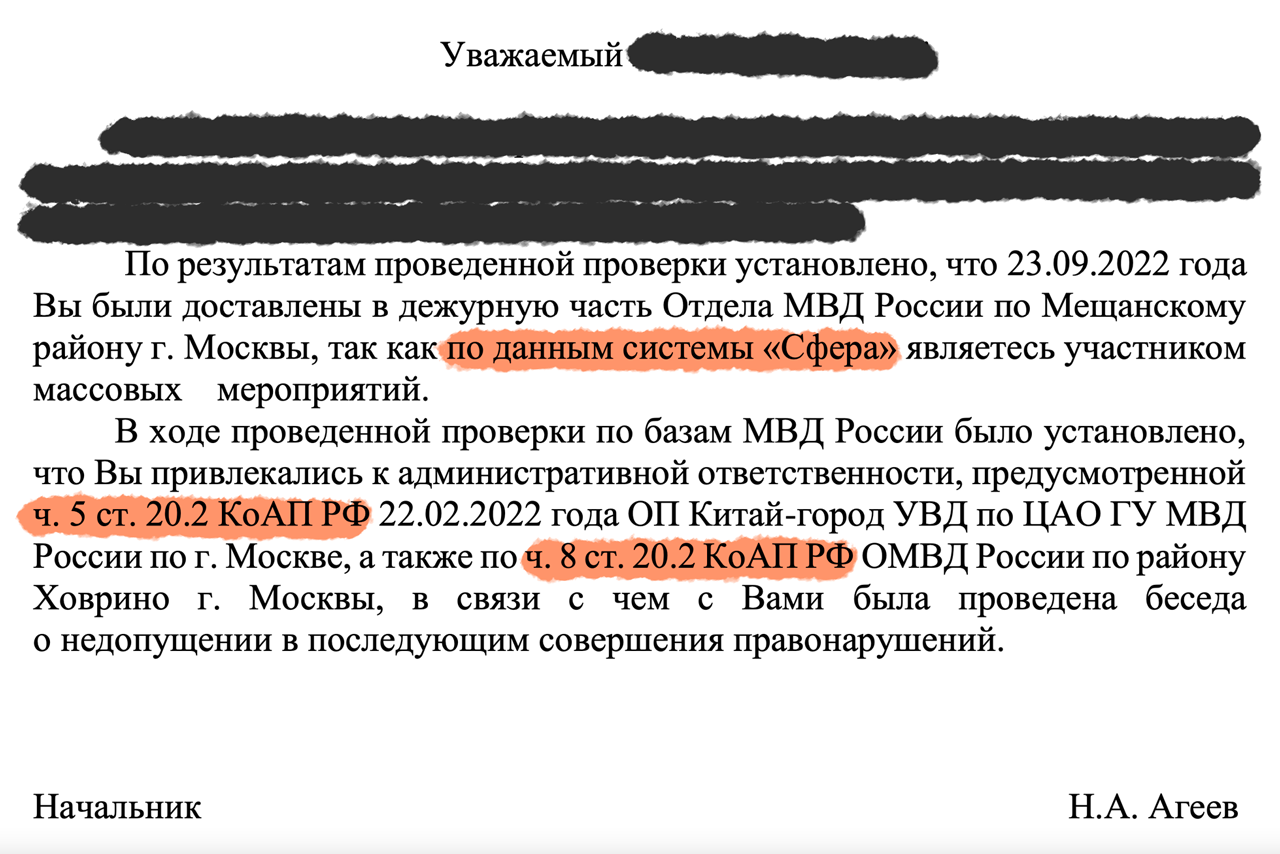
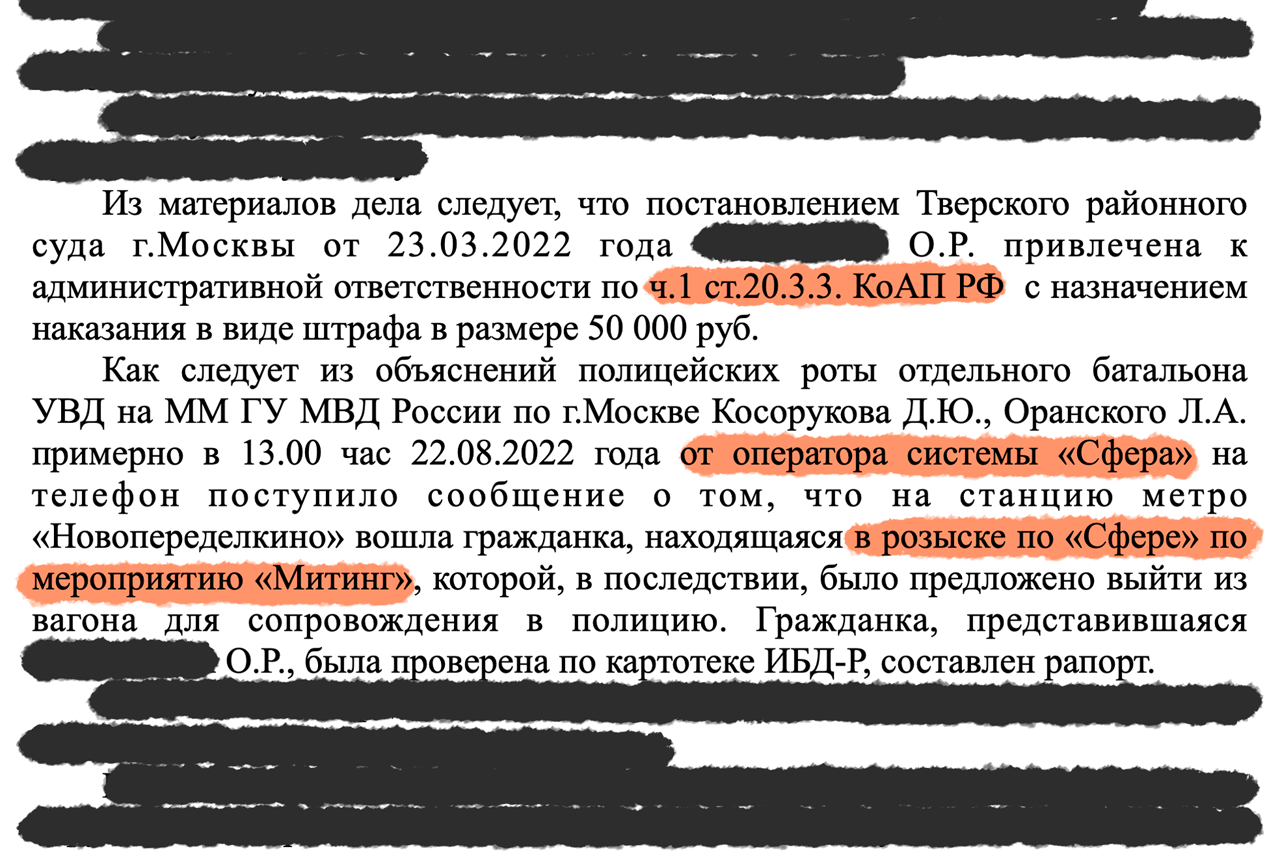
In some cases, the police admitted that the detainee was wanted because he had previously been prosecuted under Article 20.2 of the Code of Administrative Offenses of the Russian Federation, which punishes participants and organizers of public events, or under Article 20.3.3 of the Code of Administrative Offenses on discrediting the Armed Forces of the Russian Federation .
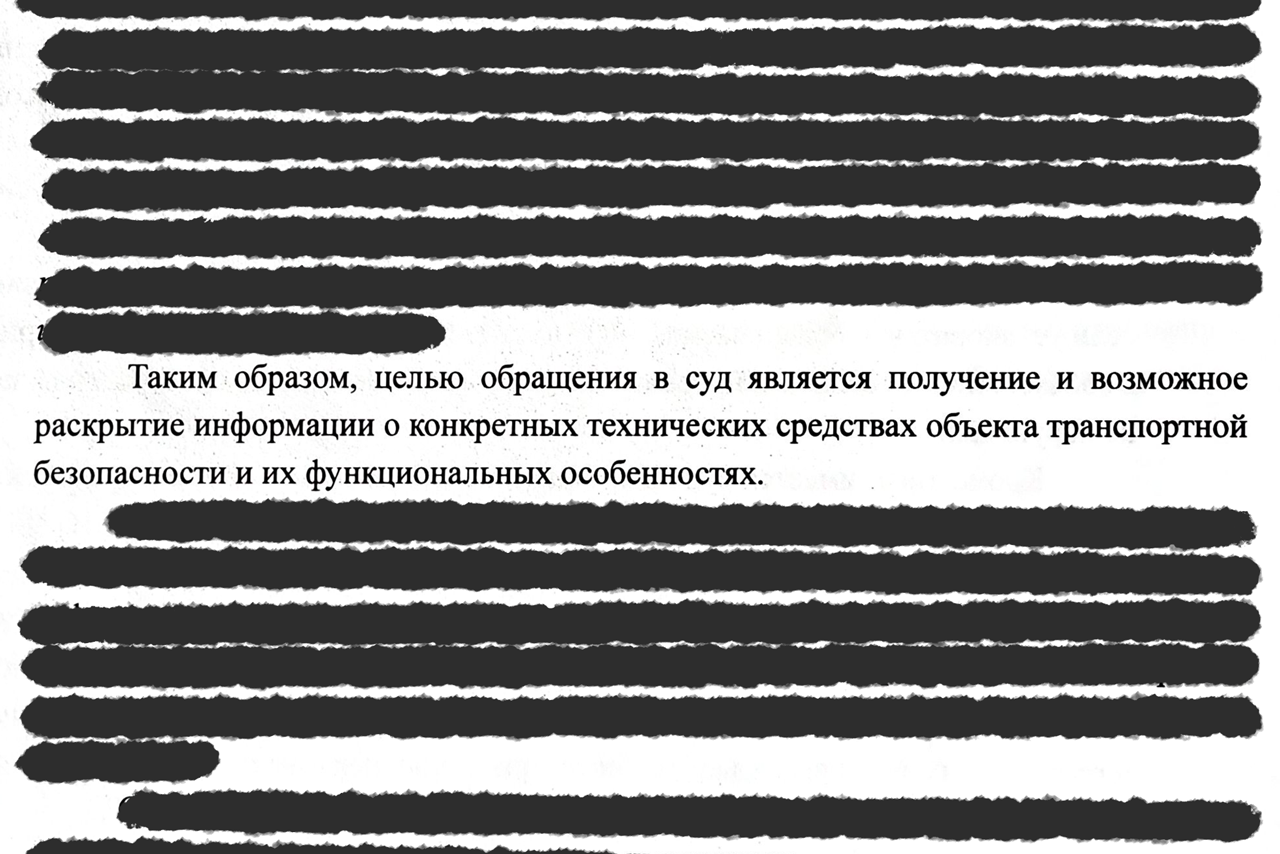
In turn, the Moscow Department of Transport confirms the use of SRL in the Moscow metro and insists on its legality, including for the search and detention of activists. However, the rules, grounds and restrictions on the use of the system are not available to the general public. Even in court, it is impossible to find out why a person was included in the Sphere lists and whether he is still on these lists. In the meantime, police representatives claim in their legal objections that the plaintiffs are no longer wanted, but this cannot be verified.
Thus, government agencies themselves record in their documents that SRL is used to suppress freedom of expression and freedom of assembly. Such recognition is important evidence of the oppressive use of the system.
Inclusion in Sphere's wanted lists means that a person's location can be determined wherever there are cameras with facial recognition. Some detainees were shown printouts from cameras at the entrances of their residential buildings and metro turnstiles, and one of the court decisions directly states that the person was “put under surveillance.”
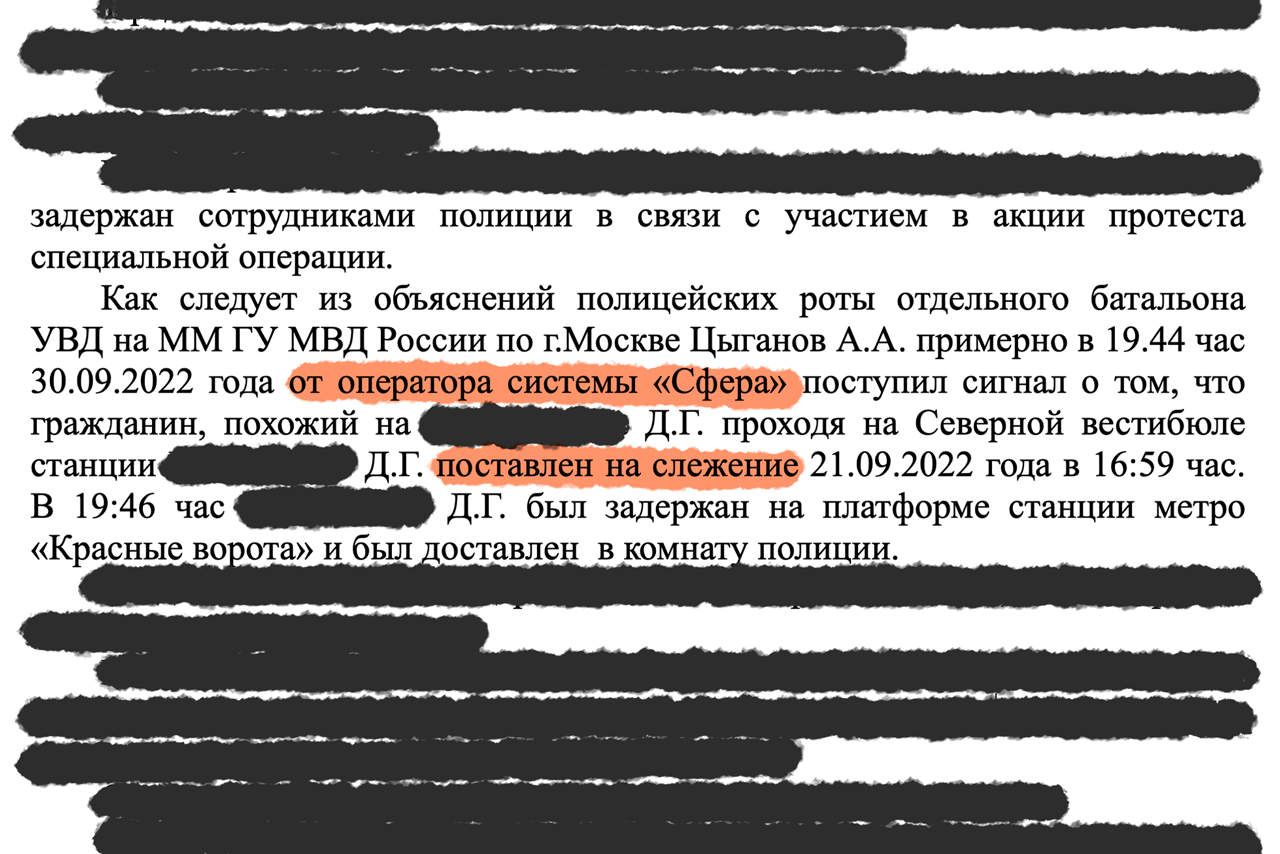
Russian courts, unlike the ECHR, did not see in this either discrimination, a violation of the right to respect for private life, or an encroachment on freedom of speech and freedom of assembly. In all cases, the courts of first instance refused to recognize the detentions and use of SRL as illegal. OVD-Info continues to appeal these decisions on appeal. If the Russian courts do not hear our arguments, then we will turn to the UN bodies and mechanisms, with which the Russian authorities continue to communicate. If the violation of rights took place before September 16, 2022, then the right to appeal to the ECHR also remains.
Most likely, the ECHR ruling in the Glukhin case will not immediately help solve the problem of politically motivated use of facial recognition technology in Russia. Although Russia is required by its international obligations to comply with European Court rulings in cases involving rights violations until September 16, 2022, it has unilaterally refused to do so.
At the same time, this decision of the ECHR cannot be called useless. It draws attention to the problem and confirms the correctness of Nikolai Glukhin, who was wrongfully detained. It is important that the court gave a very high-level expert assessment, which is mandatory for all member countries of the Council of Europe, and such an assessment contributes to the formation of pan-European and then global human rights standards in this area.
If the authorities used a facial recognition system against you because of your expression of opinion or participation in rallies, we are ready to help you appeal this in court and international bodies - write to [email protected] .