
Translated material
“There will be a disaster” - Layout
"There will be a disaster"
There will be enough HIV medicines in Russia for only a third of patients in 2023
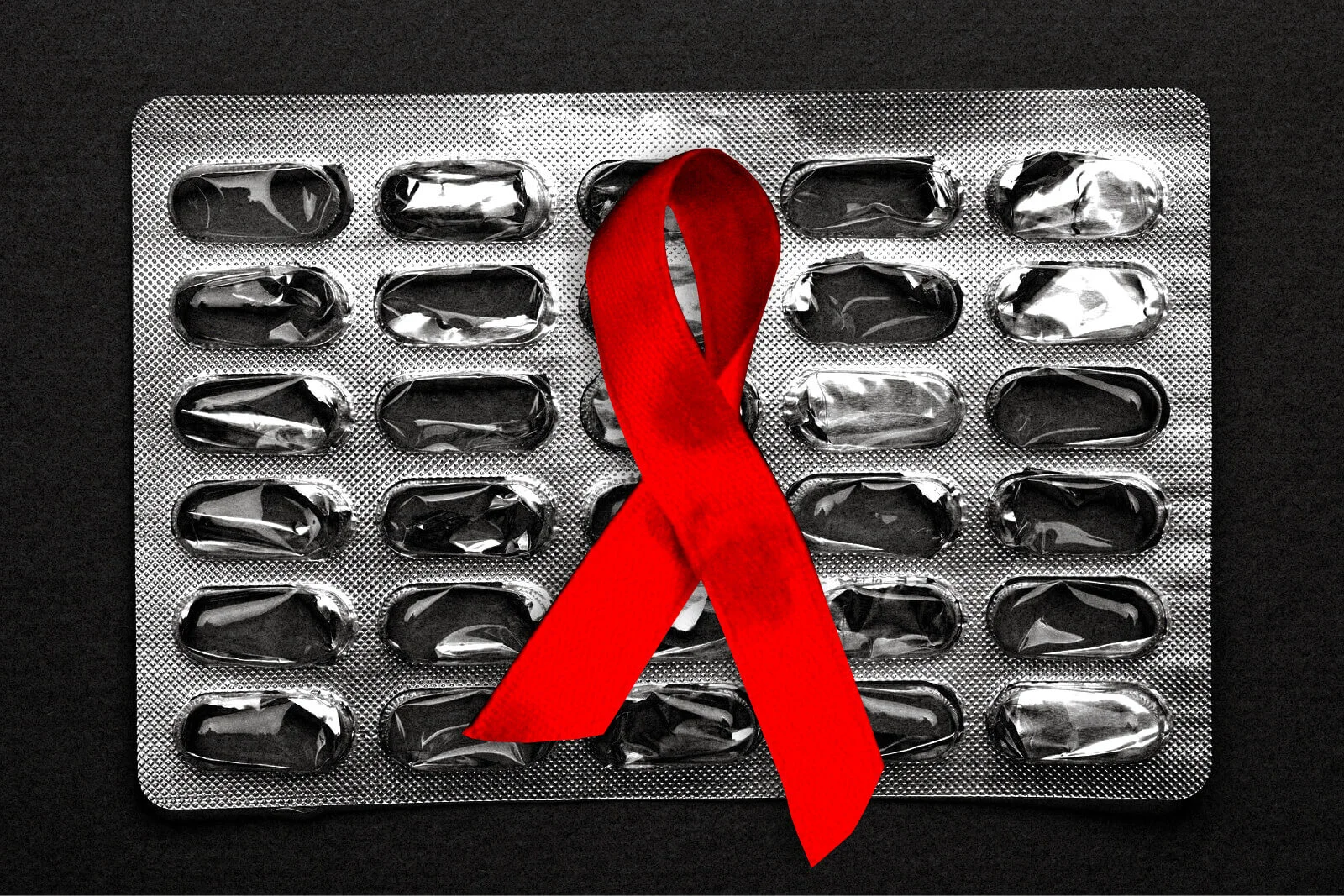
Only 30% of all Russians with HIV who need treatment will receive medications in 2023 - unless the government allocates additional money. Russian HIV activists say that serious disruptions in the supply of life-saving ARV drugs have already begun. Last year, the Russian Ministry of Health purchased 566 thousand courses of antiretroviral therapy - and this was barely enough to reach new supplies. The annual budget for 2023 is enough to purchase only 292 thousand courses, and the number of patients in need of therapy, including in the occupied territories, has only increased. Without additional funding, shortages of medicines for HIV+ people will become unprecedented - not seen since 2017.
In order not to miss new texts from “Layout”, subscribe to our telegram channel
Outages every year, but these are worse
In Russia and the occupied territories, massive interruptions began in the provision of antiretroviral therapy (ART) to people living with HIV infection: about 200 complaints were received on the Pereboi.ru website from April to July 2023. Activists defending the rights of people with HIV told Vorstka that the disruptions could become catastrophic and the largest in the last six to seven years.
Disruptions in the provision of antiretroviral therapy in Russia are not a new problem. In one form or another (usually not tragic), they happen almost every year due to underfunding and logistical difficulties. The last large-scale disruptions occurred in the country in 2016–17, when the ART procurement process was centralized: procurement was transferred from the regional level to the federal level.
Then, six years ago, problems with the distribution of drugs led to the fact that HIV-positive Russians began to hold protests, including street ones . They drew the attention of regional and federal officials to the fact that poor provision of antiretroviral therapy is contributing to the HIV epidemic in Russia. Because a person who does not receive treatment can infect other people, and his own health can deteriorate - even death .
Once centralized purchasing was more or less in place, there were fewer disruptions. Even if they happened or were planned, scarce drugs were purchased at the expense of regional budgets or they could be found in activist mutual aid first aid kits.
The interruptions that activists have been noting since the spring of 2023 and which will not stop unless the therapy budget increases, will not be able to be “covered” by regional purchases or reserves from mutual aid first aid kits.
More patients, less money
According to the specialized research department for the prevention and control of AIDS of the Central Research Institute of Epidemiology of Rospotrebnadzor, by the beginning of 2022, there were 1,137,596 patients living in Russia with a laboratory-confirmed diagnosis of HIV infection. 660,821 patients received antiretroviral therapy in 2021 (including 58,105 people in prison).
Data on the number of HIV-positive residents of the Russian Federation at the end of 2022 have not yet been published , but in the fall of that year, after the signing of agreements “on the admission of the DPR, LPR, Zaporozhye and Kherson regions into Russia,” people with HIV who need to be provided with ART at the expense of the Russian budget became even larger, and the annual budget for the purchase of therapy was not increased.
In total, 42 billion 500 million rubles were spent on the purchase of ARV drugs in 2022, which made it possible to provide the largest number of patients in all the years of monitoring the epidemic in Russia, the Treatment Preparedness Coalition reported . But it was possible to achieve such treatment coverage (566 thousand courses) only because in 2022 the Ministry of Health “borrowed” 8.5 billion rubles for ART from the 2023 budget . Thus, the 2023 budget for drugs for people with HIV was significantly reduced, and additional funds were never allocated.
Activists and representatives of patient associations and organizations from 32 cities of Russia appealed to the Government, the State Duma and the Ministry of Health of the Russian Federation with a demand to take measures to prevent shortages of medicines in 2023.
“In 2023, the amount of contracts of the Russian Ministry of Health for ARV drugs (for the remaining funds of the 2023 budget and for three-year existing contracts) amounted to only 21.5 billion rubles, with a volume of drugs of 292 thousand courses,” says this letter, which is at the disposal of “Vestka”. — At the moment, the entire planned amount of federal budget funds for 2023 has been spent. But the volume of purchased drugs will cover only about 30% of the number of patients in need of ARV therapy .”
Already in the spring of 2023, people with HIV from different cities of Russia began to complain that they were not given the medications they were taking and were replaced with cheaper ones - often with ones that were not suitable for them due to side effects.
Patients write
Expand ↓Patients write that regional AIDS centers lack many ARV drugs.
Atazanavir 200 mg, darunavir 600 and 800 mg, ritonavir 100 mg, tenofovir 300 mg, elsulfavirine 20 mg, emtricitabine 200 mg, efavirenz 400 mg and 600 mg, dolutegravir 50 mg, raltegravir 400 mg, etravirine 200 mg, combination rilpivirine/tenofovir/emtricitabine.
Interruptions are observed in 18 regions of Russia, as well as in the institutions of the Federal Penitentiary Service and the FMBA, and the most complaints were sent by residents of the unrecognized “DPR”, St. Petersburg, Leningrad, Sverdlovsk and Tyumen regions.
One of the activists, on condition of anonymity, told Vorstka that, according to her data, regions have repeatedly reported drug shortages to the federal Ministry of Health.
“Judging by the answers that patients receive, the Ministry of Health of the Russian Federation “advises” the regions to take care of the drug supply for patients themselves ,” she said. “But we all understand that not all regions have the money for this. Maybe only Moscow and the Moscow region won’t have big problems, because their budgets are completely different.”
Subjects of the Russian Federation purchase only about 5% of all ARV drugs using funds from regional budgets, and some regions do not conduct such purchases at all, activists emphasize.
Disruptions due to war in the “new” territories
At least 20 messages about non-dispensing of therapy were received on “Interruptions. ru” from residents of the unrecognized “DPR” and three from the occupied part of the Kherson region.
“With the outbreak of hostilities, we began to have problems with the supply of therapy in Donetsk. Before SVO, everyone received therapy from Ukraine. The doctor, having entered into my situation, apparently, gave out the remains of that [still Ukrainian - approx. “Layout”] therapy six months in advance, the shelf life of the tablets is until 05.2023. We’ll have to drink “overdue” because we have no choice. The AIDS center doesn’t know when there will be supplies from Russia and what kind of therapy there will be,” wrote one of the patients in June 2023.
“ I live in Donetsk. And I always lived here. I didn’t want to write until recently - I was afraid to set the doctor up. But at the moment the situation is such that we have no drugs. At all. The doctor said that therapy cannot be given even to those who have poor immune systems and a high viral load ,” another patient wrote in early summer. “The doctor told me, come, we’ll give you overdue drinks again, keep drinking.” The rest of the therapy is even worse. A friend was in Makeyevka, they told her: “Here you have a month of therapy, it’s not clear what kind of therapy, and in a month, if they don’t deliver anything, we’ll give you phone numbers and you can buy it.”
As for the Kherson region, the correspondent of “Vestka” took a personal part in delivering therapy for a local resident to one of the settlements still under the control of the Russian Federation. A relative of this patient, living in Kyiv, turned to the journalist for help. Medicines had to be sought from volunteers in St. Petersburg, then transferred to annexed Crimea, from where other volunteers were able to give it to those in need.
In response to requests from patients, the federal Ministry of Health reported (copies of the responses are at the disposal of Vestka) that “in the absence of drugs supplied centrally from the budget of the Russian Federation,” regions must independently provide patients with drugs. However, according to activists, neither the “DPR” nor the pro-Russian “authorities” of the Kherson and Zaporozhye regions posted auctions for the supply of therapy on the government procurement website .
How to prevent catastrophic outages and what they will lead to
Over the past year, there have been more patients at AIDS Centers in need of therapy, but the drugs purchased from the 2023 budget were already used last year, says one of the activists in the movement for the rights of people with HIV. “That’s why we say that something unprecedented, if not catastrophic, is happening intermittently this year. Hence our conclusions that it will be an ass,” one of the activists of the movement for the rights of people with HIV told Vorstka.
Activists in a letter to the Russian Ministry of Health, the Government and the State Duma proposed taking emergency measures to prevent impending disruptions “with far-reaching negative consequences.” These measures include negotiations with manufacturers of ARV drugs sold in the Russian Federation on price reductions and additional purchases using borrowed funds from the budget provided for 2024.
But without increasing the annual budget for ART - by at least 15 billion - the critical situation with interruptions will be repeated .
“First of all, this will negatively affect the results of HIV treatment and will lead to an increase in new cases of infection,” activists predict in a letter to the Government of the Russian Federation, the Ministry of Health and the State Duma.
These predictions, judging by the complaints of people with HIV, are already coming true. Despite the threat to health, people stop taking medications that are not suitable for them due to severe side effects - or are forced to buy the necessary drugs themselves instead of those offered to them at AIDS Centers.
"Hello! They don’t replace the therapy, the old one is not suitable - I can’t work, there are strong side effects,” a patient from Bashkortostan wrote on Pereboi.ru. “ As a result, 5 months without therapy .”
Cover: Dmitry Osinnikov
Rita Loginova