
Translated material
From session to session
The State Duma found the bills before the vacation - on an increase in draft age, fines for violation of martial law and the formation of a positive attitude to work in children
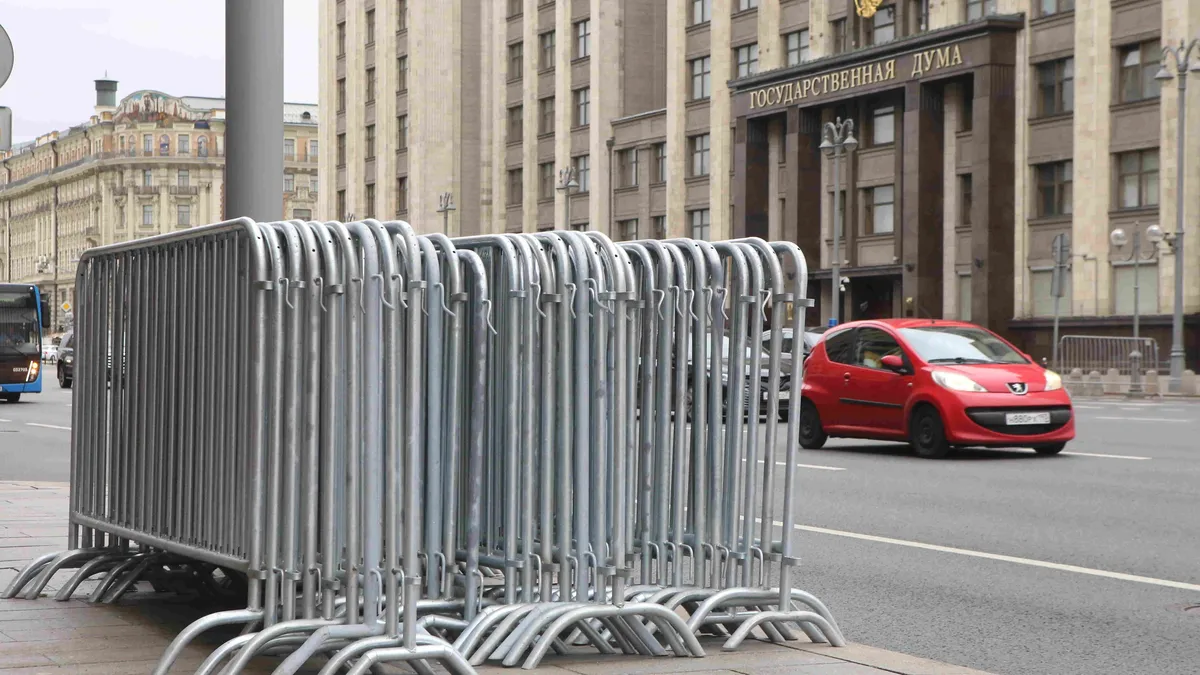
Photo: Boris Alekseev / Anadolu Agency / Getty Images
State Duma deputies today adopted the last bills in this session and went on vacation until September 5. In total, in the final readings, they approved 500 laws, said Speaker Vyacheslav Volodin. A number of bills are associated with conscripts and mobilization.
The new newspaper Europe has collected in one material the most important initiatives that the lower house of the parliament approved for the spring session.
From January 1, people from 18 to 30 years will be able to call for military service on January 1
The State Duma deputies on July 25 immediately in the second and third reading adopted a bill expanding the boundaries of draft age by three years. From January 1, 2024, people from 18 to 30 years old will fall under the call for military service. The new law will not apply to citizens who will be 27 years old before the end of 2023 - they will become military service and will not be called up next year.
Initially, a gradual increase in the lower border of draft age was planned: from 19 to 30 years (from January 1 to December 31, 2024); from 20 to 30 years (from January 1 to December 31, 2025); from 21 to 30 years (from January 1, 2026).
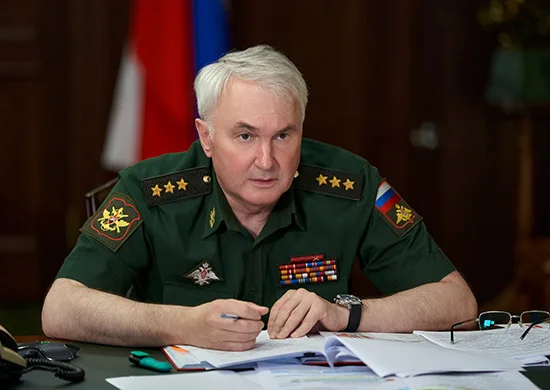
However, the head of the defense committee, Andrei Kartapolov, said that the lower limit of draft age decided to leave the former, "because there are a lot of guys who wants to go to serve exactly at the age of 18."
Lawyer Alexander Porruk noted in a conversation with RTVI that students are now entering the undergraduate after school, then to the magistracy and graduate school, which they usually finish at 27 years old - that is, they use a delay from the army for the entire draft period. Now, after graduation from graduate school, there will be a window at three years: and if the conscript does not receive the status of a candidate of science, he will need to go to the army.
In addition, Vladimir Putin signed a law on an increase in five years of age in the reserve of certain categories of military titles.
The innovation will affect soldiers, sailors, sergeants, foremen, warrant officers and midshipmen. The maximum age for military personnel of the first category is proposed to increase from 35 to 40 years, the second category - from 45 to 50 years, the third - from 50 to 55 years.
The document will also increase the age of stay in reserve: for senior officers - from 60 to 65 years, for junior officers - from 55 to 60 years, for military personnel of other ranks - from 45 to 55. The maximum age for senior officers will remain unchanged (70 years).
Pilies for failure to appear in the military enlistment office
In the State Duma, they approved a bill that significantly increases the amount of the fine for failure to appear at the military registration and enlistment office on the agenda. Now, if you do not come there without a good reason, you will have to pay from 10 thousand to 30 thousand rubles (now - from 500 rubles to 3 thousand).
If a citizen does not inform the military registration and enlistment office about a change in marital status, education, place of work, study or position, about moving to a new place of residence - he will need to pay from 1 thousand to 5 thousand rubles (now - from 500 rubles to 3 thousand). The conscript who replaced the place of residence during the draft and did not inform the military commissariat about it will face a fine of 10 to 20 thousand rubles.
For evasion of a medical examination, deputies approved fines in the amount of 15 to 25 thousand rubles (now up to 3 thousand rubles).
In addition, the deputies adopted amendments to introduce fines of up to 500 thousand rubles for non -ordering the assistance to the military registration and enlistment office when announcing mobilization and to increase to 400 thousand rubles of fines for failure to submit to the military registration and enlistment office of the lists of citizens for the initial registration.
As the lawyer and creator of the Ark project Anastasia Burakova notes , changes can be a reaction to attempts to the first wave of mobilization by some employers to save their employees.
In the case of the adoption of the law, he will enter into force on October 1, 2023. The State Duma also adopted amendments to ban the departure from Russia from the day the agenda is sent to work or study and from the moment of its placement in the Unified Register of Military Registry.
At the same time, as Burakova noted, the register does not work yet. “Given the very crooked interdepartmental interaction, low digitalization of the military enlistment offices in the regions and cuts, this failed to crank up this quickly,” she commented.
The author of the amendments, the chairman of the State Duma committee on defense Andrei Kartapolov said before the vote: “Amendments to the law“ On mobilization preparation and mobilization ”are very sensitive. They are sensitive in that this law is written under a large war, for general mobilization. And now this big war is already smacking. And we all continue to look for, who should we remove from there, whom to protect? Yes, there will be no one to protect! "
According to Ivan Chuvilyaev, the press secretary of the “go forest” movement, which helps the Russians avoid mobilization, little will change with the adoption of amendments. “Young people, just as previously, will avoid calls, go to institutes, go to magistracy or graduate school, investigate their medical stories,” he said to “important stories.” In a “call for conscience” in a conversation with journalists, the publication noted that Russians still have the opportunity to achieve permission to alternative civil service (AGS). “It is possible to resist sending to the army and then to the front - and everything will depend on the ability of a person to protect his rights, his stubbornness, courage and sequence,” the lawyer believes.
Governors will be able to form their military companies
In the framework of the same amendments to the law on improving the draft age, State Duma deputies decided to give the governors the right to create “state unitary enterprises” to “protect public order” during mobilization, martial law or wartime. They will be able to do this at the expense of the budget of the Russian Federation with the involvement of regional money. It is assumed that such formations will assist the FSB, the Ministry of Internal Affairs and the military command bodies “in the protection of public order, security, border protection”, as well as in the fight against sabotage and intelligence groups. Governors will be able to receive military small arms from the Ministry of Defense of the Russian Federation and transfer it to their “enterprises”.
Such enterprises will be temporary. According to the law, they are abolished by decision of the President, and the weapons are transferred back to the Ministry of Defense of the Russian Federation or another power body within one month.
The amendments are issued as amendments to the law “On the action of permits in the field of weapons turnover and in the field of security activities, as well as on the features of legal regulation in these areas in the territories of the DPR, LPR, Zaporizhzhya and Kherson regions”. It is proposed to rename the law in "the features of legal regulation in the field of weapons and in the field of security activities, as well as measures to strengthen the protection of public order and ensure public security in certain constituent entities of the Russian Federation."
Tighten the legislation on GOSTain
The deputies decided that another reason for refusing to admit to state secret should be the presence of a person or his close relatives of foreign citizenship or a residence permit in another country.
In addition, the chairmen of the chambers of the Federal Assembly will decide on restricting the right to leave deputies admitted to GOSTIN. Deputies of the State Duma and the legislative bodies of the constituent entities of the Russian Federation, senators, judges, heads of municipalities and lawyers will also be obliged to notify the FSB bodies and the foreign intelligence service.
State Duma deputies propose to introduce into the law the concept of “regime of secrecy” - a set of requirements, rules, organizational, technical and other measures aimed at protecting the information constituting GOSTain.
It is assumed that the president will be able to change the procedure for admission to GOSTIN in periods of mobilization or martial law. At the same time, citizens called up for military service will not have the right to refuse to issue admission - it will be formalized without their consent.
Gosizman and deprivation of citizenship
Putin on April 28 signed a law on life imprisonment for state treason. On April 18, the State Duma adopted appropriate amendments to the Criminal Code. Prior to this, the punishment under the article on Gosizmen was from 12 to 20 years.
Putin also signed the updated law “On Citizenship”. Amendments were added to the document that allowed to deprive acquired citizenship if a person was found guilty of articles on cooperation with an “unwanted organization”, “discrediting” of the RF Armed Forces, about violation of the territorial integrity of Russia, about evading the duties of “Inoage”, on public calls for extremism and a multiple violation of the rallies' law.
The right of the Russian Guard to have military equipment
The State Duma on July 19 immediately in three readings approved a bill on the right of the Russian Guard to have military equipment, including a difficult one. According to amendments, the law proposes to replace the term “weapon” with “weapons”, and the concept of “military equipment” is “military equipment”. The latter implies, as the explanatory note says, “various technical means that equip the troops (forces) for combat and daily activities (military equipment, technical means of managing the troops (forces), technical means of combat, technical and rear support, etc.”, the explanatory note says that there are already transport aircraft, combat helicopters and military helicopters, and the armed forces of the Russian Guard. Armored personnel carriers and that they are defined as “combat equipment”, and not as “military equipment”.
The authors of the bill - the chairman of the State Duma Committee on Information Policy, Alexander Khinshtein, the chairman of the State Duma Committee, Andrei Kartapolov and the head of the Security Committee Vasily Piskarev, emphasize that he will only bring the current norms of the Law “In accordance with reality” and eliminate existing gaps.
Occupied territories
The State Duma adopted 54 law aimed at integration in the legal field of Russia "DPR", "LPR", Zaporizhzhya and Kherson regions. For example, we are talking about bills “On Social Protection, Pension, Health Protection, Creation of Conditions for Business Development”. Volodin noted that the rapid adoption of these laws became possible "thanks to the experience in the integration of Crimea and Sevastopol in the legal field of the Russian Federation." During the autumn session, it is planned to consider three more bills from the sphere of “integration” of the captured territories.
About psychiatric care
The State Duma adopted in the third reading a bill introducing amendments to the law “On Psychiatric Assistance” - it is proposed to exclude 38 article from it, which obliged to create independent control over the activities of the PNI. Over the 30 years of the existence of the law, the service has not been created.
“Having an article from the law on the creation of a special service, independent of the supplier of services, the protection of the rights of people with mental disorders - violates the unspoken agreements that have existed between the state and society that, of course, the law can be violated, but if the truth gets out, you will answer. If there is no such service in the law, then there will not be a control method, ” commented on the amendments by the head of the Palliative Assistance Center and the founder of the Hospice of the Hospice of Vera Nyuta Federmeser.
Punishment for participating in the activities of NPOs not registered in Russia
The State Duma has adopted a bill that introduces responsibility for participating in the activities of a foreign non -profit or non -governmental organization that does not have legal status in Russia. For participation in the activities of such organizations, fines in the amount of 3 to 5 thousand rubles will be provided for Russian citizens, for officials - from 20 to 50 thousand, for legal persons - from 50 to 100 thousand. Foreign citizens will also be able to expel outside the Russian Federation. At the same time, criminal liability until two years of imprisonment will threaten those who have already received administrative punishment for a similar violation or have a criminal record for cooperation with foreign NPOs, whose activities are recognized as undesirable in Russia. For organizing the activities of such NGOs, they are going to introduce a punishment in the form of imprisonment up to three years.
"Foreign agents"
Putin signed two laws toughening control over "foreign agents". The first document introduces amendments to a number of federal laws. In particular, it involves the introduction of unscheduled inspections for persons interacting with “foreign agents”. In case of detection of violations of the legislation on “foreign agents”, the Ministry of Justice will make a warning with the order to eliminate them. The second document introduces fines for persons who have not eliminated the violation within the prescribed period: for individuals it will be up to 50 thousand rubles, for officials - up to 100 thousand rubles, for legal - up to 300 thousand. The bills were adopted by the State Duma on July 13.
According to the authors, at the moment, the legislation on “foreign agents” is controlled only by the activities of the “foreign agents” themselves, and not all persons who interact with them. This can lead to the fact that cooperating individuals can provide “foreign agents” with assistance in bypassing the established restrictions, according to the State Duma.
Prohibition of transgender transition
Since July 24, when Putin signed the law on the ban on the transgender transition, the document officially entered into force. The State Duma accepted it 10 days before. The Chairman of the State Duma Vyacheslav Volodin said that “the decision is protecting our citizens, children”, because, according to him, “the“ sex change operations in the United States over the past 10 years has become more than 50 times ”.
The document prohibits the registry office bodies to make changes to the human documents on the basis of medical certificates of “sex change”. In addition, the “floor change” by one spouse or both from this moment is a justification for the cancellation of marriage. This item has retroactive force, that is, it applies to marriages in which the spouse made the transition to the adoption of the law.
Recently it became known that in Irkutsk the court terminated marriage due to the transgender transition of one of the spouses. The head of the registry office of the Irkutsk region, Valery Mitusov, told how in 2022 a man and a woman entered into a marriage, and two days later the husband filed a statement to change the gender marker. “We turned to the prosecutor’s office and the court, the marriage was declared invalid. We turned to the State Duma, the Council of the Federation and the Ministry of Justice of Russia with a proposal to prohibit the change of floor and amend the legislation on the prohibition of adoption of children for people who have made a transgender transition, since often the reasons for this are departure from debts and taxes, unwillingness to go to the army, possible mental disorders, ”said Mitusov.
Another clause of the law signed by Putin prohibits couples in which one of the partners “changed the floor” and adopt children. This item has no return strength - the authorities are not going to take adopted children from transgender people.
Taxes
The State Duma deputies adopted in the final reading a tax bill for organizations in which the arithmetic average income for 2021 and 2022 turned out to be higher than 1 billion rubles. The exclusively sales tax will be credited exclusively to the federal budget and to be one -time.
The law in case of adoption will enter into force on January 1, 2024. The companies will have to pay 10% of the amount of profit excess until January 28, 2024. The authorities expect the fees to bring 300 billion rubles.
Taxes will not pay companies of the oil and gas sector and coal production; developers who implement projects involving citizens' funds through escrow accounts and who did not pay dividends in 2021–2022; credit organizations in respect of which on January 1, 2023 measures were taken to prevent bankruptcy; companies that in 2018 and 2019 did not have revenue from sales; manufacturers of agricultural goods; Small and medium -sized businesses created after 2020.
In addition, the State Duma adopted a bill on the same rate of income tax on an individual (personal income tax) for employees working for Russian companies remotely. Workers “on the remotes” located in Russia and abroad will pay a personal income tax of 13% or 15% with high income. The level of taxation will not depend on the tax residency. This applies to labor contracts, and civil law contracts (GPH).
Internet
On the last day of the spring session, July 26, the State Duma deputies adopted an amendment prohibiting to register on Russian sites with foreign e -mail. Since December 1, 2023, owners of Internet resources should be authorized by Russian users using one of the four ways: the phone number, through the “State Services”, a single biometric system or through an existing account at another Russian service. “The norms are written so blurry that it is not even clear right away that this is a ban on authorization through foreign services. Санкций как для пользователей, так и для платформ пока нет, но есть вполне очерченная новая обязанность платформ и граждан», — пояснил юрист «Роскомсвободы» Саркис Дарбинян.
Цифровой рубль
Президент Владимир Путин на днях подписал закон о цифровом рубле. Выпускать виртуальную валюту будет Центробанк. Для нее будут создаваться специальные кошельки, которые можно будет открыть на платформе ЦБ. Технически цифровой рубль будет представлять из себя код. У цифровых рублей будет своя маркировка, поэтому ЦБ сможет отслеживать их. Оплачивать товары цифровым рублем можно будет с помощью QR-кода.
Введены штрафы для должностных и юридических лиц за пересылку персональных данных, финансовых сведений посредством зарубежных мессенджеров, включая WhatsApp и Telegram. Максимальный размер штрафа составит 700 тысяч рублей.
Исламский банкинг
Госдума 19 июля приняла в окончательном чтении закон, согласно которому в Башкортостане, Татарстане, Чечне и Дагестане установят экспериментальный правовой режим (ЭПР) деятельности по партнерскому (исламскому) финансированию. Проект пройдет с 1 сентября 2023 года по 1 сентября 2025 года, но его могут продлить при согласовании с ЦБ. Исламский банкинг — банковская деятельность, соответствующая принципам шариата. Он содержит ряд запретов и ограничений. Например, запрет на выплату процентов и на процентные сделки, запрет на сделки с условиями неопределенности, запрет на финансирование определенных секторов экономики (игорный бизнес, производство свинины, алкогольной продукции).
Воспитание школьников
Депутаты Госдумы предложили скорректировать в законе об образовании понятие «воспитание» и дополнить его составляющей, направленной на формирование у обучающихся трудолюбия, ответственного отношения к труду и его результатам.Авторы инициативы предлагают отменить норму о запрете привлечения к труду обучающихся без их согласия или согласия родителей. «Если родители хотят, чтобы их ребенок вырос настоящим гражданином, у него должно быть сформировано положительное отношение к труду. Только через труд можно воспитать отношение ко многим вопросам, которые потом ему понадобится решать», — сказал Володин.
Отмечается, что примерами общественно полезной работы, к которой следует привлекать детей, могут быть высадка деревьев, цветов на пришкольной территории, участие в оформлении класса или школьной площадки к мероприятиям, помощь в библиотеке, музее и так далее.
Animals
Госдума в июле приняла сразу во втором и третьем чтениях законопроект, который предоставляет регионам право устанавливать свои правила обращения с бездомными животными. 24 июля Путин подписал документ — артисты и зоозащитники просили его не делать этого.
Глава Бурятии Алексей Цыденов уже заявил о планах отлавливать и усыплять бродячих собак в республике, потому что это «гуманнее», чем содержать их «в вольере всю жизнь».
В маеГосдума приняла законопроект об усилении ответственности за нарушение законодательства в области обращения с животными. В июне егоподписал Путин. За несоблюдение требований к содержанию домашних животных, в том числе оставление их без владельца, вводятся штрафы от 3 до 30 тысяч рублей. За жестокое обращение с животными при отсутствии признаков уголовного преступления — штрафы до 100 тысяч рублей.
За ненадлежащее обращение с бездомными животными будут штрафовать до 50 тысяч рублей, а на владельцев приютов за нарушения требований к деятельности — до 30 тысяч рублей. За содержание и использование животных в зоопарках, зоосадах, цирках, зоотеатрах, дельфинариях, океанариумах без лицензии должностным лицам будет грозить штраф до 50 тысяч рублей, юридическим лицам — до 200 тысяч рублей.
Если питомец укусил человека, то на владельца животного может быть наложен штраф в размере до 200 тысяч рублей.