
Translated material
"They wanted the best"
Thirty years ago, confiscation reform began in Russia - the last in the twentieth century and so far the only country in the latest history of the country
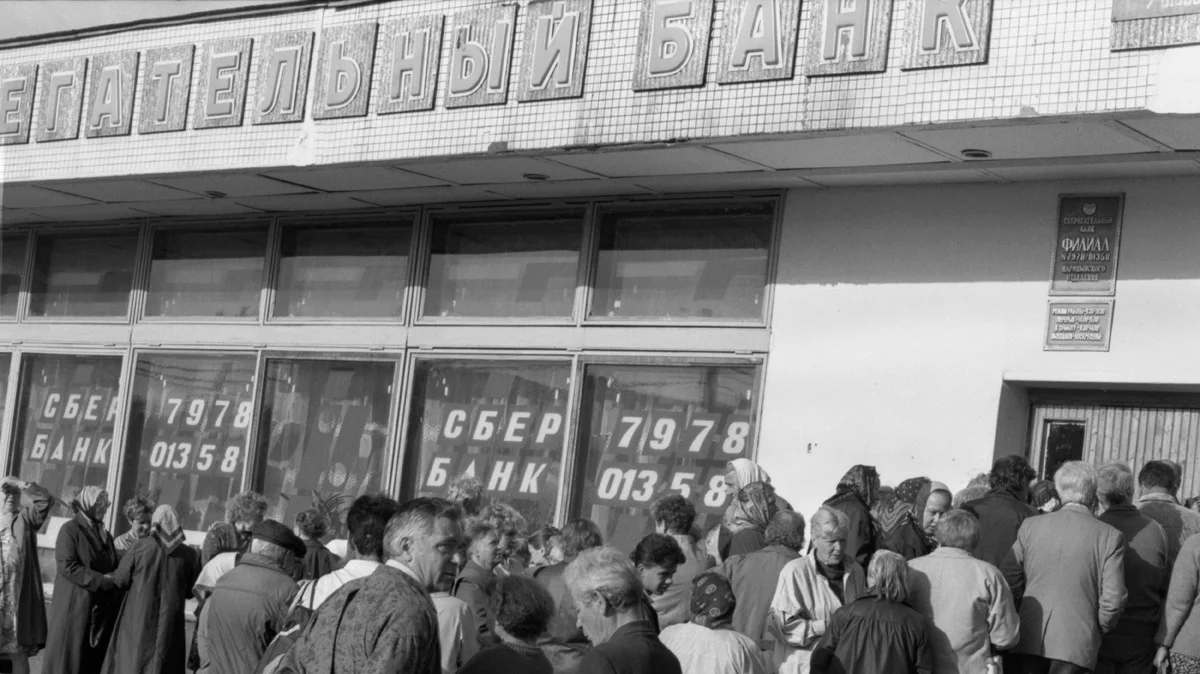
The line of those who wish to exchange old banknotes for new ones at 8.00 at the entrance to Sberbank, July 24, 1993 Fioth: Albert Pushkarev / Photo Chronicle TASS
Until 1993, Russian citizens (and a number of post -Soviet republics) continued to use the “Soviet -style” money in the calculations - cheaper, who reduced their purchasing power, as well as tickets of the Bank of Russia, “Sample of 1992”. But on July 24, 1993 (on Saturday, when the official institutions were closed), the Central Bank of the Russian Federation sent telegram No. 131-93 signed by the Chairman of the Central Bank Viktor Gerashchenko, who noticed that from scratch hours (local time) on July 26, 1993 throughout the Russian Federation, the public treasury tickets of the USSR, tickets of the State Bank of the USSR and banknotes of the Bank of Russia are stopped 1961-1992.
From telegram No. 131-93
“Since July 26, 1993, the USSR State Treasury Tickets of the USSR of 1961 with a dignity of 1, 3, 5 rubles, tickets of the USSR State Bank of the USSR of 1961–1992 with a dignity of 1, 3, 5, 10, 25, 50, 100, 200, 500, 1000 rubles and banknotes of the Bank of Russia by a 1992 sample of 5000 and 10,000 rubles are not subject to any types of payments and transfers throughout the territory Russian Federation, ”said the Bank of Russia.
In cash circulation in the territory of the Russian Federation there were banknotes of the Bank of Russia in 1993 by the advantage of 100, 200, 500, 1000, 5000, 10,000, 50,000 rubles and a metal coin of the USSR and the Bank of Russia of the 1961 model and subsequent years.
The reform was announced as official goals:
The fight against inflation,
the removal of Soviet -model paper money from the circulation,
The solution to the problem of the separation of the monetary systems of Russia and other CIS countries that used the ruble as a payment fund in domestic money.
Read also
They are to blame for everything ... non -payments
Of course, the old money could be exchanged: 35 thousand rubles, according to the passport and once. Everything that is more than this amount had to be taken to Sberbank for a deposit for a period of six months without the right to issue cash. For the entire exchange, 10 working days were given - from July 26 to August 7.
What is 35 thousand rubles in 1993? About 35 dollars.
The average salary in Russia in 1993 is 59 thousand rubles.
Prices of 1993 (approximately): 1 kg of meat - 2 thousand rubles, 1 kg of sausage - 3500, a bottle of vodka - 4 thousand.
One dollar could be exchanged for about a thousand rubles. But in exchangers two courses immediately appeared: about a thousand “new rubles” per dollar and at least two thousand - “old”.
This, I recall, happened at a time when most people did not have any bank cards, everything was paid in cash.
True, on July 26, 1993, Decree No. 1107 of President Boris Yeltsin was published, extending the exchange time for the news of August and increasing the exchange limit of up to 100 thousand rubles, small bills of 1, 3, 5 and 10 rubles were again recognized as valid (as a kind of exchange coin, until it was not enough). Banknotes of 10 thousand rubles of the 1992 model exchanged without limiting the amount. Subsequently, the exchange period was extended several times, as a result, the “old money” left the turnover only next year.
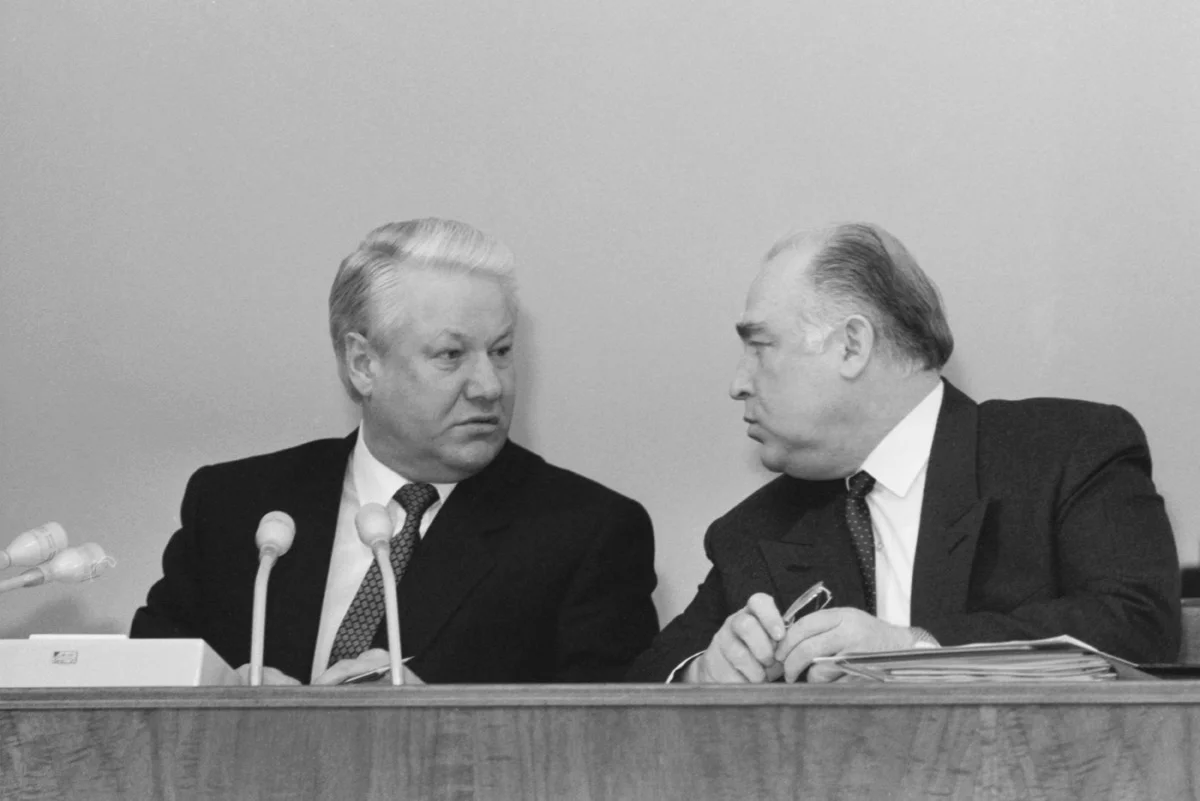
During the 1993 reform, 24 billion banknotes were seized. According to the report of the Bank of Russia for 1993, 1.9 trillion rubles of the “old -style” were exchanged. From July 26 to August 31, 1993, 24 million people came to exchange money - each had an average of 46 thousand rubles for each. On deposits in Sberbank, 167 thousand people put only 0.04 trillion rubles.
At the beginning of July 1993, the cash supply amounted to at least 5.1 trillion rubles. There was no information about how many “remaining in the hands” of three trillion rubles were “old money”.
On August 6, 1993, Prime Minister Viktor Chernomyrdin, commenting on the preparation of monetary reform and its results, will say his great phrase: “They wanted the best, but it turned out as always.”