
Translated material
Valkyrie departure
In a hot key, they will be bored with the Wagner PMC. She took life, but became here a "system -forming enterprise"

Wagner flag in the village of Baku. Photo: Ivan Zhilin / "New"
July 17, 2023. Before the fence with barbed wire, two dozen men in camouflage are built. Their faces are covered with bandans. The one that stands ahead declares: “We remove the flags of Russia and the Wagner PMC from its base in the village of Molkino. The base ceases to exist. PMC "Wagner" decreases to new locations. "
Two flags are launched for transfer to the Wagner memorial complex in a hot man (Molkino enters his city district), one is given to the commander of the “attack aircraft” to Dmitry Podolsky, and another mercenaries are taken with them to a new place to Belarus. A private military company was stationed in Molkino for eight years, becoming one of the “system -forming enterprises” for the entire Goryachklyuchevsky district. The most generous, albeit the most risky employer. And now she leaves. July 30 - her last day on Krasnodar land. The correspondent of Novaya and went to the hot key to find out how the Wagner's departure is perceived here and chat with the mercenaries themselves.
Part I. City in the ranks
"I wanted to become a killer"
Mountains, rivers, cliffs, forests, and in the middle of this - military equipment, armed people with skulls in chevrons, dense rows of graves. The hot key and its surroundings are the place of demonic contrasts.
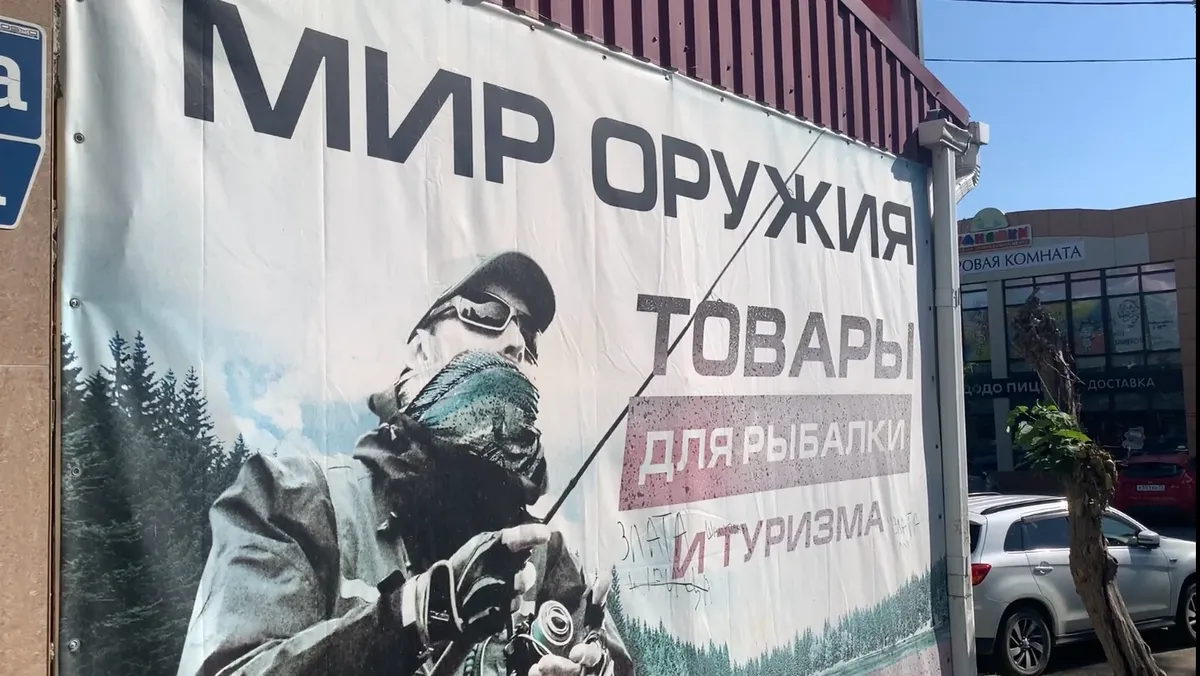
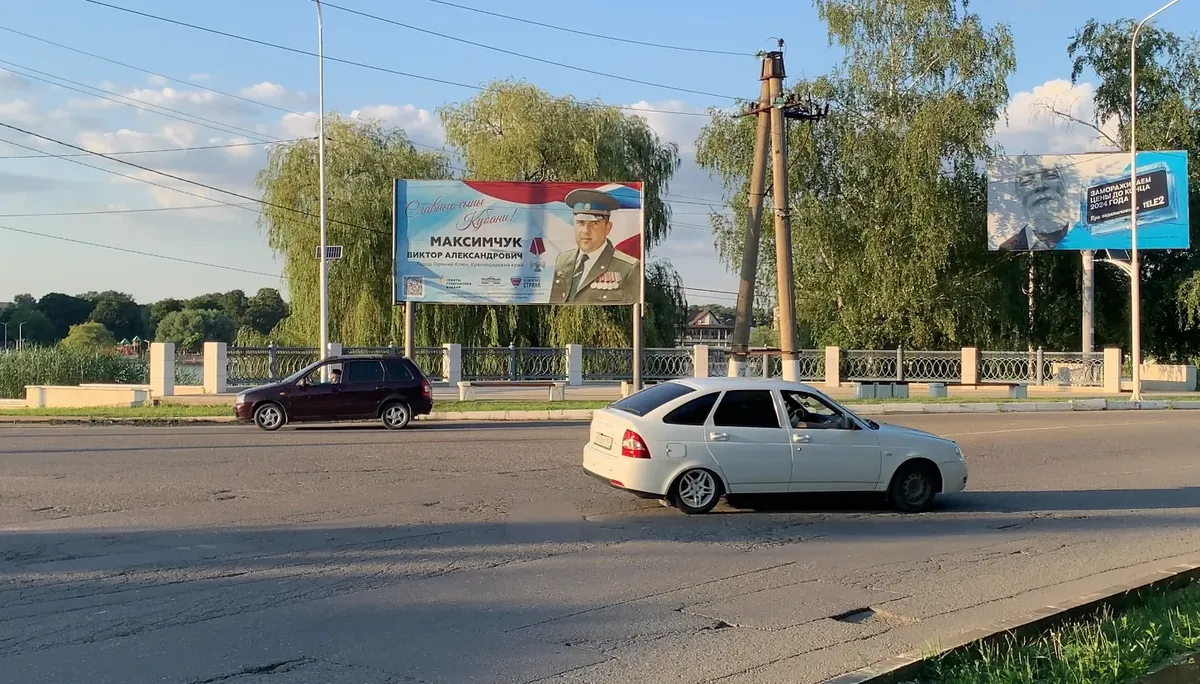
The resort city, recently known only to its sanatoriums and mineral waters, has been involved in the Ukrainian conflict since February last year. And today, this is perhaps the main meaning of life for the locals is to “win”, “help the front”. “Eaters” are not removed from cars here, stickers with them are glued to shops and sell stationery with the symbols of a special operation. The flags of Russia hang not only at state institutions, but also on the gates of many private houses, often fascinated by time.
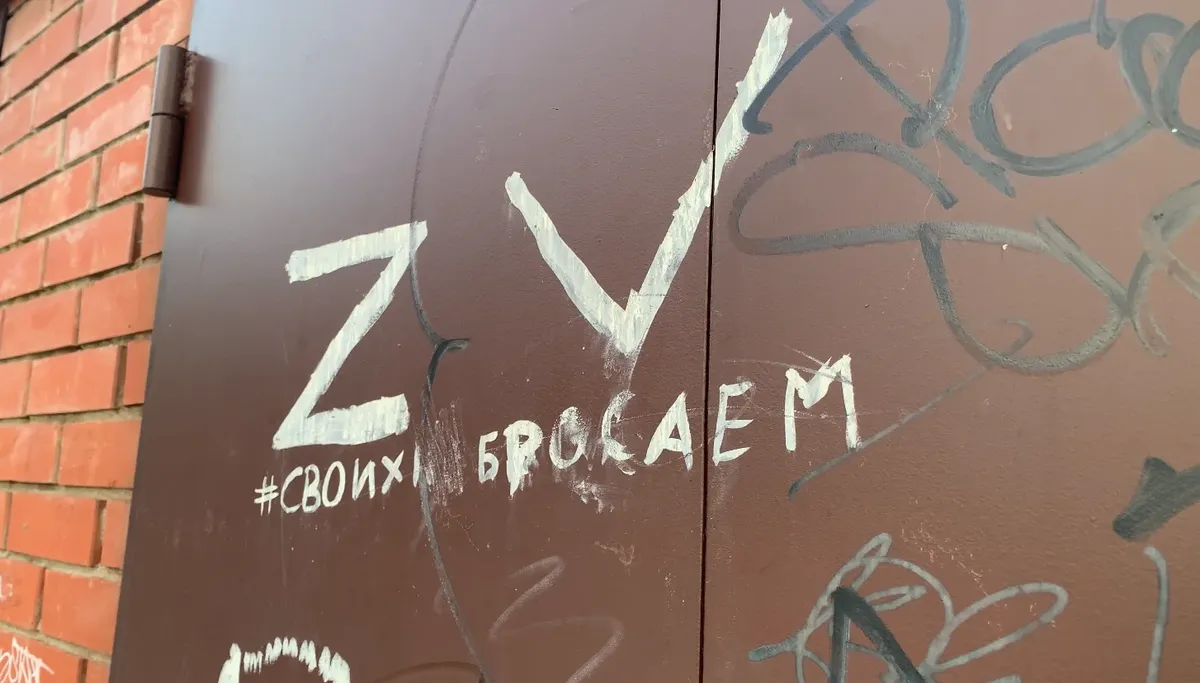
On a hot key here and there people go in camouflage. Some have signs of the Ministry of Defense on the sleeves, others have the red and black Wagner stripes. Many in the city, where 40 thousand people live, went through a private military company, “worked out” contracts, but even after the end of the service they continued to wear the symbols of PMCs. It seems that no one here confuses her sinister. Yes, and are treated in a hot key to the mercenaries as heroes.
Konstantin Nikiforov carries a humanitarian for fighters to "new territories". He has many acquaintances in Vagnere and in the regular army. They always need help: from drones to cowards, and the inhabitants of the city willingly purchase all this.
“When one, when I ride“ for a ribbon ”twice a month,” says Konstantin. - Here every second one is either a relative, or a friend on a special operation. Of course, people help them.
Nikiforov himself also thought to sign up for Wagner, but did not find a vacancy that could be combined with the transport of humanitarian. And he does not want to sacrifice this business. And he had already passed the war - the second Chechen. Was a sniper. Those events for a long time affected it.
- About ten years after the service I wanted to become a killer. I thought: how great it would be if there was such a job on a civilian - people to shoot. I knew how well. Any war changes man.
Those guys who return from the special operation will no longer be the same. Maybe, with the exception of some “Wagner”, which are simply professional killers in nature. - He says it without a shadow of contempt. - There are many guys who went there to kill. Because they need it. They themselves ask for the first line to see how their bullet falls into the enemy. This is not in the ordinary army, it is shooting [with Ukrainians] from a long distance, there are no situations where your and Ukrainian positions are 30 meters from each other. And “Wagner” gives people this opportunity.
At the same time, Nikiforov emphasizes that not all mercenaries in the Wagnere are attack aircraft, these are not even most: there are artillery, tanks, aircraft, supply units, there are drivers, medical personnel, sappers and evacuation brigades pulling the wounded from the battlefield. And not all infantry falls on the "front end".
- The chances of surviving the majority are very high. But if you say what you want on the first line, be sure, they will not refuse you, ”he grins.
In a hot vein in PMCs, they also go because you can conclude an urgent contract with the company: six months at the front line - and home. There is no such option in the Ministry of Defense: contracts do not terminate the contracts during the period of the special operation. At Konstantin, two acquaintances went to the PMC, just to solve financial problems: one needed to close the loan, the second wanted to buy a car. Both, Nikiforov says, returned "whole and with money."
“But is there really no way to earn another way?” I am surprised.
Konstantin instantly besieges, stating that we are, firstly, "about the protection of the Motherland-a Holy Deed." And secondly, a salary of 240 thousand rubles in a hot vein, and in general in the Krasnodar Territory you will not find. He does not argue that many go to Wagner for the sake of money. And for Evgeny Prigozhin, in his opinion, PMCs are primarily a business project.
- Do you think why a rebellion occurred? Just imagine: you have a state order for 80 billion rubles-from May 2022 to May 2023. You work it in good faith. And suddenly you will find out that although *** continues, specifically with you the contract is not prolonged. That is, neither 80 new billions, nor even half of this amount will no longer be. Yes, and your fighters say: “Conclude a contract with the Ministry of Defense” ( refers to the order of Minister Sergei Shoigu, according to which all volunteer detachments should go into submission to the military department until July 1. - I. Zh.) . That is, they want to deprive you of everything. And of course, Prigozhin boiled. The guys who went to Rostov and Moscow did not know anything about the plans of the leadership, for them it was a surprise. But the authority of Yevgeny Viktorovich in Vagnere is so high that the fighters are ready to follow him at least to hell. Because he helped each of them to rise, he did not only make ordinary guys with millionaires - he also gave them the meaning of life. They serve the country and make good money at the same time.
The June rebellion generally alarmed a hot key. Nikiforov says that in those days the wives of “Wagner” and military personnel were better not to cross - faces would scratch each other.
- Because some say: "How did they go against their own?" And others: "Our husbands die because the army does not give them shells." The rebellion was real. Yes, many did not want to participate in it, but they still went. You need to understand the psychology of a military man. Suppose you don’t want to go to Moscow, but here the guys with whom you were sitting in the trenches and field camps for six months - they are already more expensive for you, and they are going. And you will just go for them. Because you have experienced the most important events in life together.
The only thing Konstantin regrets when speaking of a military operation is that it has not begun before. “Then, probably, there were no such losses,” he sighs. And he calls the number of dead "Wagner", heard from friends, which is noticeably different from the data voiced by Prigozhin. It is impossible to publish them in Russia.
Claws "Doves"
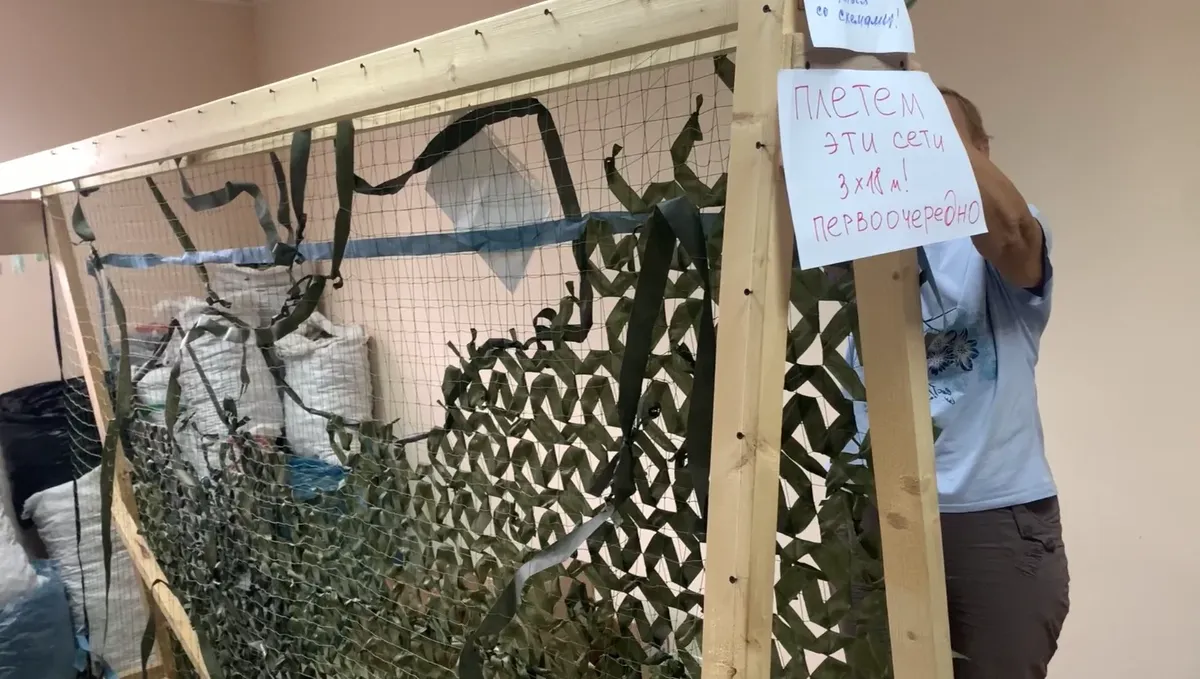
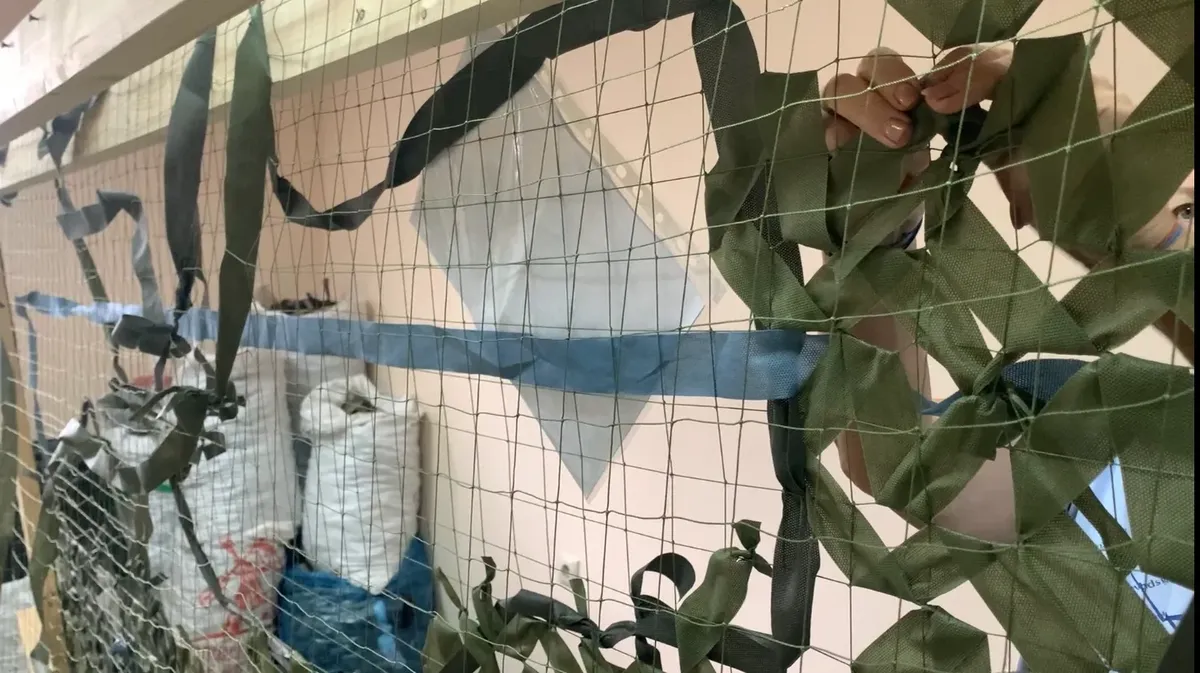
In April last year, the Golubka volunteer community appeared in the hot man, whose members also call themselves the rear battalion. They weave camouflage networks and sew clothes for the Russian military and PMC fighters, make a stretcher, cook food - when there is an opportunity to send it with a humanitarian.
Either the city administration, or the providence so ordered that volunteers occupy a municipal premises, which previously used the cash register center. In general, there are two premises in the city at the pigeon: in one, camouflage networks are weaved, everything else is done in the other. The asset "rear battalion" is large - about 100 people. These are not only pensioners, but also quite young people and even children. Only by April of this year they made 12,208 panties for the front, 4368 trench candles, 2132 stretchers, 1989 fleece vests, 1722 pairs of socks, 1427 cloaks, 555 pillows, 303 pajamas for the hospital. And this is not all. The total area of camouflage networks made by the "pigeon" exceeded 10,000 square meters.
- For us there is no difference between Wagner and the Russian army. We help everyone, ”one of the volunteers tells me, tying a green knot of the Muscovite. - Of course, when the rebellion happened, it was scary. And the pilots died - from their own.
I say that the mercenaries eventually forgave, but another volunteer notes: “They did not forgive, but released for past merits. This is a big difference. "
To make a camouflage network, an ordinary sports grid is pulled to a rack similar to the football gate, and then tied with ribbons according to special schemes. There are three such racks in the room where the “dove” works. And each of them is going on work.
On the wall next to the Russian flag-fabric samples and brief instructions: “If there is no light hacki to the transition, use the 2nd green-brown”; “The Network“ OKOP ”: the base (50%) - the color“ sand ”, the transition (20%) - the color“ dark khaki ”, a stain (30%) -“ light hacks ”. Only four types of networks: in addition to trench, for the city, forests and fields.
“I am now making a crucifix, that is, I determine the boundaries of the spot,” one of the women explains to me, drawing a ribbon between the cells. - The network should not be homogeneous, but in different colors, to better fit under the features of the area.
For some reason, volunteers are asking not to call their names, although, it would seem, they should be proud of their business. The order that they are currently working on came from Vladivostok.
- It is easier for the Far East to place an order with us than to make themselves, because so far the package reaches the front from there - how much time it will pass. And we have everything nearby, ”explains an elderly volunteer who leads the rest most of his time. - Their guys take part in special operations, and we, of course, will help them.
The "dove" does not take money for his work. From customers asks only to provide materials.
“We ourselves have the children in Vagnere and serve in the army,” a woman sitting at a sewing machine suddenly admits to me. - Of course, we are very scared for them, and we perfectly understand other mothers and wives who have relatives "behind the ribbon." Therefore, we help everyone.
But they refuse to talk about their relatives in the “pigeon”. “This is forbidden,” says the eldest.
The "fair" employer
The Wagners in the city have not had any special conflicts in the city. Amazing: no one can recall either a showdown or drunken shooting. Moreover, in the hot vein of the fighters of the PMC, they are characterized by the terms “polite” and “generous”. And in a negative light, the military is opposed to them, whose salaries are lower and who cannot make as many purchases and leave as many tips as mercenaries. A hot key is like a resort city, and they love money here.
The only exacerbation occurred in March this year, when local authorities did not allow PMC to bury the Six mercenaries in the village of Baku near the hot key. This was explained not by some ideological contradictions, but only by the desire to preserve the resort halo of the city.
“I respect the current fighters of the Wagner PMC and to the memory of those who have already given their lives for their homeland! But I can’t help but listen to the public opinion that the city resort city is incorrectly made to make a place for the mass burial of the fighters, ”the mayor Sergei Belopolsky explained in social networks.
Wagner reacted sharply. Evgeny Prigozhin ultimately stated that the funeral will pass whether officials want it or not. And the fighters of the PMC recorded a video message to the administration: “You will wait, creatures, that we will have to come and deal with you. Because you, ***, do more harm than the Ukrainian army. Because you are the Nazis. ”
The funeral, of course, took place.
Now the city authorities call this conflict sucked from a finger. With the local deputy Daniil Fomini, we meet at the central, half the city of Lenin Street.
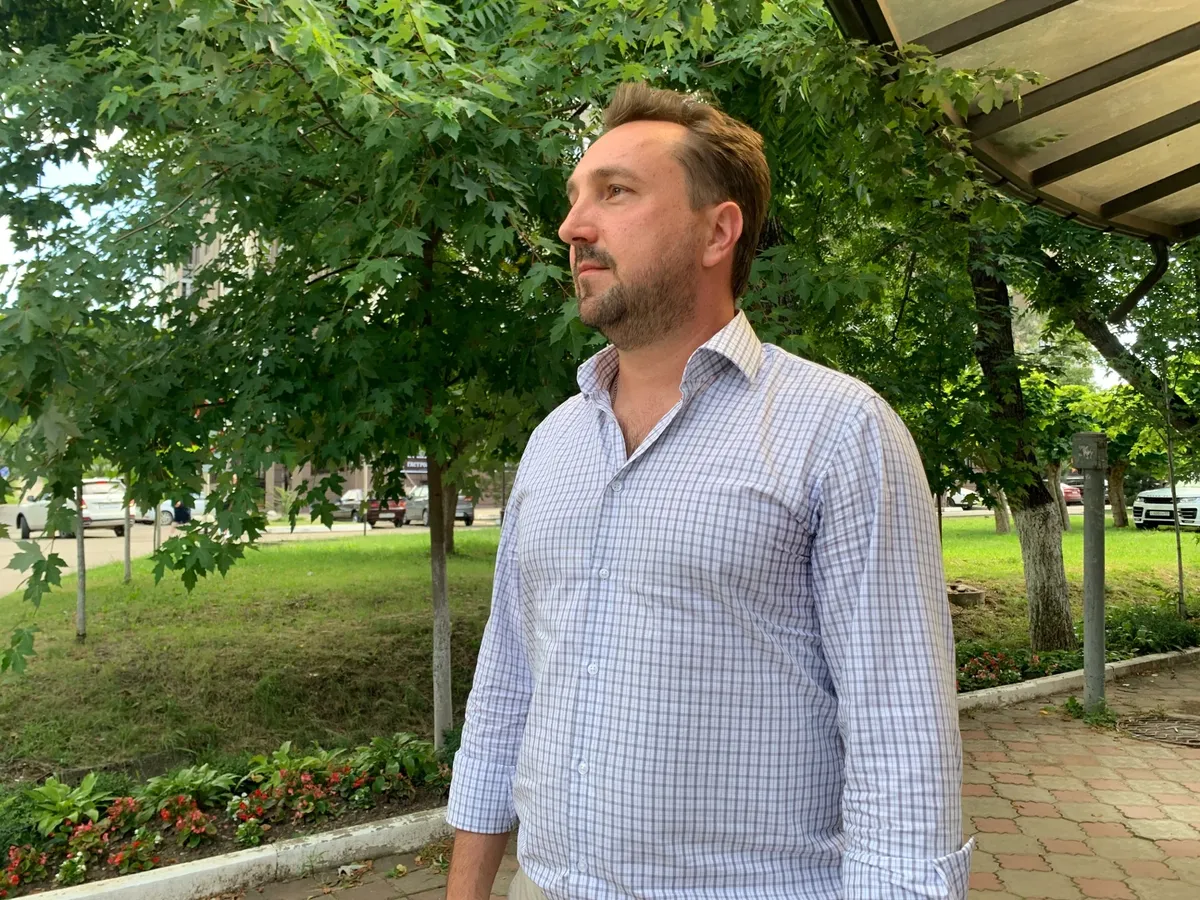
“This is in many ways a far -fetched story,” he says. - And the mayor of Belopoltsev already explained that the matter is not a disrespect for Wagner, but that the question of new burials is simply not in his competence. This should be decided by the government of the Krasnodar Territory. In a hot man, people share the position of the Russian Federation in the current conflict. A very large number of residents moved here after 2014 from the Donetsk and Lugansk regions.
The deputy explains the popularity of Wagner in a hot man by the fact that the city is small, everyone communicates with each other, and everyone, of course, was outraged by the supposedly refugee stories.
- Many, before the special operation, served in the PMC under the contract, and after the beginning of the number of people only increased.
At the same time, he emphasizes that the departure of PMC will not be a critical blow for the city.
- “Wagner” is a noticeable company. This is an employer who, hiring people to work, paid them decent money. But still his departure is not the case that will lead to a sensitive economic subsidence for the city. Many people serve us under a contract with the armed forces. I would say that the ratio of PMC fighters and military personnel here is approximately equal. Or maybe the contractors of the Ministry of Defense is even more. But Wagner, of course, gave many the opportunity to earn. Or maybe he will also give such an opportunity, ”he says with undisguised warmth.
The riot "Wagner" does not want to comment on Fomini. It only says that for the city this moment was very tense and that fighters of a military company in a hot man are known as “fair people”. “But now they themselves sign certain papers and do not want to talk about it,” the deputy concludes.
"They completely untied"
I knew that the “beer foam” between the pharmacy and the Fortuna vodka warehouse is a bad place. And therefore I decided to miss the wheat mug here for 65 rubles, listening to the conversations of visitors. A random person rarely comes here: “beer foam” - a bar for the military and fighters of Wagner.
Dark green walls hung with fan scarves and dried fish. Crime drama on TV. Imperial flag behind the bar.
Overheard conversation 1:
“With their relocation, everything is very serious,” says one man in camouflage to another. - Because you know how many tanks they ended up to us? Only thirty. Almost everything that was went to Belarus.- That is, now the direction is Poland?
- What is Poland? Have you given? Poland is what we have?
- NATO.
- This is NATO. They will not go there.
- And where will they go?
- Yes, they know them, they completely untied.
Overheard conversation 2:
- I will rest until September. It is necessary to decide whether to make a new contract or not.- So you have to leave.
- Well, yes. And it is not clear where: the chief says that someone will go to Africa. Someone in Belarus will remain. I don't want to go to Africa at all. And here, on the other hand, what to do? "Bake" again? I *** work for 60 thousand.
- There are no options here?
- Only in the cemetery, but they don’t take healthy people there.
Overheard conversation 3:
- I’ve been kvasha every day for a month now.- Mudak, you just returned for three weeks.
- [heavy sigh].
- Will you look for work?
- I don't want anything.
Drinks.
Overheard conversation 4:
- Is everything serious with the girl?- [Silently nods his head].
- What is serious for you? You will die tomorrow.
Laugh.
Part II. "Brotherly" way
Base
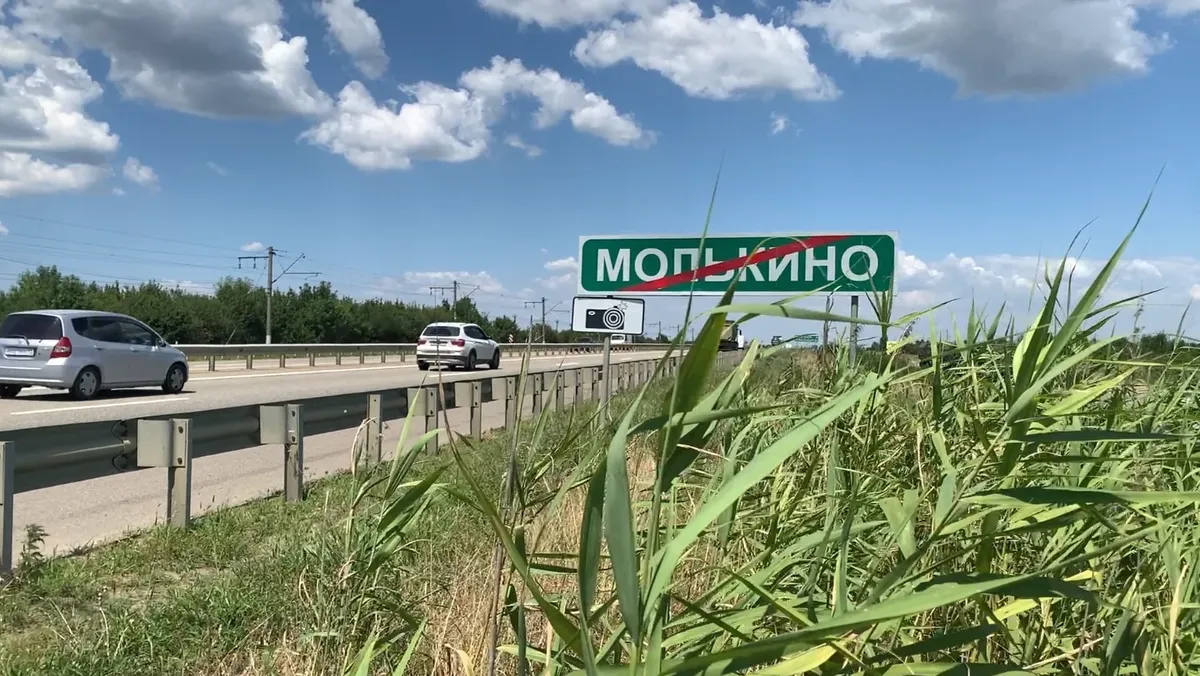
Molkino is surprisingly poor farm. On the way to the “Pionerlager” (as they call the location of the “Wagner”) I pass by the bruised, decades of the non -combined two -story houses with broken access doors, past the empty farm. Between the trees that grow next to the huts, the twine are stretched, on which clothes are dried. There are almost no people outside.
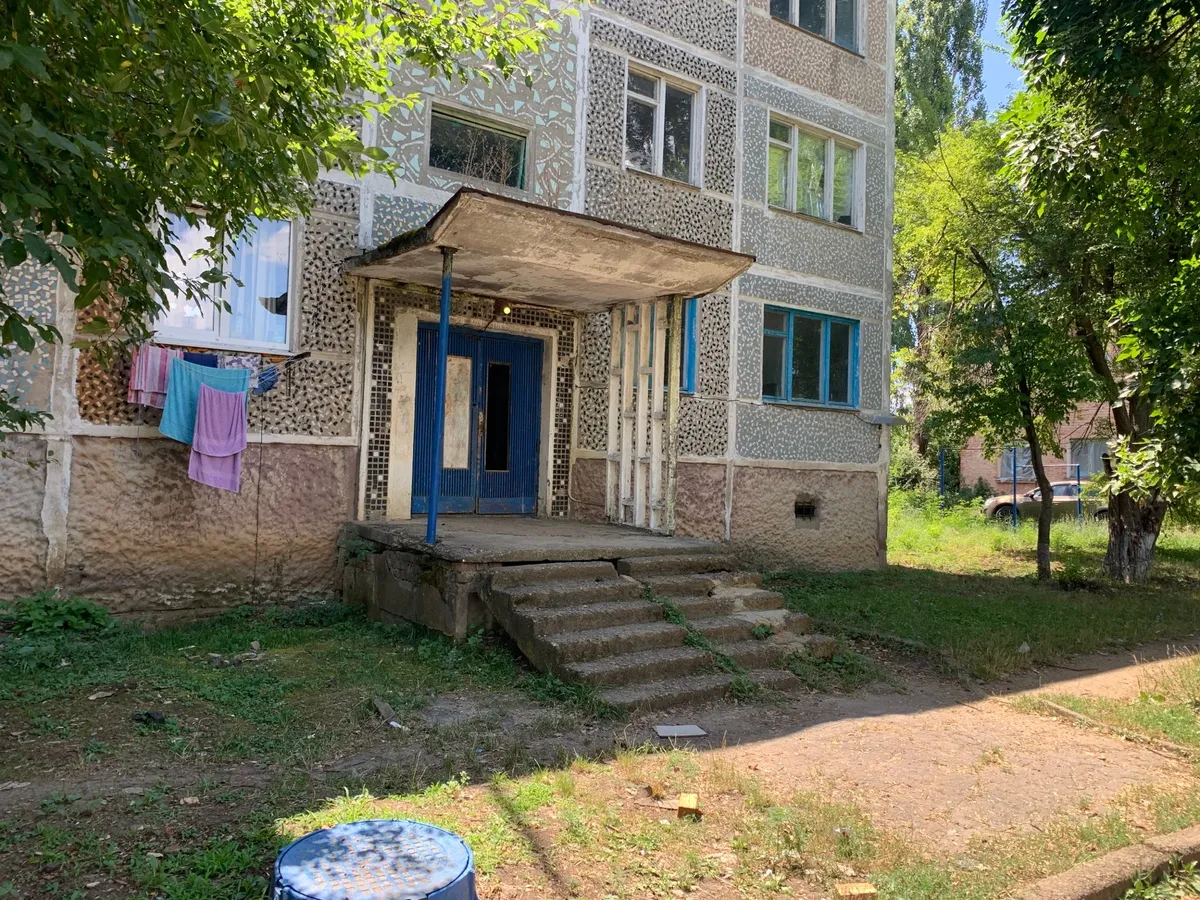
At a littered stop at the store, three men are drunk in camouflage form with Russian flags on chevrons.
- Are you not from PMCs? - I ask them.
“We are from the army,” the sitting in the middle replies. - Go to the bridge, boy. There will be a lot of PMCs.
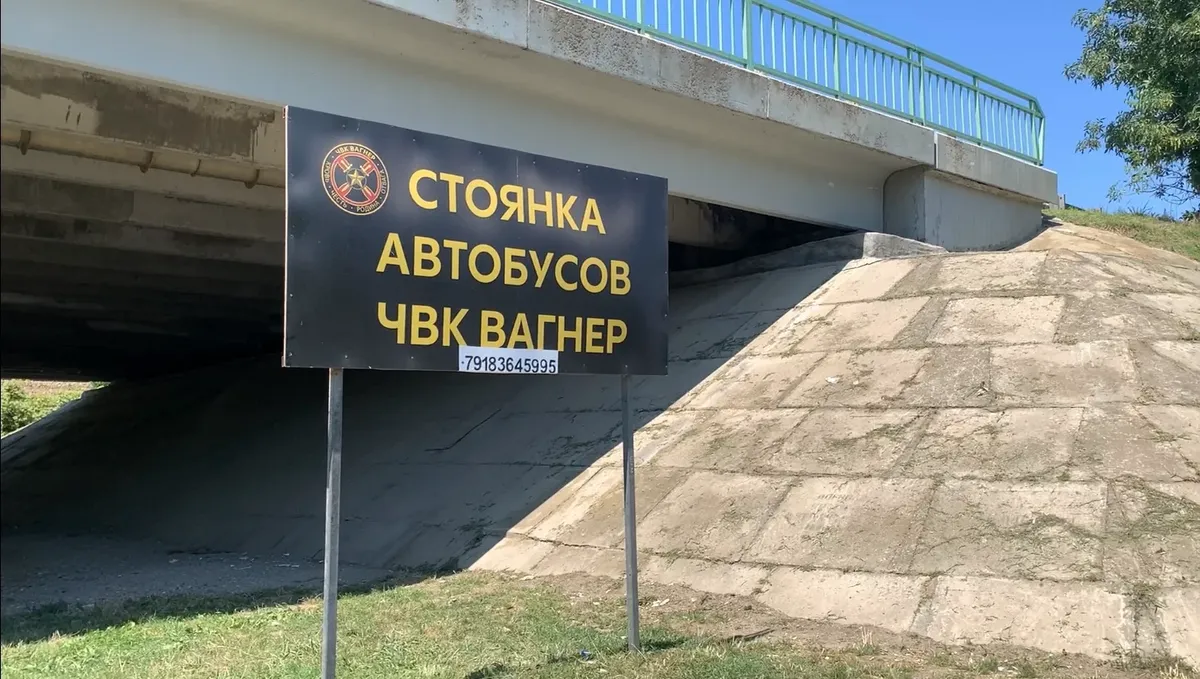
The whole “life” really begins under the automobile bridge, where in small groups people hang out in Khaki's colors. At the entrance to the arch - Banner: "Parking of BUSS PMC" Wagner "." There are no buses here. Sometimes ordinary cars drive up for the expectant, in which they are loaded in three or four people. Because of the bridge from the military unit, new groups of men with bags come out every now and then. All healthy warts, although obviously not all athletes - many have a solid abdomen over the belt.
- Are you from a PMC? - I ask the three in the sandy color of flekes. They are definitely from Wagner: there are no chevrons on the sleeves.
- What do you want? - The man with a small scars of the left eye answers, pulling himself in a cigarette.
I decide what to say directly, but the mercenary, only having heard the word “journalist”, immediately shakes his head: “No-no, no, go to the unit-maybe they will say something there. We are without comment. ”
The barrier of the military unit in Molkino has an amazing “search”. The duty officer only asks me where I am going, and, having heard about Wagner, he says: “Here on this road, then to the right - there are their checkpoints.” With a 30-liter backpack behind the shoulders, in which, if desired, anything can be put, I go to a military facility.
КПП «Вагнера» — еще один шлагбаум и накрытая маскировочной сеткой будка. Мне навстречу выходит подтянутый мужчина лет тридцати с автоматом наперевес и в панамке. Настроен он добродушно. Но услышав, что я из СМИ, также качает головой.
— Нет, брат, никто не будет тебе давать комментарии.
— Может быть, вы спросите у командиров?
— Командиров нет, а те, что есть, давать комментарии не будут.
— Могу я оставить свой контакт?
— Нет, никому твой контакт не пригодится.
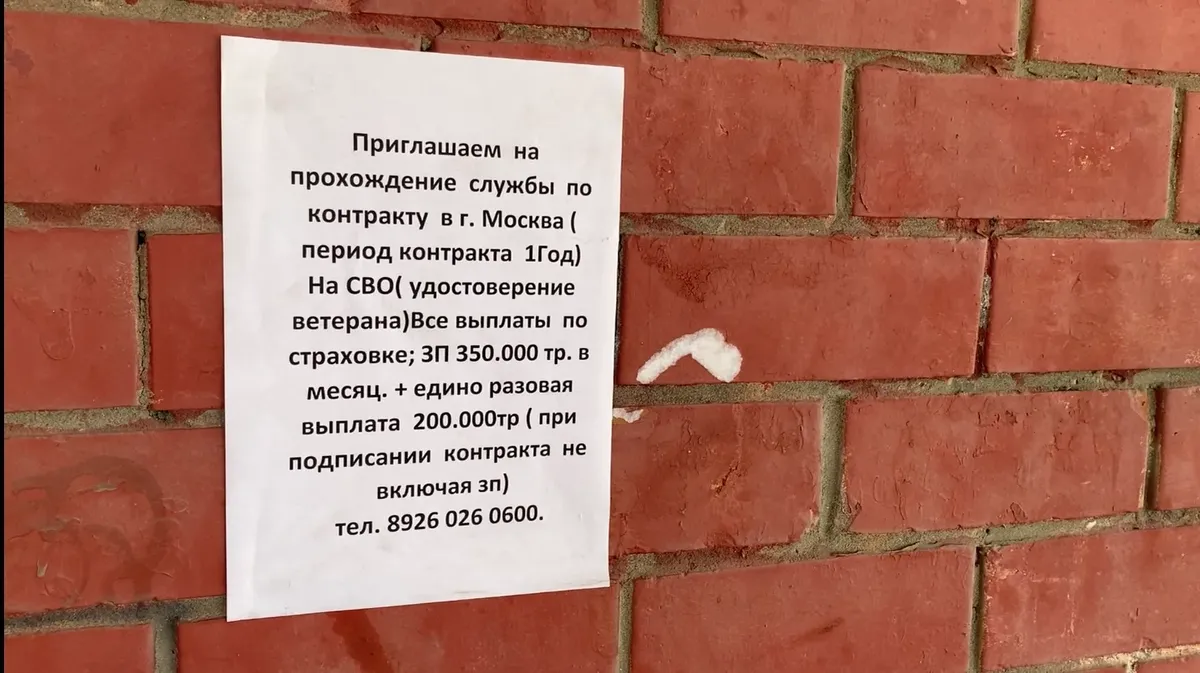
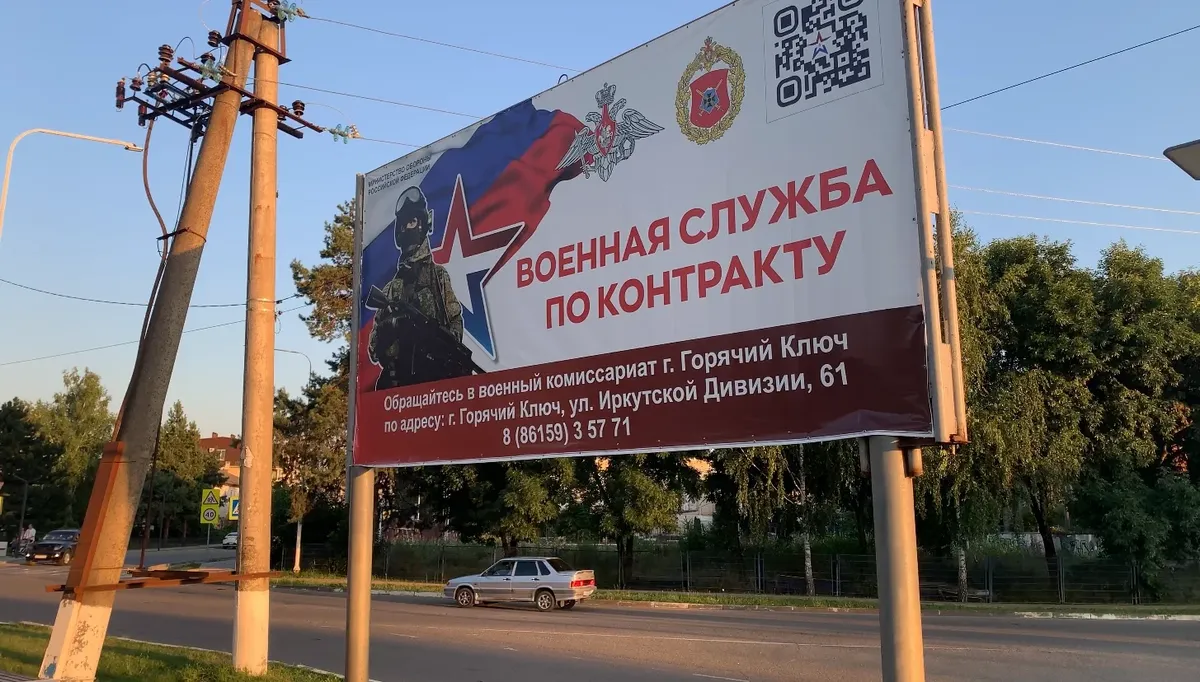
Он просит меня не задерживаться на КПП и идти обратно к мосту. Под мостом, пытаясь вслушиваться в разговоры военных (впрочем, не имеющие большой ценности), снимаю объявления: «Требуются разнорабочие. Зарплата от 1000 до 1500 + % в день. Комфортное бесплатное проживание»; «Приглашаем на прохождение службы по контракту. На СВО (удостоверение ветерана). Все выплаты по страховке. ЗП 350 000 в месяц + единоразовая выплата 200 000».
За этим делом меня и окликают двое в натянутых до носа банданах.
— Брат, а ты чего тут делаешь?
Приходится честно отвечать снова.
— Ну ты уж покажи, что наснимал. Ты же сам понимаешь, куда пришел.
Спорить бесполезно: мы под мостом, вокруг военные и наемники. Отдаю телефон. Один из моих новых «братьев» чуть повыше, и у него темные короткие волосы, у второго, кажется, волос нет вовсе. Оба широкоплечие.
— Ну ты, брат, зачем вот это снимал? — показывает лысый мне кадры со стоящими под мостом людьми. — Ну так ведь нельзя. Это же наши братья, а у него (показывает на одного из людей на видео) лицо не прикрыто. Его ведь опознают и что-нибудь плохое с ним сделают. Why do you need this?
— Да мне и не нужно, чтобы с кем-то что-то плохое сделали, — развожу руками.
— Ну вот и кадр этот тебе не нужен, значит. — Он заботливо вычищает с моего телефона штук десять видеозаписей, после чего просит показать содержимое рюкзака. — Пауэрбанк, еще пауэрбанк, тут у тебя что? Загранник? Это ты хорошо. It is necessary. Аптечка, — усмехается. — Жгут Бубнова есть? — Он и его товарищ заходятся хохотом. — Ладно, вижу, что нет. Сигареты есть хоть?
- No.
— Ну ты пропадь! — Он отдает мне рюкзак.
— Могу идти?
— Ну, брат, ты чего? Зачем тебе идти? Мы тебя с комфортом сейчас отвезем.
В этот момент становится действительно страшно, но и выбора, кроме как выполнять все требования, у меня нет. Лысый уходит в сторону парковки, и через минуту ко мне и темноволосому подъезжает белый Solaris с полным водителем лет сорока. Садятся на задние сиденья, разрешая мне сесть на пассажирское спереди. Всю дорогу они не говорят ни слова, да и дорога занимает не больше трех минут. Машина тормозит у автозаправочной станции на выезде из Молькино.
— Ты уж, брат, не сердись. Но возвращайся, когда мы уедем. Ты же знаешь: 30-го числа, — говорит лысый на прощание.
"Dragon's teeth"
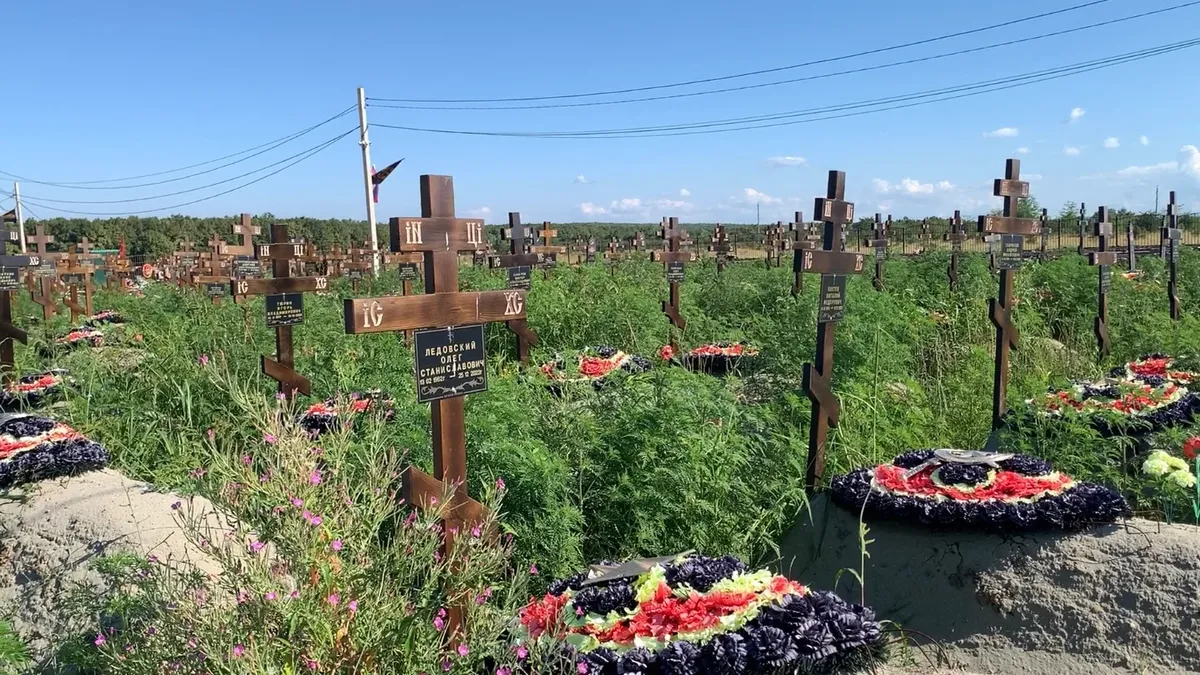
Глупо было предполагать, что на кладбище «Вагнера» не будет бойцов частной военной компании. Но именно это я и предположил. Наемников хоронят в станице Бакинской, предместье Горячего Ключа. И за последний год благодаря им местное кладбище сильно разрослось.
Невысокая черная ограда отделяет захоронения бойцов ЧВК от гражданских. Кладбище наемников разделено аллеей на две части. По левую руку — обычные, пусть и плотно стоящие друг к другу могилы с крестами. По правую (и в это сначала не верится) — пирамиды, похожие на «зубы дракона»: такие же, какие устанавливали на границе с Украиной, но серые, с эмблемами «Вагнера» и именами похороненных под ними. Впрочем, лежат ли под пирамидами люди, непонятно: «зубы дракона» устанавливают на ровной песчаной площадке, трое рабочих из Центральной Азии затаскивают их и устанавливают рядами.
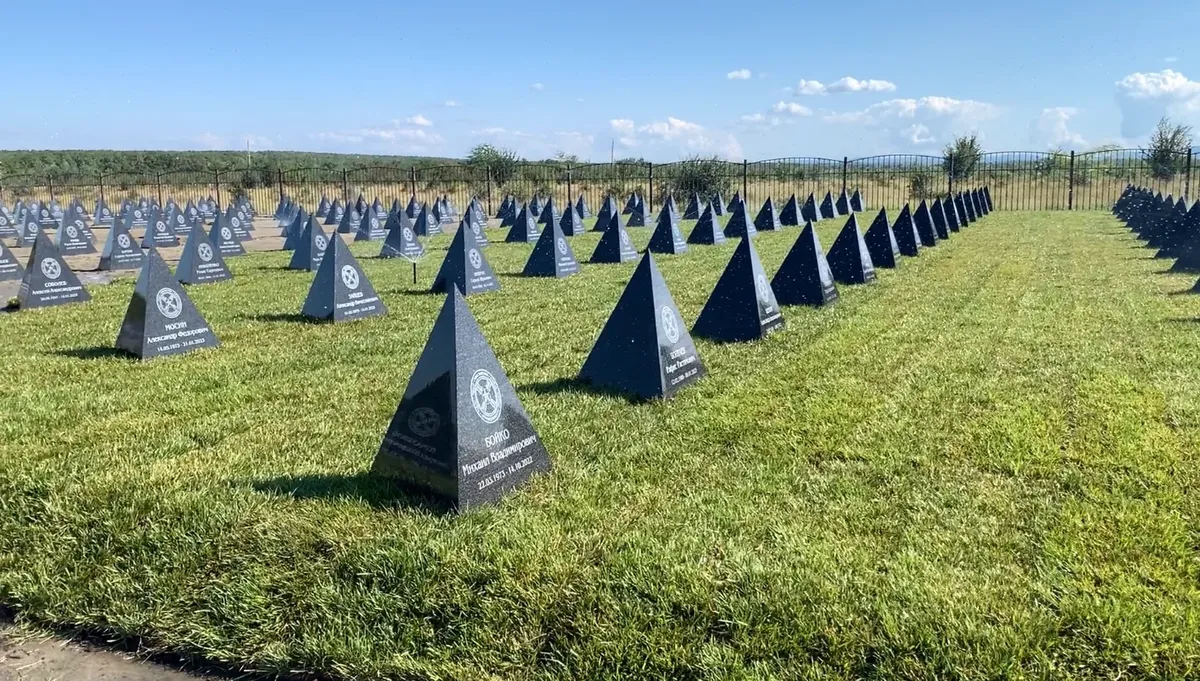
На столбах освещения — флаги «Вагнера» и России. В центре кладбища — мемориал: высокий черный камень с эмблемой ЧВК и надписью: «Здесь захоронены бойцы ЧВК «Вагнер», погибшие за Родину. 2022–2023». У мемориала меня окликает грубый мужской голос.
— Чего ты снимаешь? — кричит человек в камуфляже, идущий с дальнего конца кладбища, раскинувшегося на площади размером с футбольное поле.
Жду, когда он подойдет. Мужчина оказывается немолод, позже он скажет, что ему «скоро полтос». Но сначала наш разговор совсем не ладится.
— Я из похоронной бригады «Вагнера», — говорит он тоном, требующим уважения. — Кто разрешил снимать?
— А на это нужно разрешение? Тут вроде открыто, — указываю я на ворота.
— Ты попал на камеры. Зачем ты снимал венки?
— Это запрещено?
Вновь приходится объяснять, что я журналист. Боец требует паспорт и удостоверение. Фотографирует их, затем скидывает по WhatsApp кому-то из «старших». Ему перезванивают.
— Ага, ну да, ну вот ходит, снимает могилы… Ага, понял, — говорит он в трубку. Завершает звонок. — Тебе дают разрешение снимать. Только чуши не неси. Интервью я давать не буду. И рабочих не снимай. А вообще покажи, что «Вагнер» своих не бросает: вот мы уже и газон стелить начали, и памятники ставим, — он указывает на «зубы дракона».
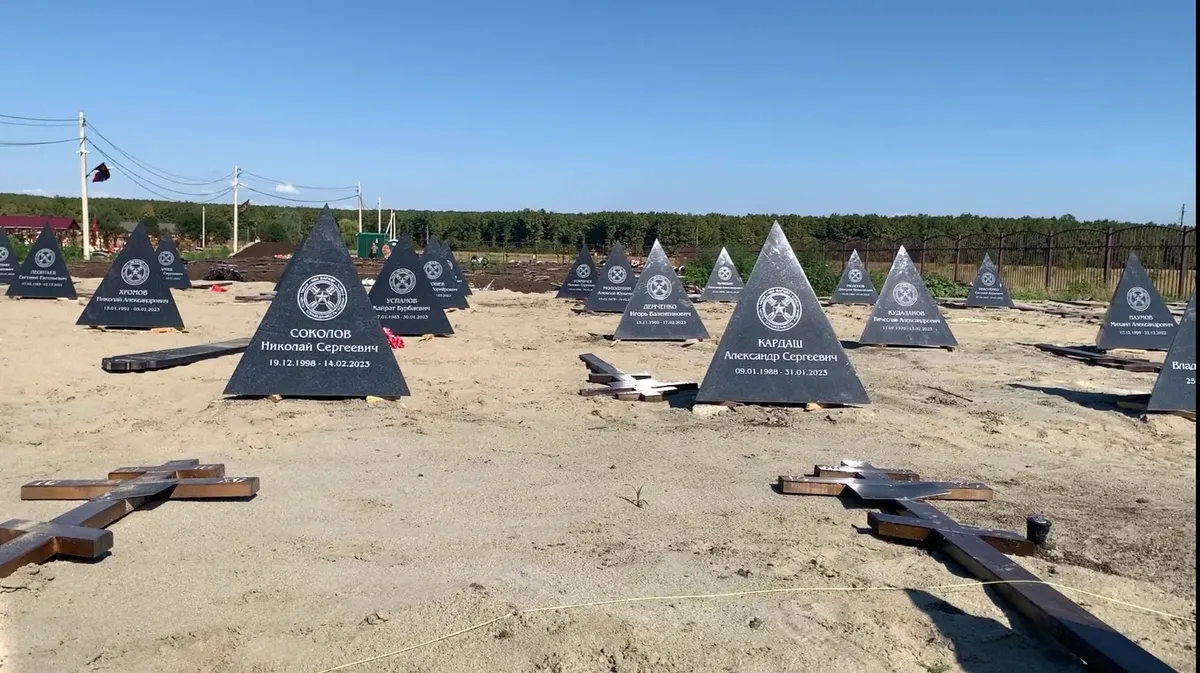
В Бакинской хоронят преимущественно тех бойцов, у которых нет родственников или от которых родственники отказались. Читаю надписи на могилах. Александр Дитятев прожил 32 года. На надгробии не указано, но в 2011 году он был приговорен к 23 годам лишения свободы. Александр Корхалев погиб в 51 год, сидел за убийство. Вячеслав Кочас четыре года назад получил 18 лет колонии за убийство. Погиб 25-летним.
Здесь лежит много людей, которые сами востребовали смерть и оказались востребованы ею раньше времени.
— Кладбище, наверное, больше не будет расти, — говорит мне сотрудник похоронной бригады. — Я сам думал поехать в Украину, но здоровье уже не то. В Сирии был, три раза мог не вернуться. Больше не хочется рисковать, не в моем возрасте. Теперь за парнями смотреть буду.
— Вы думаете, «Вагнер» не вернется в Горячий Ключ?
— Все зависит от намерений руководства страны. Передислокация — дело серьезное.
— Передислокация? То есть бунт был хитрым ходом?
— «Марш справедливости» был «маршем справедливости». Но интервью я тебе не даю.
Уроки послушания
Сергей отдал «Вагнеру» немного — всего три месяца, из которых месяц провел в учебке. Убыл по ранению. Ему все еще нелегко ходить.
Вообще-то у него вполне мирная специальность, связанная с добычей нефти. Но глядя на спецоперацию, он решил, что даже ездить на северную вахту — дело недостаточно мужское. И подписал контракт.
Перед встречей он ставит условие: не то что не записывать — даже телефон с собой не брать. И реально просит показать карманы перед разговором.
Он боится «Вагнера», и это неудивительно — все бойцы, с кем я пытался заговорить, отказывались от интервью. Им и раньше-то было запрещено общаться с журналистами без разрешения, а теперь, после бунта… Сергей считает, что его убьют.
Это, к слову, подтверждает и другой наемник ЧВК, давший интервью BBC: он также заявил, что за комментарии СМИ теперь «обнуляют». Для подразделения «Мед» ЧВК «Вагнер» мы вынуждены пояснить, что Сергей — не житель Горячего Ключа.
— Казни в «Вагнере» — это не выдумка, — говорит он. — Хотя и не секрет: если вы помните видео, где Пригожин вербует заключенных, то он об этом прямо говорит. За дезертирство, попытку бежать — расстрел. Никто за тебя не вступится. Бежать с позиций после этого не слишком хочется.
При этом Сергей не знает, действительно ли казнили кувалдой наемника Евгения Нужина, бежавшего в Украину. Они были в разных отрядах, хотя и оба — в пехоте.
— Там правила простые: если ты приходишь с гражданки — ты стрелок. Штурмовики нужны, потому что они заканчиваются быстро.
Сам Сергей говорит, что подписал контракт с «Вагнером», потому что думал, что там берегут людей, и ничего не знал о потерях. Сейчас он, как и Константин Никифоров, тоже называет цифры, отличающиеся от названных Евгением Пригожиным.
Он отказывается обсуждать конкретику, по которой его можно вычислить, но соглашается рассказать об общих порядках в коллективе.
— Мне говорили, что люди идут в штурмовики «Вагнера», потому что просто не представляют опасности, — говорю я.
— Это так, да не совсем, — прерывает Сергей. — Все понимают, что такое окопная война. Но не все понимают, кто тебе противостоит. Когда я решил заключить контракт, было ощущение, что мы сломаем [украинцев] вот-вот. Первое, что с тобой происходит, когда ты приходишь на базу, чтоб поступить на службу, — у тебя отбирают телефон. С этого момента единственным источником информации для тебя становятся командиры. И 25 дней, пока идет подготовка, ты узнаешь, что наши сумели занять новые пункты, наши одерживают победы, наши собрали много трофейного оружия. И перед отправкой на передовую ты уверен, что враг не сегодня-завтра побежит. А потом ты сидишь в пятиэтажке в Артемовске и голову не можешь высунуть в проем, потому что все окна простреливаются. А в это время новобранцам рассказывают, что ты и твоя рота движетесь вперед и берете квартал за кварталом. И так происходит ротация: одни воодушевленные дурачки погибают, вторые приходят им на смену.
Это же, как ни странно, описывал мне и Константин Никифоров, знающий порядки в «Вагнере» от своих друзей. Послушный и готовый на все боец воспитывается в тисках между рассказами об успехах и расстрелом за оставление поля боя.
— И в то же время если тебе удалось пережить месяц-другой, ты становишься частью коллектива. У тебя уже нет более близких людей, чем братья по оружию. На «передке» очень страшно, но предать сослуживцев ты не можешь. Мне до сих пор стыдно за свое решение не возвращаться. Хотя, может, еще и вернусь, — говорит Сергей.
Несмотря на то что в ЧВК новобранцам описывают не совсем реальную картину происходящего, Сергей уважает Евгения Пригожина и отмечает, что тот действительно часто приезжает к бойцам.
— С нами, рядовыми, он, конечно, не общается, но сам факт, что главный человек рядом, очень поддерживает. Я считаю, что он очень смелый. Как и Дмитрий Уткин, который руководил всей бахмутской операцией.
К слову, он опровергает и нехватку боеприпасов, по крайней мере говорит, что у пехоты точно и оружия, и снарядов было в достатке.
В «марше справедливости» Сергей не участвовал. Но, ссылаясь на продолжающих служить знакомых, говорит, что никого из них не предупреждали о походе на Москву.
— Парни и сами не поняли, что произошло. Утром им скомандовали построение и двинули почему-то от Луганска вглубь России. Никакого сопротивления они до Воронежа не встречали. В Воронеже подбили несколько их машин, но парни продавили. You know further. Мои все ушли в Ростов, там вообще ничего не происходило. Я не буду рассказывать детали.
Part III. Another
Андрей Панюшкин — едва ли не единственный антивоенный активист в Горячем Ключе. Да и он теперь не в городе, а в далекой от этих мест Испании. Ищет политическое убежище и пытается собрать деньги на жизненно важную операцию. Ее можно было бы провести и в России, но возвращаться ему, собственно, некуда: его дом сожгли.
— Это произошло 3 декабря прошлого года. Уехал я еще в сентябре — на фоне [частичной] мобилизации. И к октябрю, достаточно прочувствовав воздух свободы, возможно, опрометчиво рассказал все, что я думаю о происходящем сейчас в Украине. Я это рассказал в конфиденциальной беседе своим соседям. А на следующий день — это было, по-моему, в середине октября — мой приватный разговор был опубликован в городских пабликах. И весь город узнал о моей позиции.
Панюшкину начали поступать угрозы. По его словам, «лидеры групп поддержки фронта» стали писать ему, чтоб он не возвращался. Но в начале декабря у Андрея появилось желание приехать домой. Он написал об этом пост и даже назвал дату. Тут-то все и произошло.
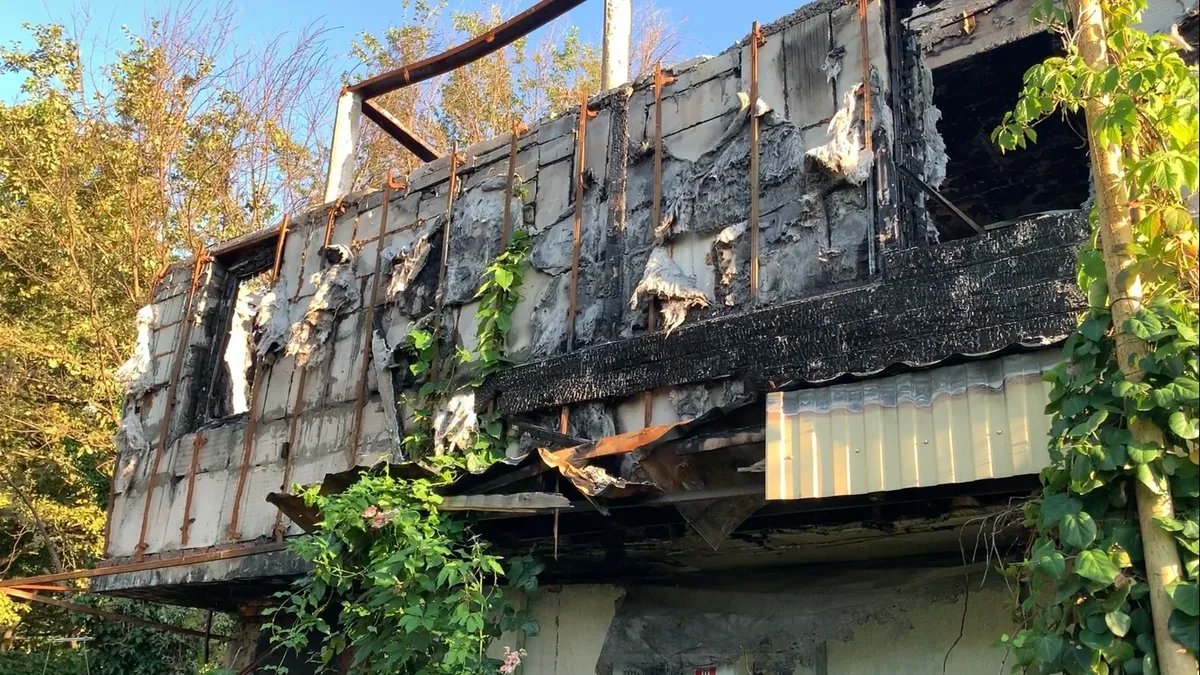
— Утром я написал, что возвращаюсь. А вечером, в 20.00 по Москве, мне позвонили соседи со словами: «Андрюха, у твоего дома горит крыша». Честно говоря, у меня была надежда, что поскольку от пожарной части расстояние небольшое, меньше километра, приедут пожарные и все быстро потушат. Но, к сожалению, за четыре часа они не смогли потушить дом. У одной пожарной машины не хватило воды, вторая якобы где-то застряла. Он сгорел полностью.
Андрей отмечает, что поджигатели действовали грамотно: за несколько часов до пожара они обесточили камеры наблюдения, и теперь найти их не могут, хотя и ищут ли — большой вопрос.
Панюшкин, конечно же, соглашается, что Горячий Ключ поддерживает спецоперацию. И говорит, что «Вагнер» здесь популярен как нигде.
— Наш город маленький. Зарплата в 20–30 тысяч считается за благо. И люди шли в ЧВК по совокупности факторов: во-первых, из-за патриотизма; во-вторых, из-за денег. Здесь разделяют идеи «русского мира», а участие в заграничных командировках, скажем так, — это хороший и постоянный источник дохода. И соответственно, я могу предположить, что то, что мои соседи меняли машины раз в полгода и имели деньги на то, чтобы заниматься капитальным строительством, связано с тем, что, полагаю, они сотрудники. Контрактов их я не видел, но по крайней мере, один из них почему-то частенько бывал в Сирии…
Популярность «Вагнера» в сравнении с армией, по предположению Панюшкина, связана с тем, что в ЧВК «больше денег платят и меньше бюрократии».
— И еще вокруг «Вагнера» есть какая-то приключенческая романтика. Они как будто корсары или солдаты удачи. У них же даже слоган есть: «Наш бизнес — смерть, и бизнес идет хорошо». Конечно, с уходом «Вагнера» — и это не только я так думаю — многие жители Горячего Ключа, станиц Саратовской, Бакинской, хутора Молькино потеряют экономически. Уход, скажем так, «высокооплачиваемых специалистов» станет потерей для экономики, потерей для рынка недвижимости, для строек, для всего. Мы знаем, что после этого «похода справедливости» на Москву пропаганда поменяла свой вектор в отношении «Вагнера». Но жители Горячего Ключа по-прежнему высказываются публично в соцсетях в поддержку ЧВК, называют ее одним из наиболее боеспособных подразделений. Они по-прежнему на стороне «Вагнера».
***
На пути из Горячего Ключа в Сочи снимаю на телефон проезжающий мимо грузовой состав с нефтепродуктами. Пожилая пара, сидящая напротив, прерывает меня: «Чего вы снимаете?» Люди, конечно, боятся, что вслед за мной прилетит какой-нибудь дрон, и страх этот понятен. Заводим короткую беседу.
— Ну и тему вы нашли. Неужели больше рассказывать не о чем? Снимите лучше о нашей природе что-нибудь, о море, о горах, о Псекупсе, — ворчит женщина. — Посмотрите, лето какое хорошее. Всё истерику нагоняете. Где надо, там и без вас всё знают.
За окном бьет ослепительно-яркий солнечный свет. Зелень в горах, несмотря на июльский зной, свежа. И тысячи отдыхающих заполоняют побережье Черного моря.