
Translated material
"No Pasaran!"
The extreme right in Europe stumbled in Spain
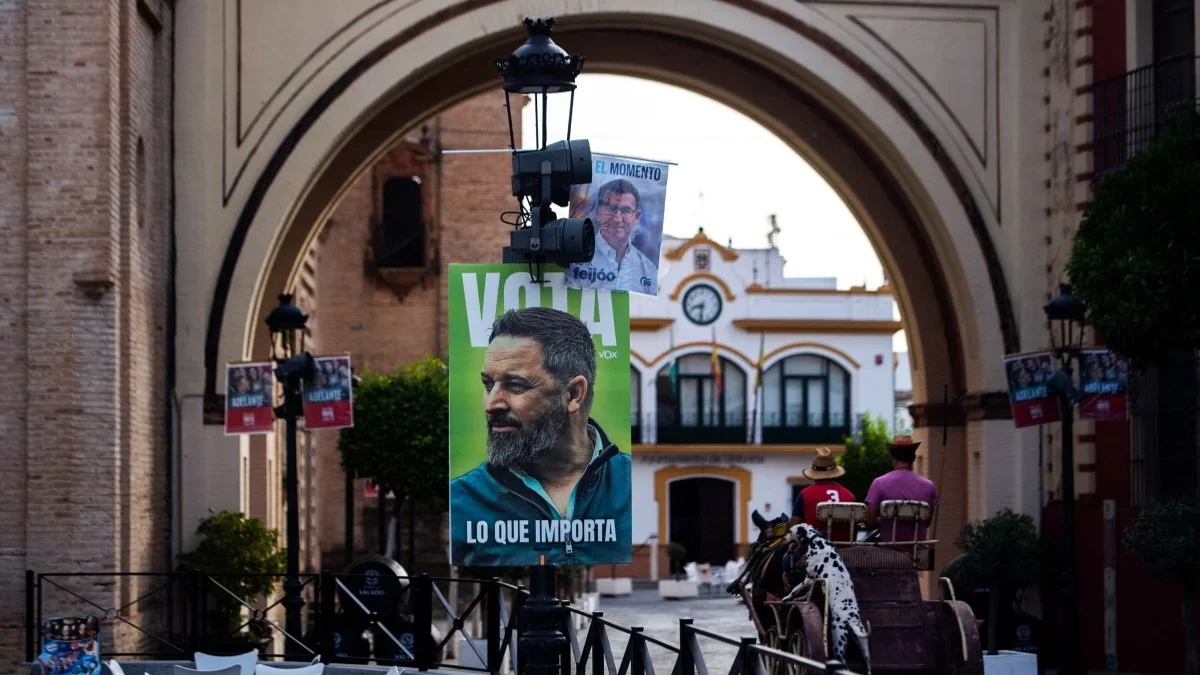
The leader of the Spanish right -wing radicals from VOX Santiago Abaskal comprehended the defeat in the elections. Photo: Cristina quicler / AFP / East News
Parliamentary elections in Spain were expected with anxiety. The forecasts were for the fact that the drift of Europe in the direction of the ultra -right, which was outlined in the crisis years and not without the influence of the roar of guns near the eastern borders of the EU. The confused voter is looking for stability in a strong hand, a return to traditional values, national identity and sovereign isolation.
Those who are accepted to the extreme right now at the helm in Italy, Sweden, Finland, in last year's elections in France showed a record result by a national association, and an alternative for Germany became the third largest party in the Bundestag ... Next year, a change of guard in the European Parliament will have to be changed. In Spain, the extreme right, this time, was the chances of returning to power for the first time after the death of the dictator Francisco Franco in 1975. This symbolic circumstance was heated by tension in society, and the appearance of the vote on Sunday, July 23, was close to the record. The next morning, many breathed a sigh of relief: the VOX party exalted in ten years lost so many places in parliament that it is unlikely that its representatives can count on ministerial portfolios.
For the Prime Minister of Spain and the head of the Spanish Socialist Working Party (PSOE) Pedro Sanchez, the election outcome was so important and at the same time unobvious that on July 17 he flew to Madrid from Brussels, having left the EU summit and the community of the Latin America and the Caribbean (CELAC) for the first time in eight years. This could only be justified by the pressure of emergency circumstances.
Spain is the frontman of the European Union in relations with the overseas Spanish -speaking region.
Spain in this half -year presides the EU Council.
There were plenty of reasons for concern. For several months in a row, all surveys questioned the possibility of PSOE levocentrists in alliance with small left -wing parties to maintain power. Va-Bank went, appointing extraordinary universal elections for July 23, after the social staff and its junior partners performed worse in the May elections to the local authorities than expected. The main rivals, conservatives from the People’s Party (PP), looked better. And with an existing political situation, they could form a new government only in a coalition with the extreme right VOX. Even at the cost of overcoming the conditional line, which the moderate PP separated itself from the odious Ultra. Moreover, the leader of the People’s Party Alberto Nunez Feihoo made it clear that in the event of a victory, he would appoint the leader of VOX Santiago Abaskal Deputy Prime Minister.
The prospect of coming to the Government of the Right Party was a red line for most voters in a country where the memories of the fascist dictatorship are fresh than somewhere in Europe.
To universal surprise, the socialist Sanchez managed to limit the success of the right opposition. Voting turned into a plebiscite in favor of the political center. The number of elected deputies increased the most numerous parties of Spain: socialists (PSOE) and conservatives (PP). That is, a two -party scheme is confirmed for Europe, when, replacing each other and attracting two partners in the coalition, two parties are competing - respectively, to the right and left of the center.
According to preliminary estimates (without votes of the Spaniards living abroad),
The Opposition People's Party, led by Feijoo, will receive 136 mandates in the Spanish parliament (instead of 89 in 2019),
now the ruling Socialist Party of Sanchez - 122 mandates (instead of 120),
The ultra -right VOX Abaskal is 33 mandates, having lost 19, which became a devastating account for her.
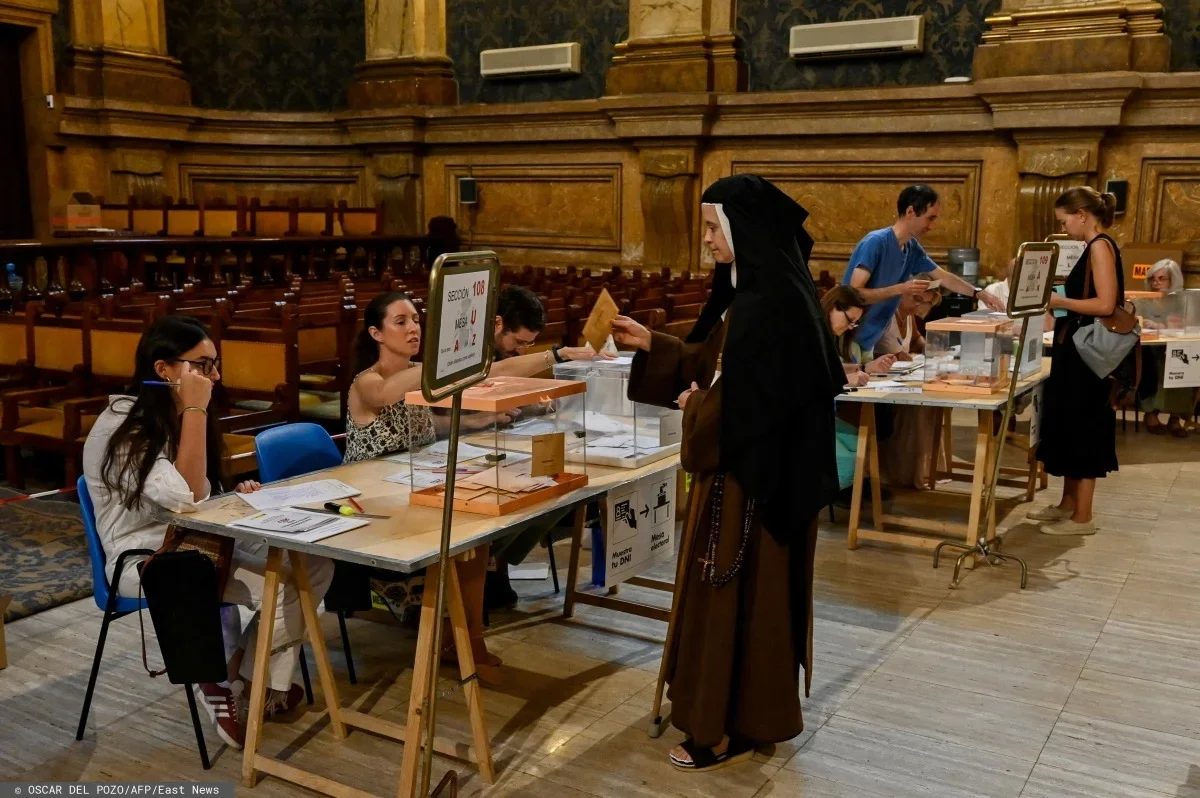
The success of the conservatives is easy to explain: they were in opposition in the most difficult years, and all popular discontent, fair or not, resulted in the ruling socialist party and its leftist partners. For socialists, even a modest increase in votes is an undoubted success. But the devastating account of the ultra -right ones threw them to the political curb.
Observers in Brussels believe that in Spain a phenomenon has proven itself, which in recent years has been characteristic of many EU countries. Including for the European Parliament.
Moderate right -wing and conservative parties in pursuit of voters come closer to the extreme, repeating their rhetoric, popular among the masses in difficult times. And more and more switch to their position, not feeling toxic measures.
The winning party of the Spanish elections let down this.
The results of the elections led to the most difficult scenario of the formation of the Spanish government: not one of the two leading parties has a sufficient majority in parliament, just like no blocks possible for today. Unexpected solutions, difficult negotiations with a multi -way trade and even, in extreme cases, new elections are required.
Although the People’s Party came out as a relative winner, it is unlikely to be able to form the government on its own, and the Party of Sanchez, which took second place, may have more chances, but he will still need unpleasant compromises.
Soon after the announcement of the results, Alberto Nunez Feihoo announced his victory and as the leader of the party, which took first place, about the determination to start a dialogue with the forces represented in parliament in order to form the government.
But the far right VOX, to which he, going to the polls, firmly hoped as a member of the coalition, suddenly scored few voices. Attempts to start negotiations with other small parties, it seems, are doomed to failure, since VOX is toxic and is a scarecrow for other parties, especially regionalist ones, which advocate the expansion of autonomy and even the separation of the regions. Basque, Catalan and Galician nationalists refuse to talk with Feijoo, who has “Francists” in allies.
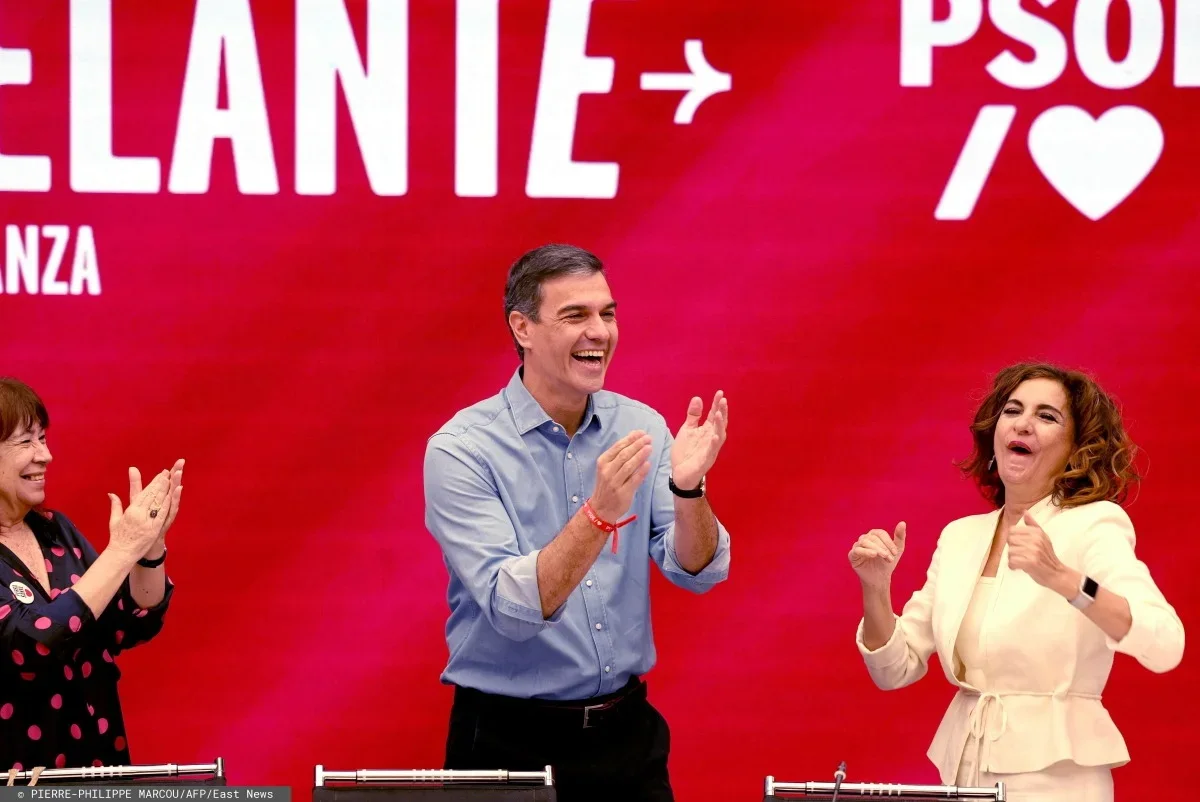
Pedro Sanchez, going out on Sunday evening to the jubilant activists of the social party, said he intends to remain the head of the Spanish government. He regarded the overall result of the elections as a defeat of the right and, therefore, his victory.
“The bloc of the People’s Party and Vox was defeated. Most of the Spaniards want the country to continue to move forward. And so it will be, ”he proclaimed, while associates shouted the famous anti -fascist slogan of the Civil War of 1936–1939:“ No Pasaran! ” ("They will not pass!"). Thus equalizing Vox with the Nazis, considering them the heirs of Caudillo.
In fairness, it should be noted that the Spanish ultra -right are not quite the same as it was under Franco. The reference points of ultra -conservatism have changed over time. Like like -minded people in other European countries, they modernize their ideology, take into account new realities, refuse outdated ideas and the most odious dogmas.
One of the commentators of the Spanish elections wrote that "society rejected the political trumpism of the People’s Party and Vox."
VOX as a party arose in December 2013 from former members of the People’s Party, who considered the PP leadership not enough radical. In the press, the party is classified as the “extreme right”, but some media are called “law -Populistic”. Mediapart, known for its political investigations, describes it as
"Neophangist",
xenophobic,
Antifeminist,
hostile Catalan autonomism.
Vox declares
liberalism in the economy,
monarchism,
Christian democracy and traditional family values,
hostile to abortion,
advocates increasing the birth rate due to help for families,
against budget financing of the fight against family violence.
She advocates the preservation of Spanish culture, traditions such as the severity of the passionate week and Corrida, demonizes the image of an illegal migrant. This is the only Spanish party that publicly criticized the transfer of the remains of Franco from the Memorial "Valley of the Fali" in the cemetery as "profanation".
At the same time, she abandoned anti -Semitism, adheres to the Zerail discourse. She calls for the dissolution of the Spanish ultra-rationalist movement Fe-la Falange to distance herself from traditional fascists.
Abaskal himself calls his party "anti -fascist, anti -nazi and anti -communist." According to ideology and declared goals, it has been akin to the “Italian brothers” Georgi Melony , who has been heading the Italian government since last year and, as a member of the European Council, managed to get comfortable in the Brussels Palace of “Europe” among other EU leaders.
On Tuesday, July 25, the king of Spain Felipe VI, by his decree, fired Pedro Sanchez from the post of prime minister and immediately appointed him the head of the Provisional Government to manage current matters "until the new head of government takes office." That is, the current prime minister will remain in power until the country gets out of a political impasse.
The coalition with the participation of the ultra -right did not pass, although it is not yet known who will lead the next government of Spain. The Sanchez Socialist Party, having 122 deputies in parliament, and its left -and -radical allies from the Sumar bloc (31 deputies) paradoxically retain the chances of staying in power because they can enlist the support of the Basque and Catalan parties and gain the necessary majority.
If before the elections all the eyes were turned to the ultra -right VOX as the key to the victory in the struggle for power in the country, now they have safely forgot about it. Suddenly, the forgotten Catalan Zhunts (Junts Per Catalunya or JXCAT) and its scandalous leader Carles Puchdemon, who lives in exile in Brussels, advanced. In Spain, a lawsuit was instituted for him, and upon returning to his homeland they can be arrested. He is accused of organizing an anti -constitutional referendum on the self -determination of Catalonia in 2017. The turnout was then 49% (almost only supporters of the department participated), and 90% voted “for”. The central government has restored the constitutional order in the province.
It makes no sense to rely on the support of radical Catalan separatists to the prime minister of Sanchez. He needs Zhunts to abstain from voting on the investment of the new government. But she openly stated that her silence could not be free. Her requirements have been unchanged for many years: holding a referendum on self -determination in Catalonia and an amnesty for separatists, still pursued by Spanish courts.
In Brussels, the fear of strengthening the block of right and Euro -digitics in the EU Council passed. But you will have to be prepared for the fact that Catalonia will again arise as a destabilizing European problem. The Spanish series continues ...