
Translated material
Not life, but satisFaction
Miku Jagger - 80. Rolling Stones roll on
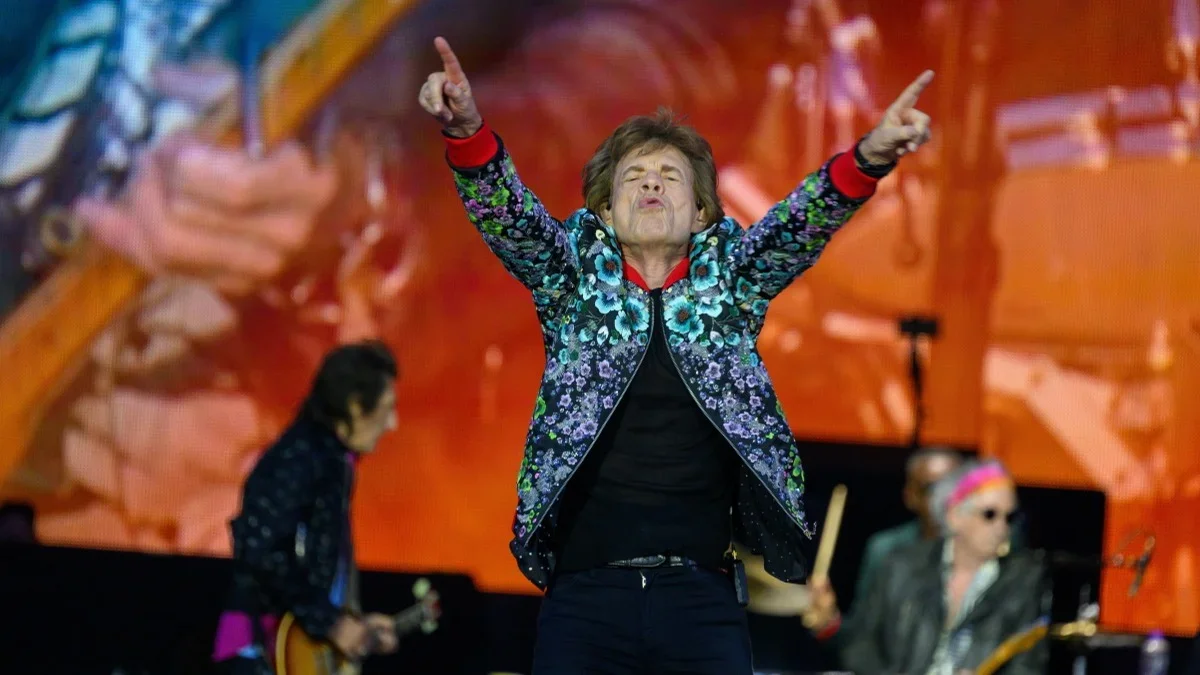
Mick Jagger. Photo: Jacques Witt / Sipa / East News
In a black tight T -shirt, in narrow black trousers, in sneakers that I suspect, knowing his passion for fashion and high style, there are a couple of thousand bucks - he runs along a huge scene to the end, moves tirelessly, like a pendulum and a living energy, circulates a tirelessly two hours of the concert, when giant screens are in ahead, and in front of the sea of people.
Fashion is changing, movie stars fly into oblivion, musical waves roll and go - rock, pop, disco, metal, industrial, electric pool, what else is there - and Mick Jagger in the estimate of an eternal wrinkles on his face, a skinny, flexible, flexible, who had traveled his ballet body - remains always, remains of who he was, remains equal to himself and does not remain equal to himself. Needs explanations.
Rolling Stones make a cool rock and roll, masterfully built, well-tempered, rock and roll of huge stadiums and incredible concert tour, covering dozens of countries and cities, where hundreds of thousands of pre-delighted fans who know what they will begin on areas for entertainment and pleasure.
Of course, with Start Me Up .
Standing on the edge of the stage, seeing the roaring sea in front of him in the light of sliding spotlights, making swift passes with continuously flying hands-urging someone from the sky, threatening someone in a hundred rows, throwing a drive from his fingertips-he sends not just a sound, but energy.
He, Mick Jagger, has long turned himself into an energy cocktail for the city masses suffering from depression, into a bright running spot in the gray dusk of dreary life.
The fleeting movement of the hand with which he removes his hair from his forehead is a thin, girlish movement. Suddenly, he raises a T -shirt on his shoulders with two hands and two fingers on each - like a football player in the midst of a match played in the heat. Its plastic is exquisite and broken. The brushes of his hands, bending at different angles, have their conversation when he suddenly makes his own, original, unknown Balanchin Pa in a clear, minted jump.
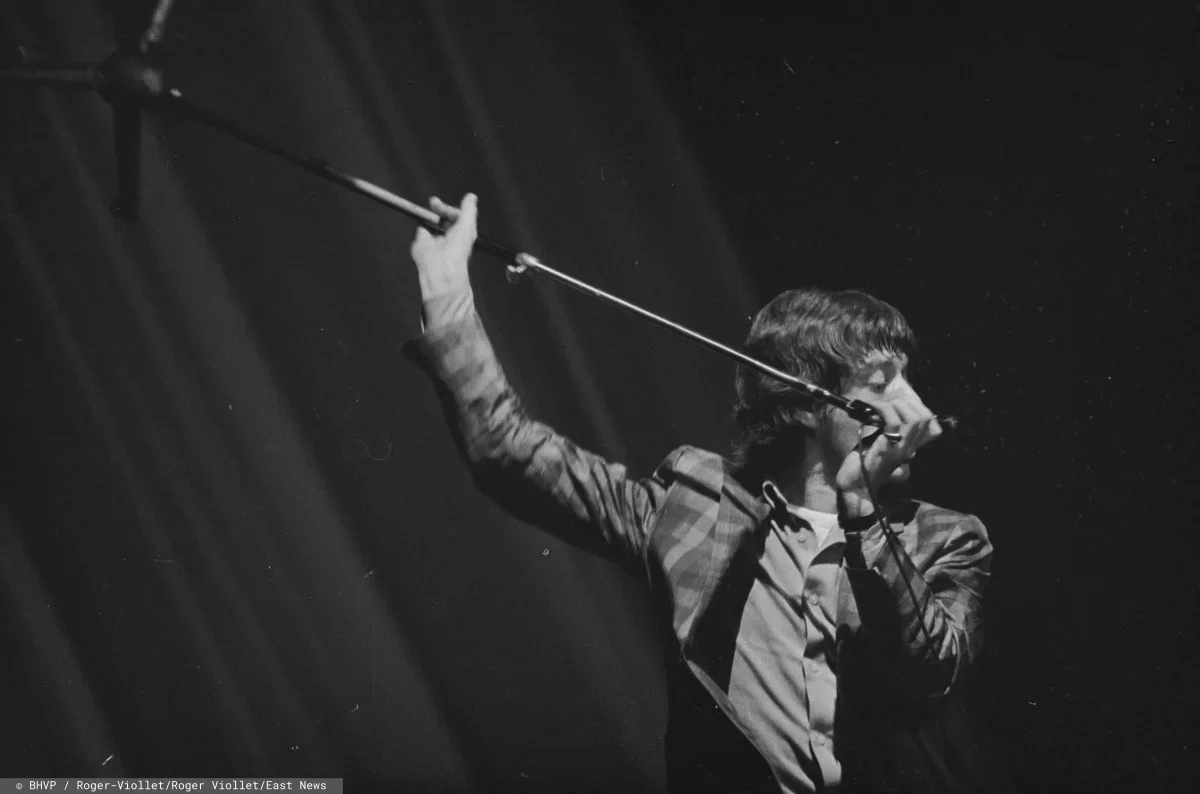
This rock and roll is all rock and rolls rock and roll. Picture, not rock and roll! He is so picturesque, accurate, sustained, purely played and good that you forget in euphoria that once rock and roll was a dirty sound
Callerly, the genuine living life shouted in it, unlike a reminiscent stage, and that, unlike a reminiscent stage in it, shouted. But the fact that today's Rolling Stones play is endlessly far away from that primary heated water and desperate game; In the fact that they play, there is no genuine rage that MC5 had, and there are no social motives that Kinks had; This is rock and roll of large artists and people well-arranged in life.
What turned out to be unbearable for others has become an excellent habitat. Peter Green did not endure this world and went crazy. Jim Morrison sang The end and closed the doors behind him. Kat Stevens-now and for a long time Mr. Islam-could not withstand the conveyor of show business and went to other Dali. Brian Jones fell into depression from the fact that Jagger and Richards led to euphoria. But for Jagger, all these suffering, depths, fall, despair did not exist; Energyzer and a lover of social life with pleasure accepted all the circumstances proposed to him and successfully passed after a time in the radiance of stage lights. He turned out to be resistant to the anguish poison and capable of giving three hundred concerts a year, which is why others began to drink and bang their brains with stronger pieces. He passed and healed himself to appear on a huge scene again-he also had small ones, but remained far in the past-in his incredible drive, with his graphic plastic and sharp gestures, as if drawn by one pencil line in the hand of an expressionist artist.
Rolling Stones made rock and roll an outstanding prestigious genre, but they emasculated him and made him conditional, almost like an opera. This is a beautiful art of sound and scenes in which figures of imaginary heroes act.
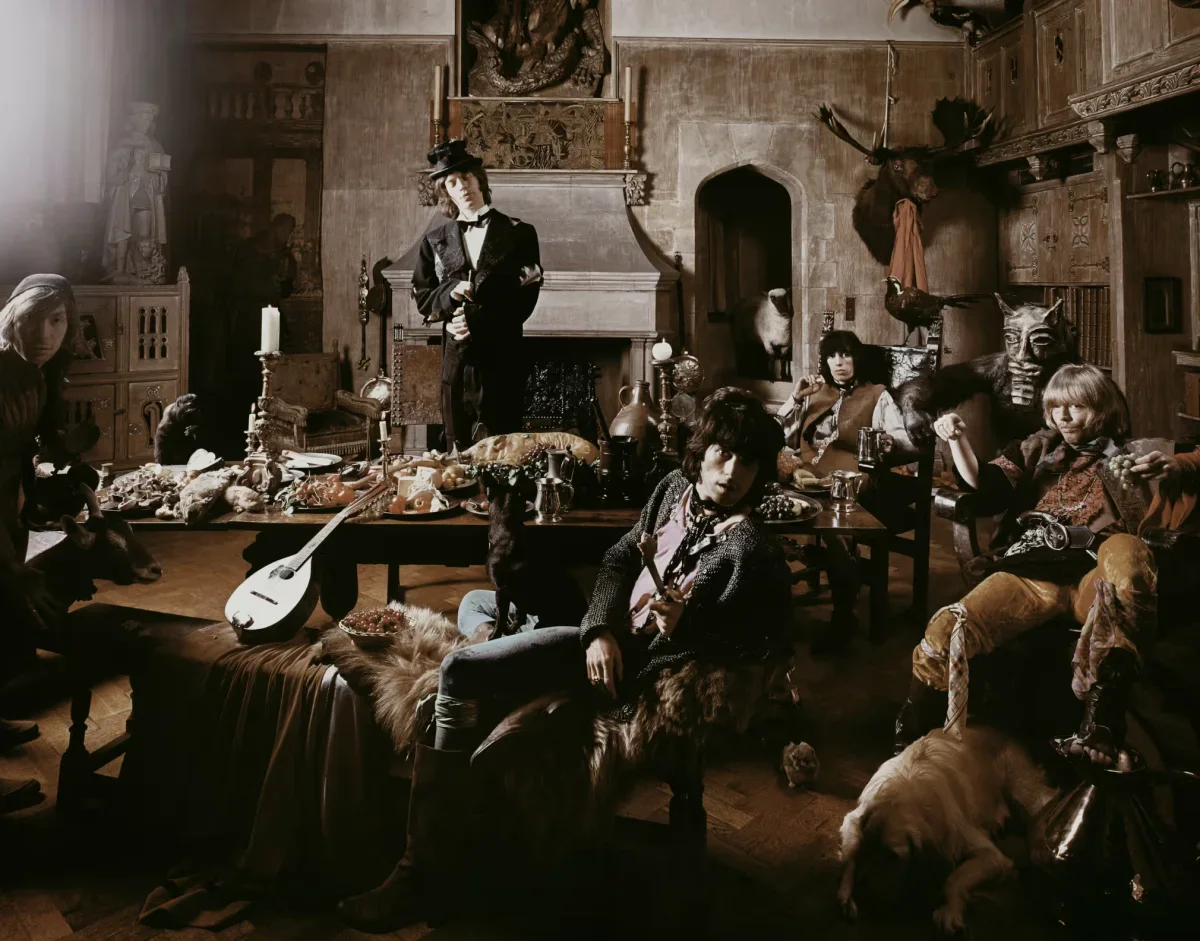
Jagger portrayed Street Fighting Man, but they have never been to them; On the day, when at a concert in Altamont, the Angels of Hell killed a man right in front of the stage, jumped off the stage and rushed into the thick of the fights, but Marty Balin from Jefferson Airplane. The Rolling Stones Let it Bleed album seems to be an aggressive statement and mockery of the Beatle It BE, but no blood is pouring there, and not a single fragment from a broken window hurt his hand. The luxurious cover of the Beggars Banquet album depicted a feast of beggars in all savory details, but it was just a play of a feast and picturesque rags, while completely different people became poor, like Danny Kirvana from Fleetwood Mac.
Rolling Stones always gave themselves as an aggressive group, but it was not a real aggression, but a marketing move and a stage game in aggression. In one concert, Johnny Rotten had more aggression than in all the stylizations of Mick Jagger.
This is not a comparison of two incomparable and not a reproach for anyone, but only an arrangement without deception.
Jagger rose up to the heights of grandiose financial success and worldwide glory, and lifted Rock and Roll into these edges with himself. Many looked at this rise skeptically, because he turned the group into an enterprise and a song production plant; Many believed that Rolling Stones repeated themselves fifty years, and Sir Paul McCartney called them a “good cover group group” a couple of years ago. But if you can disagree with such a connoisseur as Macca, then where is the blues? The blues left the music of Rolling Stones, and if it remained on their grandiose shows, then only in the form of a stingy issued additive for food or additive to machine oil.
And even in the archive, deeply hidden under the mass of released license plates, collections, compilations and other things, and other things. There, at the bottom of one hundred and fifth archival chest with any historical junk, lies Cocksucker Blues , the name of which we will not translate due to the reluctance of censorship problems; Not included in any album, it lies there, this beautiful blues, full of despondency and desires.
Those great things that Rolling Stones composed and played at the beginning of their amazing - and not only long - life path, remained. There was a Paint It Black , in the sound of which there was a density and severity that was not before, during vinyl and frivolous carnabi-stange with a boutique of Mary Quantum; There was a luxurious Miss You , where, as always, the jagger’s vocals reigns and a red cape and a black skirt of a delicious and passionate Louise Fisher, which painted a red point on his forehead, reigns. And again, a slow Lady Jane sounds over the end of a feral delusional world, all in the busting of a baroque harplok, pierced by the sounds of an archaic dulcimer, on which he played, or even imagined what he was playing, Brian Jones. No one still knows who this mysterious Lady Jane is, perhaps, the daughter of the former English ambassador in Washington, which Mick Jagger was in love with, and maybe something completely different, which is not quite decent to talk about and that Lady Chatterlae's erotic fantasies are about. This is not important, just as it doesn’t matter where the same Lady Anna that appears in the second part of, and who is Sweet Marie, an excellent vision arising for a few seconds at the end of the song.
Jagger sings this thing with incredible tenderness.