
Translated material
“In large letters,“ Freedom of Speech ”is written. And this is a fake-nuc "
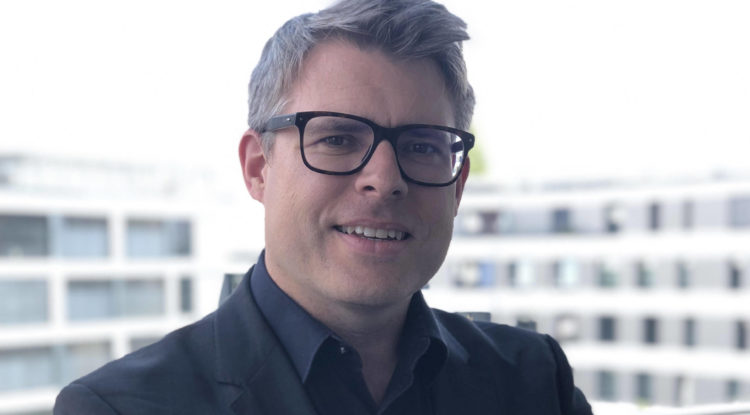
Psychologist Christian Montag-about how online platforms manipulate our choice
The publishing house of Individuum published a book by a psychologist, professor at the University of Ulm in Germany Christian Montaga "New Gods". “New Gods” mean online platforms and social networks that indicate users, for whom to vote, what to buy and what to think about. Montag explains how user manipulation mechanisms work, analyzes their effectiveness and tells how to protect themselves from them. The editor of Kholoda Maxim conspiration talked with the Montag about this and how the algorithms of social networks are associated with the Russian invasion of Ukraine.
In order not to miss the main materials of the "cold", subscribe to our Instagram and telegram .
In the preface to the Russian publication* “New Gods” , you write that ** “ is very happy to see your book published in Russian .” Many of your colleagues do not share this position and forbid the publication of their books, films, music in Russia. Why do you think differently? *
- I understand the problem you are talking about. Yes, on the one hand, we are witnesses of the terrible attack of Russia on Ukraine. Many people equate the Russian government with Russian citizens and culture. But I think that most ordinary Russians have nothing to do with politics and they should receive information about what is happening in the world.
I think that my book is very important for understanding how online platforms manipulate our choice. In our terrible time, social networks are especially often used for misinformation, and I think that my book, published in Russian, will help shed light on some mechanisms underlying social networks that clearly play a large role in the Russian war on Ukrainian land.

You only mention the Russian invasion of Ukraine once in the book - again in the preface. But do you see the connection between this war and the processes that you describe in your book?
- I do not mention this war, because the book was written before the attack of Russia on Ukraine. But there is a long chapter dedicated to misinformation and fakes. The mechanism of their distribution is universal: social networks are interested in spending more time there: so people leave a greater digital trace, information about their interests, which can then be used for any purpose.
The platforms realized that it is easiest to delay people, to take possession of their attention, showing them only what they like. So algorithms work. Imagine a person who learns news only from his tape on a social network. He has a certain picture of the world, he is connected with people who translate the ideas close to him. And he receives confirmation to them every day.
Around his worldview, an echocator is formed, or an information bubble, so this opinion is constantly enhanced and does not change. The concept of the information bubble has long been criticized, but it still works and works fine.
In today's Russia, the situation is such that the media landscape is cleaned, that is, the state is carried out. And if a person comes to social networks with the attitudes that received from the authorities, then social networks will only support them.
In addition, the algorithms of many social networks encourage fake news. Why so? Because fake news, as a rule, is very bright, they impress: “Wow! Can't be! Wow! "And many people are on this. And social networks are won, because people spend more time on the platform.
You are talking about the fault of online platforms, and this can be interpreted as an excuse for those who support the war. They are victims of algorithms and propaganda; Let's sympathize with them.
- Well, this is a simplification. We know that civil society consists of many factors. I am not saying that people are not responsible. I live in Germany, we had the Third Reich and World War II. And people who did not resist the regime shared responsibility for his crimes.
Nevertheless, it is impossible to deny the fact that it becomes more difficult for people to receive truthful information when the media and social networks create their narrative. It seems to me that now in Russia access to alternative sources of information requires a great effort from a person. Searching for the truth is practically work. I know this in my experience in China, where the state controls the Internet. People use VPN services, find technical solutions to bypassing locks-but this is very difficult. But when you did all this, you still need to somehow distinguish lies from the truth.
In the book you tell which people are easier to believe in fake news. Which?
- We conducted a great study to understand this. We tried different things: intelligence tests, studied character traits and so on. And one factor turned out to be the most relevant - not an intellectual factor, not a character factor, but trust. Trust for society and power.
It is interesting that those who have more trust, better coped with distinguishing real news and fakes than those who had no trust. That is, if a person does not trust the current system in advance, he sees a fake and says: “Yes! They are right, they support my picture of the world! "
But our study is relevant for Germany. I do not know what it would show in Russia, where the state often generates fake news.
Governments, politicians and commercial companies-do they use social networks equally or differently? It is from the point of view of propaganda mechanisms.
- First you need to discuss the terms. There are politicians, for example, in opposition who are the same people like you and me. They communicate with their audience on Twitter, try to convey their position, sometimes get Hait in response, offend and leave.
But there are politicians who either have real power, or fight for the highest posts. Can a politician with the help of social networks forced the user to vote in one way or another - just as companies make you buy their products?
Let us recall the campaign of Trump and Clinton and the scandal with Cambridge Analytica, which supposedly influenced the elections.
Cambridge Analytica?
The British company that used the technologies of a deep analysis of data to develop election campaigns strategies. CA collected data on Internet users, taking advantage of the fact that they inattentively read licensing agreements. Further without the knowledge of users, it made up their psychological portraits and based on them developed personalized advertising.
In 2015, CA participated in the presidential election campaign Ted Cruise. In 2016 - in the presidential campaign of Trump. The company was also suspected of influencing the results of voting on the exit of Great Britain from the European Union (the investigation did not confirm) and the elections of President Kenya Uhur Keniata. In 2018, Cambridge Analytica went bankrupt after a series of scandals.
There was a very interesting independent study showing that by the digital trail of a person it is possible to determine, for example, an introvert of an extrovert, and adjust the campaign in accordance with the alleged type of personality.
You look at the digital trace, how a person corresponds and decide that he is an extrovert. Then you show him more extrovert advertising. And the experiment showed that a person is more likely to vote for this. Simply put, extroverts are sociable, decisive, lively people. In this experiment, a group of the Netherlands showed them an advertisement like “If you vote for us - you are a hero!”, With a strong message. And then they voted with more hunting for this campaign than if they were shown an introvert version like “Everyone can make their own contribution. Vote for us. "
So, if you find a correspondence between a person’s digital following and personal characteristics, this can affect voting. This is the result of independent scientific research.
Which social network is now most politicized?
- I think Twitter, which is now called just X. I think this is one of the most politicized platforms in the world. Previously, we could talk about Facebook: he played a large role in many campaigns, for example, in the famous confrontation of Trump and Hillary Clinton.
Yes, there are, of course, smaller platforms, such as the platform of Trump itself, but they attract users of a certain type. On them in capital letters it is written "Freedom of speech." And there people are urge to spread fake news.
What do you think about changes on Twitter after Ilon Musk bought it?
“I am generally not a supporter of the situation when one person owns such a strong tool, whether Elon Musk or Mark Zuckerberg. If one person has the opportunity to influence the policy of such a popular platform, this creates many problems. These people do not understand all their responsibility. If you look at how Elon Musk appeared on Twitter, how extravagant controls it ... Yes, it was obvious that the platform was moving in the wrong direction: there was more hatred, I saw the statistics according to which more right ideas are spreading. But in response to this, Twitter is moving to copy Chinese social networks.
Technologically, the main idea of Ilona Mask is to make a superposition like Chinese WeChat from Twitter, so that in the near future through X, as it is now called, it is possible to perform financial transactions. By the way, Meta also moves in this direction. It is often said that the Chinese are imitators, but now it is Western social networks that copy Chinese.
You criticize almost all social networks and, it seems, the Internet as a whole. But after all, both were conceived precisely as the space of freedom, where the key concept was “the possibility of choosing”. When did everything go wrong?
-Let's get back to the 1990s. It was a time when there was no Google and Facebook, and Amazon, it seems, only appeared. Then the Clinton administration adopted the law on telecommunications (we are talking about article 230 of this law, which exempt the Internet companies from liability for information published by users on their platforms.-Approx. "Cold") .
That is, if you provide a certain infrastructure and someone publishes a fake there, the company is not responsible for this. Now it seems mad: how can this be? But for many years, until today, large companies refer to this law and say: “Look, we are just information infrastructure, we are not responsible for publishing here.”
I think that this document allows us to understand why social networks are still a lot of hands. Because they say: "We are infrastructure, not the media." But, of course, in nature, social networks are something average. Yes, they give infrastructure, but often at the same time are the media. Obviously, they need regulation, and this section of the law is the subject of fierce disputes. Probably, they will talk a lot about him next year, when we will see the next presidential election in the United States. Democrats and Republicans will argue whether this law needs to be changed.
We can hope for a technological solution, and this is also discussed for many years. You can change the algorithm - so that a person, say, supports the war, and information from the other side appears in the tape.
Legisly change the algorithms of social networks? Is it possible?
- Technically - yes, take at least the example of China. But in China, the Internet is limited for political reasons. In general, I am talking not only about the laws, but also about the new rules that the owners of social networks will accept. Social networks are supranational agents. They act not in one country, but around the world. Of course, they have the opportunity to change the algorithms and make sure that some news is filtered.
But why? The current situation is beneficial to everyone. Facebook is growing, Twitter is growing. Why should they change algorithms?
- This is a question of business responsibility.
That is, the question is, who makes decisions? If Elon Musk -Twitter begins to trade currency, if Putin - the war will begin, and if the Pope - the Internet will obey Christian values?
- That is why I am categorically against such large platforms belong to one person and company. This is too much power.
Despite the fact that initially, again, the idea of social networks was to equalize billionaires and poor, relatively speaking. I could write to Ilon a Mask, and we would have a conversation. In the real world, on the street, it would be impossible.
- Mark Zuckerberg said that his platform gives people a voice. But he did not say that they did not listen to everyone equally. The principle of "the winner receives everything" works here. Some have millions of subscribers and a serious influence on what is happening. But collecting such an audience is incredibly difficult, and it becomes only more difficult if you are just starting to work on a platform, where there are already many hyperactive users with a large number of subscribers. Of course, the idea of equality of opportunities on the Internet failed. Yes, you can still start your account, but will they hear you? Probably not.
Do you believe that someday the Internet will unfold to the ideals of freedom, equality and accessibility of information?
- Scientists are now talking a lot about what Web 3.0 should look like. Of course, most independent researchers agree that we do not need a future created by several companies. We see that Facebook has changed the name to Meta because they want to create a metavselnaya, they want to create the future. Of course, other companies also want this. And I think that now it is necessary to make sure that the future is not in the hands of the few elected.
One of the images of such a future is free software for creating social networks. Take, for example, [Twitter analogue] Mastodon, which allows users to decide for themselves where to store their data and where to move it if they are disappointed in any of the social networks.
Thus, we can influence where our data is located, where we want to place it and why, with whom and on which platform we want to interact. We see in the European Union the law on digital services and the law on digital markets, which already allow you to regulate the activities of large companies and services on the network. I hope they will become a powerful tool with which large companies can be adjusted in the near future. And this will grow more healthy social networks.