
Translated material
Be a saint
About the novel by Graham Green "Strength and Glory"
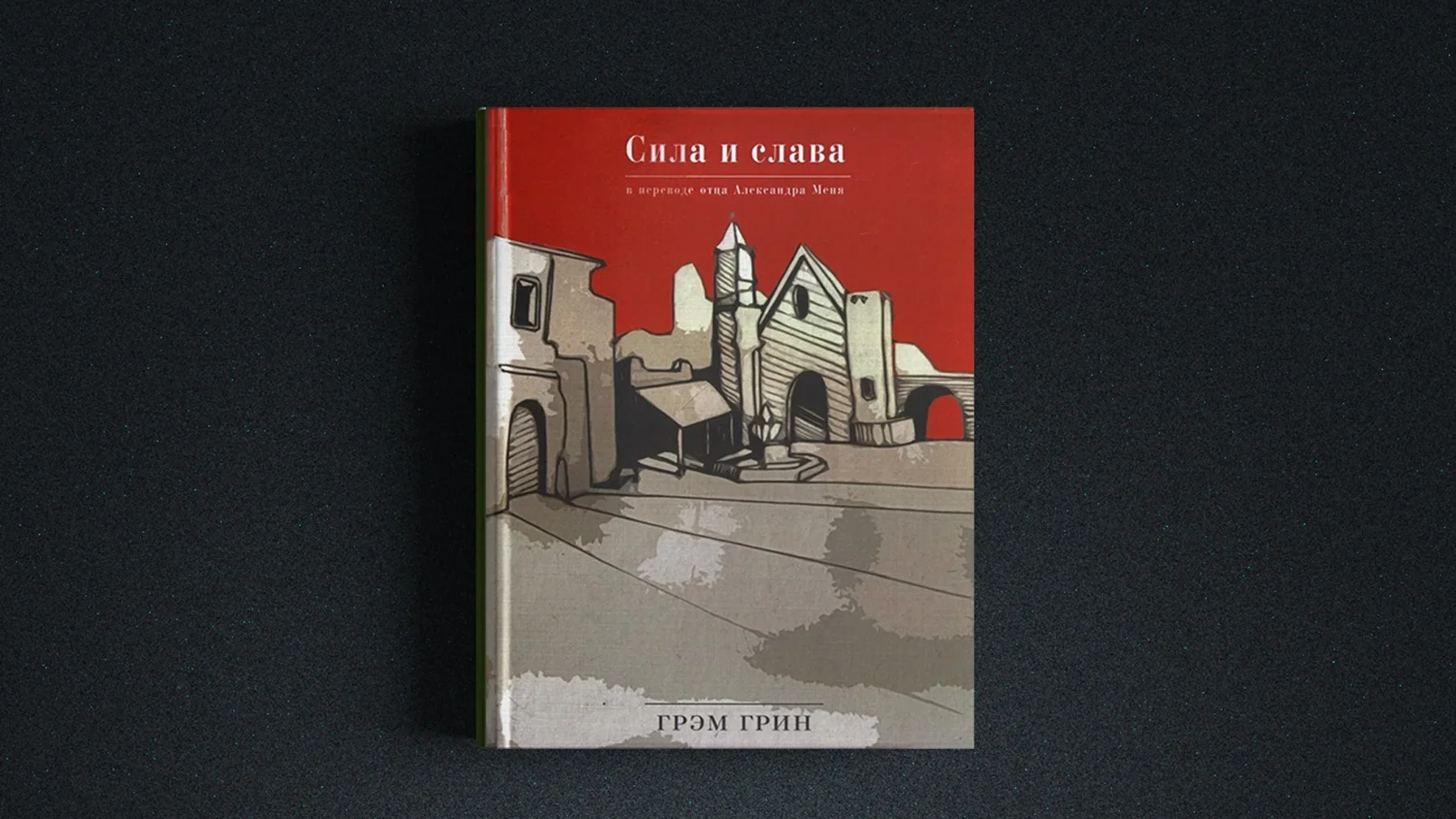
Cover of the book "Strength and Glory"
Another type of personality that manifests itself in the conditions of the dictatorship and which we have not yet mentioned in our Saturday section is a saint. Due to the fact that it is generally possible for a person to divide the world into black and white, to glue the label of holiness as fashionable as the labels of a hero, a genius or a traitor. But the problem is that the criteria of “holiness” in real life, and not in life, are even more blurred than the criteria of “positive” or “negative” heroes in literature. And the most clearly about this blurring of the criteria, it seems, Graham Green spoke in the novel “Strength and Glory”.
Mexico, the 1920s-the time of the social revolution and persecution of Christians. Repressions against the clergy, a complete ban on worship, the closure of temples, the seizure of liturgical literature - in general, a picture known for Russia. In the end, there remains a single priest who did not lose San and did not renounce faith-and he is not a strong-willed and wise shepherd, which his role requires, but the nameless “Drinking Padre”-an alcoholic with an illegitimate daughter. He walks around the villages, professes, communes, baptizes - that is, performs professional duties, and in the breaks between them drinks and tries to escape abroad or at least hide from the police pursuing him. If there is a type of hero that does not correspond to the plot in which he was placed, then this is he. Yes, and Padre himself has no desire to be a symbol or icon-he did not emigrate, along with everyone, not from any insights or heroic motives, but simply: at first it was too early to leave, then it became too late. And in general: from school he was considered a weakling, limp, teased and mocked, and then suddenly he was left alone in the middle of a pitch danger - it seems like a bold one. Nice.
In contrast to him “on the other side of the barricades” a character was placed, much more corresponding to the generally accepted standards of holiness. This is the lieutenant pursuing a priest - also, by the way, nameless. The lieutenant has clear principles, impeccable reputation, integral character - and, in general, extremely humanistic beliefs: he wants to make people happy. The church, he believes, enslaves a person, and he wants to make everyone free, who are entitled to any happiness. Only two small “but” interferes with the end of the image of the saint:
Firstly, happiness for all for nothing is possible for him exclusively in the form in which he himself imagines him. And the second: in order for someone to reach this paradise, he is ready to send a couple of dozens of others to hell.
He comes up with a simple and effective way to catch a priest: to take a hostage in every village and, if the peasants do not give out a “drinking paradise”, shoot them - those who he was going to make happy. “I want to give my heart to people,” he formulates his super -task. “Without letting go of the revolver’s hands,” adds the priest.
So these two play the catch -ups, and the background serves them with devastation and poverty, the cult of war and violence - and it is expressed not only in executions and the destruction of temples, which are described quite generally, but in general: in the relations of people, in the image of their life, in nature itself. And in the end, the spoiler, of course, wins a good, fundamental and nonsense lieutenant, and Padre's bad sinner becomes a gun, having managed to mutter something slurred before the execution-it seems: “I'm sorry”. And here, perhaps, the most interesting begins. The final of the novel is interpreted differently. The most common point of view is that it is “sorry”, of course, the defeat of a priest who could not find the strength in himself if something heroic and strong-willed, then at least courageously remain silent. I see in this semi -nominal muttering his complete victory: who dreamed of confessing before his death, but not finding the one who could accept confession, he eventually manages to ask for forgiveness at once in the whole world - as the priest does this before the arrival, and as the robber died on the cross, asking Christ to mention him. That is, he dies to repentant - and saints.
He did not win because he survived - he did not survive. He did not win because he had accomplished a feat or saved someone-he did nothing and did not save anyone.
But he won because among the inhumanity and lacquered rhetoric of the war he remained a man - with all his vices and contradictions.
He won because among the dominance of the perverted religion - faith in paradise for the elect, in the normality of the murder, in the normality of the dislike - the only one retained faith in the undistorted god, the faith in love and the value of every soul, and preached this faith. And it was he who, ultimately, possessed real power and glory - because in any conditions, whether it was war, prison, dictatorship, poverty and other, "only one thing is important - to be a saints."
QUOTE
He said:- One of the fathers of the church told us that joy is always associated with suffering. Suffering is part of joy. We are tormented by hunger, and remember what pleasure it is when we can finally get enough. We are longing ... - he fell silent, looking at human shadows, expecting that caustic laughs would be heard now, but no one laughed. He said:
“We deprive ourselves of a lot to enjoy later.” You heard about the rich in the northern countries that eat salty in order to divert what they have a cocktail. Before the wedding, after the engagement, it takes a long time and ... - he fell silent again. He is not worthy - this feeling of weight hung in his tongue. In the hut, it smelled with hot wax: one candle was melted in an unbearable night heat. People fidgeted on the hard floor. The heavy spirit from the long -noted human bodies clogged the smell of wax. His voice sounded stubbornly, imperiously:
“That's why I tell you: Paradise is here on Earth.” Your life is a part of paradise bliss, just like suffering is part of joy. Pray that the Lord sends you more and more suffering. Do not drive suffering from yourself. The police who are watching you; soldiers who collect taxes from you; Hef who hits you when you cannot pay him by poverty; Black smallpox, fever, hunger ... All this brings you closer to paradise bliss. Who knows, maybe without experiencing all this, you will not taste bliss completely. It will be incomplete. And the paradise? What are paradises? - Smooth, literary phrases that came to his memory from another life - a strict, measured life in the seminary - confused in his tongue. The names of precious stones. Jerusalem Golden. But these people have never seen gold.