
Translated material
"Better I go to the irises than they are on me." How Russia is fighting with Ukrainian firefighters, rescuers and sappers
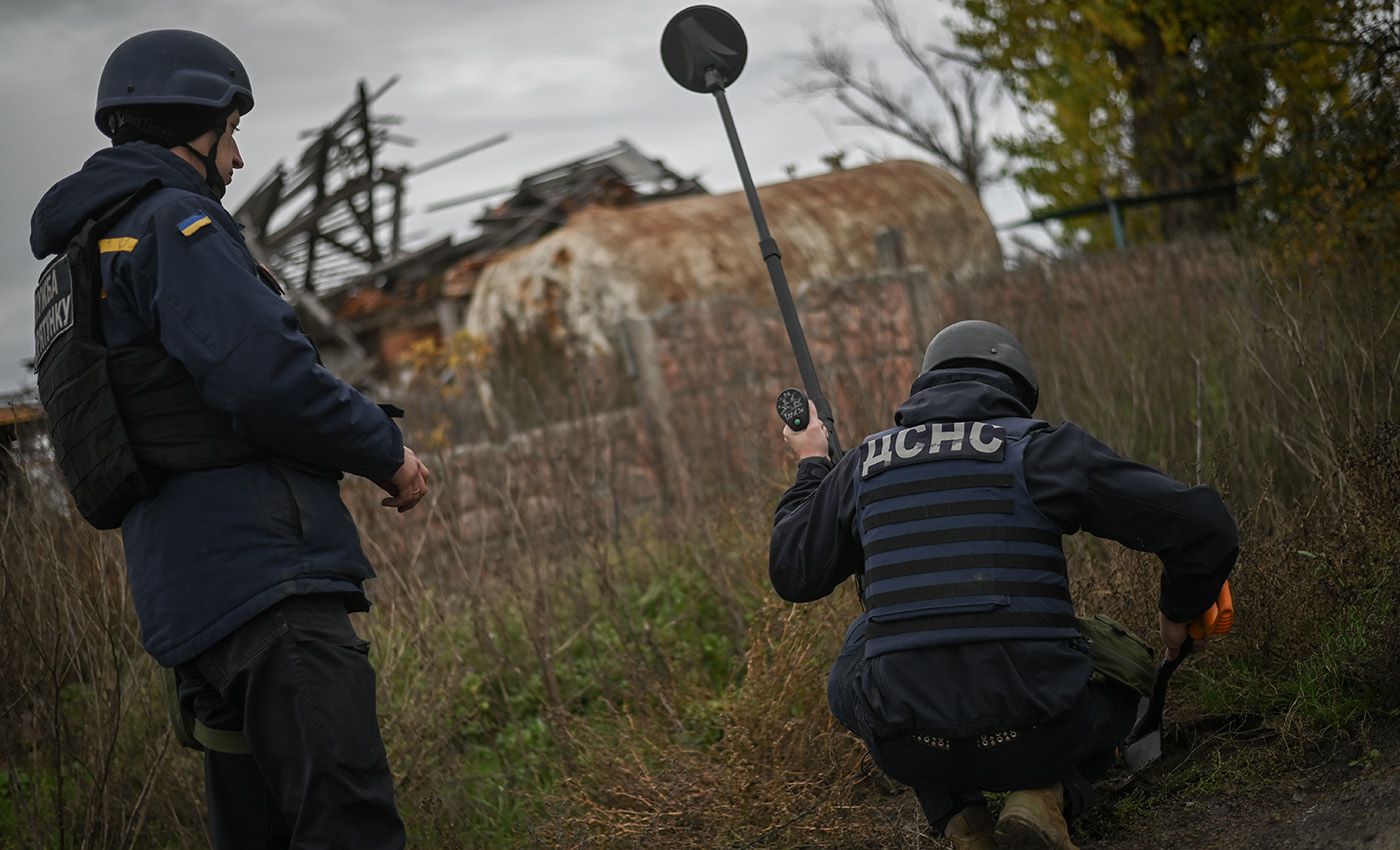
Kherson's rescue services work the whole war. Even during the occupation, firefighters remained in the city: they refused to take fuel from Russians, but thanks to volunteers they had the opportunity to go on fires. Now they are fighting with the consequences of shelling of Russian artillery - and themselves become their victims. Like sapper teams that used to look for shells from the Second World War, and now they cleanse Kherson and surroundings from Russian ammunition. The correspondent of Economist, Novel, visited Kherson and talked with firefighters and sappers. "Mediazona" publishes a translation of her report.
40-year-old Andrei Orlov almost finished work. He called his wife, said he would be at home soon. On May 6, there were colleagues for him who are engaged in the search and neutralization of mines, an ordinary working day: they collected unexploded shells in Kherson and its environs and took them to a distant field for sorting. Those that could still be useful, the detachment of Orlov sent the Armed Forces, and blew up the rest.
But that day Andrei's wife heard his voice for the last time. Soon after the call, he and five more colleagues died. The ambulance driver, who accompanied the detachment and parked a little at a distance, got out of the car to relieve the need. He heard someone screaming: "Dron!" Then there was an explosion.
Karina Filatova, a 23-year-old nurse, also working with Orlov, stood behind a charred Russian truck-another reminder of Kherson's occupation, which ended last November. She heard three shells one after the other. “I rushed to the ground,” says Karina. - Then she felt an explosive wave. We got into the cabin of a truck, a fragment whistled right above my head. I either lost consciousness, then came to my senses. ”
The remaining members of the brigade worked in another part of the city. They rushed to the rescue with the police, soldiers and prosecutors. Karina had her leg broken, but on adrenaline she was able to reach her colleagues. Then the shelling began again. Everyone hid in the ditch. “If the first salvo was from three charges, then the second out of fifteen to twenty,” says Karina, who finally lost consciousness after the second volley and woke up already in the hospital in Odessa.
Then the Ukrainian military told Karin that her detachment fell under the Russian artillery shelling, most likely, on a tip of the reconnaissance drone. I spoke with dozens of rescuers and sappers in Kherson, and they are all sure that the Russian military was aimed at them. Oksana Ulyanova, who works in the rescue service of the Kherson region, said that her colleagues are fired every day. In January, they got into two fire parts.
Two hours passed before people were allowed to approach the place where Andrei Orlov and his colleagues worked. Due to the shelling, the mines that they collected were detonated. The bodies of rescuers were smashed into pieces.
“They were like brothers to us. We spent more time at work than at home, especially when only we were evacuated and remained, ”says Sergey Seroshtan, the head of the mine clearance detachment. Before the war, the main task of the detachment was to collect unexploded bombs from the Second World War. “I still can’t believe that this was true,” says Sergey. “As if they had drove somewhere at work and did not return.”
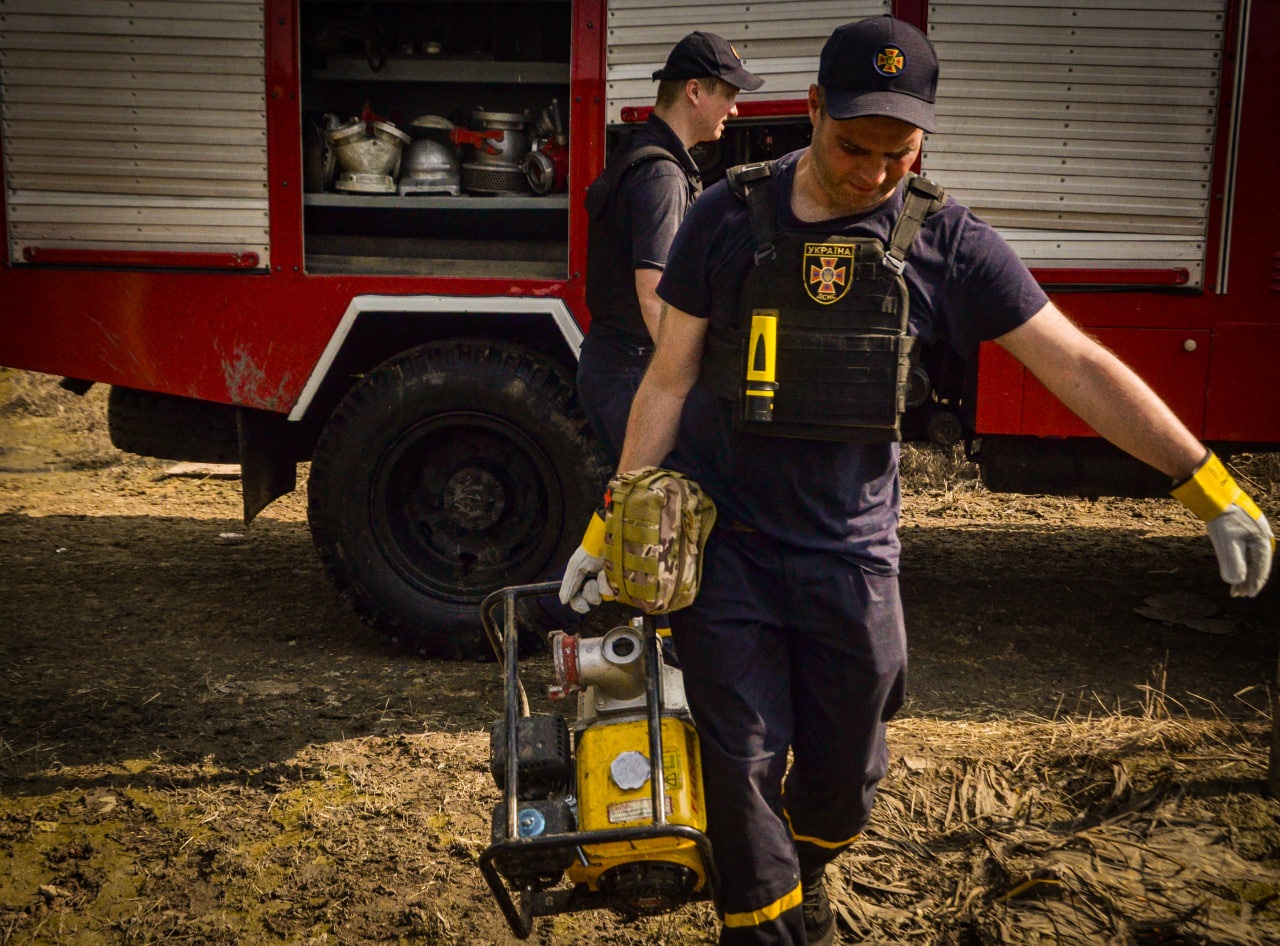
Ukrainian firefighters in Kherson after the destruction of the Kakhovskaya hydroelectric power station. Photo: Latin America News Agency / Reuters
* * *
Kherson’s rescue services kept the city all eight months of occupation and, after constant Russian shelling, during the flood, which began after the destruction of the Kakhovskaya hydroelectric power station in June. Before the war, 280 thousand people lived in Kherson. Now only a small part remains, the inhabitants of the city have left for other regions of the country.
Volleys are constantly heard in the city. There are no more safe areas. Residential buildings regularly find themselves under shelling: in May the shell hit the supermarket, 23 people died. The building of the district administration, next to which people gathered to welcome Ukrainian soldiers in November, was destroyed by a missile blow. Windows throughout the city are clogged with boards. But the most dangerous zone is the bank of the river, where children played not so long ago, and the companies fried barbells: now it is shot by Russian snipers.
Life continues - in breaks between shelling. When I arrived at the fire department, firefighters were sitting in front of the building. They calmly chatted and ate ice cream until it was time to run into shelter. According to them, there are almost no “normal” fires in Kherson now-due to the fact that there are so few inhabitants in the city. Most often they are engaged in saving people after Russian shelling.
When Kherson was under occupation in March 2022, most of the rescuers continued to work. They say that they did not want to throw their city to the mercy of fate. At the same time, the Russians occupied the building of the fire department where I visited, and even held important meetings in it - expected that the Armed Forces would not bomb him.
At the beginning of the occupation, Russian soldiers decided to scare the Ukrainian firefighters. “They parked their truck back to us and threw back the side,” says senior firefighter Konstantin Kozak. - There was a tied man in one underwear, his mouth was clung. At first we thought, this is one of the colleagues. But then they decided that it was just for intimidation. ” (It was a Ukrainian, but the firefighters did not understand - a civilian or a soldier.)
The Russian military dashed mobile communications in the city so that residents could not communicate on the phone. And the townspeople who could not get through the firefighters, sometimes just came to the unit to report that they needed help. Firefighters refused to take fuel from the Russians and used what volunteers brought.
After six months of Russian occupation, the Ukrainian government reported that there would no longer be paid salaries to rescue services employees. By that time, many firefighters left - and returned two months later, when Ukrainian troops liberated the city. Some decided to go to the side of the Russians. “There was one man, our driver, about thirty to him. I saw a video where he goes to the other side with our equipment, ”says fireman Vladimir Rezyanov. “I don’t understand why he did this.”
On June 20, the usual challenge ended with a tragedy. The fire brigade climbed into the armored car and went on a flooded road. They just began to pump out water when the first shell flew.
“We did not understand where he fell, but it was clear that it was very close,” says 20-year-old Andrei Sidletsky, who at that time worked in the part of only two months. On the way back to the car, they met another fire brigade and decided to wait all together in one of the empty buildings. The next shelling began.
Some of the firefighters rushed to the car, but Sidletsky got stuck in muddy swampy water. He asked his comrade to help, and while he pulled him out, new shells fell. They lay facing in muddy water. And then they heard screams. Leaving the shoes in the water, Sidletsky and his colleague ran to his voice. “There was so much smoke that it was difficult to breathe, but I ran to the guy who was killed,” he says. - I leaned toward him, examined. He tried to reach him, but he no longer reacted. ” The deceased, Kirill Sidorchuk, was 25 years old.
“I could not stay with him because we were in the open. I would have nowhere to hide if they hit again, ”says Sidletsky. He ran to the other side of the street when the fourth attack began. “They beat exactly for us, this is not a coincidence. Right for us, ”he says.
* * *
Looking at how firefighters drink coffee and eat soup in Kapterka, and you won’t think that they witnessed truly terrible events. Everyone copes with the experienced as he can. For some, this is black humor. One fireman joked about how many times he landed in the nearest flowerbed to hide from fragments: "Better I go to the irises than they are on me."
For others, this is self -care. Despite the crutches, Karina Filatova, a nurse, who worked with a clearance detachment, came in an interview with stacked hair and neat makeup. She said that she watched the whole war, and when the water and electricity was turned off, she washed her head in the river, and the hair dryer was connected to the generator. When all the beauty salons closed in the city during the occupation, Karina got the tools left by manicure, and painted her nails at home. “It is healing,” she says.
Author: National Koshiv
Original: Ukraine's Emergency Workers Say they Arewing Deliberaatly Targeted . The Economist / 1843, July 17, 2023
Translation: Vera Nifler
© 2023, The Economist Newspaper Limited. All Rights Reserved. Published Under License. The Original Content, In English, Can Be Found On www.economist.com