
Translated material
"Office at Putinism"
The Russian BBC Service told the story of the degradation of Russian diplomacy
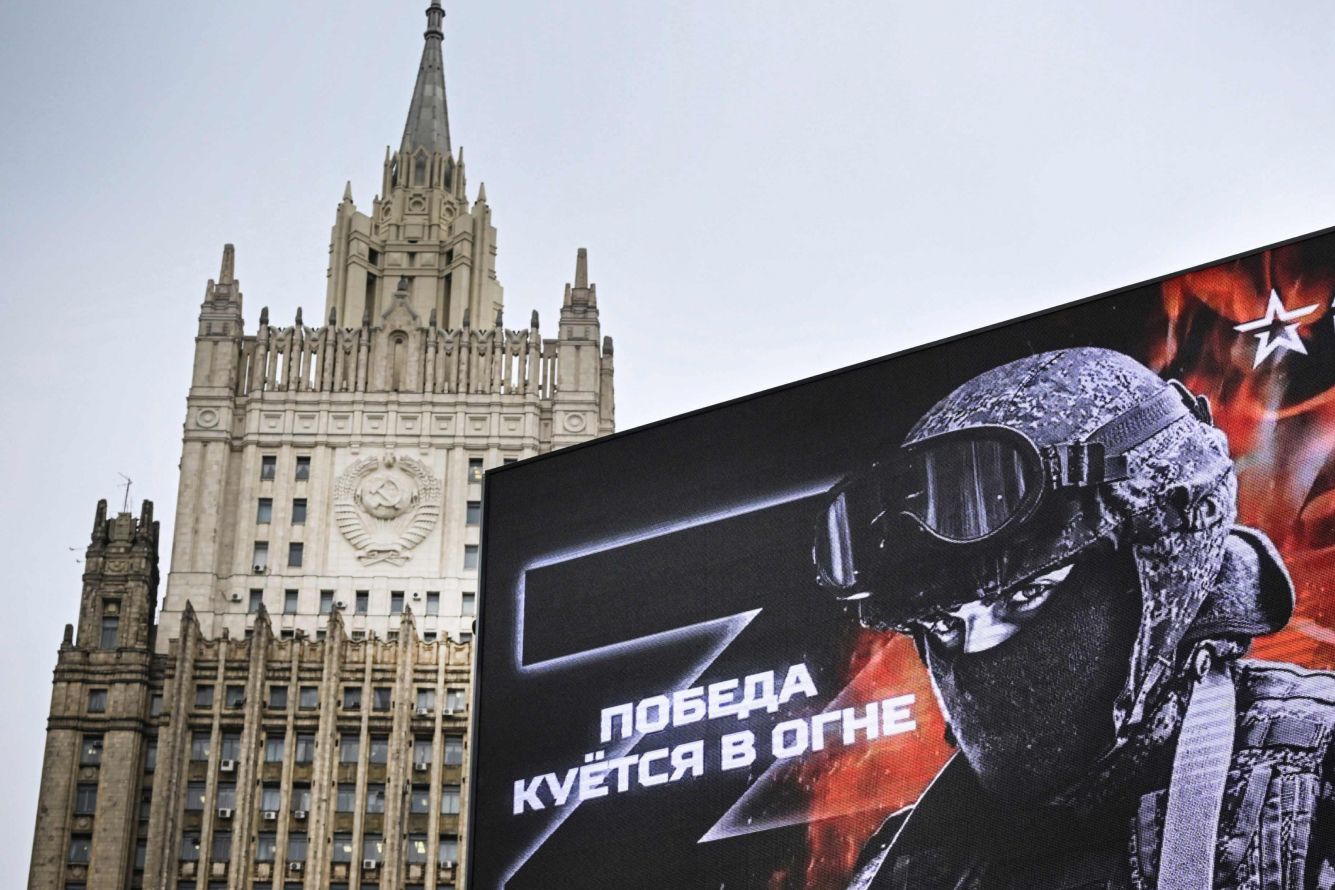
In March 2000, Vladimir Putin said that Russia was ready to cooperate with NATO “up to joining the Alliance”, and also noted that he could not represent Russia “isolated from Europe”. The director of the Berlin Center for the Study of Russia and Eurasia, Alexander Gabuev, in a conversation with the BBC, emphasized that in the first two presidential terms of Putin, Russian diplomats had something to merge. However, even then people “with a broken creative and critical thinking,” the interlocutor of the publication who worked in the 2000s in the Kremlin emphasized into the Russian diplomatic corps. He called the Russian Ministry of Foreign Affairs "in a half -nuclear organization" with a "specific Midovo language, where there is no names of his own."
In 2004, the presidential administration employees recommended Putin Sergei Lavrov as the Foreign Minister. According to the former Kremlin official, Lavrov "understood about the States and about Europe." “But it was a different laurel. Over the years, he has been greatly transformed, ”says the interlocutor of the BBC. Lavrov’s “transformation” was also announced by the former adviser to the constant representative office of Russia at the UN in Geneva Boris Bondarev, who resigned after the Russian invasion of Ukraine in the spring of 2022. In his opinion, Lavrov changed after Putin and could not be otherwise, since in any country of the world the opinion of the Ministry of Foreign Affairs may not differ from the opinion of the president if the official wants to stay at his post.
The BBC recalls how in 2009 the then US Secretary of State Hillary Clinton handed over to Lavrov a symbolic “reboot button” of Russian-American relations. Then the Russian-American Workers Commission on the development of civil society appeared-from Washington, it was headed by the future US Ambassador to the Russian Federation Michael McFol, and from the part of Moscow-the first deputy head of the presidential administration Vladislav Surkov.
Former speaker of Barack Obama Ben Roads noted that the White House understood: despite the fact that Putin left the post of president, he still determines the course of the country. So, during a meeting with Obama in 2009, Putin set out his view of his world and blame the predecessor of Obama, George Bush Jr., to the American president in Russia, writes BBC. “He complained that he held out his hand to the United States after September 11. And all that he received is the US withdrawal from the PRO agreement, the war in Iraq and the expansion of NATO, ”Roads said. According to him, from meetings between Obama and Dmitry Medvedev, American officials came out with full confidence that Russian diplomats were not subordinate to the president, but to Putin, who was then the prime minister.
Then in Washington they realized that there would be no “rebooting”. Roads called Lavrov “a man who is simply floating with the flow”: “When it carried us towards the“ rebooting ”, he went in this direction, and when the wind changed, his behavior changed.” At the same time, the former Kremlin official said “BBC” that Putin had not previously approved: he did not like when the Russian Foreign Ministry “always tries to pull up”. But already in the 2010s, according to the interlocutor of the publication, Putin did not bother Putin that he had “on dancing” diplomats.
According to Macfol and Roads, a failure in an attempt to establish relations between countries is connected with three events: Arab in the spring, US invasion (this convinced Putin that Washington sees its goal to overthrow other regimes), and protests in Russia in 2011-2012, which the US authorities have positively spoke. The BBC interlocutors note that with the return of Putin to the Kremlin, the language of the foreign policy of Moscow has changed. The publication gives several quotes of Russian ambassadors and officials of the Foreign Ministry said in recent years:
- “Look at me! Do not take your eyes off! What are you taking away your eyes? " (Deputy Permanent Representative of the Russian Federation Vladimir Safronkov, referring to the British Permanent Representative of Matthew Ryruct);
- “Sorry for the language - but we fraught with the sanctions of the West” ( the Ambassador of the Russian Federation to Sweden Victor Tatarintsev);
- “ Talk with peacocks” (Sergey Lavrov - a journalist who asked for permission to ask a question);
- “Morons, fucking” (Sergey Lavrov );
- “The Cossack strategy of the Kiev regime is not news for anyone” (official representative of the Russian Foreign Ministry Maria Zakharova );
- “Let me tell me. Otherwise, you will now really hear what Russian “grades” are ”( Maria Zakharova ).
Boris Bondarev calls the arrival of the representative of the Ministry of Foreign Affairs Maria Zakharova “Time request”. Before her, in this position were “diplomats-diplomats who muttered statements in refined expressions.” According to him, no one expected the fact that replacing them will turn out so “bright”. He noted that this style of communication has become common for many ordinary diplomats.
The BBC calls the “last straw” for relations between the Russian Federation and the West annexation of Crimea and the beginning of the conflict in the Donbass in 2014. The publication notes that the Russian Foreign Ministry continued to communicate with American colleagues on some security issues, but in the West it was obvious to everyone that the diplomats did not have control of what was happening in Ukraine, since Putin made all decisions himself. According to political scientist Alexander Gabuev, over the years, Putin was strengthened in the conviction that he “knows everything”, so he does not need diplomats. The Financial Times wrote that Sergei Lavrov was the first among civilian officials to learn about the decision to invade Ukraine - this happened on the night of February 24, 2022, a few hours before the invasion.
Ben Roads notes that in the 2010s Putin formed his own picture of the world, independent of the opinion of the Foreign Ministry. He emphasized that at meetings with Obama, Putin behaved exactly the same as during public speeches for the Russian audience. Including continued to deny that the Russian military acts in the Donbass. Diplomats also took the same style - among themselves, American officials discussed that Lavrov often said “frank lie”. According to Roads, by that time, the Ministry of Foreign Affairs turned into “robots”, who “simply read out positions” and who “had almost no influence”.
In January 2022, the deputy head of the Foreign Ministry Sergei Ryabkov and Deputy Defense Minister Alexander Fomin met in Geneva with deputy Secretary of State Wendy Sherman and Bonnie Jenkins to discuss Russian security proposals . “There was some kind of horror. The Americans are such: “Let's negotiate”. Ryabkov shouts: “We need Ukraine! We won’t leave anywhere without Ukraine! Drive with our manat [on the borders of 1997]!”. Sherman is an iron woman, but I think her jaw fell from this, ”Bondarev told BBC.
The BBC interlocutors consider it unlikely that after a year and a half of the war, diplomacy can help stop it. According to their assessment, the contradictions between Russia, Ukraine and the West are too large and there is no grounds for cook negotiations. Bondarev notes that most of the work of the diplomats takes place in a non -public field, but after the start of the war, such contacts were sharply reduced, since "there is nothing to talk about."
Analyst Samuel Charap believes that the parties will still have to say, because the only alternative to this is the victory of one of the parties on the battlefield, which neither Moscow nor Kyiv can achieve. In addition, for the United States, a long war increases the risks of NATO's direct clash with Russia and, accordingly, the use of nuclear weapons. At the same time, the expert calls Putin a “so toxic player” that it is unclear whether someone will talk to him and whether he wants to participate in settlement. Ben Roads notes that Putin still understands the usefulness of communication channels, but does not use diplomats for this - "Now these are scouts with scouts, the military with the military." In his opinion, it is "a world in which Putin wants to live."
The former Kremlin official notes that despite such conditions, diplomats do not leave the Foreign Ministry, because if you are in positions for 10-20 years, "you have all life skills atrophy." He also said that a few months ago he saw Lavrov: “A tired man. A little abrupt. The war is not his element, but he has nowhere to go. He has long heard himself. And where to go, except for retirement, is nowhere. Well, sits there, protects his chair. ” According to Ben Roads, the officials of the Ministry of Foreign Affairs are not enough courage to do something, he calls them "apparatchiks at Putinism."
Correction. Initially, the publication said that the former Ministry of Foreign Affairs Boris Bondarev said words about “apparatchiks at Putinism”. This is wrong. We apologize to the readers.