Date
Author
Евгений Берман, Арсентий Тропаревский
Source

Preserved copy
Translated material
The heir to the pharaohs
Gamal Abdel Nasser many times successfully put everything on a political map - but in the end he lost
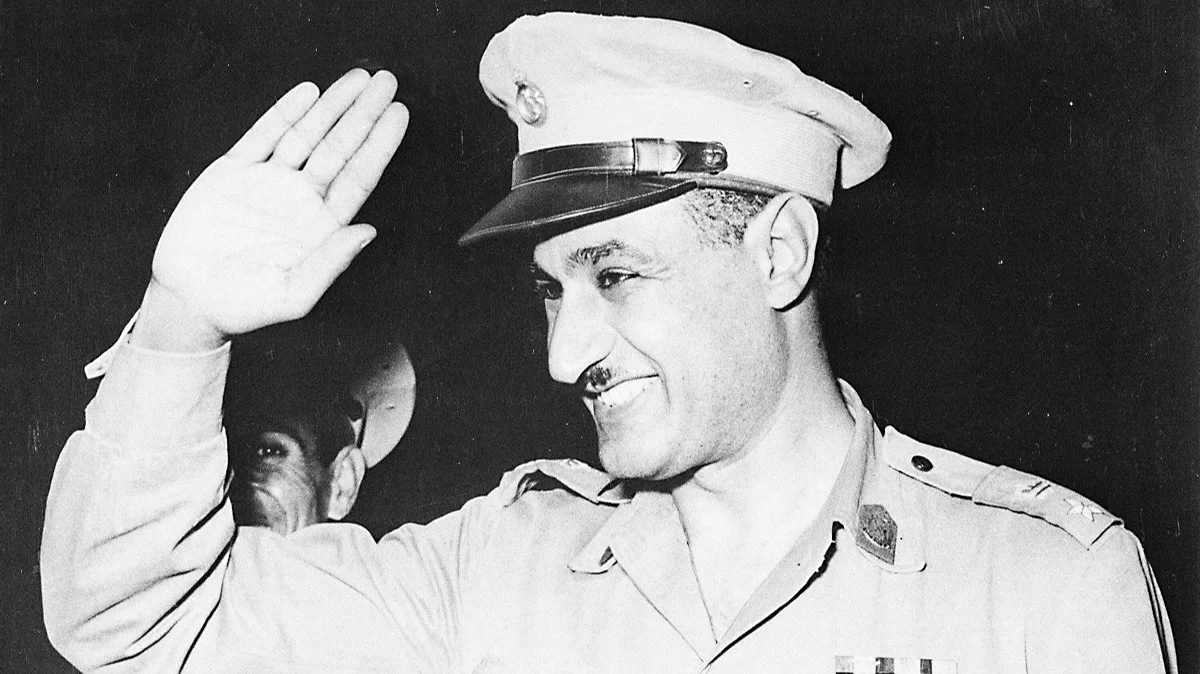
Gamal Abdel Nasser. Photo: Associated Press / East News
Among the political allies of the USSR in the 1960s, Gamal Abdel occupied a special place-he was the only leaders of the “non-socialist countries”, who was awarded the title of Hero of the Soviet Union-he had to play the large plans of Moscow in the Middle East. But the owner of Egypt preferred to play his own risky games.
Mamluks and officers
In order to understand the frenzied popularity of the first president of independent Egypt, Gamal Abel Naser, who came to power as a result of the overthrow of the monarchy and the British protectorate, it is necessary to make a short excursion into Egyptian history.
Egypt for a long time was under the rule of foreign states. First the Ottoman Empire, and then the British. During the long period of foreign dominion, the Egyptians took shape a solid national identity that pushed the people to fight the elite, consisting of newcomers - mamluks, descendants of Christian slaves who usurped power in the country, and then with the British.
The first nail into the coffin of European colonialism was driven by Colonel Ahmed Orabi, the ideological predecessor of Gamal Naser and Anvara Sadat, who made it clear
that only the military is a real force that can withstand the current authorities.
The coup, committed by “free officers” in 1952, drew his ideological inspiration precisely in the activities of Colonel Orabi.
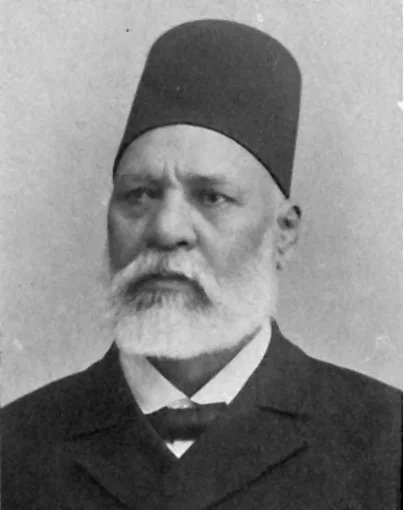
Like Nasser and Sadat, Orabi was an active participant in the combat operation as part of the Egyptian army, where he faced the egregious incompetence and unprofessionalism of the Egyptian leadership, where the army commands were in the hands of the elite - the descendants of the Mamlyukov. During the Abyssinian campaign (1874–1885), the Egyptian army suffered a crushing defeat from the Abyssinian emperor Johannes IV, which demoralized the Egyptian troops. Fearing purges from the Mamluk military elite, Orabi and his supporters went to decisive measures.
In January 1881, the Egyptian colonel handed Hediva Ismail (ruler of Egypt) the requirements for the reorganization of the army, where an equal access to military posts will become possible for the Egyptians, and on the resignation of the military minister-Cherkess. These requirements were satisfied, which created a dangerous precedent of the army’s intervention into the life of the country.
A little later, Oraby managed to get the post of military minister due to his popularity and oppose the British - but unsuccessfully. In 1882, breaking the troops of Orabi and sending him to the honorary link to Ceylon, Britain established a direct protectorate over the country, which existed before the July Revolution of 1952.
"You did what I always dreamed of doing it myself"
Gamal Abdel Nasser was a descendant of the Egyptian peasants-Fellahs, who, like Orabi, entered the military academy and received the title of officer. For ordinary peasants, this was actually the only way to go up the career ladder and become a member of the privileged class of the military. In many ways, he repeated the path of his ideological predecessor: Nasser took part in the First Arab-Israeli War in 1948.
The course of military operations turned out to be catastrophic for the coalition of the Arab states, whose soldiers were not able to withstand the trained and motivated fighters of the Israeli Defense Army. Nasser and other soldiers were locked by Israeli troops in the village of Falluja, not far from Gaza. At the future leader of Egypt, this experience had a huge impact -
He came to the conclusion that the current Government of Egypt is incompetent and corrupt, and the Egyptian monarchy has lost its authority. Then he realized that the time had come for radical changes.
After the war ended, Nasser and his associates, which entered the Anger Sadat, decided to combine their forces and establish an organization called “Free Officers”.
The window of opportunities before the officers opened from the beginning of the partisan war in the area of the Suez Canal, which Fidaina waged - the revolutionary Egyptian youth, who opposed the British authorities in order to achieve independence from Great Britain. The British began active hostilities against the rebels. In 1952, the British troops were forced to storm the police station in Ismailia, which crossed the side of the Fidains, the assault ended with the surrender of the police garrison. These events led to the protests in Cairo, sadly known as “Black Saturday”. On this day, January 26, 1952, mass riots began in the capital, where many buildings were burned and plundered. These events dealt a crushing blow to the authority of the monarchy and the British administration in Egypt.
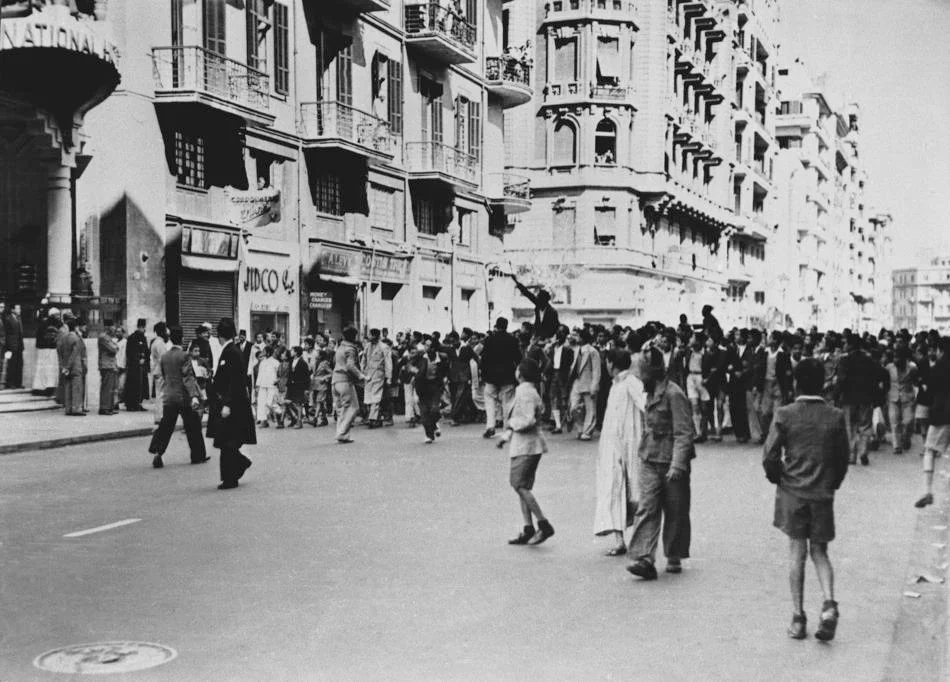
Against the backdrop of universal mass discontent and riots, “free officers” realized that the time had come for decisive actions. However, the direct guide to the actions was not a “black Saturday”, but a confrontation between the royal court and the officer club of the Egyptian army. The king refused to approve the president of the club, which challenged the officer corps, which did not remain unanswered.
Eight months later, Naser and his associates managed to carry out a coup and send King Faruk to exile. On July 23, 1952, the conspirators, having made a carefully thought -out plan, which implied the capture of the radio station and the military headquarters, began to execute it at night.
There is one curious story related to future President Anvar Sadat.
To make an alibi to himself and to maximize the suspicions of organizing a conspiracy, Sadat went with his wife to the cinema, where he arranged a brawl and a fight, following which he went to the police to write a statement for the offender.
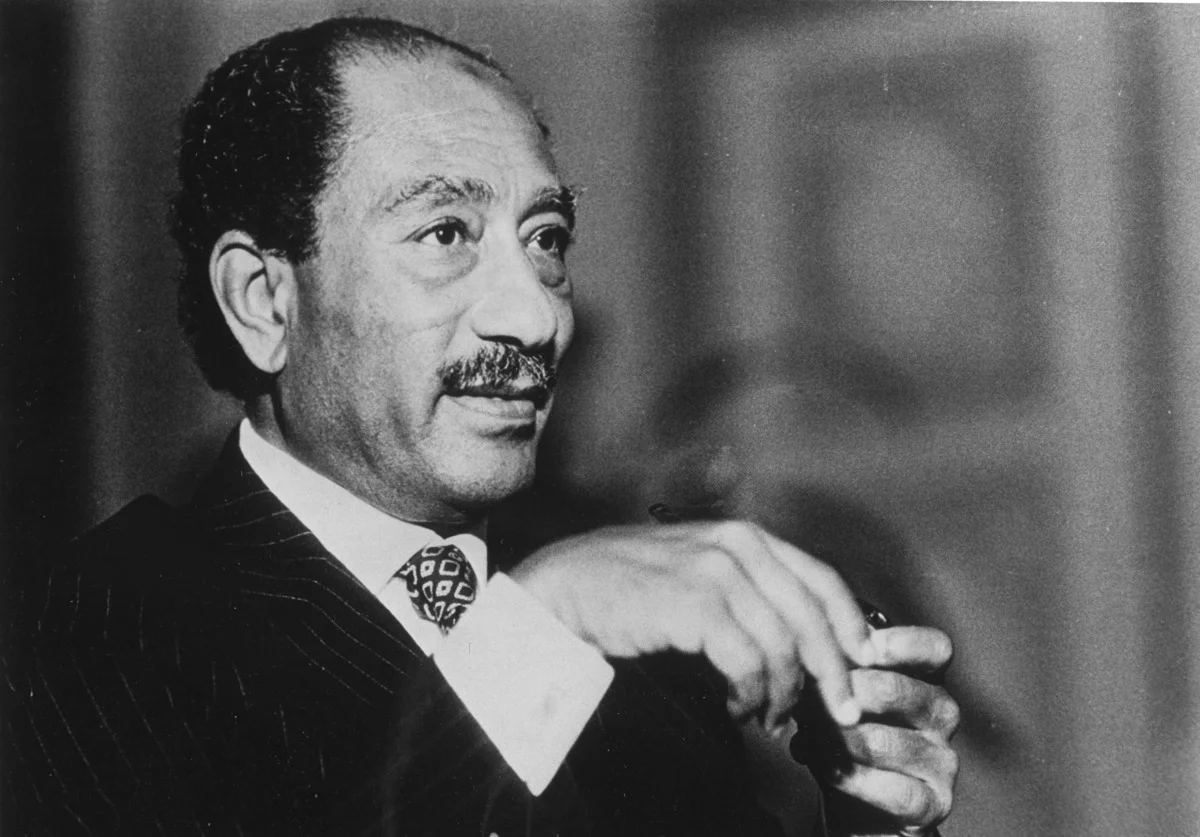
Having directed the loyal army units to the General Staff, the “free officers” occupied him without resistance - a little later other strategic objects were captured. At 7 in the morning, General Muhammad, the most senior of the officers, spoke on the radio and announced the coup. Not only did the military did not resist, but the entire population actively supported the coup. It is also interesting what King Faru said to General Nagibu before going into exile: "You did what I always dreamed of doing it yourself."
Against everyone
After the coup, Nasser and his associates acted as Ahmed Orabi acted before them: they attacked the Mamluk elite with hatred. They carried out agrarian reform, which limited the individual ownership of the land, and distributed the excess land between the peasants. In addition to agrarian reform, they also cleaned and canceled all the previous titles like Pasha, which was used by the Turkic-Cherkess elite.
The new government of Egypt faced an important task - to forever expel the British from their land, namely, to transfer control of the Suez Canal to the Egyptian authorities.
As part of the negotiations between Egypt and Britain, it was possible to come to an agreement - British troops must leave Egypt, but English civilian specialists will remain on the territory of the canal.
Against the backdrop of this agreement, the struggle between the two main political forces - President Muhammad Nagib and the head of the Council of the Revolutionary Command (SRK) Gamal Nasser, unfolded. After the July Revolution of the July Revolution, the SRK became one of the executive bodies, exercising control over the activities of the government and concentrated enormous power in its hands. Against the background of criticism by the company of the new draft agreement, Nasser left the conflict as the winner and in 1954 became the sole ruler of Egypt.
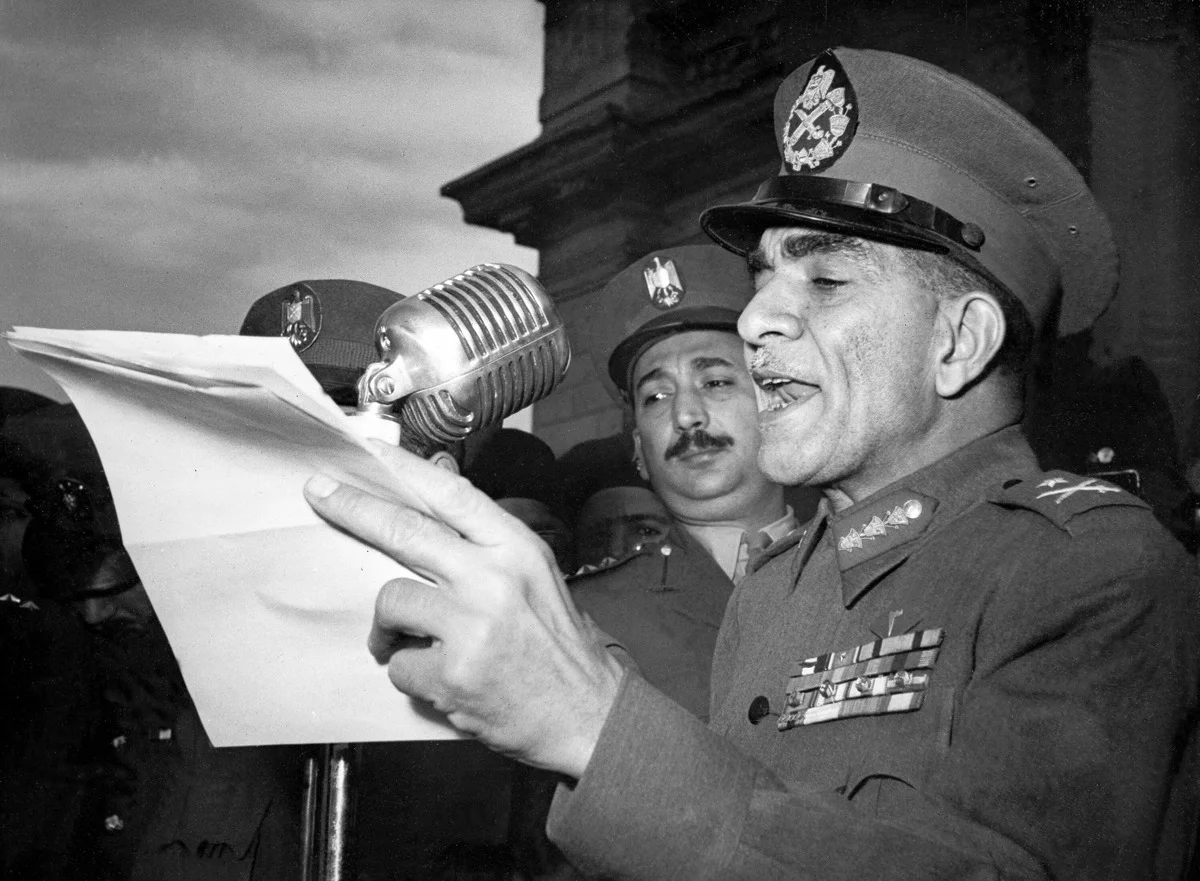
Moreover, the year the early Nasser managed to gain crazy popularity because of a number of attempts for his murder, one of which brought him the glory of the national hero.
On October 26, 1954, a member of the Muslim Brothers Group Mahmoud Abd al-Latif shot Naser during his speech in Alexandria. The attacker missed, and Nasser - that is surprising - after a small hitch he continued his performance, saying the whole country: "I will live for you and die in the name of your freedom and honor." After that, no one doubted that the Nasser was the one who should lead Egypt.
After gaining power over Egypt, Nasser was faced with the problem of threat from Israel. This problem could only be solved by reforming and re -equipping the army, for which the supplier of this weapons was needed. At first, Nasser turned to the United States, but in Washington they set a condition that contradicted Cairo's policy - to join the defensive union under the auspices of the Americans, called the Baghdad Pact.
The Nasser did not want to stand on someone else in the Cold War, so he turned to the USSR, who agreed through Czechoslovakia to completely equip the Egyptian troops with weapons and armored vehicles without any political conditions.
In France and Great Britain, they also reacted wary of Naser and his politics because of his patronage by nationalist movements in North Africa and other regions of the Middle East. Tel Aviv considered Egypt to be a particularly dangerous enemy, whom the then Prime Minister of Israel David Ben-Gurion called "Arab Prussia."
Israel conducted two operations against Egypt, against which the Nasser realized that he had very little time to re -equipment. As part of the first operation, Israeli agents had to kill US and Britain citizens to provoke a foreign policy crisis. However, the operation failed and became known as the “Davon case” - by the name of the then Minister of Defense of Israel. The second is an attack on the Gaza Sector in 1955, where 37 Egyptian soldiers were killed. By 1956, France, England and Israel came to the conclusion that Nasser was creating too many problems with his active foreign policy. The decisive actions of the three powers did not have to wait long.
Head
A stumbling block on the way of implementing the tasks of internal policy for Naser was the construction of an Asouen hydroelectric complex, which was supposed to become a driver of industrialization and a key factor in ensuring agrarian reform. Egypt needed money, and he turned to the World Bank for help, which agreed to provide a loan, provided that the United States and Britain give half the required amount. The United States and Britain refused the provision of funds.
Then the Nasser decided on a desperate step-the nationalization of the Suez Canal, which provoked the second Arab-Israeli war and the intervention of France and Britain.
During his speech, within the framework of which the Nasser was supposed to declare the nationalization of the channel, a curious case occurred - with the help of the code word, the Nasser had to give a signal to his troops about the beginning of the operation. This code word was the name of the main builder of the channel of engineer Ferdinand de Lesseps. Nasser was so afraid that his supporters would not hear this name that he repeated it endlessly, causing bewilderment to the public.
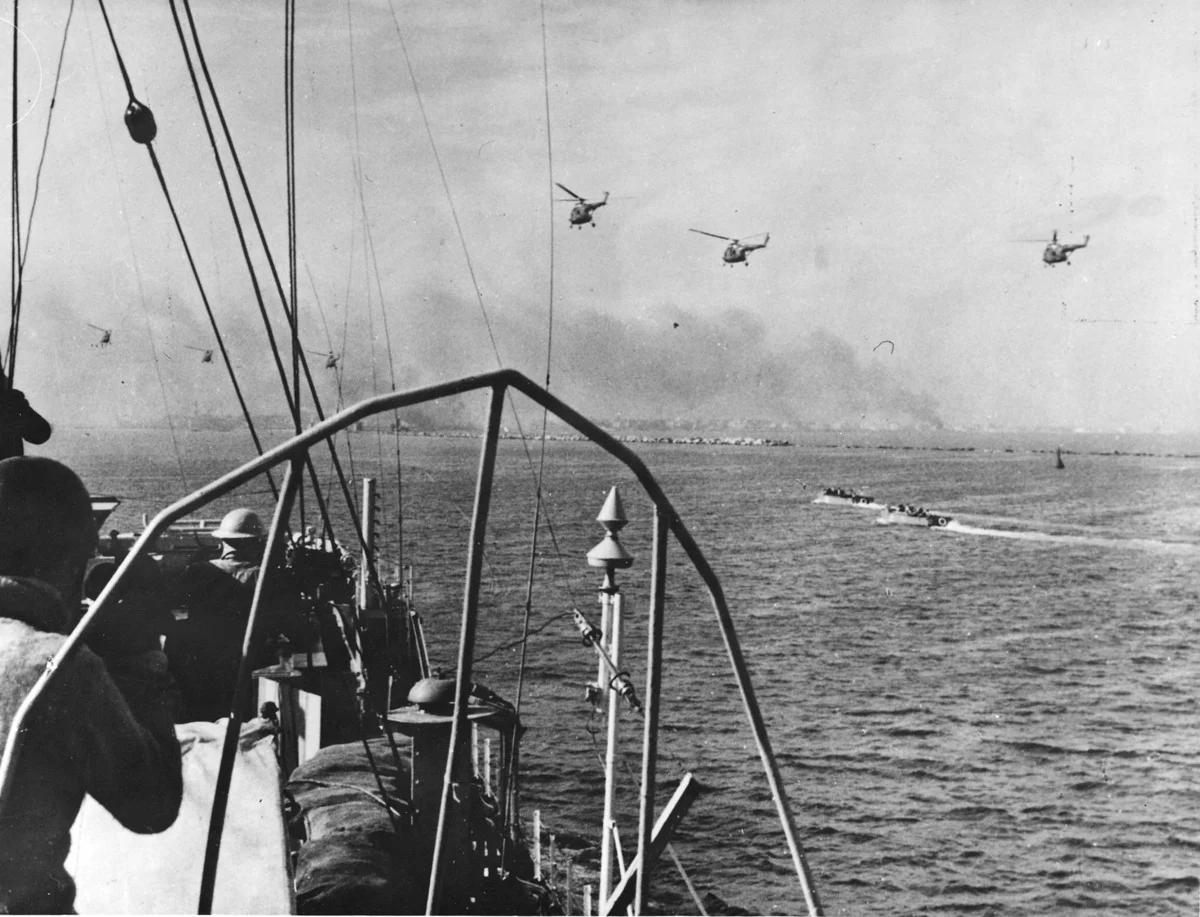
Israel, Britain and France agreed on joint actions against Egypt, where the Israelis were the first to attack, and the French and British should put the ultimatum to the Egyptian government on the need to stop military operations near the Suez Canal. In accordance with the plan, the Egyptian authorities had to refuse to accept the ultimatum, which would give the Army of Europeans to invade the territory of Egypt.
The plan was accurate, like a Swiss watch, but, as often happens, something went wrong. Having achieved success on the battlefield and occupying the gas sector and the Sinai Peninsula, the Europeans suffered a complete defeat on the diplomatic front.
This operation was a surprise to the United States, the attention of which was concentrated on an anti -Soviet uprising in Hungary. President Eisenhower was anger, learning about the actions of London and Paris, and demanded that they stop military operations.
The USSR was only at hand, since all the attention of the world public switched to the Suez crisis, which allowed the Soviet Union to successfully suppress the uprising in Hungary.
Nevertheless, taking advantage of the right to the UN, France and Britain blocked any resolutions regarding this crisis. Only after the threat of the USSR to intervene directly in the conflict and US ultimatum on the exclusion of two countries from NATO and the threat of the collapse of the British pound France and Britain agreed to withdraw troops from Egypt. The Nasser triumphed-he went wa-bank and won.
From the leader of Egypt - to the leaders of the Arab world
The Suez crisis was followed by the economic blockade of Egypt from the Western countries. However, the Soviet Union again helped the Nasser regime, which further strengthened the economic and political relations of the two states. One of the striking examples of such cooperation was the construction of the already mentioned Aswan hydroelectric complex, one of the largest structures of his class in the world, the main engineer of which was the Russian engineer Nikolai Malyshev.
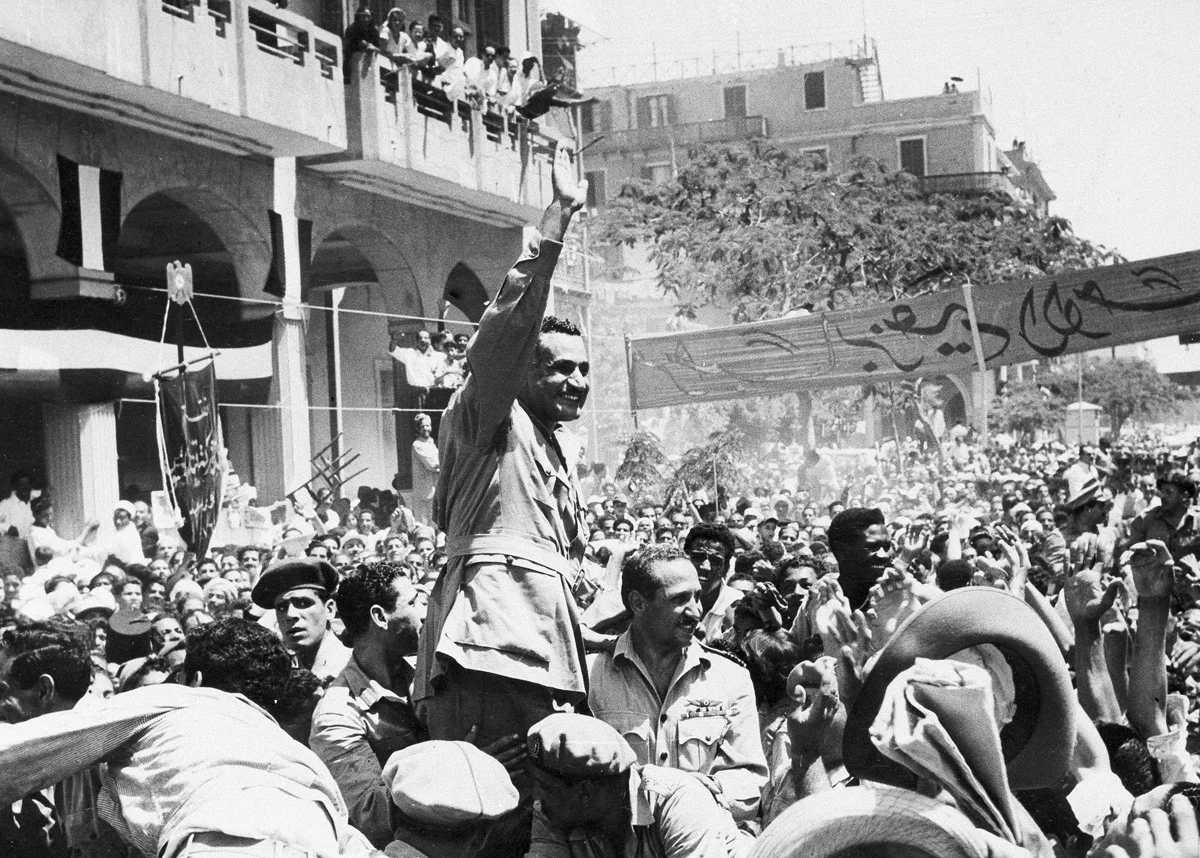
Thanks to the Suez crisis, Nasser's popularity in the Middle East has increased sharply. In the eyes of many, he became a politician capable of uniting the entire Arab world.
Thanks to this, after a military coup in Syria in 1958, his leaders went to Cairo for negotiations not just about the Union, but about the unification of the two countries.
On February 22, 1958, the United Arab Republic (OAR) was formed with the capital in Cairo and Nasser at the head. However, already in the early 1960s, the relations between the two components of the UAR were heated. The reason for this was the campaign for the nationalization of banks and private enterprises, the decision of which the government in Cairo made without taking into account the interests of the Syrian side. Soon after, all Syrian political parties were also dissolved. Dissatisfaction with the role of the “younger brother” and “northern region” led to the military coup on September 28, 1961 in Syria, as a result of which the representative of Naser Abel-Hakim Amir (remember this name) was sent to Cairo, and Damascus left the OAR.
Having come to the conclusion that the cause of the “Syrian demarche” was the opposition from the bourgeoisie by the reform, the Nasser saw a solution to the problem in increasing pressure on this class. He feared that the same counter -revolutionary forces that led to the actual decay of the OAR could plan his own overthrow. Therefore, in the winter of 1961-1962, the leader of Egypt went on the attack,
Having confiscated the property of about 600 richest families of Egypt in favor of the state. Needless to say, such a policy, to put it mildly, did not contribute to the normalization of relations with the West.
At the same time, despite a number of obviously promotional decisions, it is difficult to call Nasser a follower of communism. He rejected ideas about the need to spread atheism, establish a dictatorship of the proletariat or conducting large -scale nationalization of the agrarian sector. And do not forget that the very concept of Panarabian nationalism, as, indeed, any nationalism, to put it mildly, contradicts Marx's teachings. However, it will be a mistake that obvious political eclecticism is an atypical phenomenon for authoritarian regimes.
Nasser's regime was criticized both on the left and on the right. The left accused him for insufficient determination, stating that although the old bourgeoisie was dismantled, it was replaced by a new one in the person of the officer corps and “updated” bureaucracy. The right accused Nasser of inefficiency of the overgrown bureaucracy, the outflow of foreign capital from the country and a significant reduction in foreign lending.
However, one cannot but say about positive achievements. Among them:
high rates of economic growth (an average of 6–7% per year from 1956 to 1966),
The gradual reduction of inequality and improving the quality of medical care (in 1965, doctors in Egypt were 2.5 times more than in 1952).
It is not known whether Gamal Abdel Nasser knew, who himself came to power as a result of the coup, that increasing the living standards of the population is the best way to protect himself from new rebellions. However, consciously or not, the policy pursued by him strengthened his power in Egypt.
Despite the popularity of Nasser among the masses, he encountered obvious hostility by the Monarchies of the Persian Gulf and some republican regimes of the Middle East (for example, not surprising, Syrian), who saw a threat to their own power and influence in the region.
In September 1962, an event occurred, which was perceived by the Egyptian leader as an opportunity to "be even" for failure in Syria. In Yemen, a group of officers arranged a military coup against Imam and proclaimed the republic. The overthrown theocratic leader who did not appreciate such a move fled to the mountains and turned to the Saudi monarchy for support. Мятежники, в свою очередь, обратились за помощью к Насеру, который, стремясь распространить свое доминирование в арабском мире, конечно же, не остался в стороне.
В итоге Египет оказался втянут в затяжную гражданскую войну, в которой роялистов поддерживали не только Саудовская Аравия, но и Великобритания, США и даже Израиль. В течение следующих пяти лет в этом прокси-конфликте приняло участие около семидесяти тысяч египетских солдат, десять тысяч из которых погибли.
Кто с солдатами пришел, тот от солдат и погибнет
К середине 1960-х годов основной угрозой для режима Насера стала его собственная армия. Военный министр и близкий друг лидера Абдель-Хаким Амир (тот самый), встав во главе вооруженных сил в 1953 году, смог добиться существенной автономии, построить «государство в государстве» и фактически выйти из-под контроля Насера.
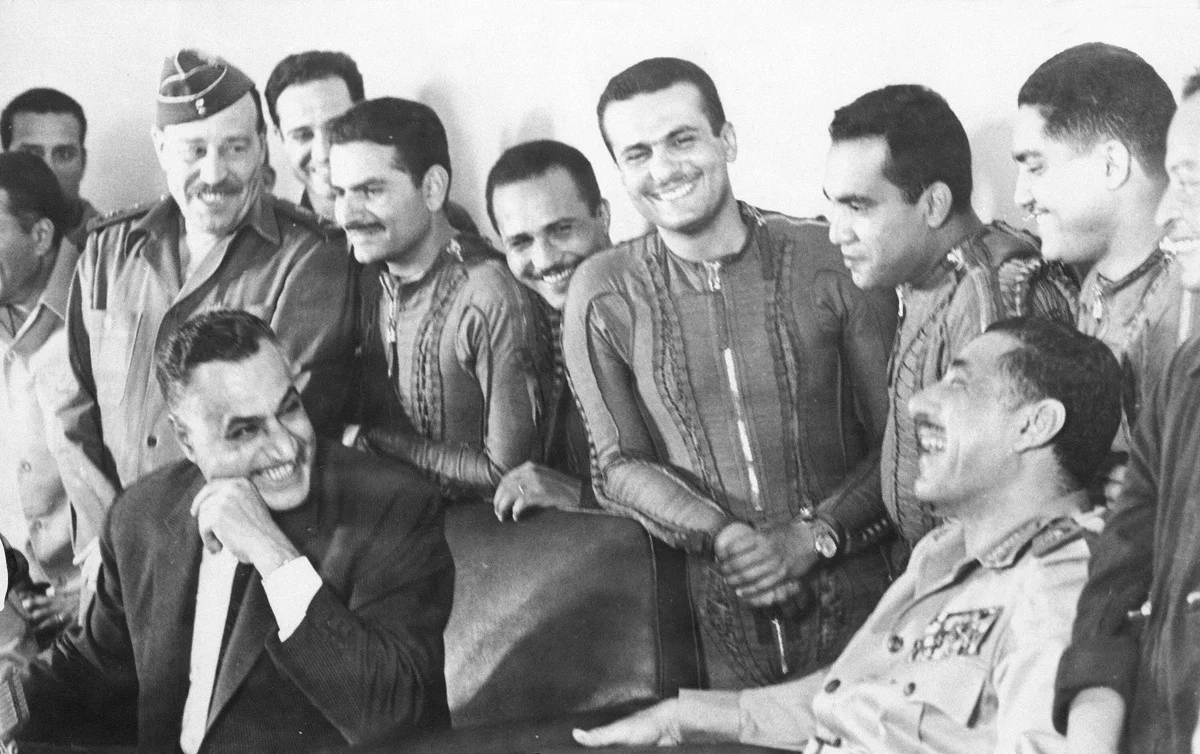
Противостояние между двумя друзьями привело к катастрофическим событиям 1967 года, когда без санкции Насера Амир предпринял ряд мер, которые резко повысили вероятность военной конфронтации с Израилем. После боя между египетской и израильской авиацией над Дамаском в апреле Амир мобилизовал египетскую армию и приказал ей направиться на Синайский полуостров. Два дня спустя Насер под давлением Амира приказал миротворческим войскам ООН, которые находились на Синае с 1956 года, покинуть полуостров. А 22 мая, в ответ на обвинение в слабости со стороны Амира, Насер объявил о закрытии для израильских судов залива Акаба, что стало casus belli для Тель-Авива. 5 июня Израиль начал воздушную и наземную операцию, в результате которой была уничтожена вся египетская авиация и сухопутная армия на Синае.
Военный разгром вынудил Насера пойти на решительный шаг, и 7 июня 1967 года, во время телевизионного обращения, он заявил о своей отставке со всех государственных должностей, которые он занимал в течение предыдущих пятнадцати лет.
Однако даже такой военный провал не смог разрушить народную популярность египетского лидера. Через несколько дней после объявления Насера об уходе с должности в Египте и других арабских странах начались массовые акции против такого решения президента. Вернувшись на пост, Насер сразу отправил в отставку Амира, который уже в сентябре 1967-го покончил с собой.
Следующие годы своего правления Насер посвятил восстановлению армии и отношений с другими арабскими странами. Однако уже 28 сентября 1970 года, в возрасте пятидесяти двух лет, Насер умер от сердечного приступа. В последний путь египетского лидера провожали миллионы сограждан.
Государство — это я
Неожиданная кончина бессменного египетского лидера обнажила одну из главных проблем его наследия: отсутствие эффективно функционирующих политических институтов. В Египте не было конституции, парламент заседал лишь пять лет из 18-летнего правления Насера, а управление государством осуществлялось посредством указов президента.
По сути, вся египетская политическая система строилась вокруг фигуры харизматичного лидера, а никаких политических организаций, способных объединить и мобилизовать сторонников Насера, создано не было.
Сам лидер при этом обеспечивал системе определенную стабильность, однако стабильность была возможна, пока хозяин Египта был жив.
Почти сразу же пришедший к власти Анвар Садат, считавшийся компромиссной и временной фигурой, начал отказываться от идей своего предшественника. В мае 1971 года последователи Насера попытались создать оппозицию новому режиму, однако в результате событий, известных как «Майская исправительная революция», многие из них были арестованы, а власть Анвара Садата лишь укрепилась. В более чем пятнадцатилетней истории режима Гамаля Абделя Насера была поставлена финальная точка.
В 1981 году Анвар Садат был убит заговорщиками на военном параде.