
Translated material
Ekovas hurt!
The revolution in Niger caused an unusually strong reaction of the EU and the allies remaining in Europe in Africa itself. We explain why the rebellion should not look for Russian roots
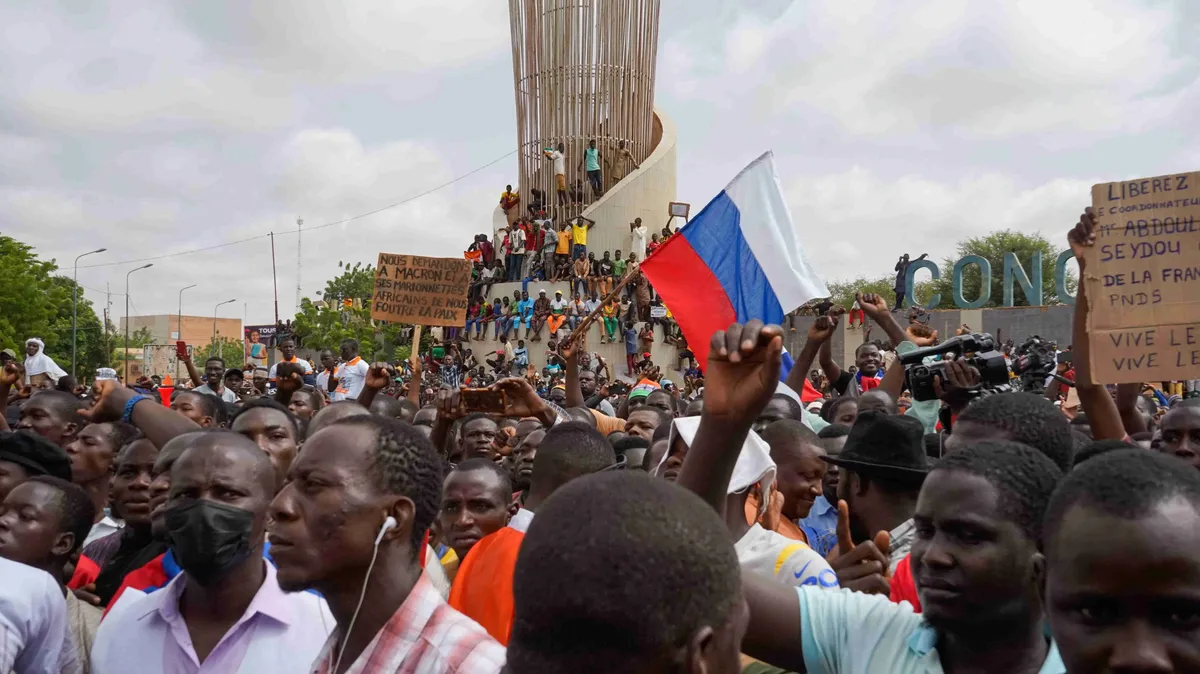
Protesters during a rally in Niame, Niger, August 3, 2023. Photo: EPA-EFE / Issifou Djibo
Another military coup in Niger for the last week approached his climax for the African continent. The General of the National Guard, Abdurakhman Tchiani, who shifted at the end of July, who shifted at the end of July, the elected President Mohammed Bazum recently declared himself the head of the transition government - the National Council for the salvation of his homeland - and canceled the constitution.
In addition to the National Guard, the general is now based on the regular army swore, and even on some part of Niger’s citizens-after the coup in the country there are demonstrations of Tchiana supporters who unfold Russian flags at rallies and are trying to attack the French embassy. The EU and France have already announced that they will stop large -scale financial assistance to Niger, which is estimated at hundreds of millions of euros annually. A number of other countries also condemned the seizure of power, and the important regional association - the economic community of the 15 West African states (Ekovas) - nominated the rebels with a weekly ultimatum with a demand to liberate the legitimate leader of the country and threatened the use of force. Why the threat of Ekovas is not an empty phrase, whether the coup has a Russian trace in Nigere, and how the situation in Niame will develop-the political scientist Alexander Fokin was specifically sorted out for the New European.
The increased attention of the Western countries, especially France, to what is happening in Niger after the military coup, which led the head of the National Guard of the country of Abdurahman Tchiana, is no coincidence.
A series of coups and political instability in the countries of the so-called Sahel five, which includes Burkina-Faso, Mali, Mavritania, Niger and Chad, made Niger with his pro-Western democratic President Mohammed Bazum by almost the last island of stability in the region.
Niamay-the capital of Niger-after the murder of President President Idrissa Debi in April 2021 and the subsequent change of power in the country became the main platform of all the counter-terrorist efforts of the Western countries in the region. With the support of basum and local security forces, Europe is trying to fight here with the elements of al-Qaeda and the Islamic state. The activity of these groups in the region is the echoes of local armed conflicts of the 1990s, primarily a civil war in Algeria.
Based on constant local conflicts and problems, terrorist organizations are trying to recruit new supporters here and control resources.
In addition, Niger is an active participant in the international operational group (together with Benin, Cameroon, Nigeria and Chad), which opposes another terrorist organization actively operating in the region, Boko-Haram.
Europe helps to fight the countries of Africa with terrorism, not only because of the threat of terrorist attacks on the territory of the EU, for example, attacks of radical Islamists in Paris in November 2015, but also trying to maintain their influence in the region, inherited since the collapse of colonial empires.
French presence
Most of all, France is involved in the affairs of the Sachalian five - as a former metropolis of its colonies in this territory. However, the military presence of Paris in Sahel not only is not very successful, and it also dragged on.
The army of the Fifth Republic has been conducting counter -terrorism operations in these territories for more than 10 years. In 2013–2014 it was the serval campaign in Mali. In August 2014, the operation received the name “Barkhan” and was expanded to the limits of the entire Sachel five. After the military coup in Mali in May 2021, the new leadership of the country opposed Paris, and the French command spoke about the imminent end of the operation. In November 2022, the “march” really ended, but at least 1000 French soldiers ended up in Niger. Paris decided to stay to train and arm the local military and support their counter -terrorism operations.
The population of African countries perceives France’s attempts to provide military assistance not so much as maintaining security, but as the protection of French economic interests in the region and the desire of the ex-metropolis to maintain political influence. At least partially - this is true.
For example, in Niger there are more than 30 French companies involved in metal production, construction, transport and telecommunications. The country is included in the top three largest Uranus suppliers to France, which is extremely important for Paris, since even before the Russian war in Ukraine, the share of electricity generated using NPP was more than 70%.
Therefore, it is not surprising that the coup itself in Niger uses anti-French rhetoric, accusing Paris of continuing colonialism and the absence of any progress of security in the country. Reacting to the anti -French protest in Niamea, French President Emmanuel Macron said that Paris would “not tolerate attacks on its interests”, once again confirming the nature of the French presence in the country.
However, the coups themselves do not lead to an increase in security either. On the contrary, the states of West Africa, in which the military has come to power over the past couple of years, lose control of the territories and often experience the subsequent series of couples. The most striking example is Burkina-Faso, where in 2022 two military coups occurred at once. Against the backdrop of a degrading situation in the country, the UN reported an increase in attacks on children, schools and hospitals by almost half. According to Africa Defense Forum, the current government controls only about 40% of the country's territory.
Waiting for the invasion
By the beginning of August, there is a feeling that the revolution in Niger could be the last straw of patience of the Western countries and the allies remaining with them in the region.
Over the past two years, the number of successful and unsuccessful attempts by the military to seize power on the African continent has approached the indicator of the 1960s-a period when, in the armed rebellion, which was released from the colonial oppression, has become the main way to struggle elite groups among themselves.
In the very Niger before today's events, attempts at the coup also took place. The last noticeable occurred in March 2021 , on the eve of the first peaceful transfer of power in the country's history from one democratically elected president to another. Then part of the Niger army tried to seize the Presidential Palace, but the National Guard was able to repel the attack and preserve the constitutional order. Two years later, the same National Guard shifted from the post of President Mohammed Bazuma, chosen in 2021.
Probably, today's events are associated with an attempt to reform strength structures undertaken by the Bazum in recent years.
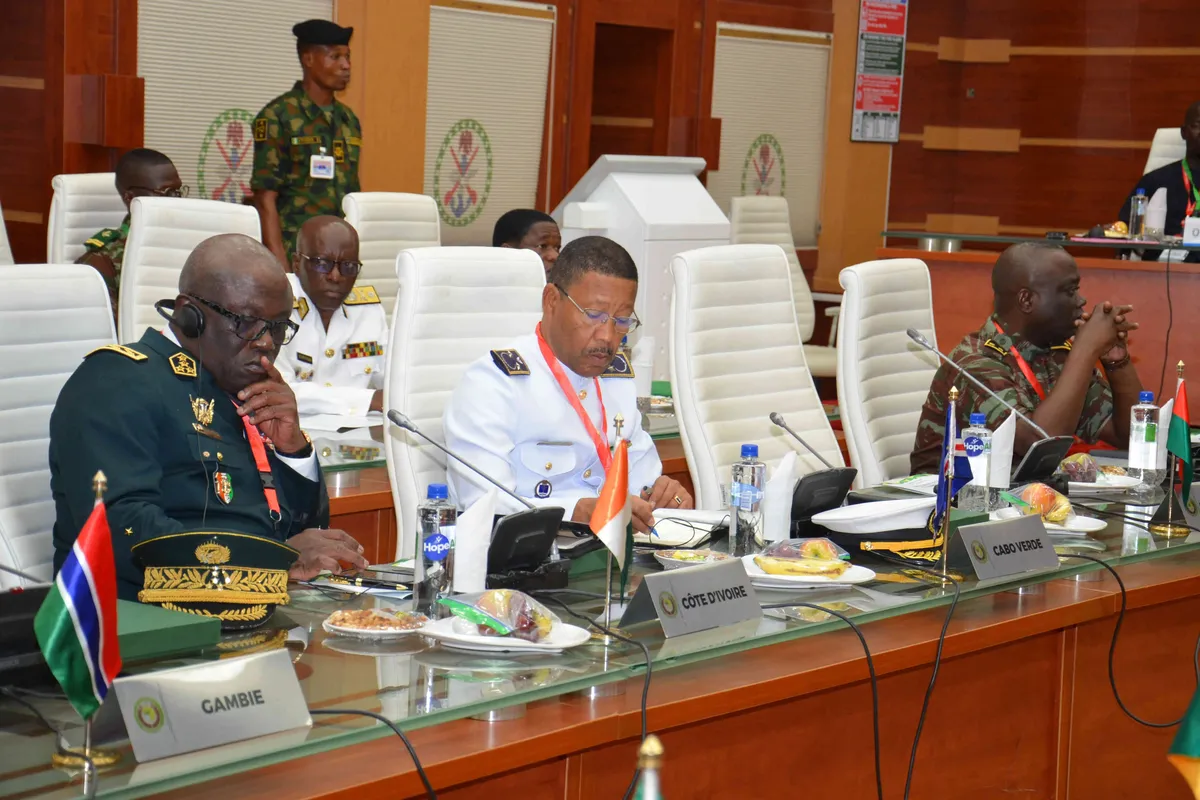
The main thing is that at the moment it distinguishes an international reaction to a seemingly another revolution in Africa is an ultimatum , Ecovas countries nominated to the rebels. The organization threatened with military intervention in Niger if the constitutional order and power of the President of the country are not restored within a week. The ultimatum expires this Sunday. On Wednesday, Niamey, an Ekovas negotiating group, with the ex-head of the military government of Nigeria Abdusalam Abubakar, went to Niamay. In Nigeria itself, extremely powerful in the economic and military sense of the country in this region, meanwhile, the Council of representatives of military departments of states included in Ekovas was held .
The threat of the use of the force of Ekovas is a really extremely rare and serious gesture. Probably, such a reaction is primarily due to the fact that a month ago, President Nigeria Bola Ahmed Tinube became the chairman of the organization.
In May, Tinube spoke about the risks of the spread of coupling in the region due to the regimes established during the rebellions in Mali, Burkina-Faso and Guinea. This is the heritage of the 1970s and 80s, when the West African junta really supported the coupes in neighboring countries. Tinubu also pointed out the need to strengthen the actions of Ekovas to prevent future coups. Therefore, the situation in Niger was the first test of the seriousness of his intentions.
In practical terms, the conditions of the ultimatum from Ekovas are rather an attempt to restrain the rebels and offer a option of diplomatic settlement. Despite the meeting of the heads of military departments of the member countries of the organization in Nigeria, at the moment little indicates the existence of a real plan for military invasion. First of all, it is unclear who and in what quality will participate in the operation, and how much the campaign can rely on the support of Western partners.
Nevertheless, by August 3, a flowing document began to spread in the local regional media, indicating that Nigeria is throwing troops into the border with Niger Sokoto, from where the direct path to the capital is opened along the RN1 highway. It is also reported that Nigeria is ready to introduce a useless zone in Niger to cover a military operation.
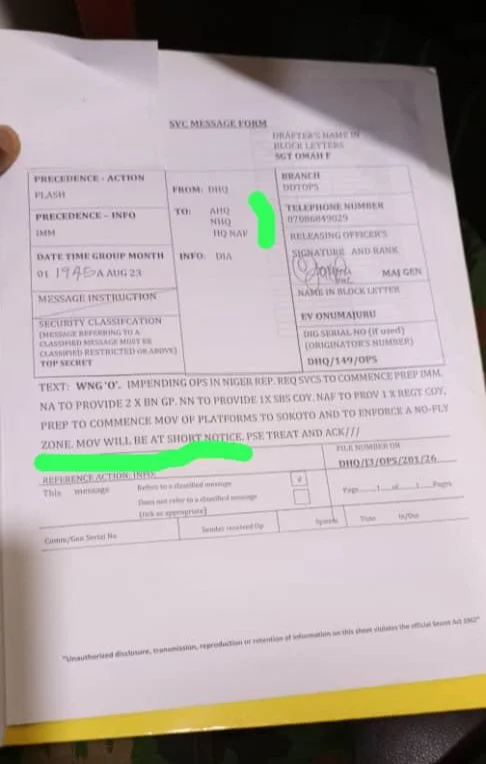
However, such actions still look like an increase in positions before the decisive round of negotiations between rebels and representatives of Ekovas. In the case of a real invasion, the split between the current member countries of the organization and the Mali, Guinea and Burkina-Faso will only aggravate after successful military coups. The authorities of Mali and Burkina-Faso-in the latter, universal mobilization has been taking place since April-they openly support the new government in Niger. Moreover, on August 1, Mali representatives said that the use of force against Niamey would be perceived as a declaration of war.
Shadows "Wagner" and the Kremlin
The emergence of personnel from anti -French protest in Niamea, where the demonstrators held Russian flags and shouted pro -Russian slogans, inevitably led to questions about the participation of the Kremlin in the coup. At the moment, there are no signs indicating the participation of Russia, the Wagner PMC or other Russian quasi -state and private groups in the events of the last week in the country. There were no traces of Russian intervention in the coup in the White House.
The official position of Moscow about the events in Niger was expressed by Sergey Lavrov, who, oddly enough, condemned and called the negotiable a revolutionary revolution. Probably, the Kremlin’s reaction was largely due to the fact that the rebellion found Moscow at the height of the second Summit “Russia-Africa”, which was also visited by representatives of the countries opposing the putsch. The Summit of the Bazum Summit in St. Petersburg was not going to visit and was not going to visit and was not going to, and in general adheres to a pro-Western position about Russia's war in Ukraine.
Nevertheless, the coup in Niger was supported by the head of the Wagner PMC Evgeny Prigozhin, whose fighters have already replaced the French contingent in Mali in 2022. In addition, studies show that the groups probably associated with Wagner organized special information campaigns that campaigning the “Sahel peoples”, including Niger, to free themselves from French influence and cooperate with Wagner PMCs.
In favor of the fact that Wagner has an interest in working in Africa, says Yevgeny Prigozhin’s performance before fighters in the Belarusian Osipovichi.
In his appeal, the head of the PMC called for mercenaries to prepare for an imminent trip to Africa.
However, the difference in the Kremlin’s reaction and Prigogine structures to a coup in Niger emphasizes that the interests of pro -Russian forces in Africa will now diverge more and more often. Such a contradiction rather increases the chances of the Western coalition and the Ekovas countries to stop the speed of military coups on the African continent.