
Translated material
Niger President, overthrown by his guard, asked to save Africa from Russia and Wagner PMCs
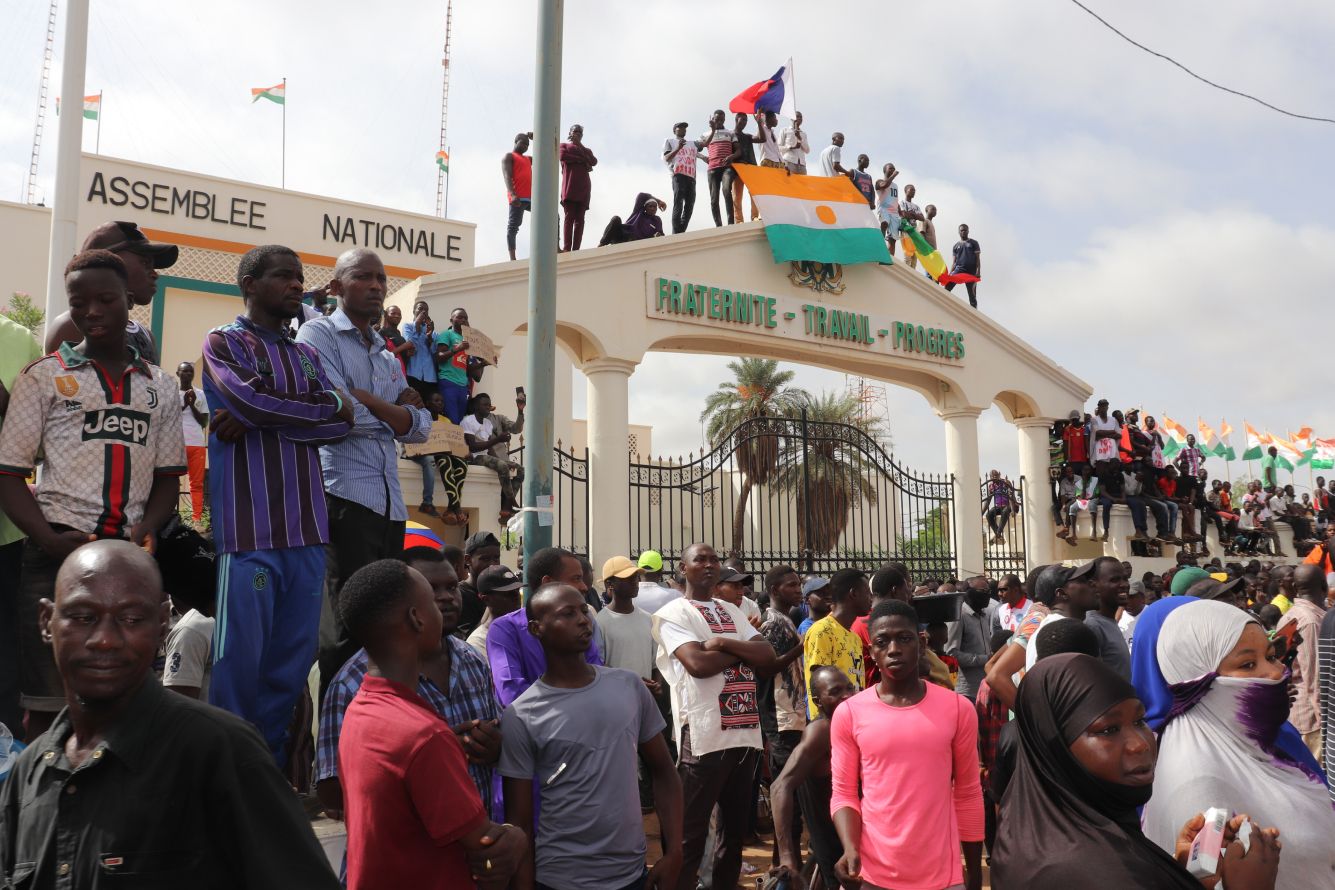
In the capital of the country, a rally was held in support of the coup - with posters "Long live Putin"
A week after the military coup in Niner, the overthrown president of the country Mohamed Bazum published a column in The Washington Post, in which the United States and the world community called on the constitutional order in the country, as well as protect the African region from the influence of Russia through Wagner PMCs. Bazum called himself a hostage and “only one of hundreds of citizens” illegally detained during the coup.
At the open invitation of the conspirators and their regional allies, the entire central region of Sahel can fall under the influence of Russia through Vagner PMCs, whose cruel terror was fully manifested in Ukraine.
“Boko Haram” and other terrorist movements will probably take advantage of the instability in Niger, using our country as a bridgehead to attack neighboring states and undermining security and freedom around the world.
At an hour of need, I urge the US government and the entire international community to help us restore the constitutional order.
Wagner PMC actively acts in Mali and Burkina-Faso-neighboring countries. Soon after the coup in Niger, it became known that the military who performed him had been in Mali - there is a version that the purpose of the visit was to enlist the support of the Wagner PMC. CNN on a link to the Mali authorities writes that the military discussed "ways of strengthening the cooperation of countries in the field of security."
In the city of Niame, the capital of Niger, after the coup, a street action took place in his support. Some demonstrators came to her with Russian flags and posters "Long live Putin."
The press secretary of the President of the Russian Federation Dmitry Peskov, answering the question of the appeal of President Niger to the world community, said that "it is unlikely that the interference of any non-regional forces is able to change this situation for the better."
A military coup in Niger occurred on July 26. The Presidential Guard removed Mohamed Bazum from power, announced the closure of the border, the introduction of the commandant hour and the suspension of the work of all institutions. General Abdurakhman Tchiana, heading the Presidential Guard, declared himself a new head of state.
The Western countries demanded that the basum immediately release. The European Union imposed sanctions against Niger, and also suspended the country's financial support (about 40% of the Niger budget is provided by foreign donors) until the restoration of the legal government. The same decision was threatened to make the United States - one of the main donors of Niger, writes Reuters.
The economic community of the West African states (Ekovas), uniting 15 countries of West Africa, imposed sanctions, including the cessation of all commercial operations with Niger, freezing the country's assets in the regional central bank and the suspension of all financial assistance. Niger's energy company said Nigeria stopped supplying electricity, which led to widespread shutdown of light. Nigeria herself did not confirm this information, the BBC notes .
As reported on July 29, the Associated Press, the African Union, uniting 55 Continent countries, raised the military in Niger Ultimatum with a demand to regain power to the legal government within 15 days. Soon, Ekovas made a similar requirement, threatening the use of force. At the same time, the representative of the Union for Political Affairs of Abdel-Fatau Musa emphasized that military intervention is the most extreme option of resolving the conflict, writes al-Jazis.
General Abdurakhman Tchiana said that “refuses to succumb to any pressure”, wherever it came. He called the sanctions against Niger “cynical and lawless”, adding that their main goal is to “humiliate” Niger’s security forces and make the country uncontrollable, reports France 24.
Mali and Burkina-Faso (where Wagner PMC actively acts) acted in support of the coup. These countries are ruled by the military who have come to power as a result of coups over the past few years. They announced that "any military interference in the affairs of Niger would be tantamount to the declaration of war," and added that "intervention in Niger can destabilize the entire region."