
Translated material
Folding creature

Dozens of Russians were captured in one basement in Ukraine. This is how they were "re -educated" and exchanged
Since the beginning of the invasion, Russia replaced Ukraine with more than two thousand prisoners of war. How many Russians were captured for a year and a half of the war is unknown. Many have been captured for several months, and the Ukrainian military subject them to “re -education”: Russians tell how their military leaders are bombing residential buildings, and their colleagues cut their heads to living soldiers. In addition, captive Russians are offered to go to fight on the side of Ukraine; Some agree. “Cold” tells the story of a group of prisoners, who were placed in one basement and then exchanged together - now they are afraid that they will be sent back to the front.
In order not to miss the main materials of the "cold", subscribe to our Instagram and telegram .
Most likely, this is a bus. Most likely, the bus goes to Russia. Grigory Polenov (the name changed for the security of the interlocutor) could not say for sure: he, like all the other passengers of this bus, had a rag bag covered on his neck with an elastic band.
He felt that the seat on his right hand is empty from him. A few hours later, the bus stopped. The doors opened. Someone went and sat on an empty place next to Polenov. He immediately felt: from the new neighbor it smells of a smoke.
Polenov himself has not smoked for seven months. All this time he spent in the basement with several dozen other men. All of them were Russian soldiers captured in Ukrainian captivity. Smoking was forbidden.
In early June 2023, prisoners were announced that they were being sent to Russia to exchange for Ukrainian military.
A couple of minutes after someone’s body fell in the seat next to Polenov, the convoys told the prisoners to remove the bags from their heads. Gregory looked around and saw his neighbor. It was the 26-year-old Vlad Izmailov-another prisoner, with whom he spent seven months in the basement and which shortly before everyone else was lucky for the exchange, the guards took somewhere. Izmailov was on a special account with the Ukrainian military who controlled this basement: they, unlike the others, were taken to smoke breaks.
At the beginning of the bus, there was an unfamiliar man in a cap. He said that the Russian Volunteer Corps represents - a military education that fights on the side of Ukraine.
“He says: we are fighting against the Putin regime, and we will fight very well. We have all the equipment there, weapons, salaries are good, good leadership, ”recalls another prisoner who was traveling on this bus. “Go to our side.” By that time, RDK was known as a formation that broke into the territory of Russia twice: in March, its participants invaded the Bryansk region, in June - to Belgorod, for a short time capturing the village of New Tavolzhanka.
Of all the passengers of the bus, only one stood - Vlad Izmailov, the same prisoner, from whom it smelled of a smoke. He said that he fought as part of the Wagner PMC, and said: “I refuse to exchange and return to the Russian Federation.”
The act of Vladislav Izmailov in the RDK was used as a campaign: the scene on the bus was recorded on the video and distributed on social networks as an example for everyone who wants to "fight for new Russia against Putin's bloody gang." Evgeny Prigozhin called Izmailov a “traitor” and promised to “find him and kill him.”
When Izmailov went out, the rest of the bus passengers drove on to Russia.
Basement
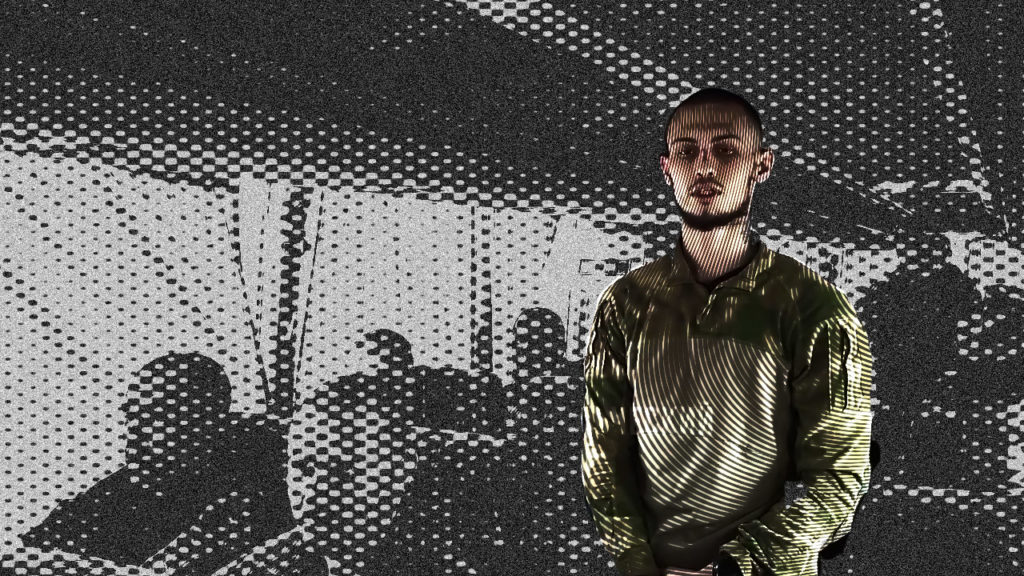
The basement was the size of half the football field. Paul and walls - from concrete. Breathing is difficult: concrete dust everywhere. No windows, only a ventilation hole closed by a grille, because of which sometimes a drum fight and the sounds of a pipe were heard, to which the flag usually solemnly lift. Egor Rybkin (the name was changed at his request) decided that he was sitting under the territory of a military unit; However, where exactly this part was in Ukraine, the Russian did not understand.
Along the walls of the basement, there were several dozen bunk Nar, on which about 90 Russian prisoners lived. There were no mattresses - only tourist foams - and Rybkin was glad that he had warm things with him in which he would sleep softer: when he went on the last combat mission, it was still cold in the yard.
How did we find out what the basement looked like?
Kholod spoke with five Russian soldiers who were captured from the fall of 2022 to the spring of 2023. Among them are mobilized, contractors and former prisoners recruited by the Wagner PMC and the Ministry of Defense. All of them were kept in the same basement and returned to Russia to exchange in May - June 2023. The editors are known for their names. In the publication, most names have been changed at the request of heroes for security reasons.
The 25-year-old ordinary Rybkin was captured early in the morning of March 15, 2023. He managed to fight by that time for two months. A vahtovik mechanics from the village in the Orenburg region, who in his free time liked to drive on a motorcycle, was mobilized at the end of October 2022. In the first weeks after the announcement of the “partial mobilization”, Rybkin looked every day at the endless columns of cars that rode past his village to the border with Kazakhstan, but he was not going to leave.
“I thought: they will call - I’ll go, they won’t call - I won’t go,” he says. - At first I did not understand what war is. There were videos on our federal channels - but they showed that everything we have Nishtyak. I did not think that everything would be seriously. ”
After the mobilization of Rybkin, he was appointed as a senior shooter. In March, his unit was sent near Donetsk, to the cities of Avdeevka and Maryinka, who at that moment tried to take the Russian troops: "If the war is the ass, then we were in its very core."
Avdeevka and Maryinka are strategically important suburbs of Donetsk: Ukraine can use these territories as a bridgehead for a counterattack, for Russia, taking these cities will open the way to the Logistic centers of the APU west of Donetsk.
The battles for Maryinka and Avdeevka were carried out even before the full -scale invasion of Russia in Ukraine, since 2014, both cities were often undergoing shelling. In 2022, they again ended up at the epicenter of military operations. The Russian troops began a second attack on Avdeevka and Maryinka in the spring of 2023 - just after they replenished their ranks with mobilized ones. In Avdeevka, despite the shelling, about two and a half thousand civilians remained in March 2023. Many houses in this city were destroyed by shells, people had to live in basements. Radio Liberty talked about a resident of Avdeevka, who was torn off his leg during the shelling. Maryinka, who, also during the offensive, tried to capture Russian troops, by March 2023 was already completely erased from the face of the earth.
During one of the battles in this direction, the position in which Yegor Rybkin was located, Ukrainian troops began to fire; Together with two more people, he took refuge in the dugout. Soon a group of APU fighters approached him, in which, according to Rybkin, there were not only Ukrainians, but also foreigners, one of whom spoke English. They took Rybkin and his colleagues.
The whole next day, as Rybkin says, they were beaten. At first they were brought to the village where Ukrainian troops were stationed: the prisoners were put in a garage, where, according to Rybkin, soldiers came in, who were striving to “squeeze” the Russians. Soon, those people who took Rybkin and his colleagues captured with the advanced. An interrogation began: where are the positions of the Russian troops, where the military equipment stands. When ordinary people could not answer, they, as Rybkin says, beat them again. One of the military, the Russian continues, threw him back and began to threaten him with a knife - and when Rybkin once again said that he knew nothing, he cut his ear with a blade.
Then the Russians began to be taken to the basement to interrogate one at a time. There, according to Rybkin, violence was also applied to them. The Russian says that during the interrogation, one of the military took off his belt, lowered his pants, picked up the tesak and threatened that he would castrate him.
By evening, Rybkin and his colleagues were taken out into the street, tied their hands more tightly with tape and put in a line. The Ukrainian military approached them. As Rybkin recalls, the military said that in the battle, during which they were captured, the doctor died. “He says: my friend died while you, Shakalov, were taken,” Rybkin claims. “And let us like a growth dolls, like boxing pears to mutter.” 10-15 minutes was closed and left. ”
It all did not end there: the Russians were plunged into pickups and took another room where the new Ukrainian military began to demand from them to inform them of social networks. “[To] dig into them, nasty to the relatives to give everyone,” he explains. (On the pages of some Russian military who have been captured, the “cold” really discovered anti -war recordings and photographs of the destroyed Ukrainian cities . ) Rybkin was afraid that his pages would write to his mother and would have extorted money, so he did not immediately give the password - at first he suffered blows with a club.
On one of the following days, according to Rybkin, the Russians were brought to the forest, turned on a video camera and ordered to shout “We are fagots! Glory to Ukraine! ” ( The Cold was able to confirm the existence of the video in which Rybkin and his colleagues, standing in the forest belt, call their names and numbers of military units, so that on the basis of these videos they are included in lists for the exchange of prisoners. The second part of the video - shouting “Glory to Ukraine!” - according to Rybkin, the Ukrainians recorded “for their own,”) at that time no longer beat them. The soldiers already understood that they had no choice, they need to do what they say.

The fact that prisoners of war both in Ukraine and Russia are subjected to abuse and extrajudicial executions in March 2023 were announced to the UN. Participants in the UN monitoring mission in Ukraine on human rights were talked with 400 prisoners of war on each of the warring parties. According to participants in the mission, the Ukrainian armed forces made 25 arbitrary executions of Russian prisoners of war. In addition, the UN recorded that Ukrainian soldiers, military police and the SBU were trying Russians - usually at the beginning of captivity or during primary interrogations.
The Ukrainian authorities rejected the UN conclusions. The Ukrainian Foreign Ministry said that they consider it unacceptable to assign liability to the victim of aggression. The Commissioner of the Verkhovna Rada on Human Rights Dmitry Lubinets, in response to the UN report, said that "Ukraine adheres to the Geneva Conventions, International Law and is open to international organizations." Indeed: Ukraine, unlike Russia, provides international observers with access to the places of detention of prisoners and allows you to confidentially talk with them; The executions of 22 Russian prisoners of war are investigated .
At the same time, Ukrainians who fall into Russian captivity, torture, beat, beat them with gunshot and stab wounds, imitate their execution. The conditions for their content, as indicated in the UN report, “shocking”; Many are refused medical care. In addition, as the mission report, the Russian military is responsible for at least 15 proven off -court executions of Ukrainian prisoners of war (no one is investigating these crimes). In addition, as Medusa and Associated Press found out, in prisons in Russia and the occupied territories, thousands of peaceful Ukrainians are presumably contained: they are tortured and psychological violence, they are forced to engage in slave labor, and most of the detainees have no official status. Representatives of the Russian authorities did not comment on these accusations.
“Cold” sent requests to the Armed Forces and Security of Ukraine with a request to comment on Rybkin’s stories about beatings. At the time of publication of the material, there were no answers.
After several days of interrogations and beating Rybkin with his colleagues, they loaded into a pickupa and after many hours they brought to the basement, where they had to spend the next one and a half months. Compared to what was happening immediately after capturing, a large basement with two -story bunks without mattresses seemed not to be such a bad place. In March 2023, when Rybkin first got into the basement, several dozens of captured Russians already lived there. They were even allowed to watch TV.
Basically, according to the Russians, the Freed channel was shown - the Ukrainian State Russian -language channel, specially created, according to the statement of the Ukrainian authorities, to combat the Kremlin propaganda (mainly he talks about the successes of the Armed Forces and defeats of Russia). Rybkin was skeptical of these plots: "A propaganda car, you can’t do anything here."
Of the other entertainments in the basement, there was a hidden deck of cards, backgammon - every day there was a queue - and a small library: Yegor Rybkin read the Tanniazer Yuri Nikitin, a novel about erotic and military adventures of the German medieval knight.
To the toilet from the basement was taken out only twice a day. The rest of the time we had to defecate in the cans, which stood right in the basement. They fed twice a day - as it should be according to the Geneva Convention, which Ukrainians reminded the prisoners - but scarce food: soup and porridge. And they were forbidden to smoke. It was possible to smoke only in one case: during the interview. The Russians were offered to talk under the cell with Vladimir Zolkin and Dmitry Karpenko, Ukrainian video bloggers, who became famous thanks to their conversations with the Russian military.
And what is written in the Geneva Convention?
The Geneva Conventions - there are four of them in total, they regulate international law during the war - do not indicate a specific necessary number of meals: they simply indicate that prisoners should not starve, and also “should be reckoned with the usual power regime”. At the same time, according to the third convention on the rules for treating prisoners of war, smoking tobacco must be allowed.
Sanych
The basement, where Yegor Rybkin, Grigory Polenov and others were sitting, the Russians call the "cellar of Sanych." Sanych is a call sign who was a kind of commandant of this point of the detention of prisoners. They did not see his faces: he came to them in a mask and, in the words of one of the prisoners, was engaged in the "re -education" of Russian soldiers.
As soon as they brought a new group of prisoners, Sanych brought a book packed in a box to the basement. The prisoners, before touching this book, had to wipe his hands with napkins. He ordered the newly arrived Russian soldiers to read several pages from this book out loud. “For this Sanych, this book was like a Bible. He wanted the Russians to know this book by heart, ”says Oleg Trotsky, a 36-year-old former prisoner. He used to work as a bus driver, but decided to make money - and became a drug courier. In 2022, he was caught with a large batch of drugs and sentenced to five years for attempted sales. He went to war from the colony, concluding a contract from the Ministry of Defense.
The book that Sanych forced the Russians to read is the documentary novel of the Ukrainian journalist Stanislav Aseev “The Bright Way. The story of one concentration camp. " In 2017, Aseeva, who then collaborated with the Ukrainian Radio Liberty service and wrote about the military conflict in the Donbass, was detained in Donetsk on charges of espionage and kept an unrecognized DPR in prison for two and a half years.
Listening to how other prisoners read this book aloud, Oleg Trotsky found out that in Donetsk there is a prison “Island”, where people - including the author of the book - “tortured electric shock, beat, hunger”. In the book, Aseev described how prisoners tied the wires to the genitals and inserted the electrodes into the anus; As on one table in the basement , they tortured his father and son and during this torture the father tried to make suicide, breaking his skull on the corner of the bunk; How torture was carried out under the supervision of doctors, who watched the prisoners did not die, and brought them to their senses.
“The book is cognitive. Of course, no one liked her, ”says Oleg. How to relate to new knowledge, he did not understand. “Probably, at that time it was [the torture of prisoners in Donetsk] the truth was. In captivity, moral pressure and hunger turn a person into a malleable creature that all hacks and believes in everything. They told me that the Russians are goats, and I believed in it. ”
Sanych constantly brought prisoners news about the crimes of the Russian army. During the next shelling of Kyiv, when the missiles hit the residential buildings, the commandant went into the basement "enraged", Egor Rybkin recalls what other prisoners told him. “He says: God forbid, they got to my house, you all here, like, will kill you, I’ll shoot you. And a little bit of such a situation, with missile strikes or something in that spirit, he constantly came and talked about what we scum, supposedly destroy the civilian population. ”
Russia really constantly strikes Ukrainian cities, as a result of which civilians die. For example, in April 2022, the rocket hit a residential building in Odessa; Seven people were killed, including a three -month -old girl. Three months later, in July 2022, 28 residents of the city died in the center of the Vinnitsa, as a result of a missile strike in the center of Vinnitsa; Among them was a four -year -old girl. In January 2023, the rocket fell into a high -rise building in the city of Dnieper - at least 40 people died . Россия отрицает удары по жилым домам и утверждает, что уничтожает только энергетические и военные объекты.
Пленные на рассказы Саныча не реагировали никак: сидели с опущенными головами. Егор Рыбкин тоже молчал. «Я, честно говоря, никак не реагировал, — объясняет он. — Лукавить — говорить: “Это вам в отместку за Донецк” — я не хотел. Я в подробности не вдавался и не знаю, что там в Донецке творилось с 2014 года, вот честное слово». Про себя Рыбкин, по его словам, рассуждал так: «Если влупили по жилым домам, значит, там что-то было, какие-то подразделения ВСУ. Не просто так же — захотели и ударили». Рыбкин продолжает думать так и сейчас.
В один из дней Саныч пришел в подвал с телефоном в руках. Он стал показывать пленным видео , на котором отрезают голову украинскому военному.
Что это за ролик?
Видео, на котором военному с украинскими знаками отличия — еще живому — отрезают голову люди в форме с белыми лентами, которые носят российские военные в Украине, появилось 11 апреля в телеграм-канале лидера шовинистического движения «Мужское государство» Владислава Позднякова. Он написал, что жертва — боец одного из украинских «национальных батальонов». Человек, которому отрезали голову, на видео кричал: «Больно, не надо!» Голоса за кадром подбадривали убийцу: «Отрезай, ломай позвоночник, что, никогда бошку не резал, нахуй». В конце видео демонстрируют отрезанную голову и говорят: «В мешок ее, нахуй, и отправить командиру». Достоверность этого видео подтверждена не была; журналисты предполагали, что оно было снято летом 2022 года, потому что в кадре были видны зеленые листья.
«Ходил и показывал: так и так, такие вы звери, блядь, — вспоминает Егор Рыбкин. — Потом хотел скачать это дело на флешку и включить нам на сутки циклично на телевизоре. Но передумал. Сказал: “Тогда вы точно станете повернутыми зверями”».
Volunteer
Перешедший на сторону Украины Влад Измайлов, как и Григорий Поленов, провел в «подвале Саныча» семь месяцев. На фронт его завербовала ЧВК «Вагнер» в сентябре 2022 года из колонии — а в ноябре он попал в украинский плен.
Владислав Измайлов вырос в детском доме. В первый раз в колонию он попал еще в юности: его приговорили к трем годам лишения свободы за кражу, угон и тяжкие телесные повреждения. Как только Измайлов вышел из колонии, он украл у друга машину и обчистил комнату знакомого в общежитии: вынес телевизор и смартфон. За это в 2017 году его отправили в колонию на год и восемь месяцев. Когда его завербовали в ЧВК, он отбывал еще один срок (за что, «Холоду» установить не удалось) . Из родных в России у него бабушка, бывшая жена и двое детей.
В подвале Владислав Измайлов, по словам собеседников «Холода», был на особом счету. Его назначили помощником медицинской работницы пани Оксаны, которая лечила раненых, и поэтому разрешали выходить из подвала на перекуры. Как говорят двое бывших пленных, у пани Оксаны Измайлов вскоре начал воровать обезболивающие таблетки, которые должен был выдавать пленным, и принимал их как наркотик.
Спустя месяц после того, как Измайлов попал в плен, в декабре 2022 года, украинские телеграм-каналы опубликовали интервью с ним (брал это интервью не Владимир Золкин; собеседников Измайлова в кадре не видно). Он рассказал на камеру, что на его глазах на базе «Вагнера» расстреляли двух бойцов, которые испугались во время артиллерийского обстрела. И заявил, что российские власти занижают число погибших на войне солдат. На вопрос о том, почему он согласился дать это интервью, мужчина ответил: «Решил рассказать всю правду как она есть, чтобы люди знали».
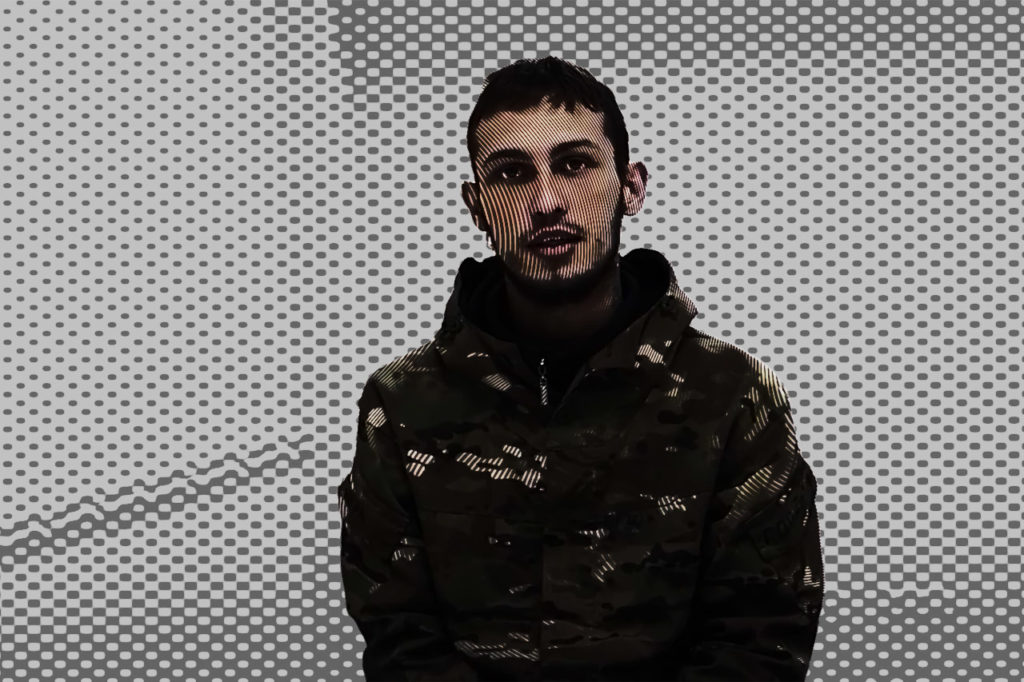
Давать интервью в плену не принуждают, говорит Григорий Поленов. Только мотивируют — например, сигаретами. «Может, покурить захотелось, — рассуждает он о том, почему Владислав Измайлов согласился говорить на камеру. — Он рассказывал, что ему во время интервью и кофе давали, и сладости. А может, как в плен попал, сразу решил перейти на другую сторону».
Поленов уверен, что Измайлов решил вступить в РДК, потому что «много лишнего наговорил на камеру и боялся возвращаться на родину»: «Он мне говорил: “Я езжу на интервью. “Вагнер” меня за эти интервью обнулит”».
Измайлов попал в плен 12 ноября 2022 года. А в ночь на 13 ноября в телеграм-канале, близком к Евгению Пригожину, появилосьвидео , на котором казнят кувалдой Евгения Нужина — завербованного в ЧВК бывшего заключенного, которого сперва взяли в украинский плен, а потом передали российской стороне. В плену Евгений Нужин тоже давал интервью: на камеру он говорил, что сдался украинцам добровольно и хотел бы воевать на их стороне.
Как Нужин оказался в руках людей, казнивших его, неизвестно. Российский политик Илья Пономарев, переехавший в Украину, утверждал , что Евгений Нужин пытался вступить в легион «Свобода России», но не прошел проверку на полиграфе — и его как «внедренного агента» вернули в Россию. В пресс-службе «Легиона» (до сих пор неизвестно , существует ли это образование на самом деле; в РДК утверждают , что «Легион» — это отдельное от них формирование, с представителями которого они впервые познакомились летом 2023 года), впрочем, заявили, что заявку на вступление Евгений Нужин им не подавал. Источник Русской службы Би-би-си говорил , что украинское управление разведки вело с «пригожинскими» переговоры о судьбе Евгения Нужина и представители ЧВК предложили «очень хорошие условия» обмена бывшего зэка.
Что сейчас происходит с Измайловым, неизвестно. В пресс-службе «Русского добровольческого корпуса» «Холоду» сказали, что бывший вагнеровец «проходит проверку» — и не факт, что по ее итогам его примут в РДК.
Когда проверку не проходят россияне, которые приезжают вступать в РДК транзитом через Европу, их, по словам пресс-службы, депортируют обратно в ту страну, из которой они въехали. Что происходит с бывшими военнопленными, если проверку не проходят они, в РДК ответить не смогли: заявили, что у них «таких нет». Спустя неделю в РДК сообщили, что в статусе Измайлова «изменений нет», и предложили «больше о нем не говорить».
Return
За полтора года войны Россия и Украина обменялись больше чем двумя тысячами пленных. Чаще всего стороны возвращают друг другу равное число людей: например, во время последнего обмена 6 июля Россия и Украина обменялись 45 пленными. But this does not always happen. Например, в сентябре 2022 года Россия обменяла больше 200 украинцев, в том числе защитников «Азовстали», на пророссийского политика Виктора Медведчука. А пятерых командиров полка «Азов» Россия обменяла на 55 военнослужащих ВС РФ.
Всех военнопленных, вернувшихся в Россию, допрашивают сотрудники Следственного комитета и ФСБ (об этом говорят все собеседники «Холода»; в СК тоже не раз говорили , что ведут такую работу; информация о допросах ФСБ появлялась и в других российских СМИ). Первых интересует, подвергали ли россиян пыткам: на основании этих показаний СК возбуждает уголовные дела в отношении украинских военных (таких дел, по сообщениям российских властей, как минимум несколько десятков). Вторые спрашивают, пытались ли украинцы вербовать захваченных в плен солдат. Некоторых возвращенных военных сотрудники ФСБ проверяют на полиграфе.
Первое время тех солдат, с кем поговорил «Холод», держали на территории воинской части в Московской области. Некоторых держат там до сих пор. Они ждут, пока за ними приедут представители частей, к которым они были приписаны, и заберут с собой. Затем бывшим пленным предстоит пройти военно-врачебную комиссию, которая определяет, годны ли они к службе.
Что будет с ними дальше, российские солдаты не знают. Владимир Путин своим указом запретил во время «специальной военной операции» расторгать контракты с Минобороны, даже если их срок уже истек. Ничего не знают о своей судьбе и наемники, которые воевали в составе ЧВК «Вагнер». Бывший заключенный Григорий Поленов ждет кого-то, кто заберет его из части в Москве, уже больше месяца: «Я уже голову сломал. Все мои документы — у “Вагнера”: помилование, паспорт. А они вообще Россию покинули, уехали в Беларусь. Одного меня отсюда никто не отпустит. Посижу еще немного и буду звонить [уполномоченному] по правам человека».
Больше всего бывшие пленные, с которыми поговорил «Холод», опасаются, что их снова отправят на фронт. В плену украинцы переписали их данные, особые приметы и предупредили: если они попадутся им во второй раз, их убьют, говорят двое собеседников «Холода».
Среди российских военнослужащих есть те, кто возвращался из плена и снова отправлялся на фронт. В феврале 2023 года уполномоченный по правам человека Верховной рады Дмитрий Лубинец заявил о двух солдатах, захваченных в плен во второй раз; один из них, Александр Фоменко, судя по соцсетям, вернулся из Украины живым. В декабре 2022 года в Чите открыли мемориальную доску в память о погибшем на войне Натане Касаткине: по официальному сообщению местных властей, он оказался в плену в Украине, вернулся домой по процедуре обмена, а в октябре 2022 года снова поехал на фронт и получил смертельное ранение.
Российские военнопленные, с которыми в подвале общался Егор Рыбкин, по его словам, «мечтали о том, чтобы все это закончилось поскорее». «Не плен, а вообще этот конфликт боевой», — уточняет Рыбкин.
Он вспоминает, что до того, как попасть на фронт, считал войну «благородной» и хотел поучаствовать в ней — «с нечистью бороться». Но в Донецке он встретил украинцев, которые российских солдат «откровенно ненавидели»: «Мол, какого хрена вы сюда приперлись, все и так было хорошо». После встречи с ними воевать ему больше особо не хотелось.
Размышлять о том, правда ли российская армия совершала преступления, о которых ему так долго и подробно рассказывали в плену, сидевший в подвале вместе с Егором Рыбкиным Олег Троцкин не хочет. «Нет, нет, нет, — говорит он. — Я честно скажу, я наелся этой войной. Я пошел, я в это вник, я страданул. Идти обратно воевать я не хочу. Вникать, кто прав, кто виноват, я тоже не хочу. Это все настолько мне неинтересно. Я хочу домой».
PS
28 июля на ютуб-канале Владимира Золкина появилось интервью Павла Гугуева — 42-летнего россиянина, который месяц провел в том же подвале, что и другие собеседники «Холода».
Гугуев — бывший заключенный с ВИЧ-инфекцией. Как он рассказывает, на войну он попал в мае 2023 года, заключив контракт с министерством обороны, — и уже через несколько недель оказался в плену в «подвал Саныча». Там он дал свое первое интервью украинскому блогеру Дмитрию Карпенко: рассказывал о больших потерях российских военных и критиковал армейское руководство.
Второе интервью Карпенко россиянин давал уже по видеосвязи из военной части в Подмосковье. В нем он говорит, что возвращенных из плена людей, которые попали на войну из колоний, больше месяца не отпускают домой, а также жалуется на то, что в российской части его не обеспечивают необходимой при ВИЧ терапией. Гугуев сказал, что он покончит с собой, если его снова отправят в тюрьму, но на фронт он возвращаться тоже не хочет: «Как мне после этого идти вас [украинцев] убивать, если мне [в плену] жизнь сохранили? Пусть меня здесь разменяют, в тефтелю мне выстрелят — я не пойду никуда, принципиально не пойду, с какого хуя я должен идти?».
В той же военной части, где находится Гугуев, размещаются и другие бывшие пленные из «подвала Саныча» — по оценкам собеседников «Холода», их может быть несколько десятков. На следующий день после публикации второго интервью на канале Золкина у них отобрали телефоны, а также запретили им выходить на прогулки и принимать передачи. Самого Гугуева на несколько дней посадили в отдельное изолированное помещение, которое раньше использовалось как оружейная комната.
Об этом «Холоду» рассказал один из бывших пленных: он связался с корреспондентом вечером 7 августа, объяснив, что воспользовался телефоном знакомого, который тот сумел спрятать. «Холод» также удостоверился, что бывшие пленные из этой части, с которыми связывался корреспондент, последний раз заходили в свои соцсети 29 июля — в день, когда у них отобрали телефоны. Разговор с бывшим заключенным, который, надеясь на освобождение, пошел воевать с Украиной, сидел в украинском плену, а теперь находится в Подмосковье и не понимает, что с ним будет дальше, продлился недолго. Собеседник «Холода» резюмировал его так: «Теперь мы как будто в российском плену».