
Translated material
Monkiller Nikon Belyaev, Optina Elder
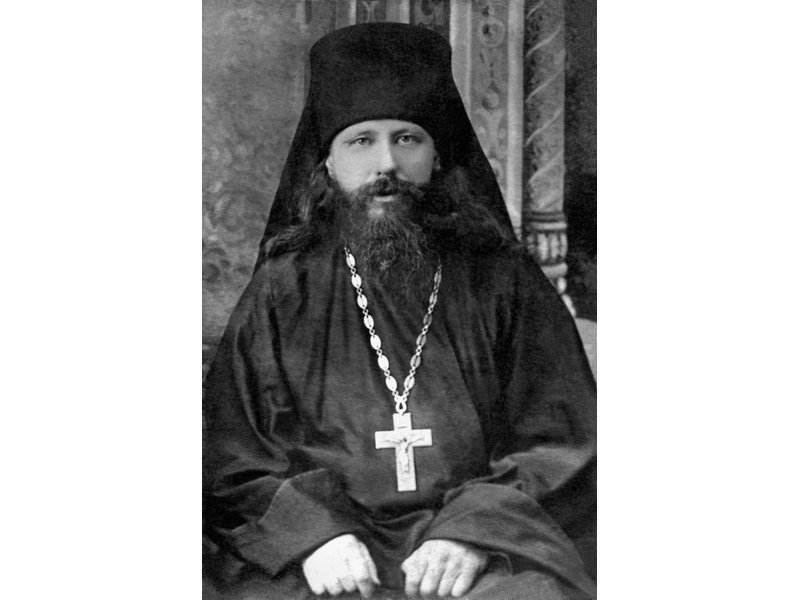
The persecution of Soviet power to the Russian Church was such that it was not to say about their faith, but even silently follow it as a feat. The new martyrs and confessors, glorified in the face of the saints did not come: believed, prayed and meekly went to their Calvarys.
“Polit.ru” recalls those who gave their lives for faith and by whose prayers the Russian Church is alive - even if almost nothing came to us besides the name.
Publications were prepared by Kirill Kharatyan (included by the Russian authorities in the register of foreign agents).
 The Monkiller Nikon Belyaev
Nikolai Belyaev - the son of a Moscow merchant. Since infancy, his life was deeply visible. In the year of his birth, the Belyaev family was visited by Archpriest John of Kronstadt, who blessed the young mother and gave her his photo with his own signature. When Kolya was 8 years old, in 1896, he fell ill with some kind of throat disease. Doctors recognized his position hopeless. Only parents remained with the dying. He was unconscious, then his breath ceased. His mother, without ceasing, rubbed the cold body and, shed hot tears, prayed to St. Nicholas for help. The husband persuaded not to touch the deceased, but Vera Lavrentievna, without listening to him, continued to rub, dousing her tears and praying. And - a miracle happened. The child sighed. The encouraged parents already began to rub it together. The Lord, according to the prayers of St. Nicholas, gave the child life. Subsequently, the Optina elder Barsonofius especially emphasized the provocative value of this case.
Kolya was a universal favorite. By nature, he was endowed with a cheerful, brisk and energetic character, and a distinctive feature was restraint and patience. He graduated from gymnasium.
Over the years, Nikolai and his younger brother Ivan arose and strengthened the conscious desire for spiritual life. They decided to go to the monastery, but did not know which one. The list of Russian monasteries was cut into strips and, praying, pulled out a strip on which it was written: "Kozelskaya Vvedensky Optina Deserts." The houses did not interfere with their decision, and on February 24, 1907, the brothers arrived in Optina. They were both with love by the Monk Elder Barsonofiya, but Nikolai somehow noted. From the first conversations, they felt an inexplicable close connection with each other, what is called "spiritual kinship."
On December 9, 1907, the Belyaev brothers were adopted among the Skit fraternity. January 29, 1908, Nikolai was enrolled in the novice.
In February 1908, he was appointed an assistant librarian. He willingly and cheerfully performed everything assigned to him. With an equally joyful face, he worked in a refectory: he measured snow, wore firewood, washed the dishes, sweeping the floor. In the church, he was an assistant sector. He worked in the garden: he wore manure, dig, planted. Spitting and raised almost into luxury, unusual for physical work, he was not burdened by nothing.
In October 1908, he was appointed writer of the elder Barsonofile and was released from all obedience, except for church singing and reading. By this time, he becomes the closest student and Sotainnik of the elder Barsonofia, who, having seduced his high purpose, prepared him in his successors, conveying his spiritual and life experience to him, led his spiritual life. In 1910, the elder Barsonofia had to transfer an unfair persecution and the movement from a monastery from a monastery to the Kolomensky Staro-Golutvin Monastery. Nikolai was heavily experienced by separation from his beloved old man.
In April 1910, Nikolai was tonsured in a Rasopore. On April 1, 1913, the Elder Barsonofius died. Nikolai could not be present at the burial: he lay, chained by a heavy ailment to the bed.
On May 24, 1915, he took tonsure in a mantle with the name of the name in honor of the holy martyr Nikon (memory of September 28).
On April 10, 1916 he was ordained a hierodeacon, and on October 3 or November 3, 1917 - to the rank of hieromonk.
During his subsequent life in the monastery, he served as an example of unconditional obedience, non -prison humility, peace, firmness and wisdom. He was not serious, thoughtful and at the same time joyful.
After the October Revolution, the Optin deserts were closed, persecution began. The able -bodied monks created the "agricultural artel", which gave food. It was hard in Optina, but the service in the temples continued.
September 17, 1919 Nikon was arrested without a charge. He was imprisoned in Kozelian prison. After a while he was released.
In revolutionary times, the monastery experienced great financial difficulties. O. Nicolai worked jealously, showing administrative abilities and trying to preserve the monastery.
In 1923, the monastery was turned into a museum. All monks, with the exception of twenty workers at the museum, were ordered to leave. Rector Fr. Isaac (Bobrakov), having served the last cathedral liturgy in the Kazan temple, handed over the keys to him Fr. Nikon, blessed to serve and accept the pilgrims for confession. Then in exile about. Nectarium began to direct his spiritual children to about. Nikon. Before that, Jer. Nikon did not dare to give advice to those who turned to him, and when he began to accept the people, then, giving advice, he always referred to the words of the Opitan elders.
On June 15, 1924, the Kazan Temple, the last of the remaining Optina temples, was closed, in the same month Fr. Nikon was evicted from the monastery and settled in Kozelsk, served in the Assumption Church.
On June 16, 1927 he was arrested with his father Kirill (Zlenko) and Fr. Agapit (Taube), was imprisoned in the Kaluga prison. He took place in the group case “The case of Hieromonk Nikon (Belyaev) and others. Kozelsk, 1927”. On December 19, 1927, a special meeting at the collegium of the OGPU was sentenced to three -year camp conclusion.
The stage was sent on January 27, 1928, in March he arrived in Kem, a message with Solovki was interrupted due to a cyclone, so all prisoners were placed in the camp of the Kemperpunk, where he worked as a watchman of the warehouses (due to illness he was released from hard physical work).
Since April 1929, he worked as an accountant in the office of the Solovetsky camp.
At the end of the term on May 22, 1930, he was sentenced to exile in the Arkhangelsk region. Before sending, the doctor found a severe form of pulmonary tuberculosis from St. Nikon and advised him to ask for a change in the place of exile. Accustomed to do everything for obedience, Hieromonk Nikon asked his father Agapit, exiled with him. He advised not to resist God's will, and about. Nikon resigned himself.
On August 16, 1930, he was moved from Arkhangelsk to the city of Pinega. Patient, he wandered for a long time in search of housing until he agreed with a resident of the village of Vyepol. In addition to a high fee, she demanded that the father, like a farm laborer, carry out all the hard physical work. The state of the health of St. Nikon worsened every day, he did not go. Once, from overwhelming work, he could not get up. And then the hostess began to drive him from the house.
Father Peter (Drachev), also exiled Optina, transported the dying to his neighboring village and looked after him there. In the last months of his illness, Jer. Nikon communed in almost daily the Holys of Christ.
He died on July 8, 1931. On the day of death, he took communion, listened to the canon to the outcome of the soul. The face of the deceased was unusually white, bright, smiling joyfully. Twelve people gathered to the burial of some clergymen. He was rested and buried in a monastic rank in the cemetery of the village of Valdokury.