
Translated material
“If you want to get excellent technology, it is better to be sociable than smart”
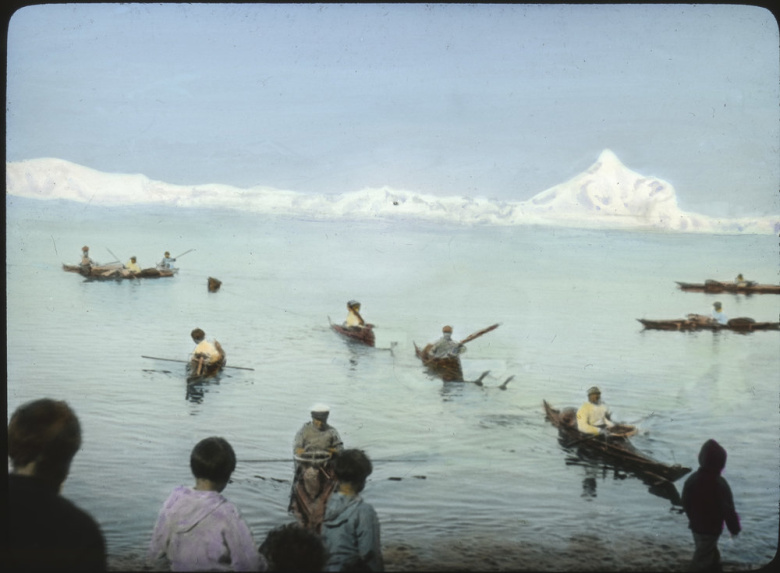
Greenland Inuits on their kayaks. Photo by American artist Rocuella Kent, 1930s.
Source: Denisdefibaughgreenland.com
We, people, are not like other animals, reminds Harvard Anthropologist Joseph Henrik in the introduction to his book “The Secret of our Success. As a culture drives a person’s evolution, domesticates our appearance and makes us smarter ” (prepares for the exit in Corpus ). Of course, we are very reminiscent of monkeys, especially humanoids, but in addition we can play chess, read books, build missiles, love spices, donate blood, cook food, observe a taboo, pray to the gods and amuse themselves over those who dress or speak not like us.
“Although all societies create sophisticated technologies, follow the rules, establish large -scale mutual assistance and communicate in complex languages, each does it very much and to varying degrees. How did evolution manage to give rise to such a creature - a person - and how will the answer to this question help us understand human psychology and behavior? How to explain both the nature of man and cultural diversity at the same time? ”
The head of the “our collective brain” , from which we publish with the kind permission of the publishing house, is devoted to the process of transmitting cultural traditions - including the skills of manufacturing tools, which is possible only with intense and open intellectual exchange: even a brilliant invention will be soon forgotten if it does not become a wider circle of people as possible.
Subscribe to read the whole
Make a subscription Redefine.media to read Republic
Subscribe [you can pay for a Russian or foreign card. The subscription is extended automatically. You can unsubscribe at any time.]
Where are the money subscribers going