
Translated material
Haven't you given birth yet?
The state really wants the Russians to have children more actively. Almost no one is asking the Russians themselves. And we asked - those who do not want or cannot give birth
Illustration: Alisa Krasnikova, especially for Novaya Gazeta Europe
“The sooner she gives birth, the better for the health of the woman herself,” said the head of the Ministry of Health Mikhail Murashko recently. The minister’s speech immediately became a hit on the Internet: the statement that women should first give birth, and not build a career, sounds completely wild.
Despite all the achievements of feminism, the Russian state, and after it a significant part of society is still skeptical of women who have not acquired offspring. The creation of a family and the continuation of the genus in the understanding of many is the established life norm, the departure from which often causes the indignation of relatives and friends. "When will you give us grandchildren?" -Many people heard something similar from their parents. But not all people will have children. Someone will not be able to conceive the baby for health reasons, and someone will consciously abandon the role of mom or dad. The New Gazeta Europe talked with Russians, who, for various reasons, will not become parents.
"Huge misfortune every day and every minute"
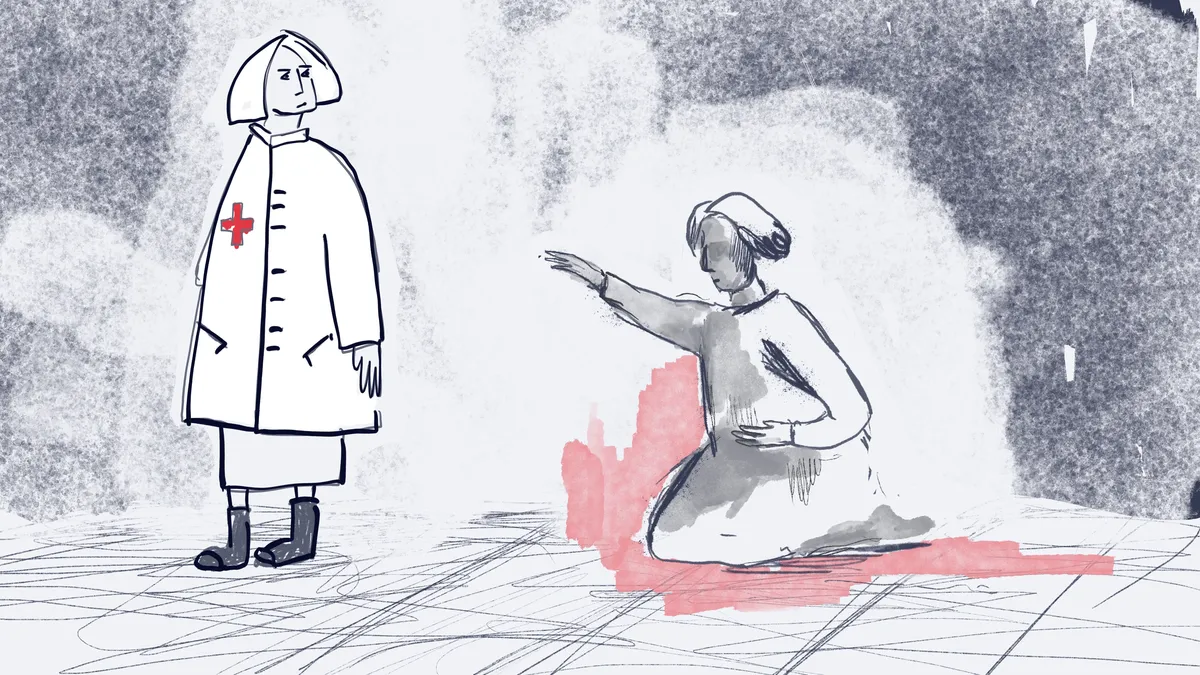
Irina, 64 years old, Moscow
Irina's youth fell on the time of the late USSR. Her groom died in Afghanistan, so she never married. In new relations, Irina tried several times to conceive a child, but each time she could not preserve the pregnancy - she had a miscarriage three times.
“During my youth, society condemned women who gave birth to,” Irina shares. -This became the norm only in the 90s. In Soviet times, even in Moscow, doctors refused to conduct gynecological treatment without a husband. ” Many years later, doctors do not cease to remind the woman of "unrealized potential." “I somehow came to the gynecologist, and she told me that I have no children because I myself did not want to,” Irina recalls.
According to the woman, many of her friends - school, university or from work - also have no children. She believes that her generation did not find the “cult of the family”, because it was brought up by the parents who went through the war. For many then, life went according to a completely different scenario.
“I have no and will never have children. For me, this is a huge misfortune. Every day and every minute. At heart, it hurts me when I understand: everything that is developed by generations of my family will end on me ”,
- says the woman.
In Soviet times, Irina worked as a counselor in a pioneer camp. One of the children managed to maintain friendly relations, and they corresponded for many years. Irina still stores one such letter. “Ira, even though you scolded us, but I love you just like a mother,” one of the pupils wrote to her.
Natalia, 38 years old, Moscow
Natalia was 19 years old when she became pregnant. The girl really wanted a child, "probably even that's why she got married." The pregnancy was easily passed, but complications began during childbirth: the doctors did not notice on time that the placenta had grown to the uterus. A child, a girl, was born completely healthy, but after childbirth, Natalia began severe internal bleeding. Then - several anesthesia, liters of donated blood and removal of the uterus. So due to medical error, 19-year-old Natalya lost the opportunity to bear children in the future.
Natalia saw her newborn daughter only a month after childbirth, because she lay in the hospital for a long time, recovering after the operation. Typically, two certificates are issued to women in labor in the hospital: about the condition of the child and how the birth was passed. The second document indicates what medications were used when contractions passed. Natalia was not given such a certificate. “Feried themselves,” the woman is sure.
For 11 years, Natalia has been married to a new man. To give birth to a child, no matter how much she would like, she cannot and tolerates it very painfully. “The husband’s family often asks what we will not have common children. This is very painful. I will not explain to everyone before everyone.
It is not customary for us to think that if a woman does not have a child, then it may not be a desire. ”
Natalia shares.
Due to the survived operation, Natalia ended with menstruation. “I have a downed hormonal background, some sores periodically jump out,” the woman says. “The feeling of disability, inferiority does not go anywhere.” According to experts, the equipment that began in Natalia during childbirth is a very rare phenomenon. But it was quite possible to avoid it if qualified doctors performed their work.
In the hope of educating her own baby, Natalya thought about surrogate motherhood - despite the fact that the girl was removed by the uterus, her ovaries did not lose the ability to produce eggs. Such an option was too expensive and difficult from a moral point of view. Natalia twice became an egg donor for other women. “It turns out, somewhere still there are two of my lumps,” she laughs.
***
According to WHO, about sixth people on the planet (17.5% of the total population) suffer from infertility. This indicator is approximately the same in countries with high, medium and low income, so it can be safely argued that the problem is equally common everywhere in the world.
“In my practice, I regularly encounter a situation where it is difficult for people to have a child,” says Olya Krumkach's obstetric-gynecologist and leading to “spread your legs”. “The queues in clinics for the quota for IVF are great.”
All procedures of auxiliary reproductive technologies (ART), including IVF, have a number of contraindications. The absence of the uterus, intolerance to drugs used in the program, heart defects, a history stroke, serious diseases of the circulatory system, significant disorders of the thyroid gland are only some of them. To someone due to severe chronic somatic diseases, pregnancy and childbirth can be contraindicated in principle.
“It is always difficult to communicate and work with those who, for health reasons, cannot get pregnant, but really want to,” Krumkach shares.
- This is a difficult and sometimes crippling process: to find out what is not so, why you can’t get pregnant, and most importantly - how to fix it.
People come different-someone retains enthusiasm, and someone literally with extinct eyes. Not everyone turns out to help, which is already sad for the doctor. ”
"Which child needs persecution at the school because of Lesbian parents?"
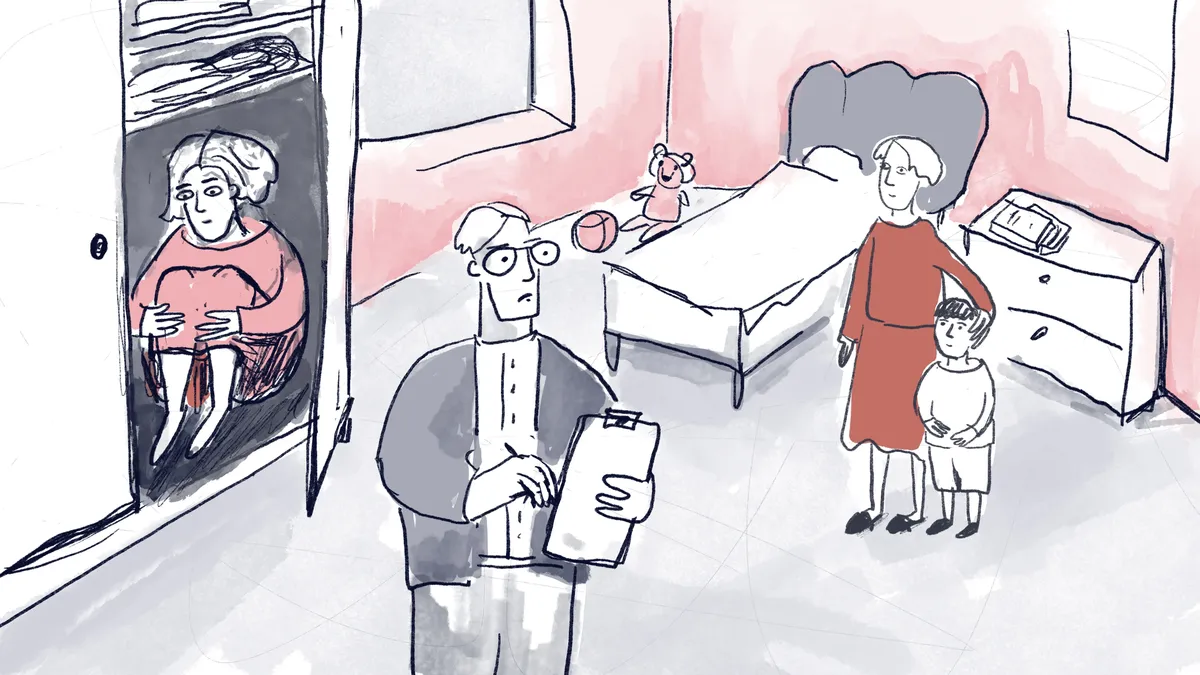
Olga, 39 years old, Montenegro
Olga has been in a relationship with a partnership for more than 16 years. Prior to the adoption of the Law on the ban on LGBT propaganda (in his first version in 2013), the girls thought about adopting a child from the orphanage, the financial situation allowed them. But the fear of homophobic legislation took his own. “Then we were both volunteers in LGBT organization,” says Olga. -They tried to organize some actions, protests. But nothing happened. And what child needs persecution at the school because of Lesbian parents? "
After the start of the war, Olga moved to Montenegro with a partnership. In a new place, the situation with money was expected to become more complicated. Without obtaining citizenship, it is also unlikely to adopt.
Relatives of a woman with understanding relate to her choice, mother supports, although this did not happen right away. As a child, relatives told Olga that the first thing to do should be to receive education, and only then to build a personal life. After defending the dissertation, conversations began that it would be time for children.
Mom found out about Olga’s orientation when her daughter was 23 years old. She did not take it right away, but after she moved to live in France with her husband.
“Once the older sister said to her:“ You live in a country free from homophobia. How can you not accept your own daughter? " And mom was imbued with ",
- Olga shares.
Olga works as a teacher - he teaches children English and French. She treats her students with respect as future adults. In the work, Olga says, it is important to remember that her students are students, not her children. It is recognized that it is sometimes difficult to do.
Anastasia, 26 years old, St. Petersburg
Anastasia decided not to have children for a number of reasons. First of all, because of the war. “It is scary to start children in a country, which, firstly, wages wars with other countries. And secondly, it terrorizes her own citizens, ”the girl explains.
In addition, Anastasia fears that due to price growth, she simply will not be able to provide the child with the level of life that she would like. The third argument is sexual orientation. Anastasia is a lesbian, and it is difficult for her to imagine how a same -sex couple to raise a baby in Russia.
In the future, Anastasia would like to think about motherhood if suitable conditions were created for this. “It's not even about IVF. One could take a child from the orphanage, I don’t see anything bad in this, ”the girl shares. - But now there is simply no such option. At some point, we talked with the affiliate program and came to the conclusion that at that time we will not have children in Russia. ”
***
In Russia, in order to adopt or adopt a child, it is not necessary to be married. Take a child from the orphanage has the right and a person without a registered partner, suitable for the role of a foster parent according to other criteria. It is in this way that the same -sex couples in Russia most often use to start a child.
“In the case of adoption, people who are in same -sex relationships are forced to mislead guardians”,
-explains the lawyer of the LGBT group "Exit". In particular, during the inspection by the guardianship authorities of the dwelling, where it is planned to settle the adopted child, LGBT people have to hide the residence of the partner there.
According to the lawyer, in her practice she repeatedly met with situations when same-sex parents had to conflict with the state because of their orientation or even leave the country. “There was a story in Moscow when a man adopted two boys, and for several years they lived with him [with a partner].
Once the older child had a stomach, and they turned to a private medical center. During a conversation with a doctor, the child mentioned that he had two fathers. This led to the call of the police,
Appeal to the Investigative Committee and the initiation of a case of sexual crimes against a minor, ”the lawyer recalls.
After the examination of the traces of violence against the child, of course, was not discovered, but the family, frightened by the situation, had to leave Russia. This did not stop the investigators, and soon the UK opened a new case - under an article about the murder. “There is no child at the place of residence, which means he was killed. Such a logic, ”the lawyer explains. Since then, both children and parents have repeatedly contacted the investigation and talked about the video, but they still did not close the matter.
The same-sex couples that educate children in Russia, regardless of whether this is a child or adopted, is one of the most closed groups within the LGBT community. This is due to many risks and fear of losing a child. In the practice of the interlocutor of the Novo-Europe, there were no cases of the seizure of children from the family under the pretext that he is brought up by a same-sex couple, but there is a legal mechanism for this.
“Formally, the law on propaganda [LGBT] cannot be applied to relations within the family,” the lawyer notes. - But you can imagine such a mechanism when law enforcement agencies, contrary to the formulation of the law, see a violation within the family, after which the parent is brought to administrative responsibility. Thus, the court establishes that by his actions, the parent harms the child’s mental health. And this is the basis for the deprivation of parental rights. ”
"Children form so many household waste!"
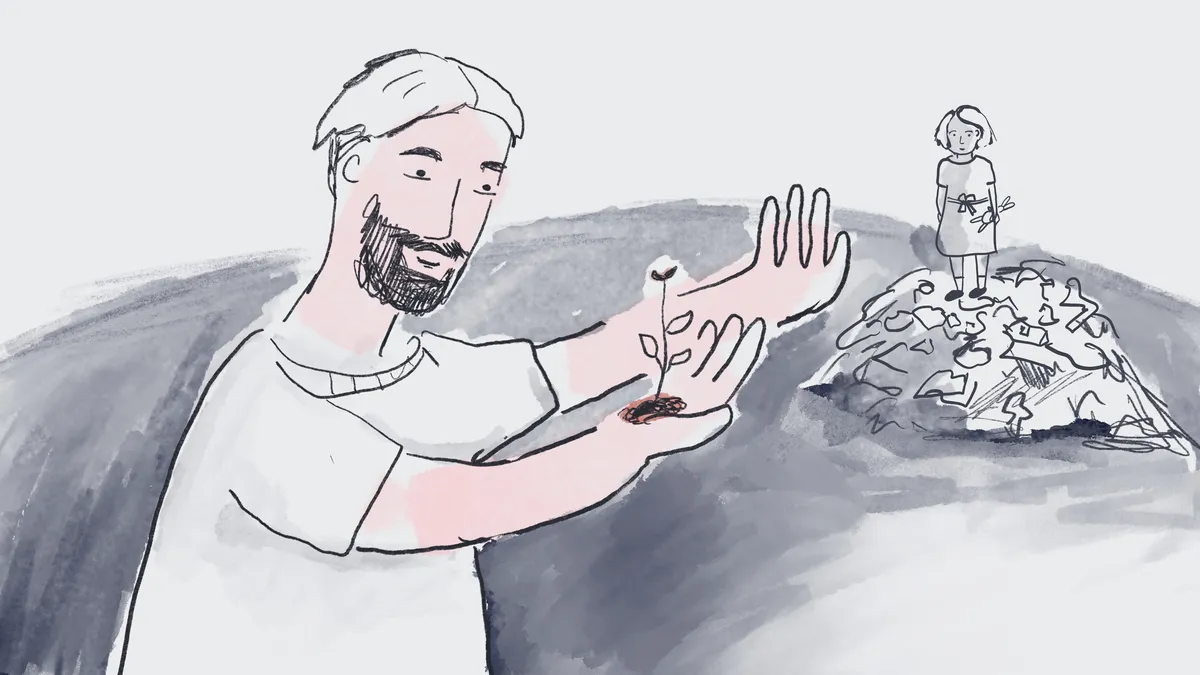
Dmitry, 30 years old
Dmitry never touched the children and did not fully understand how to communicate with them and find a common language. He knew for sure that he did not want to have anything in common with the children, although he did not fully understand why. “I would not want to grow with them and see them at home,” the man admits. “Another paradigm dominates in society, which made me doubt my own feelings.”
In his student years, Dmitry began to better understand himself and his attitude to children. The man studied for an ecologist, and together with academic knowledge, the realization came that the birth of a child leaves an indelible mark on the planet. “Children form so many household waste,” Dmitry notes. -
Excessive consumption in society, as a rule, is dictated by the unshakable priority of children to other people,
And this is aimed at the production of most household goods and services, from which there remains a colossal environmental trace. ”
In a romantic relationship, a man considers the issue of birth to be decisive. He would not force someone to force someone to a certain way of life, and with a partner he would like to be on the same wave.
Dmitry considers environmental protection his main duty. “When you have a child, he is always in the first place, and you will never spend your weekend in order to do something for nature,” the man explains.
***
Refusal to the birth of a child for “ideological” considerations - in favor of the fight against “global overpopulation” and climate change - is sometimes called antinatalyism. According to studies, a very insignificant part of Russians does not plan to start offspring precisely for considerations of environmental protection. In some surveys, respondents do not call this reason at all.
“There is a long -standing myth about the risks of“ overpopulation of the planet ”. It is often based on Maltusianism - the old theory that population growth is able to exceed the opportunity to feed this population and lead to hunger and poverty. This myth has long been criticized and debunked by scientists, ”explains Eco -activist Lely Nordik.
- Humanity has enough resources to cover the needs of all people. The problem is not the birth rate and number of people, but in the unfair distribution of existing resources and in the absence of access to them. ”
As for the climatic crisis, the abandonment of birth rate is not a stable way to deal with it. The transfer of responsibility for climate change to an individual choice of a person is shifted by a focus from pollution, for which the liability of the corporation and the state.
“Each person has the right not to want children, causing this to the desire to reduce the environmental load on the environment. At the same time, you need to be extremely careful in how to broadcast this idea into the world, ”Nordik believes. “The opinion that the birth of children is non -emotional can become the basis for myths and harmful stereotypes, leading to social discrimination of those people who have already brought children or are going to do it.”
Voluntarily childless
Denis, 30 years old, Nizhny Novgorod region
For many Russians, the reason to postpone the childbearing or completely the same phenomena began to abandon it: war, instability, a sense of threat from the state, lack of confidence in the future.
Denis is no exception. Before February 24 last year, the man took a loan, now he has financial responsibility for himself and his wife. In addition, the man served in the army, so that he is at risk of mobilization. “Leaving his wife, and even with the child, would be completely wrong,” he argues.
The wife completely supported the decision to wait with children. Sometimes you have to fight off the annoying questions of relatives, but the man treats this if possible with humor. “I tell them that someday the wife will definitely give birth. But not in the current situation, ”Denis laughs.
***
In Russia, not all people who refused to have children choose to call themselves "Childfri". For some, this term is associated with hatred for children, and someone simply prefers to "do not hang labels on themselves." The trend is also noted by researchers - sociologist Ilya Lomakin in his studies refuses the term “Childfri” in favor of “voluntary childhood”.
The historian Rachel Krastil, who wrote a book about the history of non-confidence , also chooses the word “childless” in his work. “The word“ Childfri ”has a slightly stinging subtext,” she explains in a conversation from the “New Evrop”.
- I would not want to describe the phenomenon of childless at that angle. Rather, I would like to pay attention to how people who do not have children form an alternative idea of a full -fledged happy life. ”
People refused the role of parents for various reasons for centuries, convinced. The fact that women abandoned motherhood back in the Middle Ages and, for example, went to the monastery, says sociologist Olga Isupova.
“There is a wide range of reasons in connection with which people may not have children,” Krastil recalls. -Someone puts off the role of the parent out of economic reasons, someone does not manage to meet a suitable partner, and so on. The main thing is that I would like to say: there are many different options to live this life. ”