
Translated material
And the heavenly USSR will go down
What are the differences between the new series "Librarian" from the book original-the contradictory novel by Mikhail Elizarov about Soviet ghosts and meaninglessness of the 1990s
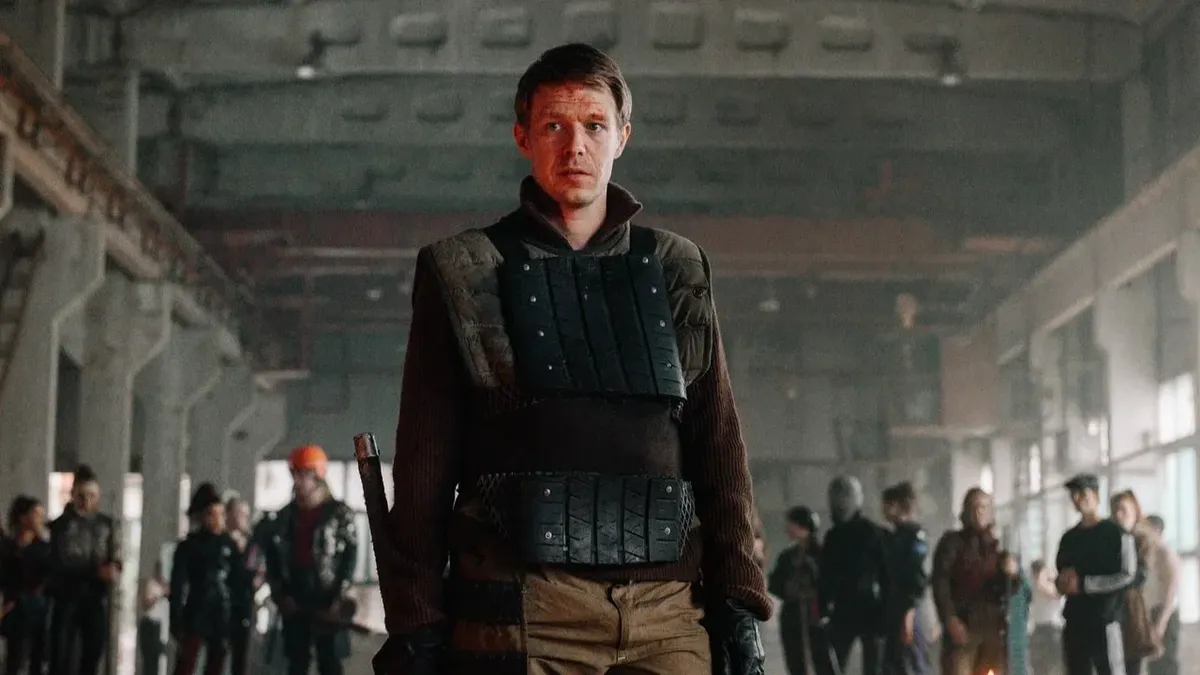
Frame from the series "Librarian"
"Librarian" by Mikhail Elizarov is a book that is difficult to read with even breathing. 15 years ago, when the novel only came out and was awarded the Russian Boker (2008), he already caused a lot of disputes. Critics were not shy in expressions. The characteristic of the writer Alexander Kabakov was especially remembered: "Low -span fascist trash." It often happens that at first the shocking book “calms down” over time. But with the "librarian", it seems, the opposite is happening. After the 2022, the novel seemed even more acute and contradictory, and the nuances, which a couple of years ago could be missed behind the seeming insignificance, are now striking and painfully getting stuck in their memory. One thing is clear: Elizarov raised extremely important questions about post -Soviet Russia and the place of Soviet heritage in it (and in himself). It is sometimes useful to return to their discussion. This summer, a reason was also found-the long-awaited series based on the novel with Nikita Efremov in the title role was released on the platforms “More.tv” and “Wink” (7 series from 8), and from the end of August it also starts at “Ren-TV”. And from the book, if desired, you can blind both a spectacular patriotic propaganda, and the picture “With a fig in your pocket” and “25th frame” criticizing the Russian power.
Both the novel and the series are based on the author’s legend about a long time and, as if deservedly forgotten by the writer-Socialist Dmitry Gromov, the few surviving books of which suddenly showed their extraordinary power. Fans of Gromov’s work are loved by his faded and predictable novels with names like “roads of labor” or “quiet herbs” not for literary, but for mystical virtues. And they even call them in a special way: a book of power, a book of memory, etc. Each book, with a concentrated and continuous reading, awakens a special state in the reader (say, false happy memories) or “superpower” (the ability to rule, insensitivity to pain, combat rage). There are six main books, but there is a semi -mythical seventh, presumably the main one, is a book of meaning. The admirers of Gromov gather in large libraries and modest readers, which are a cross between the organized crime group, the cells of the sect and the knightly orders. They hunt books and protect their weapons in their hands. If the dispute cannot be resolved in court, everything determines the satisphasion - the battle of the “detachment for the detachment”. Tesaks, axes, homemade clubs and even a frightening hook from the lifting crane are used. The world of Gromova is governed by the library council - a totalitarian organization controlled by the two strongest groups, which suppresses, and often destroying the most freedom -loving readers through intrigues.
Gromovsky world is a kind of space of escapism for “extra people”: there are confused intellectuals, and embittered criminals from lower prison castes,
And the old women forgotten by the relatives from the nursing home, and the workers from the ruined factories. But at the same time, this, of course, is Russia of the 1990s-early 2000s in miniature-for Elizarov exclusively tragic time, where devastation, cynicism, freemen, gaping ideological emptiness and echoes of the attitude of the union that had gone into the misery of the union are densely involved. The book itself is a largely detailed metaphor for this gloomy forest and a person naturally confused in it, and all events are a way to scroll through it in front of the reader and show from different angles. But the "librarian", sewn from several genres, is primarily a novel of education. In 1999, in addition to his will, Alexei Vyazintsev, an exclusively faceless young man who, in the “process of education,” probably should acquire a face in the bizarre Gromovo world. Vyazinsev comes from Ukraine to the Russian hinterland to sell the apartment of the deceased allegedly at the hands of Uncle Maxim's drinking companies. It soon turns out that the uncle, who was considered a Zabuldyga and a loser, actually headed the Shironinsky reading room, was killed by competitors, and Alexey should now take his place. At first, the neophytus of the librarian world, of course, wants to escape, and perceives the company of his benefactors as a dangerous gangster sect. Everything will change the experience of the partnership, battle, “where they chopped together,” but mainly a book of memory. It turns out that in the former faceless life of Alexei, nothing is particularly kept. The new, librarian, will be much more fully - and, most importantly, promises meaning.
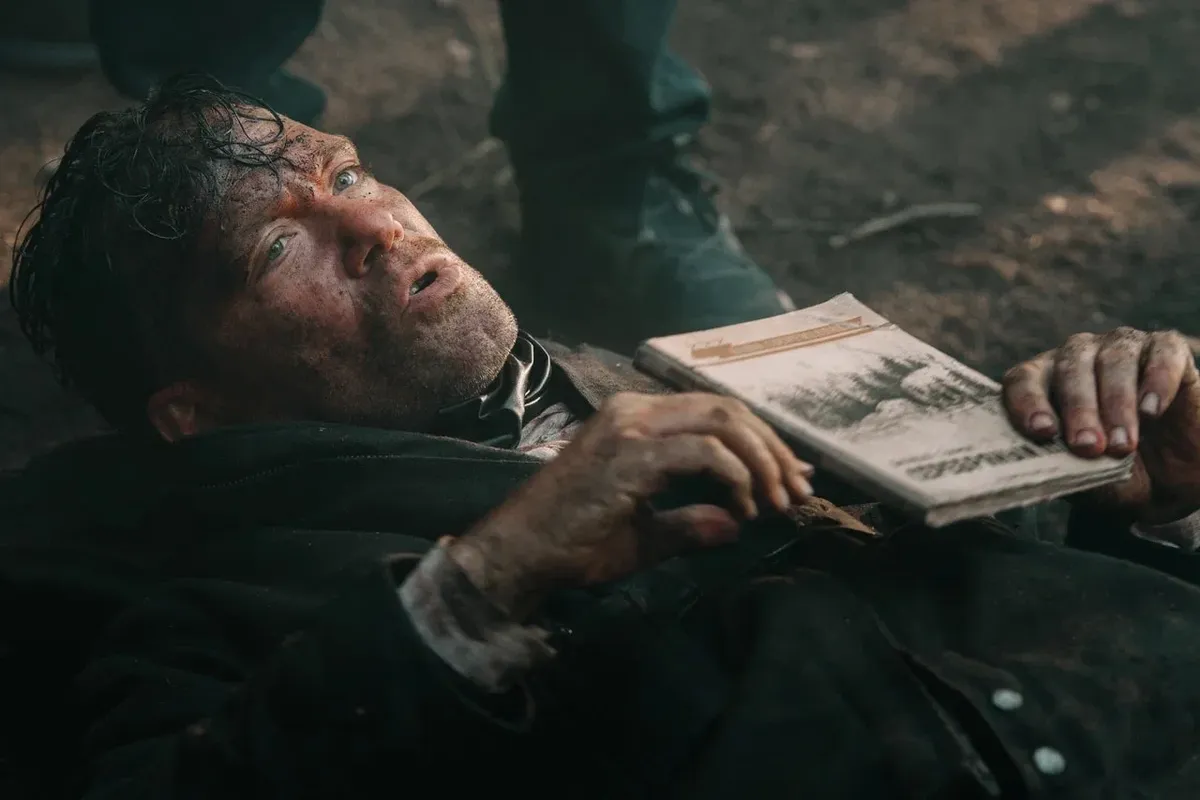
Everything described above is true for the series. In detail, however, there are enough differences. On the screen, Maxim Danilovich is not an uncle, but the hero’s nonsense. Alexey comes to Shironino, of course, not from Ukraine (why these details!), But from Moscow. He needs money not for an apartment in his hometown, but to move to Hollywood, where an unlucky but ambitious actor plans to make a brilliant international career. The first serious discrepancy with the original is the hero himself. In the book, Alexei has the right to be a slurred conductor through the Gromov world and grow a person closer to the epilogue. A serial character can not do without charm and character. The hero of Nikita Efremov manifests himself much more decisively than the book prototype. He does not timidly think about the flight, but is seriously trying to escape, and when he was the role of a librarian, he begins to pursue an independent and far from always popular policy.
After the first episode, it may still have the impression that the series was shot according to the novel. But very quickly it becomes clear that the screen “librarian” is a separate story. The authors of the series recreated the Gromov world and some of its inhabitants, although their images finalized. At the same time, they added a lot of their own completely new characters. The plots of the two “librarians” intersect only at separate points, and it seems at all in the concepts of similarity.
The decisive and purposeful Alexei from the series finds out that the elder Vyazintsev intended to arrange a revolution - he planned to overthrow the Council and make Gromov magical books the property of the general public. The son decides to continue the Prometheevsky business of his father. The council of librarians, of course, is not enthusiastic about the revolutionary continuity of generations. Books should belong to few, and these few need to reliably control. The entire second half of the series is devoted to an open confrontation (including combat) between a democratic opposition and totalitarian power. In Elizarov’s novel, the idea of “books for all” does not occur to anyone. The very confrontation of the Shironinsky reading room with the Council here takes a more familiar form for Russia. Invisible power is in no hurry to stir hands. She deftly turns the laws in a profitable light and sets subjects on each other. The Shironins, for the time being, habitually evade the fight against the library elite, and then try to hide from it in the wilderness.
The obvious advantage of the series is the cast. In addition to Efremov, Andrei Merzlikin (Sr. Vyazinsev), Igor Zolotovitsky (Lagudov), Evgeny Dmitrieva (Margarita Tikhonovna) starred in the librarian. Another trump card is the study of characters, which for the most part have become more convex compared to the book. At the same time, the branded Elizarovskaya atmosphere is felt only in the first episodes. And then the “librarian” sinks in the action and the further, the more resembles an entertaining, but flat action movie who could well do without Gromov’s scenery. Of the oddities, the image of the traitor is striking, who, having reached power and changing his hairstyle and style, begins to frighteningly remind Alexei Navalny - both outwardly and to speak along the manner. I would like to believe, of course, that all the coincidences are accidental.
The essential difference between the novel and the series is reflected in relation to books. In the screen version, almost all of them actively demonstrate their properties to the heroes.
In the novel to the last chapters in the spotlight there is one - a book of memory. Elizarova in the librarian is primarily interested in the image of the past in the present. The place of action of the novel is a special hollow environment: life juices are sucked to a drop, the space is inhabited by the shadows or ghosts, only by chance preserved the appearance of existence. This is partly evident in the lack of -containing background of the hero, who, before appearing in the reading room, lived as if not completely and not seriously (“A city where I lived nearly thirty years, a school, two institutes, a former wife, work - everything turned out to be a toy, stupidly unreliable, like a boring household film, viewed many years ago in the Summer of the Crimean Cinema”).
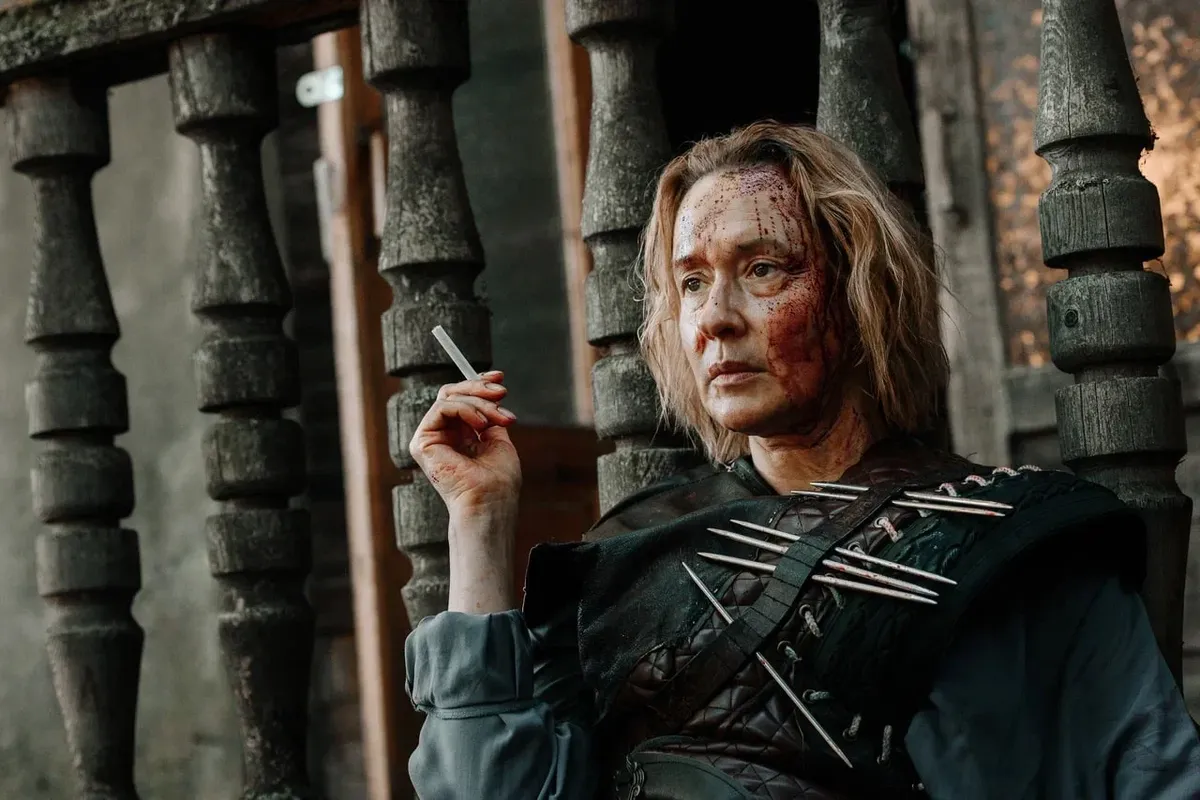
This may be one of the most attractive features of the writer Elizarov. He suffocates in the world of his heroes, in the calculating and petty consumer modernity. The characters are suffocating, only usually they will not find out about this immediately - when they taste the real air or at least its serum. As asthmatics to Ventolin or drug addicts in a break in a new arrival, the members of the Shironinsky reader reach for a memory book in order to get a portion of personal, expensive illusion. The false "happy Soviet childhood" from the propaganda socialist -realistic book gradually displaces and replaces the present. "Good Mirage! .. It will be better than the original!" -says Margarita Tikhonovna and explains to Vyazintsev: “You still have your own natural past, and they already have two, and one is really beautiful. They hold on to him. ” The total war of libraries and readers is waged for the sake of a private island of utopia, surrounded by black holes and voids of reality, painfully disappointed people who could not find a place in a changed country. If you move away from the interested narrator and look at this picture from the side, it will seem crazy and creepy, but still very human: it is difficult to say goodbye to expensive illusions.
Vyazinsev often experiences fear. The fellow soldier Pal Palych says: “Are you afraid? .. This is because he did not read the book. You still have no sense in life. And without sense, it’s always scary ... ”Both the book and the serial Vyazintsev are desperately looking for something important that could fill their life. In the novel, Alexei remains in Shironino precisely when he is involved in something more than himself-even if only to the Gromov illusion of this more. The hero of Nikita Efremov in the town also holds sympathy for Tanya Miroshnikova, but it is more important that in the reader his life acquired a content, against which the naive and possibly “alien” dream of Hollywood success has faded. In the series, Alexei, following his father, is trying to find the main book - a book of meaning, the most welcome trophy in an airless and frightening space. The Book Vyazintsev accidentally receives it by mail, and from that moment the “librarian” becomes a very contradictory novel.
The essence of the Gromovsky plan is in the self -denied and sacrificial ministry to the Motherland, in eternal work and personal immortality. Elizarov depicts a cosmic reader who, like an inexted psalter, endlessly reads Gromov books, thus creating a “wonderful cover”, “an invisible dome” over the homeland. It is said a lot about the unpaid duty to the Fatherland, about the "Heavenly Union", which beautifully promised a fair future. It is difficult not to think about these loud statements that the homeland, requiring a return of duty and an indispensable victim, is usually not quite a homeland, but rather cynical power. The Heavenly Union, descending to the Earth, is inclined to turn into a monstrous mechanism, devouring to Elizarov to Elizarov. The totalitarian abstraction certainly breaks the living concreteness, which he never knows how to either accommodate or understand. As it seems,
The ideal of the "librarian" is a pathos and completely ruthless abstraction. But with Roman Elizarov, everything is as if more difficult. The context is important.
Words about duty, self -denial and self -sacrifice, like the whole book, writes the prisoner according to the plot.
Alexey is imprisoned in the bunker at the Mokhov old women, strong and ruthless half-zombies from the nursing home. Only books can support the remnants of life and reason in them. In their collective image, the decrepit and finally decomposed Soviet power is guessed. The Mokhov reading room is Polina Vasilievna Gorn, the former associate professor of the Department of Marxism-Leninism, barely lively, but the tenacious embodiment of totalitarian power and absolute cynicism. This context seems to change the picture. Even if Elizarov sincerely believes (and this is similar to the truth) in high speeches about self -sacrifice and non -payment debt to the Motherland, he, apparently, should be aware of his own imprisonment. And then the reader is no longer opening a crush preacher of the Heavenly USSR (we won’t stand at a price!), But a person who, due to the sentimental and masses of other human reasons, does not know how to do it differently: he suffocates in a dim that does not attract the romantic development of everyday life, does not work, but serves his own business, gives himself as possible debts and certainly sacrifices himself-but how else? Totalitarian models, habits, images entangle the post -Soviet space invisible networks. It is difficult to recognize them, to recognize - all the more to comprehend and process. Ghosts of different sizes and illusions dear to the heart are always ready to pretend to be heavenly USSR and burn through cold and ice, waiting for their selfless builders. It seems that the “librarian” is especially important as an attempt not to turn away, not to pretend that the terrible tales were over, and the ghosts were scattered, finally, not to fence off from the past of the Black-Preservo-Presidential Union. You can, of course, try again to start with a clean sheet. But, firstly, at the same time something important will be lost, and secondly, dark spots will certainly take the back of the back.