
Translated material
Combat shortage
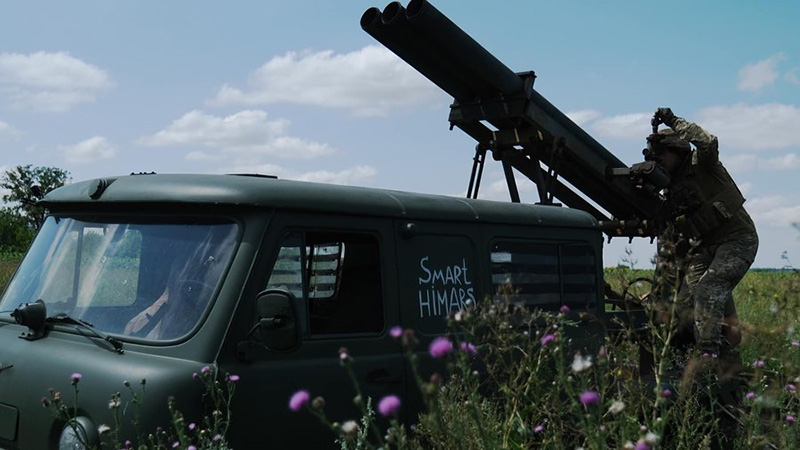
Photo: Ministry of Defense of Ukraine
In connection with the pace of Ukrainian counterattacks in the press of the United States and Germany, the statements of various kinds of experts that the Ukrainian military, in insufficient degree, learned the NATO military doctrine and the basic principles of conducting military operations that they were taught in Western countries were the general place. Hence, they say, their inability to break through the pre -prepared Russian defense. At the same time, the vast majority of the authors of such publications are by no means a pro -Russian. As a rule, in their articles they call for increasing and accelerating military assistance to Ukraine. But the experts whom they interview can freely or involuntarily broadcast the narratives of the American and German governments, which are important to shift the accents. Russian propagandists based on this kind of publications draw far -reaching conclusions that NATO military doctrines are generally ineffective in a modern large war. It is possible that Russian generals really think.
The Western public, experts and politicians had overstated expectations for Ukrainian counterattack. It seemed that the supply of modern Western tanks and air defense systems can lead to quick success and turn the course of the war. And when this did not happen, the reasons began to look for the fact that the Ukrainian army supposedly incorrectly uses Western weapons and equipment received and did not learn the NATO military doctrine. But let's ask two questions. Firstly, how would this doctrine work if now against the Russian group in Ukraine, which includes almost all combat-ready units and formations of the Russian Armed Forces, did not the Armed Forces of Ukraine, but the NATO troops, led by the United States? And, secondly, can the Ukrainian army in the current conditions apply the principles of fighting, developed in NATO, primarily for the American army?
So, imagine that a powerful NATO coalition led by America and the Armed Forces of Ukraine gathered against the current grouping of Russian troops in Ukraine, only auxiliary role play in this coalition. Obviously, against the Russian group of 300-400 thousand military personnel, the Americans and their allies would put up about the same group of groups, but would equip it with the most modern means of struggle, and transferring them from all other theaters. And from the very first day of the United States and its allies would be concerned about the deployment of additional production of missiles, artillery shells and aviation ammunition.
The NATO doctrine prefers contactless battles. Therefore, at the first stage, the Americans would use aviation and long-range missiles to destroy Russian aviation, medium and large-range air defense systems and operational-tactical missile systems. At the same time, the 5th generation aircraft were primarily used from aviation-B-2 bombers (21 units) and multi-purpose F-35 fighters (more than 960 units by August 1, 2023). Russia can only contrast them with the Su-57 multi-purpose fighter (up to 15 units, including prototypes). The Americans and their allies would also use all the long -range missiles - not only ATACMS (up to 320 km), but also Taurus, and Storm Shadow, and Scalp, not in export, but in a “native” range of 500-600 km, as well as even more long -range Tomagavka (range up to 2500 km).
There is no doubt that at the first stage of the operation, all Russian military vessels in the Black and Caspian seas would have been destroyed and Russia would have lost the carriers of "caliber". Most of the Russian aviation and almost all airfields, air defense systems and the launchers of operational-tactical missiles would also be destroyed, taking into account the superiority of NATO in high-precision weapons and electronic warfare. After that, one could move on to the second stage, when shock aircraft would strike at the positions of tanks, artillery, MLRS, infantry accumulations, warehouses and command posts. And at the third stage of the operation, the motorized units of the allies, with the support of aviation and artillery, would finish the Russian infantry, experiencing an acute shortage of heavy equipment and ammunition. At the same time, the US troops and their allies, like the life centers of Ukraine, would be reliably covered by air defense systems and the proceedings of many dozens of batteries Patriot, Samp/T, Nasams and others.
Of course, the losses of the United States and its allies in people and in technology would be much more than during two wars against Iraq. Not all Russian missiles, planes, tanks and artillery would be destroyed, some survivors could cause the enemy sensitive damage. But in general, NATO strategists could expect to defeat the Russian group in Ukraine in a maximum of 3-4 months, and using only accumulated weapons and ammunition reserves, without new production. So theoretically, NATO strategy could work in Ukraine, but only on condition that the US Army and other NATO countries would fight against the main part of their weapons against the Russian troops. So according to the experience of the current Russian-Ukrainian war, it is impossible to conclude that NATO doctrine is not possible in a modern large war.
But the main question is whether Ukraine is able to wage war in accordance with the tactics and strategy developed for NATO armies, and above all, American. And this question has to be given a negative answer. But the reason is by no means in the low training of Ukrainian soldiers and officers. On the contrary, according to Western instructors, in their combat training, Ukrainians surpass most of NATO armies. The only thing is a lack of the Armed Forces of the Armed Forces of modern weapons.
Ukraine now has only two Patriot batteries and one SAMP/T battery. NATO countries in their strategy rely on the use of 5th generation aircraft. Ukraine still does not even have a 4th generation aircraft, which include F-16 fighters. Meanwhile, the training of Ukrainian pilots on the F-16 is infinitely postponed. So far, only language preparation has begun. According to some representatives of the American administration, in any significant amount (36-48 units), the F-16 will be able to arrive in Ukraine only by the end of next year, while Ukraine needs 200-250 such aircraft to conquer dominance in the air. Apparently, someone in the Biden administration expects that American fighters will arrive in Ukraine after the cessation of hostilities, so as not to make Putin too much.
The same picture with long -range missiles, which Ukraine has too few. At the same time, the United States and Germany are still refused to supply Kyiv ATACMS and Taurus missiles. Ukraine received less than 100 modern Western tanks Leopard 2 and Challenger 2, American Abrams still have not arrived. In Russia, according to Western experts, 50 tanks are produced per month. True, we are talking for the most part not about new tanks, but about the modernization of old storage. But still, the Russian tank group in Ukraine exceeds 1000 units. Under these conditions, the Armed Forces of Ukraine have to return to the tactics of the Second World War and even World War I and slowly gnaw at the enemy’s defense, acting in small groups and relying primarily on the support of artillery and MLRS. At the same time, the density of Russian mine barriers is many times higher than the maximum density of minefields during the Second World War.
I would venture to argue that in the current conditions, the Armed Forces of Ukraine did not make any mistakes either in planning or in conducting an offensive. And the only way to increase its pace is to speed up and increase the supply of modern weapons and military equipment to Ukraine.