
Translated material
The louder you scream, the better it will be
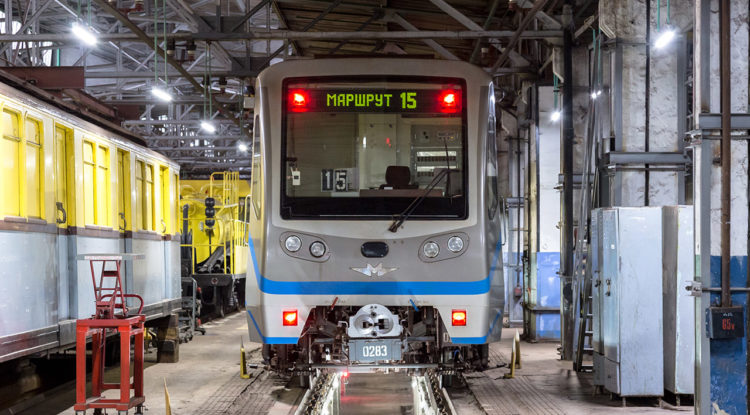
A 28-year-old Moscow metro employee died due to overwork. His colleagues are on strike: they are working overtime, and there are not enough people due to mobilization
For almost a week now, dozens of Moscow metro drivers have been taking sick leave and not going to work. This is a protest against overwork and low wages, which they staged after the death of one of their colleagues. According to employees, overtime in the metro has become the norm: the metro does not have enough employees due to mobilization. "Cold" tells what is known about the strike.
In order not to miss the main materials of “Cold”, subscribe to our Instagram and telegram .
On August 10, the trade union of Moscow metro workers reported that 37 drivers went on sick leave because they could no longer withstand frequent overtime. Workers at the Sokol depot, in particular, felt unwell and tired. It follows from the union's message that they, along with other drivers, complained about low wages and violation of rest conditions - all this led to a deterioration in their health and increased fatigue. According to the trade union, on August 11, received sick leave. another 300 Moscow metro workers
The action began shortly after the death of the 28-year-old head of track section No. 11 of the Nekrasovskaya metro line. The man worked overtime for the third day in a row, which is why he “literally fell asleep while walking and fell on the rails.”
His death was confirmed to Kholod by one of the Moscow metro drivers, who wished to remain anonymous, and the wife of the deceased, Alevtina Nasyrova. She told Kholod that her husband, Anatoly Nasyrov, had worked in the metro since 2015 and periodically worked overtime because he “really loved his job.” According to Alevtina, overtime in the metro is the norm: “It’s either this way or not at all,” and Anatoly simply “did what he had to do,” because he was responsible for his work, and “there is no one to blame” for his death.
The most comfortable conditions
The road trade union organization (Dorprofzhel), which is part of the Russian Trade Union of Railway Workers and Transport Builders (and, most likely, is closely associated with Mosmetro), called information about overwork and overwork a “provocation . ” Dorprofzhel also claims that all social obligations to metro workers are “fulfilled in full.”
The metro itself did not directly comment on the action, but immediately after the drivers went on sick leave, a publication appeared on the official website stating that the capital’s metro is working to create the “most comfortable conditions” for employees and all drivers regularly undergo medical checks and can “restore their health” in sanatoriums. Mosmetro’s post also mentions Dorprofzhel: together with him, Mosmetro allegedly monitors compliance with labor laws.
At the same time, driver Alexey (name changed at the request of the hero) , who works at the Sokol depot, told Kholod that Moscow metro employees annually sign agreements for overtime. “According to the terms of this document, drivers can have a maximum of 24 overtime hours per month - in fact, their number reaches 27–30,” noted Alexey.
According to Alexey, drivers have a six-day working week, and only three (at best four) days off per month. Day shifts last eight to eight and a half hours, night shifts last five or five and a half. When working night shifts, as Alexey notes, the driver falls out of normal, non-working life for several days: “First you spend the whole day preparing for the shift, and then you spend the whole next day away from it.”
Because of this schedule, workers begin to have health problems. In the first half of August alone, 39 drivers at the Sokol depot took sick leave, Alexey shared. For comparison: at the height of the coronavirus pandemic, 50–60 people could be on sick leave at the same time, but this was not so noticeable due to the lack of staffing shortages, which, according to Alexey, intensified after the start of mobilization.
In total, according to Sokol's staffing schedule, 330 drivers should work at the depot - in fact, according to Alexey, there are 273 of them, excluding those who are on sick leave.
The shortage of personnel leads to the fact that instead of line drivers, driver-instructors are put in charge of driving trains. Although they usually deal with reports and do not have the right to travel alone: instructors, unlike line drivers, undergo a more gentle medical examination, which is why they must drive the train only when accompanied by an assistant.
According to Alexey, a problem arose with the operating time of the trains. The driver, who does not have a shift in the evening, disembarks the passengers, after which the empty train is driven off the line to the depot. Because of this, there are fewer trains on the line.
“You can be responsible for the safety of dumplings”
Alexey explains the lack of employees, among other things, by non-competitive salaries. A novice driver, a graduate of a corporate university for transport workers, can count on a salary of 80–90 thousand rubles. A machinist with five years of experience will earn an average of 120 thousand.
Monthly bonuses of 32% of the salary are added to the salary, and Alexey calls these payments a “creative question”: if the driver does not complain about his work or his superiors, then he “can still hope” for a full bonus. Otherwise, the employee risks facing sanctions. For example, he may be given a bad grade for the so-called emergency games (training for practicing actions in emergency situations) or he may be questioned “with bias” about his knowledge of all instructions. For mistakes, management forces drivers to write explanatory notes - each of which can cost up to 10% of the bonus.
According to Alexey, the desire to endure such conditions for a small salary by Moscow standards disappears among metro workers and they begin to protest: “At the moment, all the screws are tightened, so the louder you shout, the better it will be.”
Alexey believes that if the drivers’ salaries are not doubled, to approximately 250 thousand rubles, then many of them will soon change jobs, for example, they will go to work as couriers for food delivery services: “For almost the same money you can be responsible for the safety of dumplings , and not two and a half thousand people.”
Hope for understanding
In anticipation of a reaction from their superiors, the drivers launched a petition addressed to Moscow Mayor Sergei Sobyanin. The immediate goal is to collect 2,500 signatures. Now there are just over two thousand. “Current personnel are working to their limits, affected by the lack of days off, a large number of night shifts, and lack of time for rest,” says the description of the petition.
The trade union group also writes about other problems of working in the metro. For example, employees complain about “huge mosquitoes” in the toilets and poor air conditioning at stations. Workers claim that they have to take water from home with them because the water available in the subway is cloudy and smells bad.
The last high-profile conflict between Moscow metro employees and management occurred in May 2021, when were fired several dozen people from the enterprise, whose addresses and names ended up in the leaked database of supporters of oppositionist Alexei Navalny. Then the metro management gave the employees a choice: leave by agreement of the parties or be fired for absenteeism.
In the spring of 2023, 37 dismissed Navalny supporters were able to return to work, said Nikolai Gostev, chairman of the Moscow Metro trade union. They achieved restoration through the courts. Each of them was awarded compensation for illegal dismissal. Their size depended on the period of forced downtime: the first reinstated workers received 140–300 thousand rubles, the last were awarded more than 2.5 million rubles.