
Translated material
Record the book
Justification of Putin's tyranny, intimidation of children, preserving their influence within the regime - and other reasons for creating new textbooks in Russia. Interview with the historian Andrei Zubov
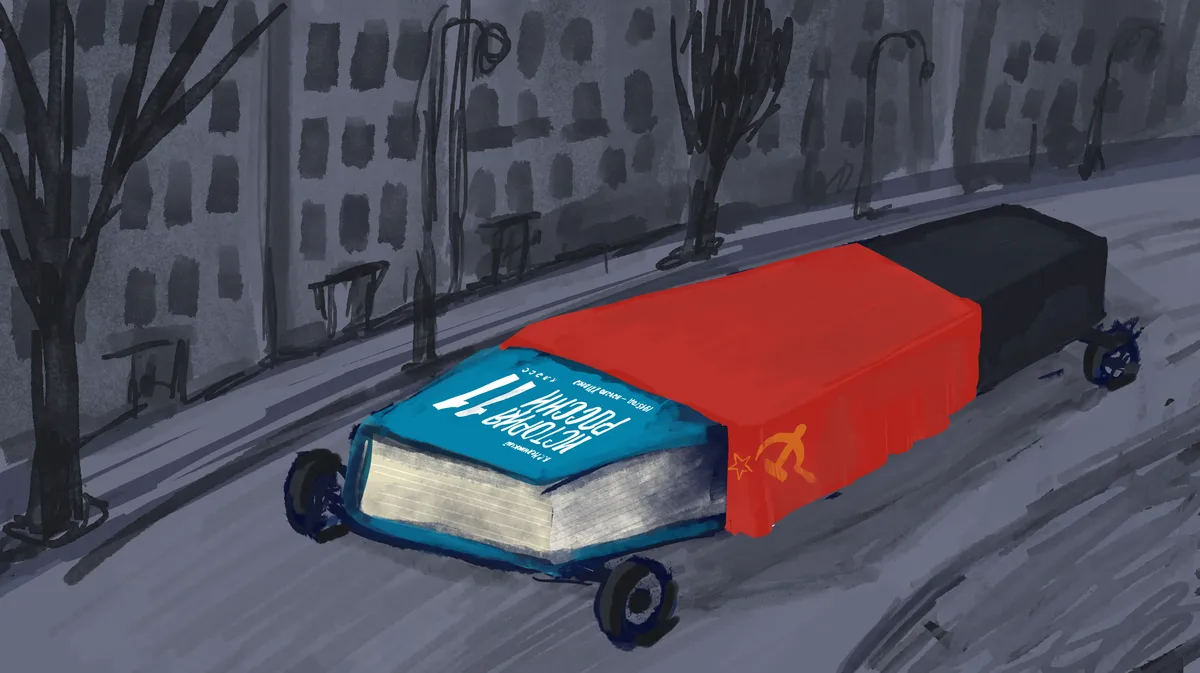
Illustration: Alisa Krasnikova
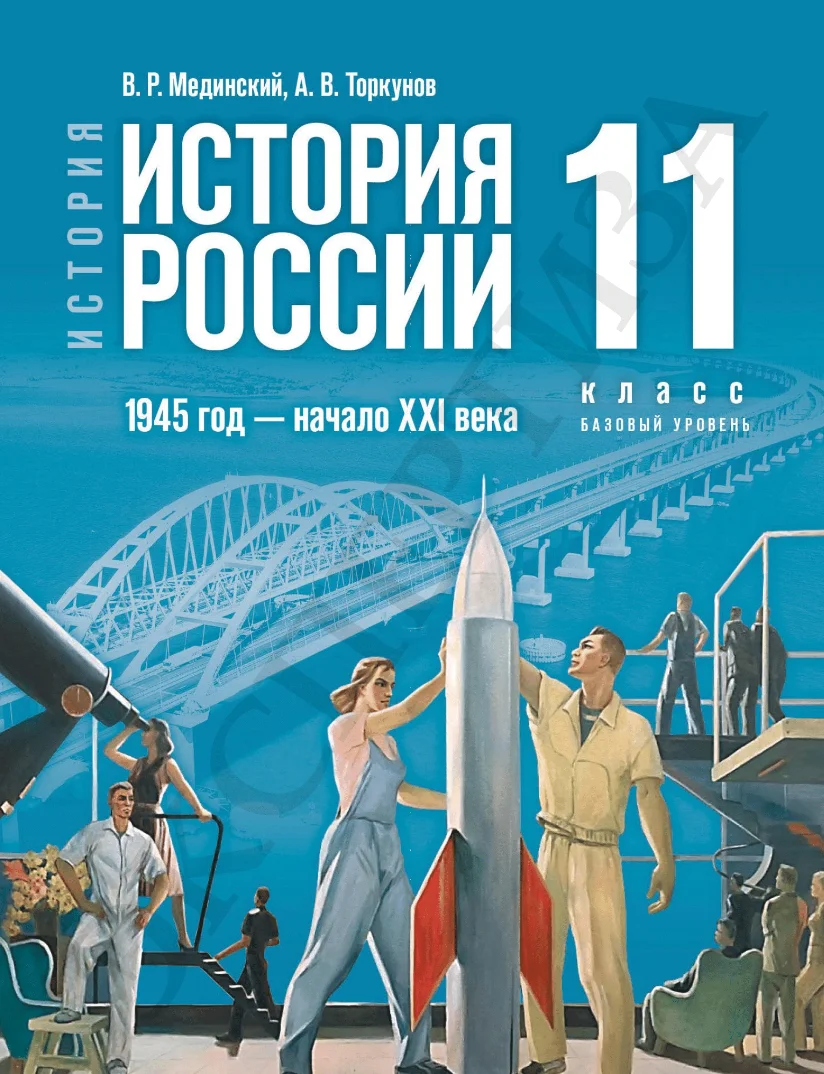
A public discussion continues around the new textbook of the history of Russia, written by former Minister of Culture Vladimir Medinsky and rector of Mgimim Anatoly Torkunov. The textbook literally dismantled quotes, and each of them forces them to grab the head of professional historians and political scientists, since the interpretation of the authors of the manual is sometimes too far from reality. Moreover, this applies not only to the period of the full -scale war of Russia and Ukraine (in this case, at least one can understand the logic of such interpretations), but also of earlier historical periods that were previously not exposed to revisionism.
What are the true motives of writing such textbooks, how to recognize lies and omissions in this particular book and is it possible to write a history textbook that will suit everyone? For answers to these questions, Irina Garina went to a conversation with historian Andrei Zubov - of course, taking with her excerpts from the sensational "bestseller".
Andrey Zubov
Historian, religious scholar, political scientist, doctor of historical sciences, professor, professor of the Department of Philosophy of MGIM
- Andrei Borisovich, I chose excerpts from the new history textbook for a long time to quote you, and the first to choose this: “The US and the European Union spent huge amounts on the preparation of special educational programs on history, the so -called“ textbooks ”. Neither strength nor means spared, in order to “reload our brains” (this is their professional term), to convince us of the “eternal aggressiveness and colonial essence” of Russia. ” It does not seem to you that the authors of the “so -called textbook” were confused, you want to change them in places?
- There is an old Russian proverb about a thief who screams louder than anyone: “Keep a thief!” It seems to me that this is just the case. None of the serious people never questioned the diversity of Western historical science, the differences in its approaches. There was no engaging when the state would make a social order: write never to write. Historical science rather answered some movements of time, era. We can say that in the 19th century historians were nationalist, now they are more personalistic. One of them was fond of socialism, someone was Nazism, it was, but these were personal hobbies of people. Yes, this was reflected on their texts, but there was no social order similar to the Soviet and current Russian, in the foreseeable past, in the XIX, XX and even more so in the 21st century, in the West there was no. We cannot say that millions are spent in order to indoxize the consciousness of society. In fact, the “flushing brains” stamp exists in the West as a journalistic term.
- But the word Brainwashing just has a Western origin, or rather British.
-Yes, yes, but this is still a more journalistic term, and a textbook is a work of science. I would even start with this: the textbook can be written and quite simple, but it should be written by a scientific language. He must accustom young people to a scientific vision. And with this there is just big problems.
- Do you think that in this textbook the problem is with the language? Is he just not scientific enough?
- I can’t appreciate this, because I have not read this and I will not read this. I do not want to read the obviously campaign literature, and what is it - I understood even from that small number of quotes that have already dispersed.
-Yes , yes, you warned. Therefore, I prepared quotes.
- I am unpleasant even for personal reasons. One of his authors, Anatoly Torkunov, and reviewer Alexander Chubaryan are my colleagues, I once worked with them together and was in excellent relations. They are really good scientists. And the fact that they went this way is regrettable for me.
And if you return to your first question, then science is turned into an ideology. It is turned into a set of certain ideological cliches that are not true or consistent with it only partly, but they serve to form consciousness ... Do you see how neatly I express myself? I'm not saying Brainwashing.
So this desire is a feature of totalitarian regimes. This was done in Nazi Germany, this was done in the Soviet Union, in communist China, and now they do this in today's Russia.
This, I repeat, is a specific feature of totalitarian regimes: there is no variety of opinions, there is no way to choose between different judgments and freely jump out to the truth. Look: this textbook itself was declared one.
- I would even say - the only one.
-You are absolutely right: one-that is, the only, only possible history textbook for the 11th grade. That is, pluralism of opinions is already excluded. Meanwhile, the whole science: historical and natural sciences, and philology, any - is built on pluralism, on a dispute of scientists, on discussions.
When the communist totalitarian order ended in Russia, we immediately got a lot of history textbooks. And this is good, it should be so. And the teacher himself chose which textbook he wants to deal with children. Of course, all textbooks should be true, but they can approach the problems in different ways. And the student’s parents must choose a school in which they will give the child. And they can choose such a school that the views of teachers are close to them. Actually, this is a pluralistic approach. The totalitarian state requires a uniformity of knowledge. This is a typically totalitarian phenomenon.
-The word "pluralism" in a new textbook for 11-graders is used as four times. There is a whole section “Glasnice and Plusism”. And there is an explanation of the term in the dictionary: “The possibility of free existence in society of various political views, schools, ideologies, political parties and organizations with unequal goals and programs . ” Really great? But at the same time, the textbook itself was created in order to burn pluralism in the root. Why is such duality?
- I think this is the duality of lies. Even household lie - it is usually dual. For a lie to look believable, some things are saying truthfully. But that it is especially important for him, he lies.
In this textbook, they simply have not reached the denial of pluralism. I think this is the next stage. If this regime will last for some time, then it will begin to deny pluralism, proving in some way that everything should be the uniformity of opinions in accordance with the will of the Fuhrer-as it was in Germany, or with the will of the Communist Party and Stalin-as in the “short course of the history of the CPSU (b)”. And now this is a transitional period.
- You want to say that they will have to create another version of this single textbook? Will they reprint?
- I hope that they don’t have to, they won’t have time. I hope that all this will collapse before.
- They do it so quickly ...
- Yes. But if it does not collapse, then, of course, you will have to publish a new one. You already see a contradiction: they announce that the textbook is one, and pluralism is praised in it. If only, then, probably, there should not be pluralism, but complete monism?
When my children studied at school, and this was in the 1990s, I myself advised the director of their schools, what history textbooks are worth choosing. Naturally, she asked me not one, but also other parents, whose opinion she appreciated, but the children were engaged in the textbooks that their parents chose.
By the way, the student may choose the wrong textbook that the teacher offers, he can insist: in the textbook they say this is not at all like that. And the teacher should be able to explain the difference. This is the learning process. Learning is not to lay candy in an empty box. As Mendeleev said, this is not a chest that needs to be filled, but this is a torch that needs to be lit.
It is necessary to light the student’s mind, to open inquisitiveness in him, the desire to learn, compare, dispute, find the truth himself. This is the task of the textbook. It seems to me that the “single textbook”, by definition, cannot solve such a problem.
- He, of course, is “one”, but there is a lot of such duality here. Here they write: “By the time M. Gorbachev came to power, most of the population still retained confidence in Soviet values. The dissident movement experienced a severe ideological crisis ... ” and on the same page, after a few lines: “ The death of L. Brezhnev in 1982 increased the expectation of changes . ” How will these two mutually exclusive phrases explain to children?
“They, of course, turn out.” They will say, for example: they expected changes, but they believed in Soviet values, therefore they were waiting for changes within the framework of the Soviet system. And so on. And this is not true. Yes, they were waiting for changes in the USSR, they could not argue here, but almost no one shared communist values. For most people, it was a dead scholasticism of scientific communism, historical materialism, and so on. In fact, the communist ideology has never been the cementing force that she declared herself.
- You already say that that outside his textbook. And first, the teenager sees two such paragraphs one by one and wants to know which of these two phrases is a lie.
- the teacher will get out, get out. But in fact, because even then most of the society wanted us to have a democratic, pluralistic, market state. And when on March 17, 1990 the 6th article of the Soviet Constitution was canceled, most people were very happy.
- An article about the leading and guide role of the CPSU, if I remember correctly.
- Exactly. Those who worked in the party bodies were scared, but the whole people were very happy.
- You can't say that from the textbook. In the section “August political crisis of 1991 and the collapse of the USSR”, the authors say that the coup was, it turns out, “decisive actions” , to which “conservative forces in the leadership of the country” were forced to resort to . In general, it was "a strange putsch in which all the legal leaders of the state were supposedly putty . " It is not mentioned that there was no president among “all legal leaders”. What is the authors of the textbook hint at, I'm afraid to even imagine?
-You can, of course, imagine that Anatoly Torkunov laid some kind of short-action mine when he approved such a textbook. I don’t know if he wrote it himself or entrusted to someone. Yes, there was a president, and his ministers suddenly decided to arrange a coup. True, there was a people who did not support this revolution, and we remember the huge rallies that were then passed, I don’t know if it was said about this in the textbook.
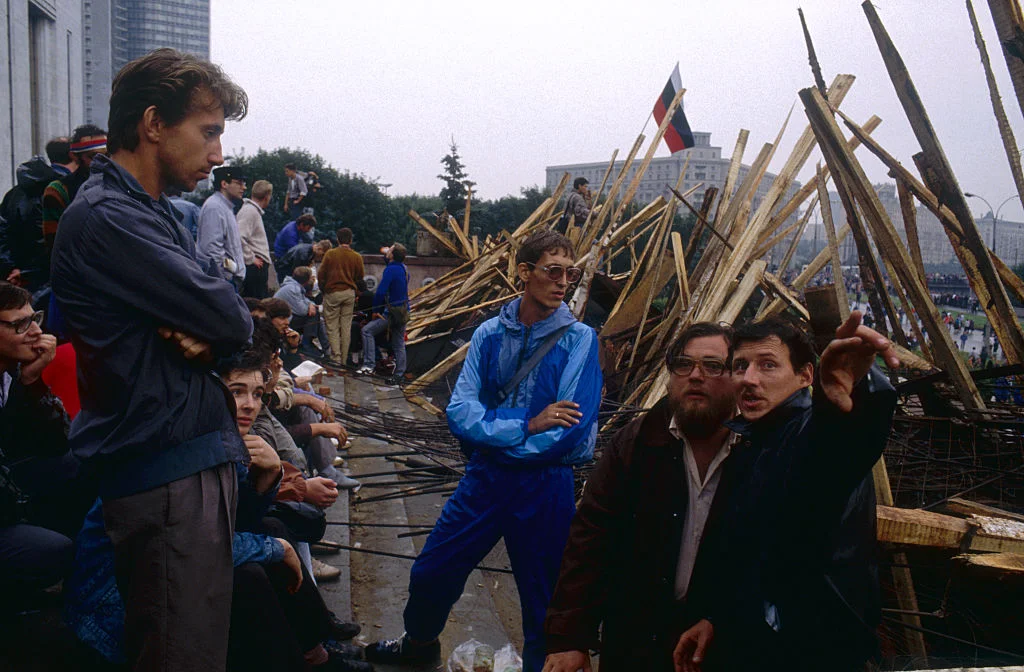
- I did not see anything about rallies there. The textbook says that the coup "ended strangely . "
-But the coup was choked not because Gorbachev was alone in Foros, but because the people went against the putschists.
-They also managed to write a textbook that says how the USSR nuclear weapons have passed to Russia, the last section tells about the “special military operation”, but before that on four hundred pages there is not a word either about the Budapest memorandum, or about the 2003 agreement “On the Russian-Ukrainian border”. There is a listing of dates - and these two are not. And if children somehow know about these two documents themselves? They are not classified yet?
- Of course, children can ask the teacher. But such a false textbook. After all, at one time we also did not learn about the history of Russia and the Soviet Union from textbooks. Now the same thing has begun: the concealment of some facts that everyone remembers so.
- In Soviet times, people were concealed from people what they could not find out, except from the stories of the elderly or from Samizdat. But here we are talking about what mothers and dads were eyewitnesses, and about the war that the children themselves see.
- No, this is the same as then. For example, my father told me about the Holodomor. As I was not an eyewitness to the Holodomor, and today's children cannot remember the signing of the Budapest Memorandum.
But my father told me, but my parents did not tell someone, many still say that it was not because they were not told this. Everything is designed for this.
- Only now there is the Internet, adolescents can subtract everything. In what position does this textbook put teachers?
- The situation of teachers is terrible, I can only sympathize with them. If the teacher is an honest person, he will tell the children the truth, answering their questions.
“ And maybe someone can convey.”
- Yes, and the teacher can lose his job, or even get the deadline. But he can lie, and a lie is a thing very harmful to the liar himself. She is like rust, she tends to spread. So they made a false textbook, now the teachers will lie, afraid that they will bring them to them, parents will lie, and this rust of lies will quickly spread in society. Probably, this is what the Russian authorities need how the Bolsheviks should be, so that the lie would spread, and everyone was afraid of the truth.
- It was all already ...
- Certainly.
- I just don’t remember the lessons of recent history in the Soviet school, because no one read this gallest. How will today's schoolchildren perceive it?
- Maybe you don’t remember the lessons of history, but I remember, because I always loved history. I read these textbooks, but I and my friends were amazed at how many lies and shortcomings in them. We tried to find out the truth.
When I already began to study at MGIMO, I found that after the war were, oddly enough, volumes of international treaties of the USSR, including with Germany, were openly published. Of course, no one referred to them, but there was a pact of 1939 there.
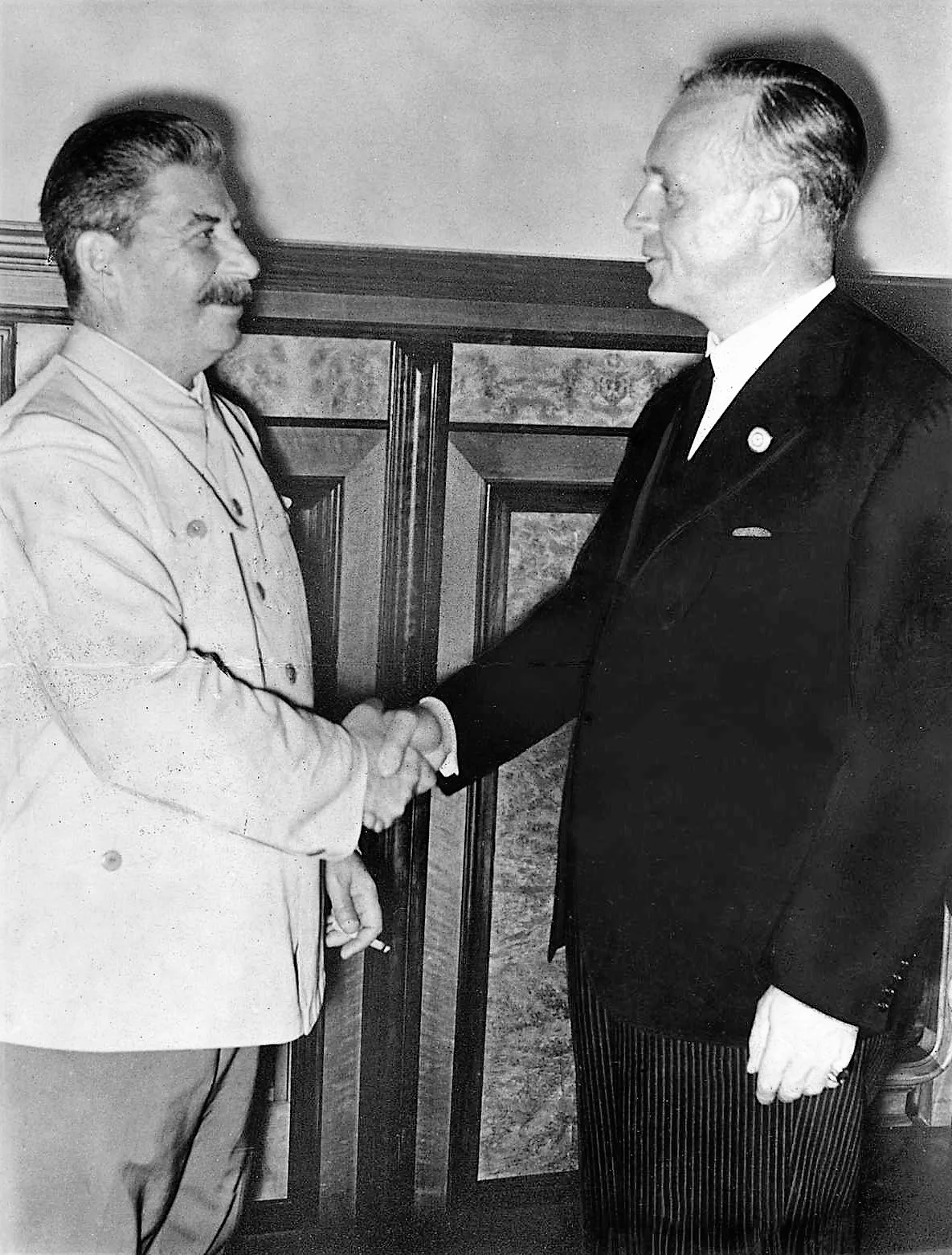
“ But without secret protocols?”
- Naturally, without them. But even without secret protocols, he made a strong impression. And on September 30, 1939, after the visit of Ribbentrop to Moscow, as you know, an additional protocol “On Friendship and Borders” was signed, and it was about the correction of borders. That is, one could understand that there was another agreement - about the initial border, if there is a correction. A smart person could guess about it.
- And you slowly asked questions about what was not written in the textbook black and white? Or how did it happen?
- Of course, we asked questions, we discussed it among ourselves. My first course of MGIMO is 1968-1969. And I remember how we talked about the entry of troops into Czechoslovakia, all these were relevant topics.
-And yet in Soviet times, in history lessons, it was precisely about historical events. For something completely modern, God forgive, political information, some cool hours, there was social science ...
- Yes, I have already passed social science.
- How correct is it - to insert completely hot in the program on the history of the event, today, as is done with the war of Russia in Ukraine?
- This is already a matter of science methodology. Actually, it is wrong. But now they do this all over the world. Now there is Current History - in my opinion, it is wrong to consider this part of the story when the events of the last decade are described.
I think that history should dwell on some point that was significant in the past. Further, modernity is already, and it is still written as a story, so the textbook is not included.
When we wrote a history textbook, I wanted to stop at the end of Boris Yeltsin’s reign and not give Putin. But the people who proposed creating this textbook, first of all, Alexander Solzhenitsyn, wanted Current History to be there. Therefore, we brought the textbook to 2008 and in 2009 from afar. And they made a lot of mistakes because of this. Not actual, but prognostic. Because from the day of today it is impossible to judge tomorrow's day.
- How is Current History taught in other countries? What sources do they use? Are they guided by the media?
- No, the current story is written right now - and therefore it is taught. Now there are already many research and even books on the Russian war in Ukraine. This is an ongoing action, Present Continuous, but Tom has already been written about it, and they are written by serious scientists. In my opinion, it is not entirely correct to include this in the textbook. But they describe events, use data that can accumulate somewhere. When it comes to war, much, of course, is classified, but somehow people work.
In itself, the fact that the textbook on recent history has been brought to almost the last days - this is a global trend. The question is how correctly, honestly, deeply and alternatively, that is, with different answers to one question, this is presented. The main question to the students should be this:
Guys, let's think about how, for example, you appreciate the “special operation” in Ukraine? Does Russia need it? Could it start it or not? Wrong Putin or not? If there were such questions, it would be a good textbook.
As for the current textbook, it was important to its customers primarily today. It was important for them to justify the war and Putin’s transition to outright tyranny. This was done.
-They write so: in the early 2020s, "the confrontation of Russia and the West was even more aggravated . " К власти пришел Байден, «советники НАТО натаскивали Киев к наступлению на Донбасс» , дальше Украина собиралась вступить в НАТО, а потом напасть на Крым с таким расчетом, чтобы «Россия оказалась бы одномоментно в состоянии войны со всеми участниками Североатлантического блока: от США и Англии до Германии и Франции. Это был бы, возможно, конец цивилизации. Этого нельзя было допустить» .
— Разве может член НАТО начинать войну без согласия других участников Альянса, чтобы на это распространялась пресловутая пятая статья договора НАТО?
— Судя по учебнику, да, может. А старшеклассники такие умные, чтобы задать такой вопрос?
— Конечно, они будут задавать такие вопросы. Кто-то обязательно погуглит, они найдут этот договор, многое поймут. Что вы, они очень умные. Я преподавал в старших классах школы, поэтому знаю, что с этими детьми очень интересно работать. Так что в условиях интернета это мертворожденный учебник.
Это заказ президентской администрации, самого Путина, авторы учебника — люди, близкие Путину лично. Но при существовании интернета всё это легко отправляется на помойку. Поэтому параллельно с интернетом происходит то, что происходит: в России пытаются создать автономную от всего мира собственную сеть, а весь «международный» интернет ограничить. Так это происходит в Китае: если вы захотите там прочесть про события на площади Тяньаньмэнь в 1989 году, вы ничего не найдете.
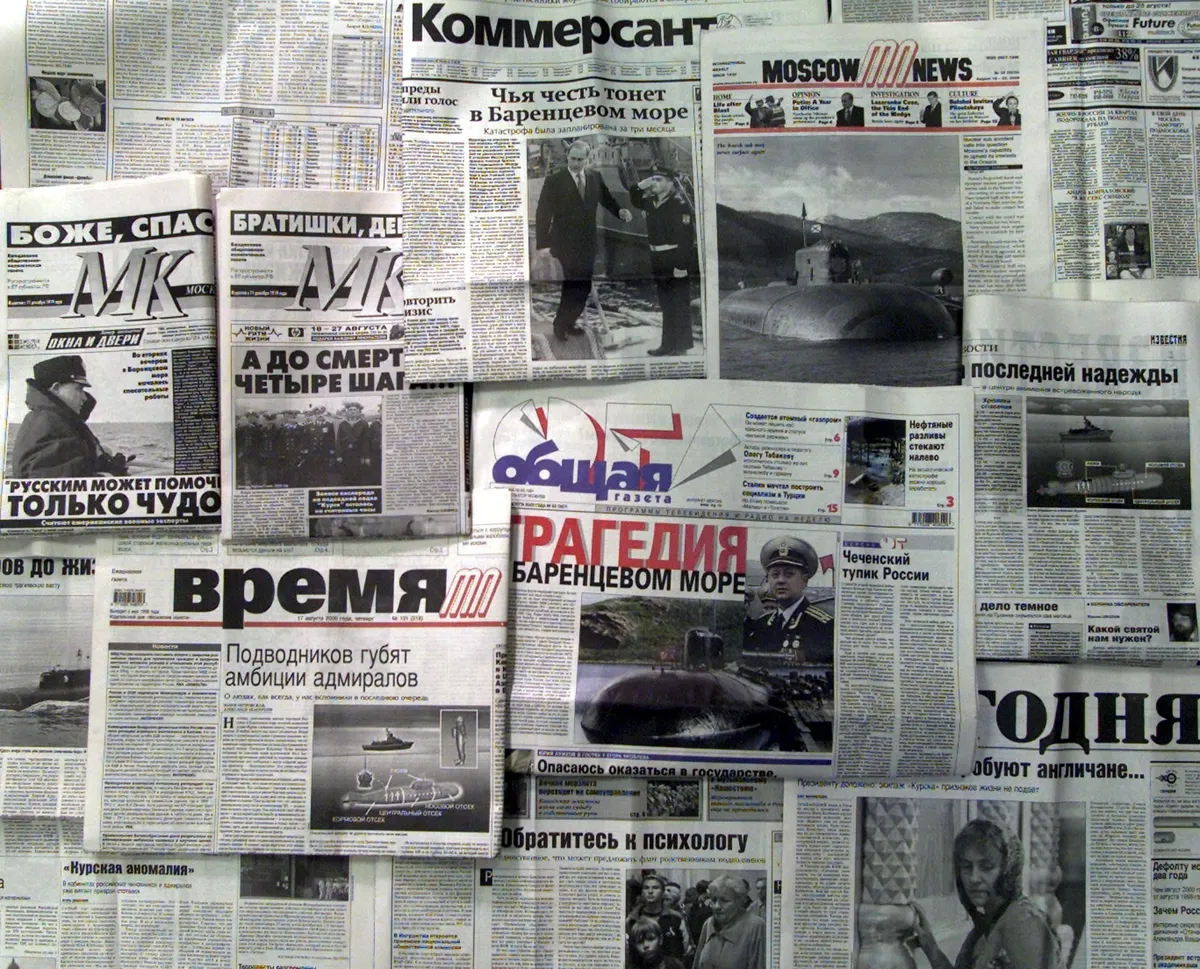
— А если в учебнике Мединского вы захотите прочесть про аварию подлодки «Курск», то тоже ничего не найдете. Там вообще нет слова «Курск» ни разу.
— В кавычках?
- Not at all.
— Да нет, город Курск наверняка где-то упоминается.
- Not once. Я контекстным поиском проверила. И в перечне «Основные события истории России 1946–2022 гг.» в 2000 году только выборы Путина, создание полпредств и «официальное завершение Контртеррористической (именно так, с большой буквы) операции на Северном Кавказе» .
— Да, уже очень многое замалчивается. Но ведь для чего существуют подобные учебники? Не для того, чтобы сформировать определенное сознание, этого они сделать не могут, а в условиях отсутствия железного занавеса — тем более. Они существуют для того, чтобы задать норму. Норму, которая приветствуется властью. Чтобы любой учитель, ученик, родитель могли сказать: ну это же в учебнике написано, как можно с этим не соглашаться. Это нужно, чтобы люди знали, что хочет от них власть, что они должны говорить и думать. Поэтому публично люди будут опасаться говорить что-то противоположное.
«Краткий курс истории ВКП(б)» писался не для того, чтобы все в него верили.
Он писался для того, чтобы знали: будете говорить иначе — бед не оберетесь. The same thing happens now. И мне обидно, что в этом принимают участие приличные люди.
— В этом учебнике есть и отсылки к некоторым источникам. Например, после прочтения раздела «Результаты политики гласности» подросткам предлагают прочитать газетную статью того времени и выполнить по ней задание. И статья эта — «Не могу поступиться принципами» Нины Андреевой. Помните ее?
— Конечно, помню! Газеты в учебнике истории интересны именно как факты общественного мнения эпохи. В этом смысле статья Нины Андреевой интересна, и мы в нашем учебнике истории тоже о ней упоминали.
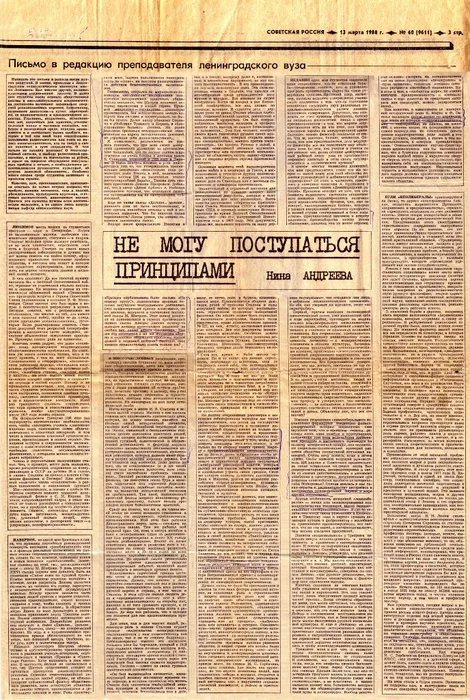
— Да, но тут предлагают анализировать только ее.
— Если об этой статье говорят не как об одном из документов эпохи, а как о главной позиции общества, то это еще одна ложь. И ложь постыдная.
— Это всё выглядит настолько безумно, что я пытаюсь найти хотя бы корысть. Учебники у нас выпускает только одно издательство — «Просвещение». Если еще и учебник единый, то совсем монополия. Тираж гигантский, чтобы на все школы страны хватило, а еще, как вы сказали, дальше наверняка переиздавать будут. Это же клондайк? Может, для того и писано?
— Какая-то корысть в этом, безусловно, есть, но она не в деньгах. Конечно, писано не для этого. Клондайк для этих людей в другом: им нужно быть близкими к власти, разделять эту власть. Анатолий Торкунов как ректор МГИМО имеет достаточно большую власть. И, кстати, большие деньги, потому что большинство студентов за обучение платит. По закону, он уже не может оставаться ректором, то есть «владельцем» этого «предприятия», потому что уже дважды переизбирался. Теперь он назначен специальным указом Путина. Чтобы эти специальные указы и дальше были, чтобы этот «клондайк» в виде МГИМО не закончился, чтобы вообще плавать близко к верховной власти страны, он и принял участие в создании этого учебника.
Гонорар за учебник — это разве что приятный бонус. Потому что вообще в России власть рождает деньги, а не наоборот, это известное отличие России от Запада.
Чем ближе к власти — тем лучше. Отсюда и Мединский, и Чубарьян… Выгонят этих людей с их постов — они будут никто. Nobody. А быть просто учеными они отвыкли.
— В начале перестройки, когда сменилась власть, тоже переписывали учебники истории. Если сейчас вдруг придут к власти либералы, они тоже перепишут учебник истории. Чем тогда отличается то, что делает нынешняя власть?
— Либералы в первую очередь позволили бы написать новые учебники многим людям — профессионалам, всем, кто захочет писать учебник. Если эти учебники соответствуют стандартам образования, то они и принимаются. Именно так это было в 1990-е годы, тогда ведь много было учебников. Вот главное отличие. Единого учебника у либералов точно не будет.
— То есть беда не в том, что это учебник лживый, безумный и просто ужасным языком написан, а в том, что он единый?
— Нет, беда еще и в том, о чем вы сказали. Но если бы это был один учебник из множества, он бы просто не прошел апробацию. Учебник, состоящий из умолчаний и лжи, не может быть принят. Вот если это учебник с какой-то определенной интерпретацией фактов или, скажем, с большим интересом к одним фактам и меньшим — к другим, то это нормально. Но если он состоит из лжи и полных нестыковок, которые вы сами заметили, он был бы просто объявлен некачественным.
— Вы знаете реакцию ваших коллег и друзей, преподавателей истории на это произведение? Как они оценивают его перспективы?
— Понятно, что мои друзья плюются. Никаких перспектив у этого нет, их и не может быть. Я знаю достаточно много смелых учителей, которые продолжают учить детей правдивой истории. Конечно, они делают это осторожно, как и полагается в тоталитарном обществе. Но они продолжают это делать.
Этот учебник ставит определенные вопросы. Вот вы сказали о статье Нины Андреевой, которая там упоминается, а хороший учитель найдет еще массу других статей того времени. Он скажет ученику: прочтите еще статью Александра Николаевича Яковлева, например. И всё встанет на свои места.
— Так ведь мало таких учителей. Основная масса будет готовить учеников к ЕГЭ так, чтобы весь этот бред отскакивал от зубов, чтобы ребенок поставил галку напротив правильного ответа.
— Что ж делать… Вообще, мыслящих людей вокруг не так много. Но поэтому и важны хорошие учебники. А если продолжать традицию ЕГЭ, то и там вопросы надо ставить так, чтобы допускался плюрализм ответов. Это отдельная сложная задача. Но большинство учителей, конечно, склонятся перед этим текстом и будут ему следовать, чтобы не потерять место. А потом страдать из-за того, что приходится лгать ученикам, скрывать от них правду. Дай Бог, чтобы этот учебник поскорее был сдан в макулатуру.