
Translated material
Age of the oprichnik
Nikita Sokolov, Vasily Zharkov, Ilya Budraitskis: Oprichnina as an eternal plot of Russian history
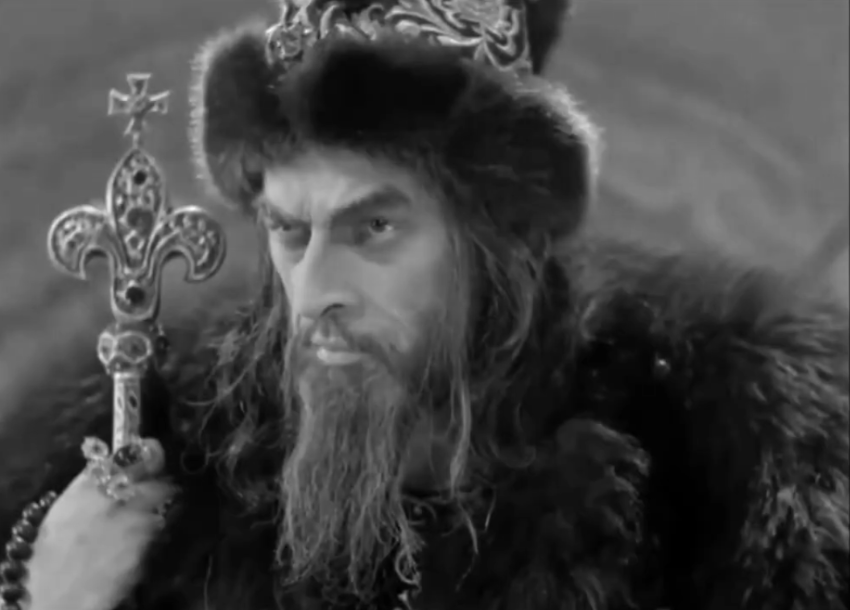
Sergey Medvedev : And the day lasts longer than a century - the day of the oprichnik. In the new history textbook, which will fall on the desks of Russian schoolchildren on September 1, the role of Ivan the Terrible and his oprichnina in Russian history continues. In fact, oprichnina is one of the basic models of Russian power: it was manifested in the kingdom of Ivan the Terrible, and at Peter the Great, and Stalin, and today in the Putin system. Russia is actually ruled by the oprichnin of the special services. What will it lead to the country to? Is it possible to rule Russia without an oprichnina?
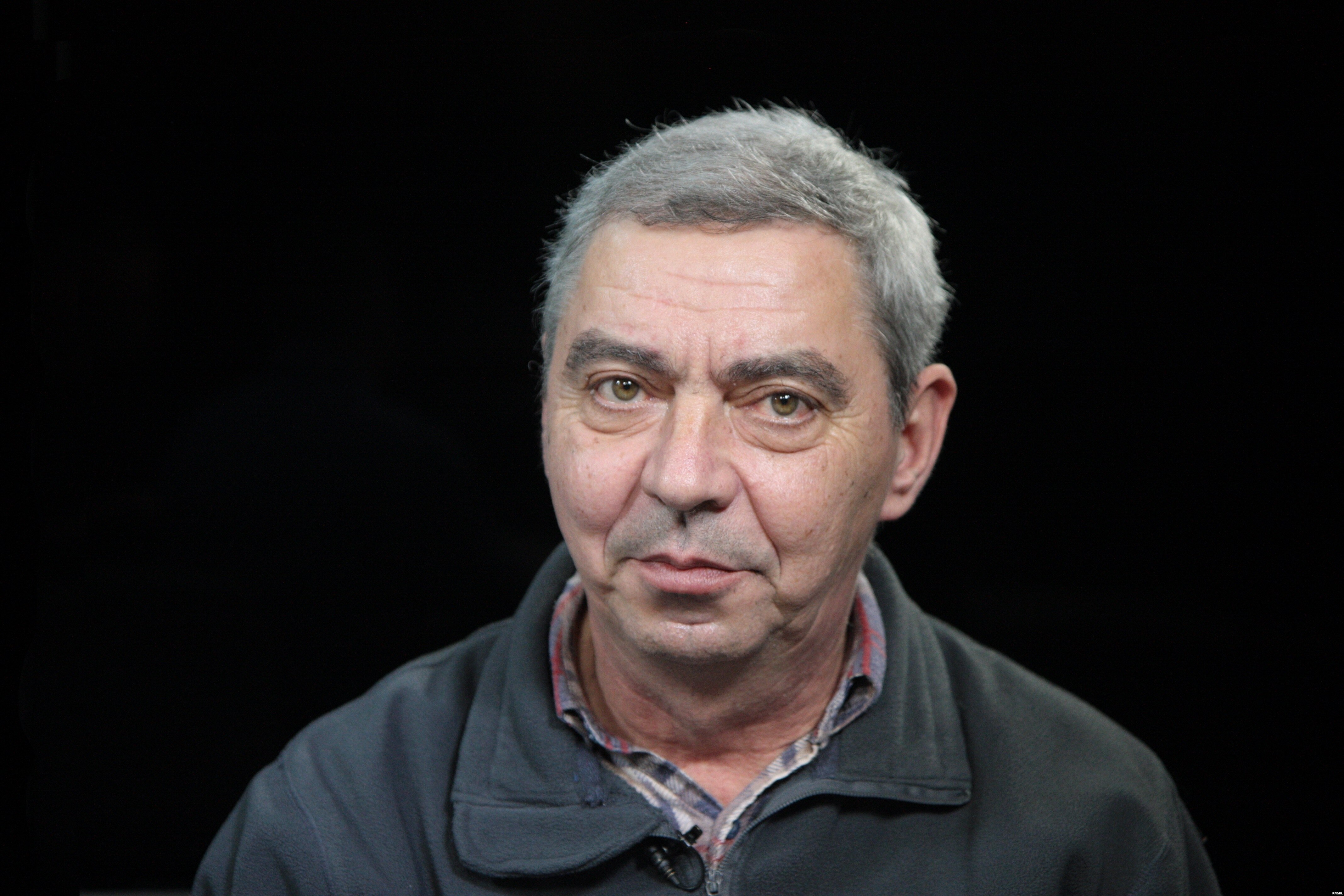
With us historian Nikita Sokolov . Here is a monument on the Alley of the rulers in the Kremlin. As I understand it, in recent years, three monuments have been erected - in the Kremlin, in Orel and in Alexandrov, that is, in fact, in the same Alexander Sloboda, a monument to the Terrible - is this, it turns out, as if a monument to the oprichnina?
Nikita Sokolov : Yes, to a large extent this is so. The only thing that the monument to Grozny stands on the alley of the rulers not in the Kremlin, but in the courtyard on the house territory of the Russian Military Historical Society. So, after all, still hesitate to be so shy about the thunderstorm. Medinsky, of course, is not a historian, but he also understands that it is quite difficult. We have a very good precedent. When in 1862 they opened a monument to the millennium of Russia in Novgorod, which was defeated by the oprichniper, the Novgorodians then resolutely opposed the premises there the figures of Grozny, and it is not there. Still, the then power adhered to some moral limiters.
Still, while still hesitation, they are shielded to fly a formidable
Sergey Medvedev : If you look over the past 400 years, no one has covered the most formidable as in the 21st century, saying that there was such a time, and there was a lot of cruelty in the West, and maybe he did not kill anyone. Or, remember, there was a famous meme: they just passed by, and there, by chance, Metropolitan Philip was killed.
Nikita Sokolov : For some reason, it is believed that it was the Novgorod pogrom of 1570, but the guardsmen defeated the entire north-west, starting from Tver and Torzhok, and there were destroyed Pskov boyar families, which at that time followed from Pskov to the evictions. It was one of the most severe blows to the future of Russia. Modern historians believe that this North-Western Territory-Pskov, Novgorod, partly Vyatka and Pomoria-there was no serfdom, there was no local nobility, respectively, then there were no serf institutes. In this regard, the majority of the population there was engaged in fishing and trade, and it was a completely different social way.
The guardsmen defeated the entire northwest. It was one of the most severe blows to the future of Russia
The nearest cities surrounding Moscow were much more archaic in their social structure. And the Novgorodians and a little later Arkhangelsk traded with England, exchanged public experience. Modern historians, starting with Vladimir Kobrin, believe that the North-West was potentially the region of another development of Russia, not autocratic and not serfdom.
Sergey Medvedev : That is, here Grozny chopped off one Nemoskovsky project for the development of Russia. And can we see some rationality in this monstrous terror unleashed formidable?
Nikita Sokolov : Yes, of course, but it must be borne in mind that the decree on the oprichnina did not reach us in the original, we know him only in the retelling of the chronicle. And in this retelling there are two essential points: all pay attention to one, and on the second - much less often. Everyone somehow pays attention to the division of the administrative order of the territory into an oprichnaya and zemstvo, how they selected people into an oprichnaya army on the basis of personal devotion and distributed new estates in the oprichnikh counties, and the Zemsky was evicted from there. And in the second paragraph of the decree on the oprichnin, the Moscow sovereign received the right to be a hopeless execution. The chronicler sets him out like this: "And in his stomach and execution, God and the sovereign are free." This was a decisive rejection of the entire previous centuries -old practice, when no free person could be deprived of the abdomen, honor and property without a righteous court.
In the second paragraph of the decree on the oprichnin, the Moscow sovereign received the right to be aless execution
Sergey Medvedev : In fact, the core of sovereignty was created, which in the twentieth century Karl Schmitt would call "emergency." In fact, the space of legal exclusion is taken, in which the king declares himself with the supreme power, sweeps all other institutions and begins to create a new state from himself.
Nikita Sokolov : Not just from himself, but not limiting himself to any right. That's exactly why the figure of Grozny was so important for Stalin, since this was the first Russian monarch to decisively approve the state of arbitrariness.
Sergey Medvedev : Can we say that all this Russian autocratic tradition comes from this episode of the oprichnina in any limited tradition?
Nikita Sokolov : Yes, of course, but this tradition is still not continuous. After all, the reign of the formidable ended with a monstrous disaster - devastation, an extreme decline in the economy, defeat in the Livonian war . By the 80s, this regime of unlimited power led the country to a perfect catastrophe. The very great turmoil of the beginning of the XVII century is an answer to the introduction of an oprichnaya order. If this is a Stalinist invention that the Troubles was a foreign intervention, it turns out that the Troubles were a civil war within the Moscow state.
Sergey Medvedev : Grozny exposed the state. When Devlet Girey came in the 71st year, the guardsmen could not do anything: Moscow was burned.
Nikita Sokolov : Oprichnina, first of all, upset the military organization of the Moscow state, upset the local order and made both the Oprichny army and the remaining zemstvo army incompetent for war.
Troubles are a civil war within the Moscow state
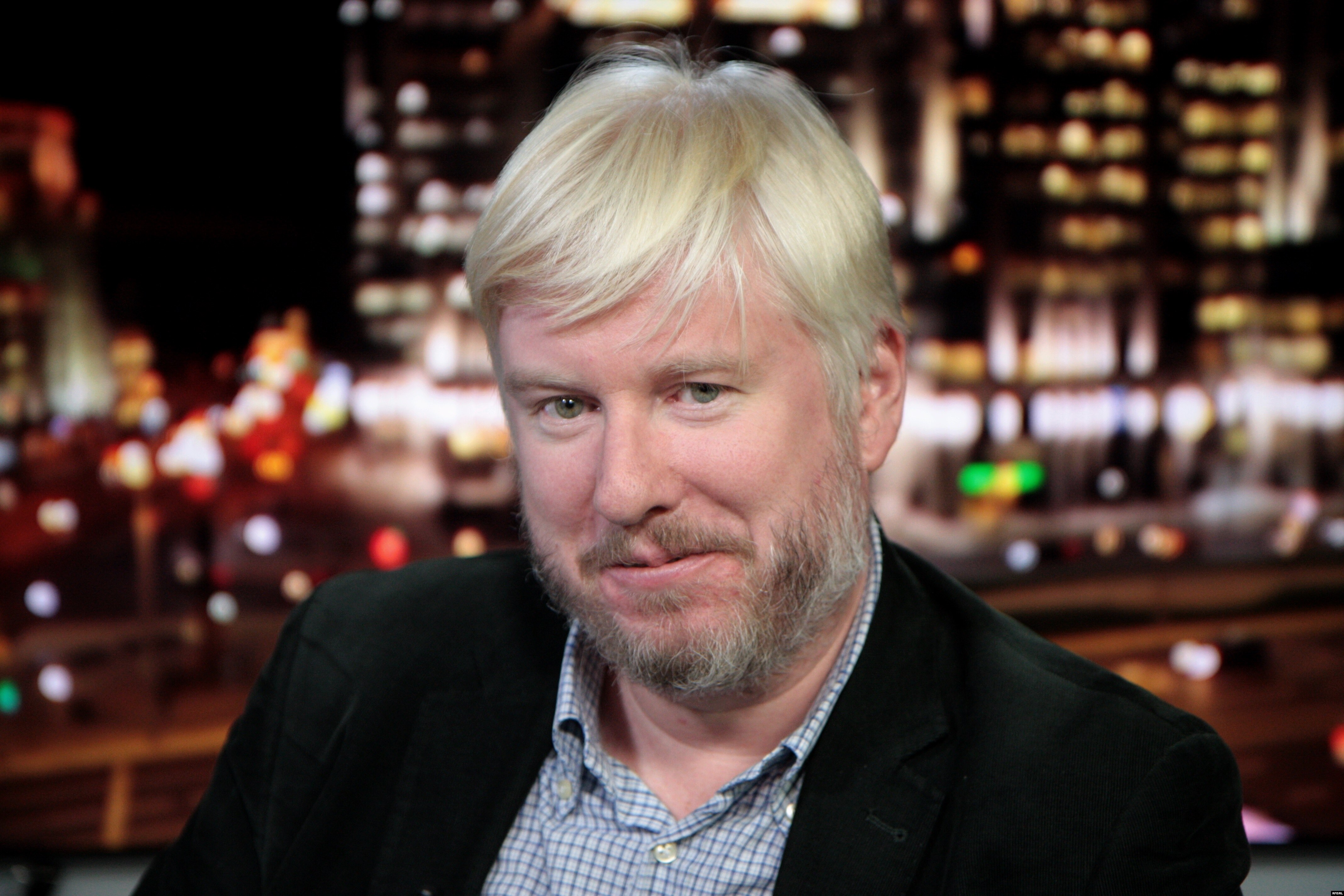
Sergey Medvedev : We are joined by Vasily Zharkov , a political historian and an invited lecturer of the European Humanitarian University in Vilnius . Is the oprichnina a form of Russian power when a certain autonomous center of forces is created, an autonomous state that rules both the country and the legitimate state itself?
Vasily Zharkov : A similar point of view has the right to exist, but I would not absolutize the role of oprichnina. Oprichnina began in 1565, after Ivan the Terrible, feeling the problems during the Livonian war, realized that it was very difficult for him to negotiate with his chosen Rada, with his associates. And he proposed to divide the country into two parts: one of these parts was named by the oprichnina due to the fact that, to the tsar, it did not obey anyone, and the second part remained zemshchina. Actually, further 7 years, from 1565 to 1572, the war of the oprichnina against the earth region took place. Moreover, it was a war in the literal sense of the word, because the oprichnoe army, created according to the likeness of the monastic order, terrorized the rest of the country.
The question immediately arises here: did this state strengthen or not? Historians such as Sergey Platonov, some others, Soloviev, also tried to find the struggle of the state and birth principle here and so on, but in fact, if you look in the eye, then, of course, it was a struggle for the personal power of Ivan the Terrible, which destroyed the state.
Sergey Medvedev : In part, the same can be said about Stalin, 1937–38 is a strengthening of personal power, the paranoid, manic regime of Stalin, but the state is undermined, defense is destroyed, the Red Army is destroyed, the country remains almost defenseless on the eve of the German invasion.
Vasily Zharkov : The only thing, I would say that Stalin did not create anything new. He already had this body of the NKVD, created back in 1917: this is a Cheka, then the GPU, the NKVD, and so on. Of course, not even Peter the first - in fact, for Alexei Mikhailovich the quietest model to follow was Ivan the Terrible! And he created a secret order that was in charge of his court, his personal estates. This, of course, was the first replica regarding the oprichnina.
It was a struggle for the personal power of Ivan the Terrible, which destroyed the state
By the way, as soon as the oprichnoe army showed its inefficiency during the invasion of the Devlet Girey in the 71st year, a year later Ivan the Terrible disbanded the pharmaceutical and even forbade it to mention. A specific historical event lasted only seven years, while it took place in a completely different country. I would advise those who are interested in this issue, go to Alexandrov Sloboda and visit the Palace of Ivan the Terrible. The stone chambers of Ivan the Terrible were preserved, the hall in which his feasts with an oprichnaya army took place. This is a very small, cramped room, which indicates the scale of this country. We are used to the fact that Russia is a large country with a large population, with a large territory. So, the Moscow state of the 16th century was a very small state in which such a case occurred, and it immediately became the subject of historical memory!
Sergey Medvedev : Not only historical memory, but also a political model. The sovereign’s constant temptation is to create a kind of extravocal space that is controlled in addition to the law.
Vasily Zharkov : The first surge of interest in this topic is the end of the 30s-early 40s of the XIX century: “Song about the merchant Kalashnikov” (this is the oprichnik Bestuzhev-Ryumin), and the second stage is the end of the 19th century, when the “royal bride” was set. And then-the end of the 40s, when Stalin turned to this topic, Eisenstein made his famous film, and then already directly to us, in the zero years. First Mikhail Yuryev ...
Sergey Medvedev : The Third Empire is, in my opinion, the Kremlin table book.
Vasily Zharkov : Yes, it began with this. Then Sorokin appeared with the "Oprichnik Day". By the way, a wonderful answer to this was given to the art group "War" . In 2008 or in 2009, Mikhail Leontyev and Dugin arranged the Opprichnik club in Zamoskvorechye, and the “war” made the door there. It was a great answer to all this hobby of an oprichnina!
Sergey Medvedev : And then, by the way, the Izborsk club appears. They are engaged in a lot of oprichnina. Now the fourth oprichnina, according to the Izborsky club. There were three oprichnaya moments: Grozny, Petrovsky, Stalin, and now Putinsky.
Vasily Zharkov : frequency increases. There was more distance between Peter and the Terrible, between Stalin and Peter-even more, but for some reason it became more often. Why? It is incomprehensible.
The history of the formation of Russian absolutism is not completely exceptional
Maybe because it is necessary to completely finish with this. The archaic state of the 16th century has only been created. Do not forget that a single state in Russia developed somewhere in the first quarter of the 16th century. In fact, 50 years later, the state in the person of the king declares war on his country and actually loses this war, because the oprichnina did not achieve its results: the specific system was not abolished. The reign of Ivan the Terrible ended with the fact that he gave Uglich to his son Dmitry. The boyars resisted, but this brought terrible economic, social damage. No strengthening of the state happened here, on the contrary, it was rather a blow to the state.
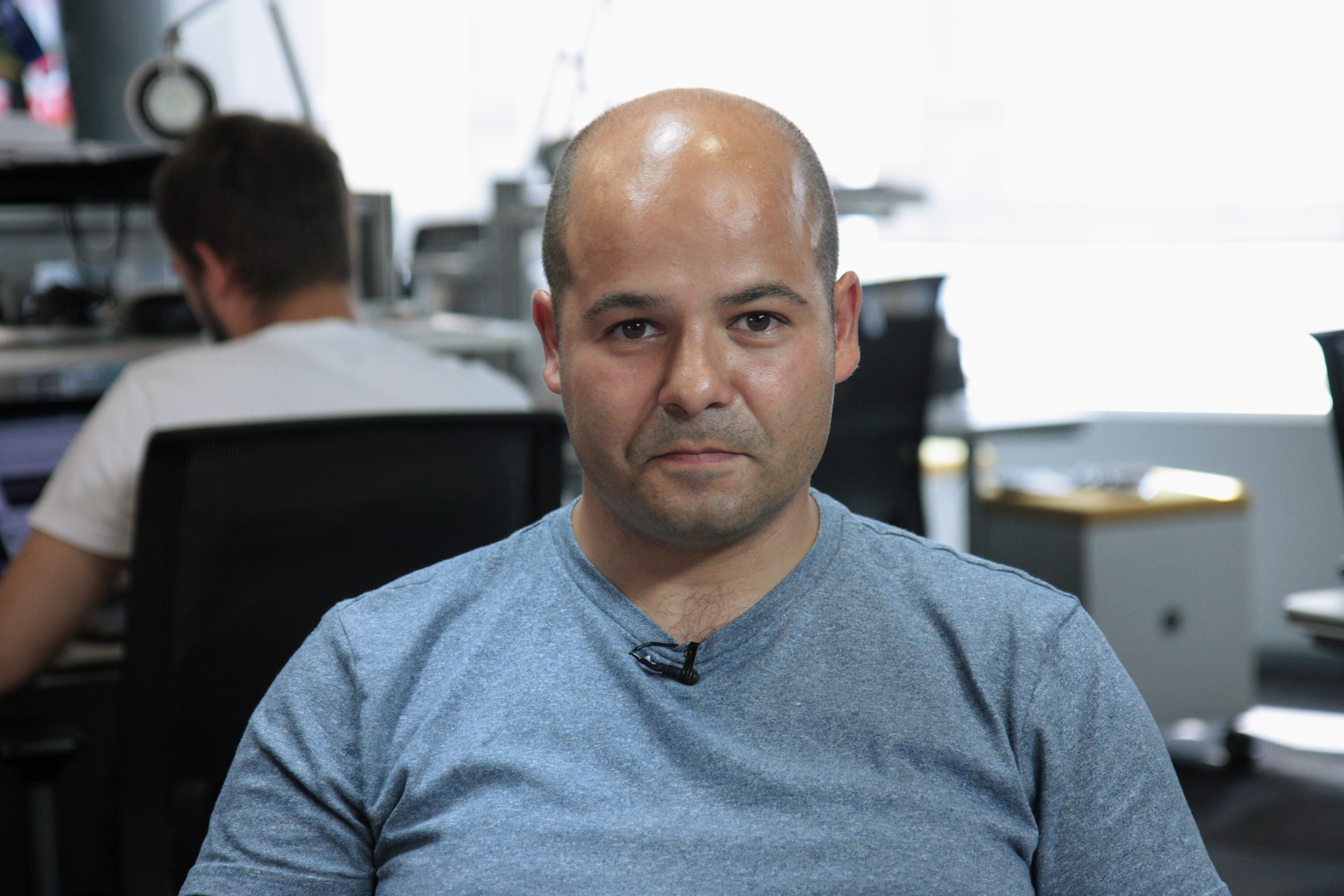
Sergey Medvedev : Ilya Budraitkis , historian and publicist with us.
Ilya Budraitskis : I agree with the main idea of Vasily Pavlovich: there is no need to say that allegedly what is happening today is predetermined by all the previous course of Russian history, because this move is constantly using the existing regime itself and in many ways it justifies its non -alternativeness and eternity.
Sergey Medvedev : In general, your view of the oprichnina is a certain system of such a system, when the authorities are regularly trying to create an extra Yuridic space from which it creates itself without legal restrictions?
Ilya Budraitskis : The history of each state played a special structural role: somewhere the state historically developed as a result of some agreement, somewhere the state established itself, destroying the previous conventions. In this sense, the history of the formation of Russian absolutism is not completely exceptional. The establishment of the absolute power of the monarch through a state of emergency, through the destruction of previous legal norms, is also not exclusively Russian history. In addition, such a universalization of the oprichnina, that is, the idea that some kind of oprichnaya moment in Russian history was constantly repeated-this is a rather controversial idea. It is the latest ideological construct.
At each specific historical moment, the description of the oprichnina was built in different ways
Sergey Medvedev : Stalinsky, probably?
Ilya Budraitskis : It is clear that Stalin referred to the oprichnin. But we must understand that Stalinism invented Ivan the Terrible in his own way and attributed him to what the era of the formidable was not quite. At each specific historical moment, the description of the oprichnina was built differently. For example, in the 19th century, in the classical history of Karamzin, an oprichnin is described as pure arbitrariness, the personal tyrannical madness of Ivan the Terrible. In this sense, it is opposed to the rational paternal power of the Romanov dynasty.
Sergey Medvedev : Is it really some kind of consequence of madness and irrationality? Or is there a method in this madness and he had a certain rational goal?
Ilya Budraitskis : The search for a rational principle in the oprichnin has occurred somewhere since the second half of the 19th century. For the first time, Sergei Soloviev puts forward the idea that in fact an oprichnina was a well -thought -out policy aimed at the destruction of feudal land ownership, at the undermining of the power of the specific princes. Oprichnina was an important stage in the path to the formation of an autocratic state.
Sergey Medvedev : Is the Putin regime in this regard not an oprichnina?
Ilya Budraitskis : I would start with how this regime itself comprehends itself. The beginning of the war in February last year also raised very big questions about whether this could be described in terms of some kind of political rationality. Obviously, such an idea of a historical mission exists there. A person who has been in power for more than 20 years, structurally begins to believe in his divine purpose.
The super-task of this power is the reconstruction of the world order, which seems to them decapitated, unfair, in the place of which they want to put some kind of their own, based on their idea of the life and nature of man. These ideas are quite eclectic, they are a combination of very many lines of some experience-personal, institutional, but, in general, they, as it seems to me, at the time of the beginning of the war came to some quality of ideology that they themselves believe.
A person who has been in power for more than 20 years, structurally begins to believe in his divine purpose
Sergey Medvedev : Can they be compared with the Bolsheviks in this regard, who also had their own super -assignment of the world, and on the other hand, with the Nazis, with a millennia Reich?
Ilya Budraitskis : I would use here the definition of Hannah Arendt , who said that the difference between even Stalinist totalitarianism and Nazi is that the Soviet regime, with all its repressive nature, used the figure of humanistic morality, the figure of universalism. He was in this regard a continuation of the Enlightenment. And Nazism was in this sense counter-interrogated, that is, he proposed to understand the human nature differently, proposed a programmatic abandonment of universalism, from the idea of a human person, improvement, and human progress. It seems to me that this Putin ideology, which is the final realization of cynicism, contempt for the human person, in this sense is close to historical fascism.
Sergey Medvedev : It is interesting that she is not an enlightening, but an anti -inter -world of utopia, which is now embodied in completely new and terrible historical forms.