
Translated material
Ho from here!
Deputies propose to leave the World Health Organization, because it supports Ukraine and transgender people. Russia will only be worse from the exit
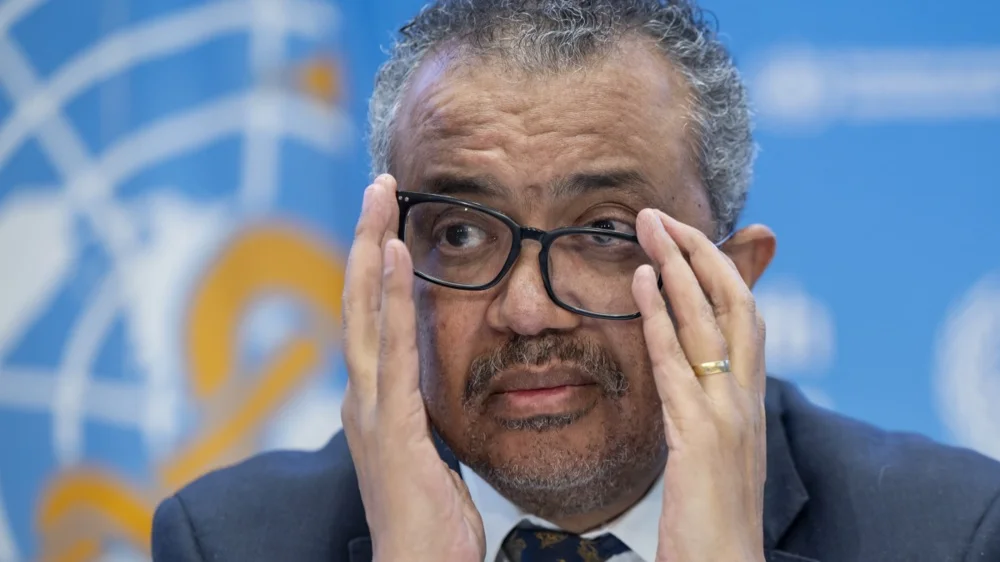
The head of the Tedros Gebreisus. Photo: EPA-EFE/MARTIAL TREZZINI
In August, he warned about the rapid spread of the new coronavirus strain Eris, which was first discovered back in February and since then registered in 51 state. In Russia, according to official figures, only 17 cases of infection were revealed from April to August.
Against the background of the appearance of a new strain to WHO, those questions that were raised at the beginning of the Pandemia of Coronavirus again arise: how effective is the organization monitor the situation and how rational measures does it offer? After the pandemic took millions of lives, the WHO has many critics - both among politicians and among representatives of the medical community. In Russia, in general, a discussion rose about the possibility of leaving WHO, its initiator was the State Duma deputy from United Russia Peter Tolstoy. True, he is concerned about other questions: what the WHO supports Ukraine and does not consider transgender. Against the backdrop of these news, we tell what exactly WHO is doing and what gives Russia (and other countries) membership in the organization.
The history of the emergence of international medical organizations is rooted deeply in the 19th century: back in 1851, the I international sanitary conference was held in Paris, in which, incidentally, the Russian Empire also participated. In 1907, the International Bureau of Public Hygiene was created, which became a kind of “great -grandfather” of WHO and was engaged in the fight against especially dangerous diseases of that time - cholera, plague and yellow fever.
In 1923 there was [Created] (https://www.historymed.ru/training_aids/candidates_at_least/ index_page6.php#: ~: text =%d0%9e%D1%80%D0%B3%D0%D0%D0%D0%B8%D0%B7%D0% B0%D1%86%D0%B8%D1%8F%20%D0%B7%D0%B4%D1%80%D0%D0%D0%D0%BE%D0%BE%D1%8 5%D1%80%D0%B0%D0%BD%D0%B5%D0%BD%D0%B8%D1%8F%20%D0%9B%D0%B8%D0%B3%D0%B8 %20%D0%9D%D0%B0%D1%86%D0%B8%D0%B9%20 (%D0%9E%D0%97%D0%9B%D0%9D,%D0%BE%D 1%81%D0%BF%D1%8B%20%D0%B8%20%D0%B4%D1%80%D1%83%D0%B3%D0%B8%D1%85%20%D0 %B8%D0%BD%D1%84%D0%B5%D0%BA%D1%86%D0%B8%D0%BE%BD%D0%BD%D1%8B%D1%85% 20%D0%B7%D0%B0%D0%B1%D0%BE%D0%BB%D0%B5%D0%B2%D0%D0%D0%D0%B8%D0%B9.) The organization of the League of Nations - the direct predecessor of the WHO.
The World Health Organization was founded in 1948 to fight different epidemics: primarily with tuberculosis, sexually transmitted diseases, and especially malaria. The disease then raged in China: he annually reported about 30 million cases of infection and 300 thousand deaths. In the post -war USSR, an increase in infection was also noted .
It is not surprising that one of the initiators of the creation of the organization was precisely China, the Soviet Union also took part in this process and one of the first ratified the charter of the new organization in 1948. But already in 1949, in the midst of the Cold War, the USSR left the organization because of the disagreement: the Soviet government did not suit the maintenance of the WHO. In the period from November 1949 to August 1950, Albania, Bulgaria, Hungary, Poland, Romania and Czechoslovakia left the organization-about the same reasons as the USSR. However, most likely, an ideology was still the present reason: first of all, the financing of the Rockefeller Foundation and, accordingly, the alleged lobbying for the interests of the United States. The Soviet Union returned to WHO already under Khrushchev.
Victory over black Ospa and children's immunization
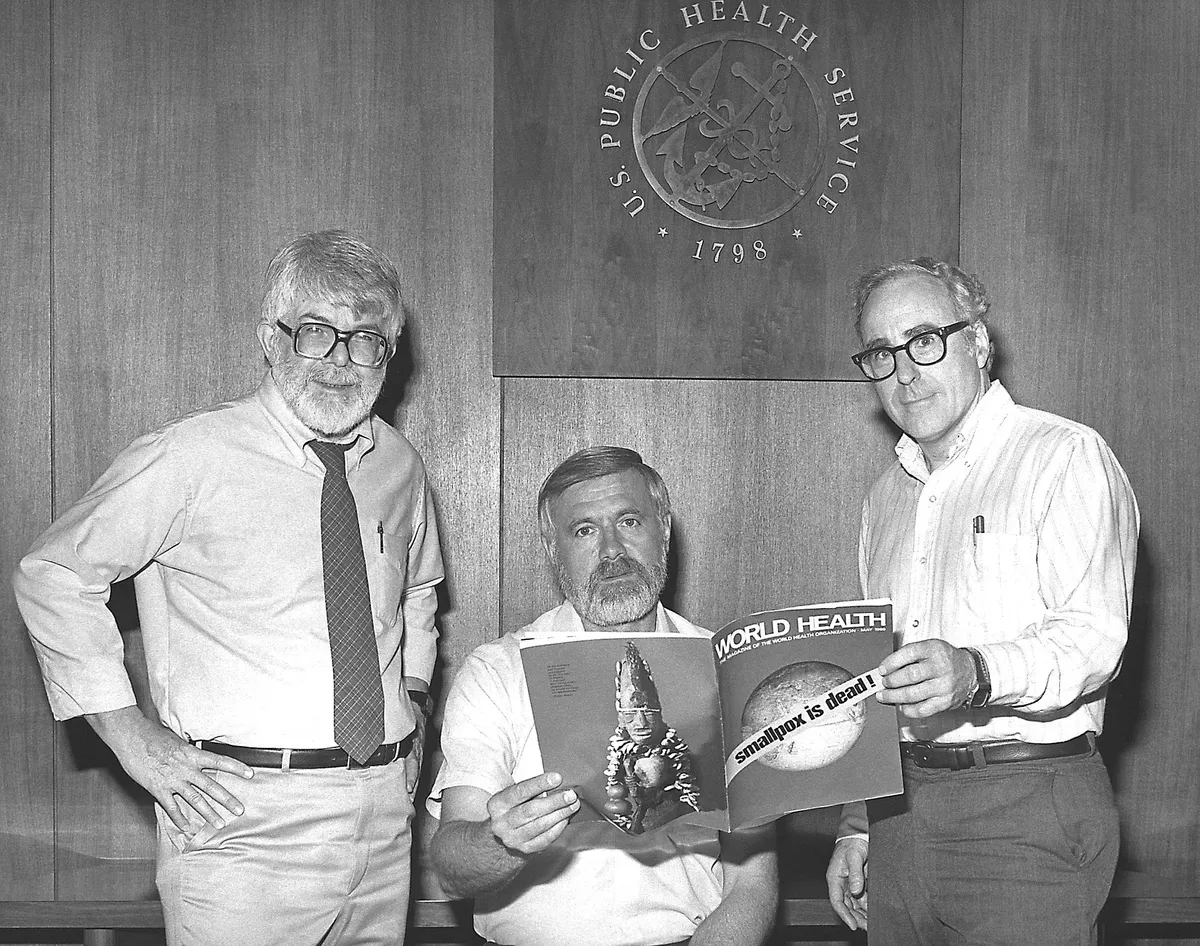
WHO claims that her "goal is to create a better and more healthy future for people around the world." Organizations during its existence really managed to achieve great success in the field of health. Perhaps the most noticeable of them is the complete elimination of black smallpox in 1979.
The USSR was proposed by the USSR in 1958 at WHO sessions, and nine years later the organization decided to mass vaccination.
From 1967 to 1978, the USSR provided 1.5 billion doses of a vaccine from a deadly disease, which claimed more than 300 million lives over the entire 20th century and at that time at that time in Africa. WHO, regardless of the Cold War, was able to successfully coordinate the forces of the world community, raising $ 298 million to solve the problem: however, the countries of Africa were allocated from them and only 98 million - the rest of the world.
Another important and truly large-scale initiative of WHO is an expanded program of immunization of children. In 1974, the XXVII WHO World Assembly adopted a resolution on the start of universal immunization. The organization calculated that about 5 million children would die on average without vaccinations per year: more than half from measles, and 1.2 and 0.8 million from the tetanus of newborn and whooping cough, respectively. The program was updated three times, and the following goals are set in its third iteration: by 2025, to protect each resident of the planet from 20-30 of the most dangerous infections, as well as “eliminate measles, rubella, epidemic mumps, diphtheria, and hemophilic infection”. According to WHO, after achieving these goals, vaccination against these diseases can be refused. Without this WHO initiative, it would be difficult to imagine modern children's medicine: vaccination has become an integral part of life, with which, however, anti -Distilled brakes are actively fighting.
WHO in the era of Covid
WHO reputation was impacted by the Pandemia of Coronavirus, which took the lives of millions of people: many wondered how much WHO acted and could there be fewer victims. In 2020, the ex-president of the United States Donald Trump accused the WHO of concealing facts and the mistakes, because of which the pandemic began, suspended the payment of membership fees and said that the country would leave the organization. According to the research center, Pyu, in the spring of 2020, 51% of the Americans believed that WHO coped poorly with pandemia. Even lower, WHO rating was in South Korea and Japan - countries that were one of the first to suffer from a rapidly spreading virus: there only 19% and 24% of the population supported the organization’s actions.
Looking back, you can really see what was done wrong: for example, WHO was too late to recommend closing the borders and suspend a message between the countries. Initially, the organization proposed testing people on the virus, and not limit their right to move.
The reaction of the general director of Tedros Gebreisus to the actions of China to prevent the spread of the epidemic: at the beginning of the pandemic, he said that the country “established new standards for the response to the outbreak of diseases” and praised them for “transparency”. This was strange: in April 2020, in China, with its almost one and a half million -dollar population, according to the authorities, a little more than 80 thousand people were infected, and a little more than 3 thousand died. Now, according to the WHO official website, there are almost 100 million confirmed cases in the country in total.
Donald Trump then did not miss the chance to criticize China, and at the same time WHO. “WHO really ruined everything. For some reason, it is financed mainly by the United States, but very focused on China.
We will carefully consider this. Fortunately, from the very beginning I rejected their advice to keep our borders open to China. Why did they give us such an erroneous recommendation? " -asked the ex-president. And on July 7, 2020, he announced the release of the United States from WHO. In this solution, many saw the elements of blackmail and the rash characteristic of Trump.
Here is how Richard Horton, editor-in-chief of The Lancet, appreciated , in a conversation with the BBC, the position of the ex-president: “This is a crime against humanity. Every scientist, every employee of the healthcare sector, every citizen must rebel against this terrible decision. WHO is the only international organization engaged in global coordination of efforts in the field of healthcare. And to stop its financing now, at a time when we need solidarity more than ever - this is a crime. ” As a result, the US exit from WHO did not occur: Trump lost the election, and the new American president Joe Biden decided to save membership in the organization.
In defense of traditional values
Now the conversations about the need for membership in WHO went in Russia: in July, a deputy from United Russia, Peter Tolstoy, said that the country "has nothing to do in this organization." The deputy confuses the ICD-11 -the eleventh revision of the international classification of diseases. In Russia, the ICD-10 is still operating, and it is such an option that suits Tolstoy: in the new version, transsexuality is not considered a diagnosis, while in the previous one it is recognized as a mental disorder. Tolstoy explained his recommendation for Russia's withdrawal from WHO: “WHO supported the sanctions in relation to our country, they closed the office [on the prevention of non -infectious diseases in Moscow], which worked. They are trying to impose on Russia ideas and rules that do not correspond to our values. The totality of these factors suggests that we have nothing to do in this organization. ”
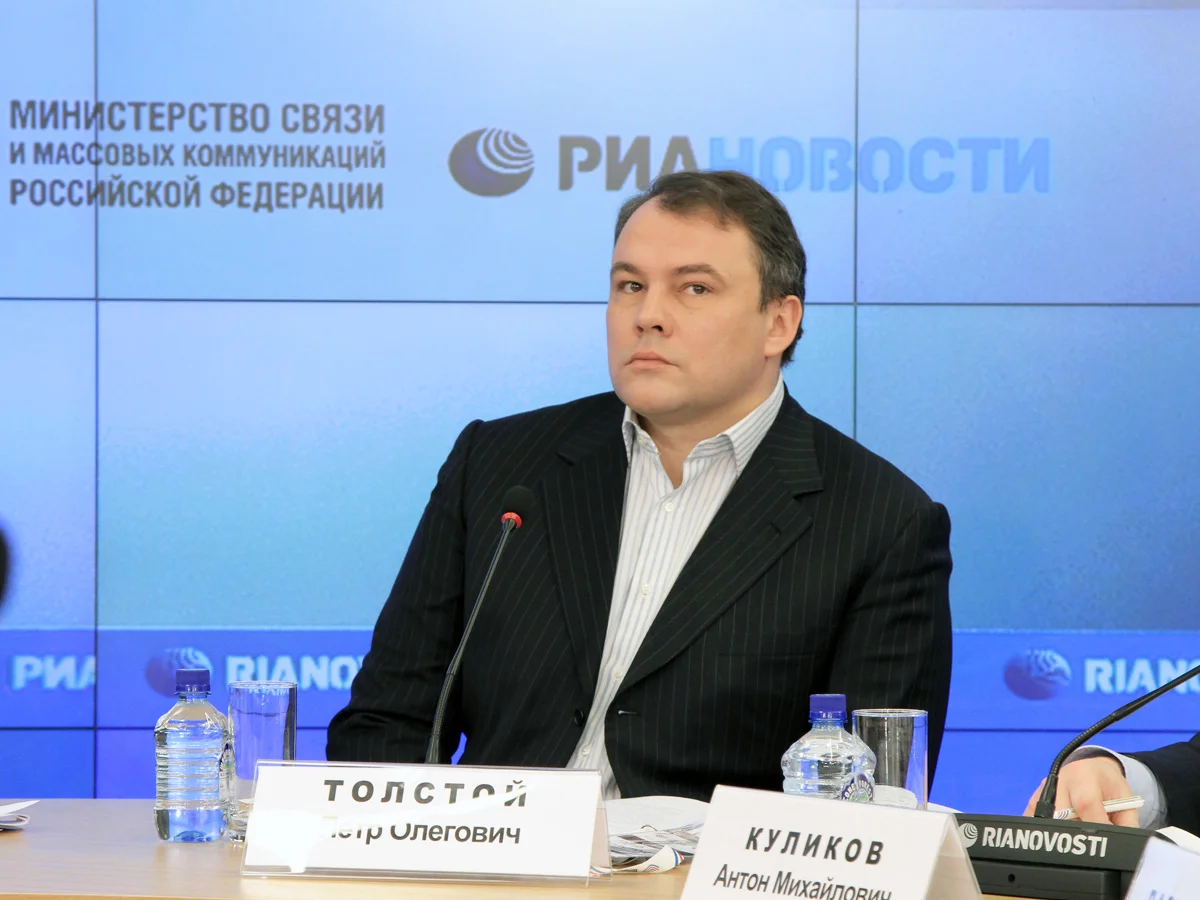
Before that, the deputy said that the decision to go out is “next.” There is no confirmation of this: against at least the Ministry of Health itself. On July 17, at a meeting in the State Duma, the head of the ministry, Mikhail Murashko, stated that “WHO WHO is very important”, first of all, noting the joint warning of epidemics.
At the same time, with the outbreak of war, the organization itself gradually began to turn off cooperation: on May 15, the WHO announced the closure of the Moscow office for the prevention of non -infectious diseases (bottom) and the fight against them. Until January 1, 2024, the office will be transferred to Copenhagen. Then, on May 24, WHO adopted a resolution condemning Russia against Ukraine, in particular, attacks on medical institutions. 80 participating countries voted for its adoption, nine against nine, 52 members abstained. Despite this, there is no talk of a complete breakdown of relations even now, in the conditions of war.
Why do each other needs Russia and
The complexity of the issue lies in the fact that leaving the organization is purely legally impossible. The charter does not provide for such a scenario and does not say anything about the relevant actions. At the same time, the Vienna Convention on the right of international treaties of 1969, under which the USSR signed, prohibits the exit from the contract that does not contain provisions on its termination, denunciation or exit from it. So Tolstoy’s proposal is debatable at least from a legal point of view - it will be a long and uncomfortable process. Moreover, the country's exit from WHO will look wild even on a geographical map. The organization consists of absolutely all the UN states - there are 194 members. The Mission of WHO came even in Transnistria, a full member of the organization is North Korea.
Doctors are expected against leaving WHO. “For example, Russia provides [WHO] data on which influenza viruses circulate with us,” a doctor with experience in international medical organizations told Novaya Gazeta Europe. - The same data is provided by other countries in August and September and give a forecast for the winter season in the Northern Hemisphere. Russia begins to make a flu vaccine, which this season will allegedly circulate. ”
Now, according to the doctor, the WHO is preparing a draft world agreement on readiness for infections. It is assumed that in this agreement the coordinated actions of all countries will be spelled out in the event of an epidemic similar to coronavirus.
“If Russia gets out of this mechanism for interaction in the field of healthcare, then a disaster with Russian healthcare, of course, will not happen,” the expert believes. - However, the processes of coordination of technical requirements will be even more difficult.
For example, Russia in Soviet times, being isolated, practically did not own the means of evaluating the effectiveness and safety of drugs. After the end of the Soviet power, WHO helped Russia a lot. ”
Now, the doctor says, we have a completely modern system: when outbreaks of infectious diseases arise somewhere, the World Health Organization invites Russian experts so that they can go and familiarize themselves with what is happening, make their contributions. For example, experts from the Institute of Epidemiology study the outbreak of Ebola out of foreign colleagues.
“This is extremely important for us to be ready,” the expert says. - Russia in the Soviet and Soviet times actively participated in the provision of vaccines to the poorest countries in order to fight preventive infections. No, in essence, such a sphere of medicine, where, to one degree or another, Russia does not receive benefits from membership in WHO and, in turn, wherever the healthcare organization and the world community would not receive the benefits of Russia's participation. Since this is a great and mutual benefit, the Russian Ministry of Health, and all reasonable experts believe that membership in WHO should continue, it should develop. It is sad if these developments are lost. ”