
Translated material
Witness from Brussels
The first propaganda blockbuster was released
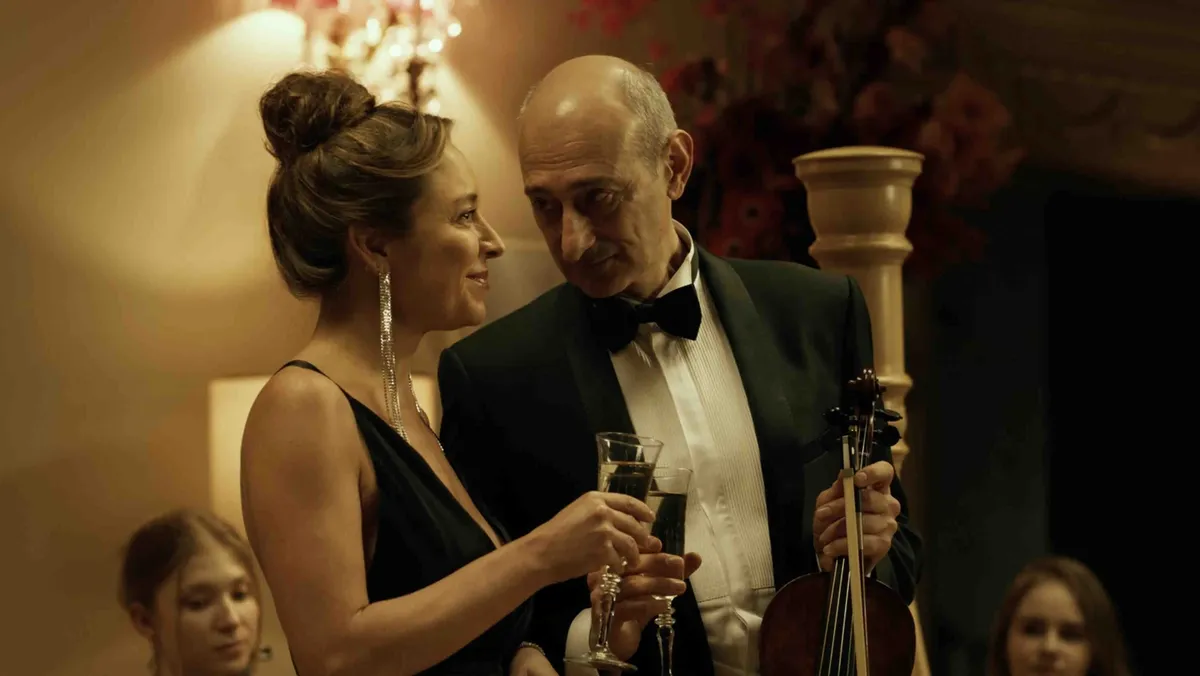
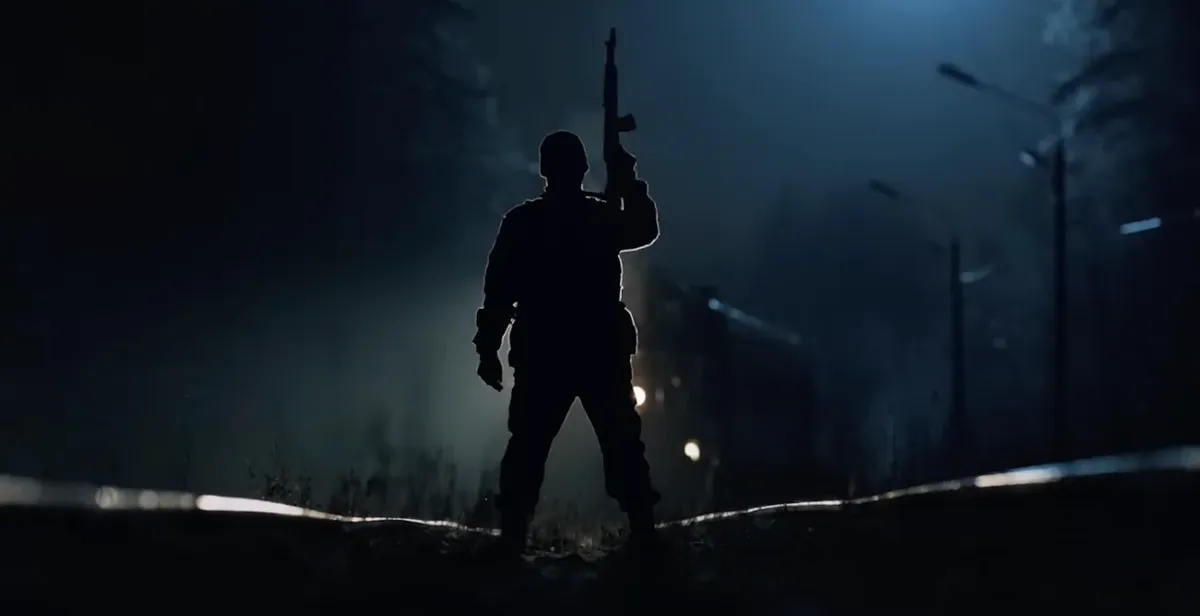
Shot from the film "Witness". Source: Kinopoisk
August 17, the first day of the rental of the film "Witness", session 14:30. The large Moscow cinema is not a center, but not the outskirts. The once lively multiplex, in which, after quarantine, there were queues and all 12 halls were filled with a variety of repertoire, today is empty. Pirate content does not roll, and therefore the corridors are empty and part of the cinema is completely closed. There are not even controllers at the entrance to the hall.
At first, I am alone in the hall, I am settled in a brand new (apparently recently changed) comfortable leather chair, being upset that it will not work to compose a “portrait of the audience”. During the advertising block, several more people are pulled. First, a woman is 60 years old, then another 40 years old, followed by two girls 20–25 years old. Only I thought that the film seems to be designed for a male audience, and in the hall some women, when a man still appeared - about 55 years old, similar to a Soviet engineer.
... On the final credits, one of the girls rushes to the exit, crying out into the air: "If I at least once come to such a film, I no longer know what will happen to me."
At the exit, she stops to wait for her friend, and I ask her, what caused such emotions. It turns out that she did not know which film was going on, it was just necessary to pass somewhere for two hours, and the girls decided to have fun in the cinema, bought tickets for the nearest session.
- Well, how is entertainment?
“I don’t know, it’s hard for me.”
- What exactly is hard?
“I don’t know, all this, it’s hard for me to be a lot of blood, I can’t watch that.”
The second comes up, I ask what emotions she has.
“I don't want to talk about my emotions, I have a guy in the war.”
- By mobilization or contract?
- Under the contract, but before the start of the war he signed, and now it is. I don't want to talk.
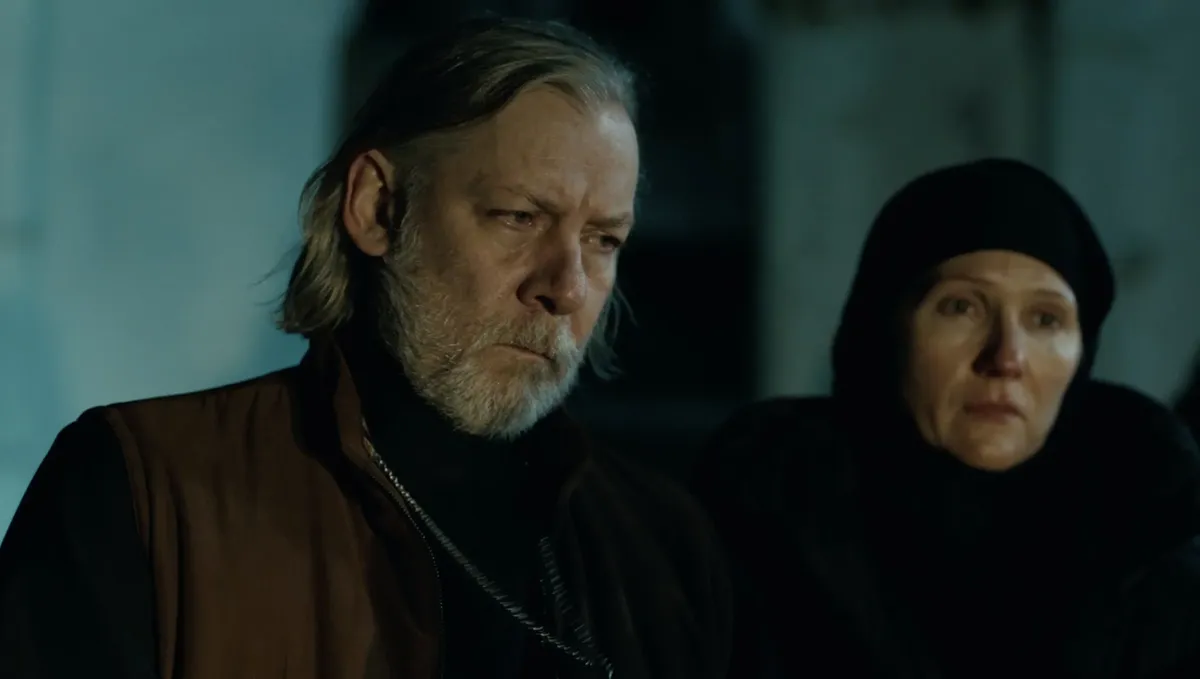
While we are talking, a woman 40 years old, wearing black glasses, comes out with a quick step. I manage to discuss a movie with an older woman. She in the past is a musician, a teacher, she often goes to the cinema, watches all the new items, decided not to miss this. The film is disappointed - says: “One Karen Badalov drags everything on himself,” but otherwise - “Theater of Bad Actors”. The trailer, of course, promised a propaganda film - but it seemed to her that he would be better. “I am neither for the Reds, nor for the whites,” she says, “I am sorry for everyone, but this movie is not about the Donbass, it is about the fact that all Ukrainians are non -yules and Nazis. And it causes me distrust and even rejection. ”
The only man, meanwhile, slips past us and disappears in the depths of the neighboring hall-there is no controller, look what you want, at least around the clock.
How did it happen?
Russian mass cinema has carefully avoided reality for many years. One by one, we lived the historical events of the Oscar’s scope, but the Russian film industry was hiding from them in the plots of the heroic past, in parallel realities or in some kind of artificial problems.
During the screen, only two Chechen wars found a reflection on the screen. But the era of Gorbachev, a putsch, shelling of the White House, the ascent and departure of Yeltsin, Putin’s arrival, the submarine “Kursk” (the Germans shot about her), the explosions of houses in Moscow, Beslan, “Nord-Ost” (there is a good film by Ivan Tverdovsky, but it was seen by units), the story of Khodorkovsky, Politkovskaya, Nevzorov, Navalny (the American dock received about it this year “Oscar”), Bayopic about any of the oligarchs (there was an attempt by Lungin) and many more, much other somehow did not attract the Putinsky industry. She, the industry, avoided even spiritual plots: several Nobel prizes, the Sochi Olympics, the World Cup - there was a lot of good.
But no, reality scared and no one undertook to talk about it directly. Until the war began.
And here, from those who wish to speak out on a hot topic for guaranteed state departments lined up. In addition to the traditional nomination “Socially significant cinema”, a new one appeared in the Ministry of Culture: “Films about global geopolitical and social changes in the history of modern Russia”. And it instantly flew into it as much as nine applications. The expert council, which at this point was already carefully cleaned from unreliable elements and was reinforced by trustworthy, allowed only two to full -time defense and as a result voted for the painting “Musician” (as the Witness was called ”). After that, this company experts voluntarily left some of those who were not cleaned. And the film was immediately launched into production.
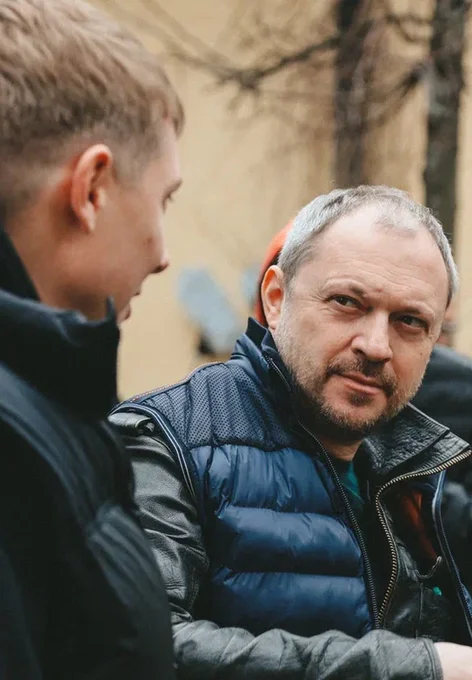
In an interview with RT, the producer of the film Sofya Mitrofanova (at the time of launch of the picture, she also headed the Premier online cinema) that the expanded synopsis of the film Screenwriter Sergey Volkov brought her in April 2022, and by the end of August the script was completed. Sergei Volkov, who, according to the creators of the picture, “was in the Donbass many times”, is glorified by scripts for different telemenal, the projects of Sarik Andreasyan and the directorial debut of David Dadunashvili - who became the director of “Witness”. That debut was called “Dreams”, Pavel Priluchny and Sarik Andreasyan's wife actress Lisa sailor were shot in it. According to the plot, the heroine who possesses superpower helps forensics: she dreams of visionary dreams at the crime scene. Who was dreaming of is the murderer.
The script of the “witness” looks about the same. Everything that happens on the screen is some kind of bad dream, woven from delicious propaganda, stamps and fierce vulgarity.
What is the story
In the center of the picture is a violinist from Belgium Daniel Cohen. The official Sinopsis says that at the end of February 2022, "he came on tour to Kyiv and witnessed inhuman crimes and provocations of Ukrainian Nazis against his own people." But the film begins with an international competition in Moscow, at which Cohen conquers only the second prize - “Silver Arph”. He plays so that only the second place from the end is worthy, and it is not clear why the violins are handed to the harp, but we will lower unnecessary details.
So, right in the center of Moscow (apparently, somewhere in the Tchaikovsky Hall), Coen is coming up with congratulations from a colleague-flirter. His name is Lev Sakhnovitsky, he is a longtime fan and expert on Cohen. But the Belgian abruptly breaks off his colleague: they say, there is nothing to congratulate me with. To which Sakhnovitsky invites Cohen to visit, saying: "Our people drink more often than with joy." "Do you mean Russians?" - asks Bridget, manager Cohen.
“No, Ukrainians,” the flutist replies and offers to take a walk in Kyiv on a private plane and for a big fee. The plane flies to Kyiv, a chopin sounds behind the scenes.
Cohen and Bridget are brought to a country mansion, where the chandeliers are more than at the Bolshoi Theater, and luxury is brighter than in Versailles. At a dinner, local nobility, part of which is discussing the upcoming invasion of the Donbass. “The fist is already squeezed, it remains only to move along the Donbass to roll to Rostov or directly to the Muscovites,” says the hero of Alexander Dyachenko, Panchak (the same friend Danila Bagrov from “Brother 2”, who has a publicist brother in America). The Belgic-Belgian Dyachenko, who has just kindly, will subsequently turn out to be the leader of the Azov regiment, who will humiliate the musician and force him to play for food.
But while at an elite dinner, the Nazi leader not only prepares an invasion of the Russian Federation, but also does not forget about the basic needs: “Disipteen, sho for Barbie came to us, elastic,” says Panchak about Bridget and leads her into numbers. Meanwhile, Cohen calls home to a little son, who asks Dad to bring a "funny Russian hat with his ears." And on the remark of the pope: “I’m no longer in Russia, but in Ukraine,” reacts with surprise: “Is this not Ukraine?” (That is, the five -year -old Belgian understands geopolitics no worse than President Putin).

The intelligent look of Sakhnovetsky presented as a gift to Cohen Violin Nikolo Amati, clarifying that she costs $ 2 million, and asks Maestro to play. He plays something badly, but his game is drowned out by the cries of "Glory to Ukraine!"
At exactly 4 in the morning, Cohen wakes up from the gap of shells. Russia's invasion of Ukraine began. And without that sad, here he was completely depressed, but Bridget resorts to cheer him up. “The Russians attacked. Nothing serious. Russia does not submit. NATO will turn her away. Here everyone thinks so, ”the manager will make a chatter. "Yes, but what will happen to Ukraine?" - the thoughtful Cohen stretches the words, without taking his sad eyes from the wall. “Who cares about this Ukraine?”, Politically informed the manager, while the musician already identifies himself as a hostage. And then it turns out that the telephone connection is cut off, the hospitable Sakhnovetsky flew with his family to Israel, and the Belgian embassy fled to Lviv. And on the streets, weapons are already distributed to everyone, brutal men scorched in the air, and even a taxi driver who takes Cohen in the city condemns the actions of the fellow citizens: “Here is moronism. They will pour a lot with their kalashi against Moskal missiles. ”
“The damned Russian, left us here,” Bridget is indignant, “here the driver escaped.” “These are Ukrainians,” Cohen corrects her.
Bridget does not understand at all what the difference is. During this dialogue, foreigners walk along Kyiv Street, where people are already scorching at each other, and there is not a single Russian on the street.
Bridget yells that Ukrainians must ensure their security, and to the assumption of Cohen that no one owes nothing to them, Bridget yells: “They want to go to our European Union, so they should raise the ass and ensure our safety! Now I will explain to them where their place is! Savages from the outskirts of Europe! " - and runs to explain in a crowd of tense armed men. And to the car, in which Cohen trembles, the thug with a machine gun approaches, opens the door and says: “Say“ Sishop ”.” Since Cohen does not pass the express test for belonging to the highest race, they are beaten and locked in the basement with the manager. While Bridget is outraged by the non -compliance of human rights, the patriots of Ukraine are already sharing microwaves and washing. And since Bridget continues to pump the rights in the dungeon, they drain her by the hair, rape and kill her. Koen is saved by the Ukrainian police who say: “Say thanks for clockwork on time, otherwise you would lie next to her with a bottle in the ass” (you see, the dry people still learned something useful from Russian cops).
Cohen wanders along Kyiv Street, there are no bombing, but there are corpses around (there is a clear thing - no one is bombing, they kill themselves). He needs to go to Lviv, the train is clogged to capacity, frenzied dill burst into the car, they throw all passengers to the street “for verification”, sell places on the train for money. The sobbing mother, trying to save her son from mobilization, gives them $ 300 (“as agreed”), for which the flapping erysipelas says: “Now 500”. Cohen with several old people and women remains in the forest, where the Nazi partisans also come, and the old man is shot, just like that. And then they want to shoot Cohen who was wandering along the road, but they decide that no one will buy his violin anyway, and therefore they drag him to the Azov headquarters, where Cohen meets Panchak again.
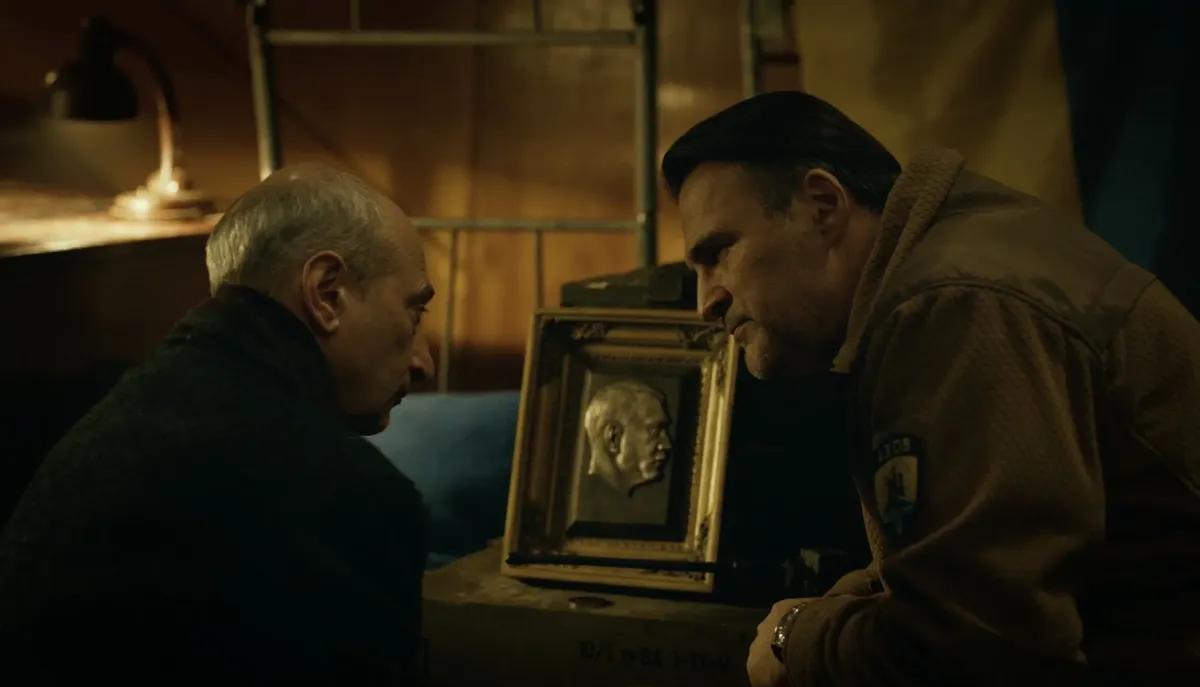
In the Prom still telegram channel, the “backstage”, which, of course, praises the “witness” in every way, write: “And we also want to note the adrenaline role of Dyachenko, whose hero sacredly believes in his mission.” Dyachenko is an actor, not too good in roles. But in his filmography, in addition to Brother-2, there is also McMafia and Hunter Killer, he studied in America. When you look at his “adrenaline” role in the “witness”, you involuntarily think that in GITIS education is much better. His character is a stubborn Nazik without any human features. On his table lies “Mine Kampf”, and Hitler's profile flaunts on the nightstand. At the same time, he yells that they are not the Nazis, they simply love Ukraine and therefore everything is allowed to them. To give the hero persuasiveness, Dyachenko moves the jaw, grinds his teeth and inflates his nostrils. And he just doesn’t grunt, depicting the pork snout.
The “exporting” film Karen Badalov is a good theater artist. And even here it is quite convincing, but the whole film existing on one note: in only one scene he yells, calls for help, in the rest - on the stage with a violin, and in a conversation with his son, and at the advanced after a shell, and in a television studio on an evening show - he is equally sad, sometimes with tears in his eyes. PR managers came up with a comparison of this film with the Pianist. Well, yes - a long dusty coat, an exhausted face with a long nose, a musician. Only in the “pianist” the Wehrmacht captain, listening to how the hero of Edrien Brody plays Chopin, re -opened a man in himself: the genius of the Jewish pianist reborn him. In the “Witness”, Panchak humiliates the violinist, forces him to play something funny in exchange for food. When Cohen offers to play Wagner, Panchak says that "this name is hesitated to him." Then Cohen offers Horst Wessel (author of the NSDAP anthem), which finally runs out his executioner, which gives him the last chance.
And then Cohen plays the music, under which Bandera torch marches were held. The Nazis are satisfied and begin to thug “Chervona Kalina” to the joy of the throat.
... and all this happens where would you think? In the catacombs "Azovstal", of course. Here, not only the Azovites are hidden, but also civilians, women with children, and there are torture, where the Ukrobanders torture their own. Cohen is conducted there a tour, as if hinting at what will happen to him. Although the Belgian did not do anything bad for them and generally a representative of the country of NATO, but to hell with logic, because Ukrainians enjoy cruelty for the sake of cruelty. Some of them are scorched in the basement of weapons. And suddenly, moving to a pure Russian, they say a toast: “For all the guys from Azov,“ Tornado ”,“ Kraken ”,“ Steppe Wolves ”! You are pure blood of the Ukrainian nation! ”
For a complete picture of the atrocities in the plot, there is a Russian priest (in this role, Lenkomets Viktor Rakov), to whom the Azovs bring to bury black bags with the order not to open them. In bags, of course, disfigured corpses - these people were cruelly tortured.
Well, where without children. A child with a Russian name Misha, who speaks Russian, appears in the dungeons of Azovstal. Thanks to the authors that the Nazi scum did not shoot at least him, but simply renamed Mikhailo, and the mother was strictly ordered to speak in Ukrainian. And then his mother was “presented” to the Belgian, because he, in their opinion, “missed sex”. When the Belgian refuses, saying that “he is not like that,” he is immediately declared gay, so in order to avoid new troubles, he calmly leaves the dungeons of Azovstali with a pretty Russian -speaking Ukrainian, who tells the witness that the Nazis themselves turn off the light and gas. In the Russians, no one has any resentment here.

It is amazing that by this moment the Azovites, who were captured by the musician in captivity, completely forget about him, and he calmly lives with Misha and his mother, and the dear boy Misha also turns out to be the owner of absolute hearing and whistles the sounds of different missiles: this is the way “hail” sounds, so-the “vaslek”, so-something else, but I also “point U”, but I also-I’ve been “a point of it”, but I’m still a “point of it”. I have never heard ...
“When we lived in Avdeevka, I heard the sounds of different missiles, they all flew towards Donbass,” is another important geopolitical detail invested in the child’s mouth. And then a new gangster regiment comes among this pastoral, they report that the Russians are going to kill everyone, and drive all the inhabitants of the village of Semidan to the station. Against the background of the station, Panchak gives an interview with CNN (the operator shoots a movie camera like Arri Alexa - they usually take off such Hollywood blockbusters), talking about their heroes, and then information comes that Russian arrivals are being prepared, and all the heroes of Ukraine cowardly sort out. And a rocket flies into the station building, which buries the whole city at once, and only the musician manages to escape.
The Russian military rescued him - clean, beautiful, brilliantly equipped, with tied St. George ribbons. They carry Cohen to their brand new SUVs with the marking of V, not asking what nationality he is.
All the same sad Cohen returns to his Europe, where both the members of the European Parliament, and representatives of the embassy, and the host at the television show insist that Cohen is “a witness to the atrocities of the Russian army”. In response to the question of the host, Cohen is sadly silent .... The monitors can be seen from the station and the sunbathing text is that the Russians launched missiles at the station, complete people ...
“But the Ukrainians said that now there would be a Russian arrival, which is why they ran away,” I clarify with my interlocutor.
- Do you have an absolute rumor? She asks.
- No.
- Then you just did not understand. Remember, the boy showed how the “point U” whistles? So this she flew in, ”the musician-musician explains to me.
Having appreciated the subtle directorial technique, I went to find out what they write about the film in public space.
Premiere that was not
The premiere of the “Witness” took place on the eve of the Cinema “Artistic”. The luxury art site, thoroughly forming its repertoire, but which is an institution of the Moscow government, was forced to let into its walls the most nightmare premiere of the year. The film did not have a press order; independent photographers were denied accreditation.
The “backstage” writes that “there were not all, but many”, but who was is completely unclear, because, in addition to the crew, the photographs have only the new head of the Ministry of Conematography of the Ministry of Culture Dmitry Davidenko. Судя по фотоотчетам и сюжетам НТВ, никто из сколько-нибудь именитых гостей эту премьеру не посетил. И даже Елену Ямпольскую не позвали, о чем она сокрушалась в своем телеграм-канале.
«Это необходимо для того, чтобы общество, и не только наше общество, видело и знало правду. Просто правда — она и есть правда, просто другой нету», — говорит в репортаже НТВ режиссер картины Давид Дадунашвили (в кадре он в черных очках). Чем известен нам этот режиссер? Помимо сериала «Сны», он снял два сезона «Ресторана по понятиям», был креативным продюсером сериала «Чикатило» и художником 58 фильмов (всей фильмографии братьев Андреасянов). Странный выбор режиссера для важного пропагандистского блокбастера. Why is he? Скорее всего потому, что больше никто не согласился. И потому, что продюсер Митрофанова подписала на проект свою команду, которая всегда готова снимать хоть про еду, хоть про войну, хоть про ночные кошмары. От Дадунашвили как режиссера ожиданий ни у кого не было, но есть вопросы к нему как к художнику. Ни образа Москвы, ни образа Киева, ни поселка Семидвери (который не то Буча, не то Краматорск) в фильме нет.
Весь фильм снят где-то под мостами и в переулках Твери, от домов виден лишь фундамент, а единственный план с памятником Победы не то нарисован, не то куплен в стоках.
О том, что действие происходит в Киеве, вы должны понять из обилия сине-желтых флагов, танков со свастиками и машин DHL, груженых взрывчаткой (это посылки из стран НАТО).

«Да, мы снимаем тяжелое кино, оно не для всех, и многие его не поймут, им нужно готовиться к этому, но мы справимся, потому что мы — люди творчества, люди искусства, мы можем рассказать это с точки зрения искусства. Киноискусство существует для того, чтобы мы показали какую-то призму правды через это», — радостно вещает на камеру НТВ актриса Юлия Афанасьева. Ее наивысшее достижение в киноискусстве — это военный мини-сериал 2023 года «Позывной “Журавли”» канала НТВ и международный российско-португальско-украинский сериал «Мата Хари» (2016), где Афанасьева довольствуется в титрах номером 68. И дело не в том, что у актрисы нет биографии, у Чулпан Хаматовой тоже ее когда-то не было. Но когда ты начинаешь в таком фильме, профессиональный фокус сбивается. Вряд ли это та роль, которую потом будет приятно вставить в свое портфолио.
Кстати, единственную массовую сцену в фильме — на вокзале — снимали в Угличе, в массовых сценах задействовали местных жителей, не сказав им, в чем они участвуют.
Перед титрами на черном экране появляется следующий текст: «Ракетный удар по железнодорожному вокзалу в Краматорске, подрыв родильного дома и драматического театра в Мариуполе, массовые убийства в Буче, обстрелы Донецка, Макеевки, других населенных пунктов — эти кровавые преступления против мирных жителей были совершены киевским режимом, чтобы обвинить в этом Россию и очернить ее в глазах мировой общественности». А дальше на титрах мы видим любимую хронику российского ТВ: горящий Дом профсоюзов в Одессе, факельные шествия с портретами Бандеры и что-то еще, якобы доказывающее вину Украины в каждом эпизоде этой войны.
Судьба в прокате
«Предпродажи уикенда: “Свидетель” вырвался вперед среди всех премьер», — написал «Бюллетень кинопрокатчика» (профессиональное индустриальное издание, анализирующее потенциал картин). Чисто математически — да: среди всех картин, вышедших на данной неделе, предпродажи «Свидетеля» были выше, но говорить о сумме в 126 тысяч рублей как о рекорде просто смешно. В стартовый день фильм собрал 1 387 577 рублей (французский мультик «Леди Баг и Суперкот» собрал в стартовый день 47 миллионов). Если посчитать количество зрителей и поделить его на количество сеансов (это можно сделать в приложении ЕАИС), то получится 4 человека на один сеанс (для того чтобы результаты проката можно было считать нормальными, в зале должно быть минимум 17–20 человек).
Почему предпродажи «Свидетеля» самые высокие? Потому что под него кинотеатры полностью зачистили — в конкурентном окружении только третьесортные боевики и триллеры. Но сколько бы околокультурные Z-паблики и канал НТВ ни пиарили «Свидетеля» как «первое осмысление причин и обстоятельств событий на Украине», как «историческое событие» и чуть ли не как «великий фильм о великой войне» (слоган «Утомленных солнцем-2» Никиты Михалкова), сколько бы ни манипулировали словами «правда» и «киноискусство», зритель на фильм не пошел. Ведь это по телевизору можно ежечасно вливать в уши зрителям про зверства украинского нацизма — это бесплатно. А заплатить 500 рублей за билет ни любители телевизора, ни хотящая в кино публика не готовы.
…И еще одна любопытная деталь к портрету не столько главного героя, сколько самого пропагандистского акта. Гений, не от мира сего гений Дэниэл Коэн не имеет телефона, потому что «это отвлекает». Чтобы созваниваться с сыном, что очень важно для него, он просит смартфон у помощницы, а когда ее убивают, остается совсем без связи.
Зачем же авторам понадобился такой банальный сценарный костыль? Наверное, вы и сами уже догадались. Ведь когда Свидетель вернется в Европу «рассказать миру правду», у него не будет никаких доказательств своих слов.