
Translated material
Why does the brain bring us traps?
We tell you what cognitive distortions are and what they are
To make a well -thought -out decision, it takes a lot of time. But sometimes the brain is lazy and uses the usual templates, because of this you can lose your savings or go about marketers. This is the result of cognitive distortions - certain errors of thinking to which everyone is inclined. "Cold" tells where cognitive distortions come from and what they are.
In order not to miss the main materials of the "cold", subscribe to our Instagram and telegram .
Imagine Alice: she has been working as a marketer for three years and has achieved considerable success. Now the boss invites her to head the team. After several days, she refuses to think out: she is scared to switch to a new position, so the girl decided to leave everything as it is.
Studies show that such behavior is often found. People do not dare to change - be it the choice of a medical insurance plan or a place to leave - even if the maintenance of the current situation entails large costs. This phenomenon is called a deviation towards the status quo ( Status quo bias )-and this is one of many cognitive distortions.
Why do cognitive distortions occur?
The main reason is how our thinking works.
People process and interpret information, and then make decisions or make judgments. But sometimes our thinking is cunning and uses certain templates so as not to bother when working with information. As a result, we are in vain interpret the facts and make not very rational decisions. This is how Israeli psychologists Daniel Kaneman and Amos Tver, the authors of the term “cognitive distortion” describe this process.
In the late 1960s and early 1970s, these two psychologists took up the study of human behavior-more precisely, how a person makes decisions. At that time, it was assumed that people for the most part make rational decisions and act in their interests, for their own benefit. This turned out to be not so, since then decision -making models took into account only the theory of probabilities and economic benefits.
Doesn't a person care only about his benefit?
For a long time in the economy, the idea prevailed that a person is a kind of car in maximization of his own benefit. He always acts rationally, seeks to increase the benefit and reduce costs. But it turned out that this is not true.
First you should go to Scotland of the Enlightenment. In 1776, Ethics Professor Adam Smith published his Opus Magnum - "Study of the Wealth of Peoples." The key idea of work - people work for their own benefit, and the market acts as a universal regulator, which allows you to satisfy the need most effectively.
“Each individual person is constantly trying to find the most profitable capital application that he can dispose of,” Smith writes. - He means his own benefit, and by no means the benefit of society. But when he takes into account his own benefits, this ... leads him to the preference of the lesson that is most beneficial to society. "
However, Smith also noted that people do not always act in such a way as to correctly dispose of capital. “Each more or less overestimates the chances of good luck, and the chances of failure by most people are underestimated, and there is hardly such a person who would have exaggerated them more or fiercely, who would exaggerate them.”
Almost 40 years later, the Englishman David Ricardo became a follower of Smith - and at the same time a meticulous critic. He came up with simplified models with which he explained world trade (based on Smith's ideas), described the labor theory of value - objects are proportional to the work spent on their production. And in his reasoning, he proceeded from the premise that a person is a creature that cares only about his own benefit. So the classical economic theory appeared.
But a person is weak, free to succumb to temptations and temptations, therefore he is not always able to act with an eye on the mind to gain his own benefit. In the 1970s, psychologists-the main specialists in human behavior, undertook to prove this. After long research and discussions, they showed that human behavior affects past experience, emotions, mental state and environment. This influence can be studied, which is what the new field of knowledge has engaged in - the behavioral economy.
“Kaneman and Tverski closely collaborated with a number of well-known theoretic economists and found that they describe their models with the basic assumption: the agent makes a decision is rational and has the fullness of information,” says Nikita Loginov, candidate of psychological sciences, researcher at the cognitive research laboratory, Nikita Loginov. “But from the point of view of psychology, this is completely wrong.” Scientists conducted several studies in which the features of human thinking have shown.
Sometimes we tend to think that some events are more common than it really is. A simple example is lottery. If someone was lucky to get the right ticket and the media told about this, then some people involuntarily revise their chances of winning. And exorbitant expenses become the result, although the chances of winning the lottery have not changed and are still very low. A similar situation occurs with the mention of the attacks of sharks and a plane crash - Kaneman and Tverski called this phenomenon of the heuristics of accessibility.
According to the definition of Kaneman and Tverski, heuristics is a mental label or an “empirical rule” that helps us make judgments when information or time is limited. And the heuristics of accessibility is a type of label that we use to assess the probability of an event. In some cases, this helps to quickly make a decision, and in others it traps.
In 1979, Kaneman and Tverski published the work "Theory of Perspectives: Analysis of Decisions at Risk." In it, psychologists criticize the hypothesis of the expected utility - this once popular economic idea proceeds from the assumption that people are rational agents. The research results of psychologists have shown that people underestimate risks, which means that they do not always act rationally. In 2002, Daniel Kaneman received the Nobel Prize for Economics “For the Integration of the Ideas of Psychological Research into Economic Science, especially with regard to human judgments and decision -making in conditions of uncertainty” (it would probably have received AMOM of Tver, but it died in 1996, and the Nobel Prizes are not awarded posthumously).
The studies of Kaneman and Tverski stretched for decades, and in order to summarize all the observations, in 2011 Kaneman released the book “Think slowly ... decide quickly” (in the original - “Thinking, Fast and Slow”), where he retells the research in simple language. In it, he described the thinking of a person as the work of two systems: systems 1 and systems 2. They look like this:
System 1 works automatically and very quickly, without requiring or almost not requiring effort and not giving a feeling of intention: we don’t even think about what needs to be done, but we do it right away.
She solves such problems:
Determine which of the two objects is closer
Determine hostility in the voice
Read letters on large advertising billboards
Drive a car on an empty road
Understand a simple sentence
System 2 distinguishes attention necessary for conscious mental efforts, including for complex calculations. System 2 actions are often associated with a subjective sense of activity, choice and concentration.
She solves such problems:
Intentionally speed up the pace
Monitor the relevance of behavior in a certain social situation
Draw your phone number to the interlocutor
Compare two washing machines in price and functions
Fill out a tax return
These two systems are responsible for making decisions. Kaneman believes that we perform some actions on the machine, others - after thinking. But sometimes automatic thinking makes decisions too quickly - and then systematic errors arise, or cognitive distortion. “The simple rules by which we make decisions quickly and automatically turn out to be ineffective and lead to distortions,” adds Nikita Loginov. To deal with them, you need to slowly slow down the decision. In fact, Kaneman says that you need to turn on the system 2.
“It seems to me that Kaneman came up with a system 1 and system 2 to explain to the nonsense how thinking works,” says Vladimir Spiridonov, doctor of psychological sciences, head of the cognitive research of the Institute of Social Sciences of Public Sciences, Vladimir Spiridonov. “This is a crazy simplification, but economists, lawyers and managers will be able to understand something about their own thinking in this example.”
Kaneman and Tverski began to study cognitive distortions almost 50 years ago. Are their ideas still relevant?
Yes, but over time, other scientists introduced some clarifications into this theory.
German psychologist Gerd Gigerentser believes that cognitive distortion is the result of normal thinking. “Our thinking will fail in some situations, while in others it works effectively. Gigerentser emphasizes this thesis and says that scolding cognitive distortions is an unpromising lesson. Because they are on their own - the norm, ”says Vladimir Spiridonov. As Gigerentser himself wrote, "a biased mind can more effectively and reliably cope with uncertainty than impartial."
What are cognitive distortions?
There are more than 150 of them - so many cognitive distortions are contained in the list of Wikipedia. Some concern recent memories, others - information that contradicts our beliefs, and others - our ability to notice the bizarre and unusual. But to completely systematize cognitive distortion to scientists is still beyond the power: their mechanisms have been little studied.
“The Wikipedia refers to cognitive distortions, which is not entirely correct,” says Nikita Loginov. - Kaneman described cognitive distortions as errors of thinking. The fact that there are errors in memory, attention, perception, there is no dispute, but they do not relate to cognitive distortions. There are other names for them like visual illusions, false memories and so on. ”
Vladimir Spiridonov believes that "sooner or later someone will summarize cognitive distortions-and instead of individual pieces of mosaic, the pattern will be clear." But while scientists understand this intricacies, we will dwell on several common traps of thinking and consider them in detail.
A trap of irrevocable costs
In the 1960s, France and Great Britain took up a joint project-the development of a supersonic airliner with a capacity of approximately 100 people. The ambitious task took a lot of resources - and over time, more and more expenses grew. But the partners were in no hurry to abandon the project, since a lot of money and labor were already invested. The first commercial flight “Concord”-this was the name of the liner-took place in 1976, but already in 1979 the production was curtailed, and in 2003 the flights of the existing “concords” stopped. The project was economically ineffective: the costs were almost six times more planned.
Sometimes people - including politicians and businessmen - continue to invest resources in a deliberately unpromising business, because they are sorry for the money or effort spent. This may be the construction of an infrastructure project in a sparsely populated area, investment in a suspicious company or even in a disgusting relationship. This phenomenon is called a trap of irrevocable costs (it is also the effect of irrevocable costs - SUNK COST FALLACY ).
This cognitive distortion works not only in people, but also in animals. In 2018, a group of researchers from the University of Minnesota in the United States discovered that this mechanism is similar in rats, mice and people. The experiments were held in the laboratory. The rodents were supposed to find flavored granules in the maze, people - videos on the Internet. The more time it took to search for a “reward”, the stronger the effect of irrevocable costs was manifested. Scientists believe that such research - the use of economic ideas in naturalistic experiments - can shed light on a neurobiological basis for decision -making.
The systematic mistake of the survivor
The fate of Mark Zuckerberg and Bill Gates are similar. Both were born in wealthy families, entered Harvard, and then threw the university to do business. Both founded companies whose cost today exceeds the GDP of most countries of the world. And both serve as an example for students who want to leave their studies in order to do their own business, although there are much more people who abandoned the university.
This is how the systematic mistake of the survivor ( Survivorship Bias ) - cognitive distortion when we focus on successful cases (“survivors”), in our judgments neglecting the failures (“dead”).
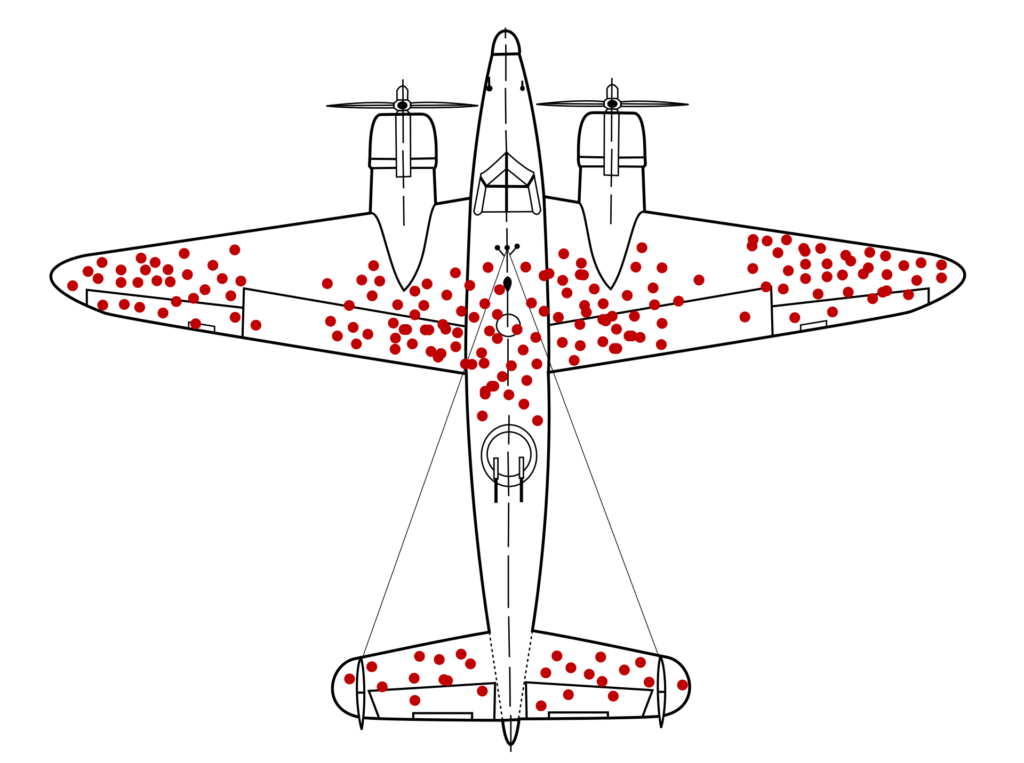
A good example of the work of the surviving error is the history of the mathematician Abraham Wald, who found a way to protect American bombers, not succumbing to cognitive distortion.
During the Second World War, planes flew out on a mission and often did not return to the base. A group of statistical studies of Colombian University in which Wald worked was supposed to evaluate the vulnerability of aircraft, and then find a way to improve their booking. The research results soon found themselves on the military table, which was proposed to strengthen wings and fuselage.
In his analysis, Wald went from the opposite: he proposed to strengthen in airplanes those places that the returning after departure remained unharmed. The mathematician noted that the planes are able to fly to the base with holes in the wings, in the center of the case and tail - it was these places that were most often broken. So, he decided, it is necessary to strengthen those parts that turned out to be intact - the cab and engines - because, probably, it was hit by them that became fatal for the plane. The military did so.
The illusion of the depth of understanding
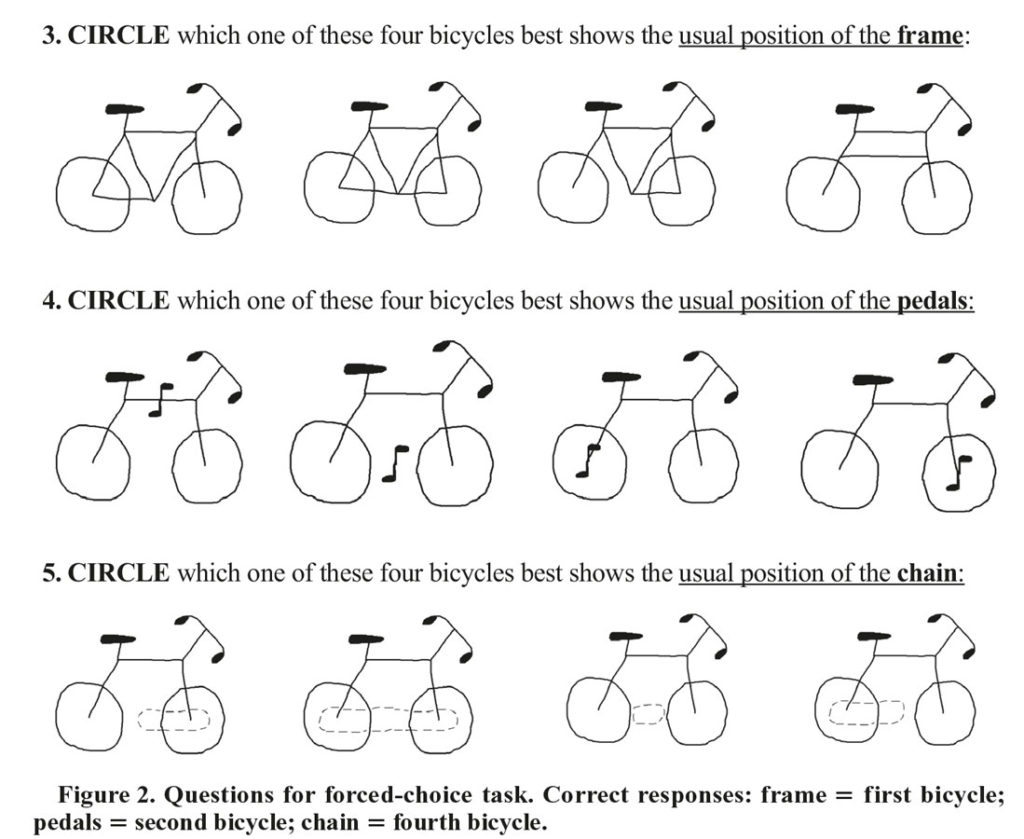
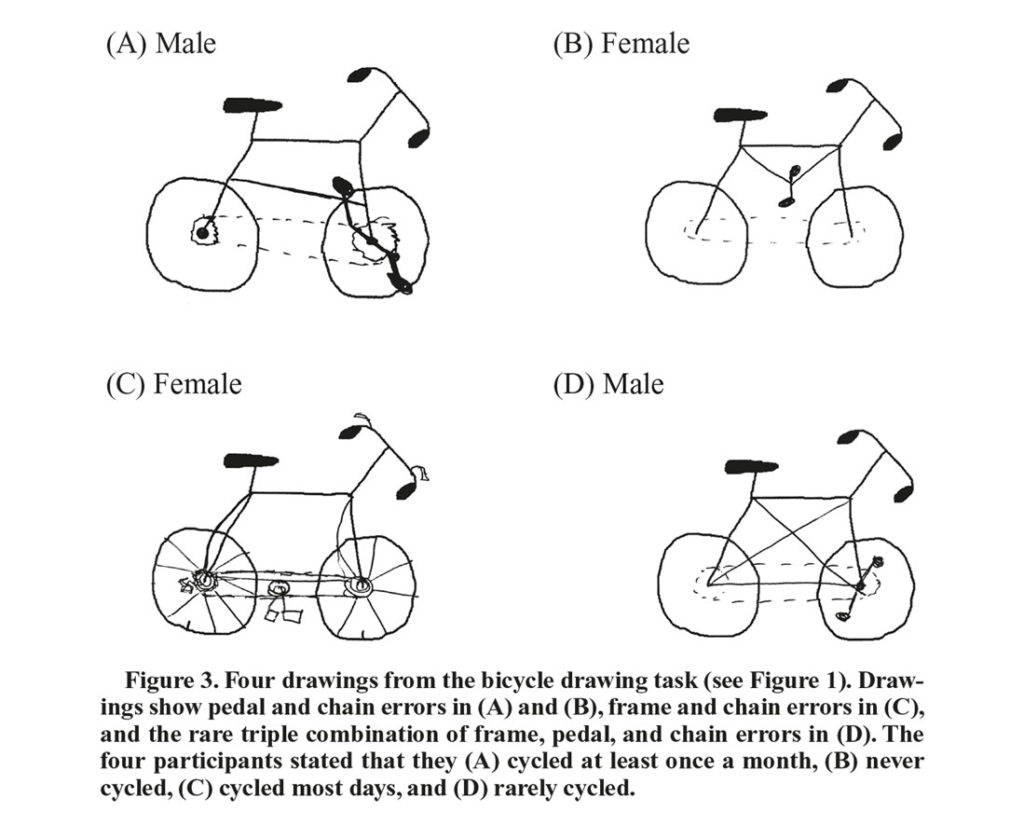
Do you know how the sewing machine or speedometer work? Studies show that it is unlikely.
In 2002, psychologists from Yale University Leonid Rosenblit and Frank Kail published a study based on a series of experiments in which the subjects were to explain the device of simple objects. Among the proposed objects were a speedometer, a zipper, a quartz clock, a sewing machine and others.
At first, the participants in the experiments had to evaluate their knowledge of the subject from one to seven - from “I mean nothing” to “I am well versed”. The next stage is the answer to additional questions on which the participants usually poured. It turned out that they knew much less about objects than they thought before. “Most people think that they understand the world with much greater detail, connectedness and depth than they really are,” scientists said in the study. This cognitive distortion began to be called the illusion of the depth of understanding.
The illusion of the depth of understanding is also reflected in politics. In 2013, a group of American scientists published the results of a series of experiments to find out how the extreme political views of the Americans relate to understanding political issues. They learned the opinion of the respondents about different areas of state policy - from health and social security to politics regarding Iran and quotas for carbon ejection. Next, the researchers asked to describe the mechanism (what and why is being done), and then to evaluate confidence in their own views and the degree of understanding of the topic. At the final stage, scientists asked participants in the experiments to make political decisions in favor of a particular group of interests.
The results turned out to be as follows: people of extreme positions are too confident in their innocence, but as soon as they have to understand the causal relationships of political decisions, their views become more moderate. But, as the psychologist Steven Sliman later noted - one of the co -authors of the study - this does not work if the basis of political views - values that do not allow compromises.
Motivated reasoning
The climate is changing, and in conversations this became a common place: from 1901 to 2020, the average annual temperature rose by 1.1 ℃. But here are people diverging is the reasons for the changes. Political scientists James Dracman and Mary McGrath from the North-Western University in Chicago believe that the points of view of people on the causes of climate change are associated with their political preferences.
«Демократы и либералы склонны считать, что человеческая деятельность является основной причиной изменения климата, — пишут исследователи, — тогда как республиканцы или консерваторы гораздо реже придерживаются этого мнения».
В основе этого явления — мотивированное рассуждение. Это когнитивное искажение, когда люди воспринимают — или игнорируют — информацию исходя из собственных представлений о мире. Мотивированное рассуждение (Motivated reasoning) стало важной теоретической концепцией не только в психологии, но и в политологии и исследованиях медиа.
«Люди с большей вероятностью придут к выводам, к которым они хотят прийти, — писала социальный психолог Зива Кунда, — но их способность сделать это ограничена их способностью конструировать кажущиеся разумными обоснования этих выводов». Иначе говоря, при желании люди могут обосновать все что угодно, если это соответствует их текущим убеждениям.
Однако Никита Логинов делает важную оговорку об исследованиях когнитивных искажений: «В американском академическом сообществе популярны исследования, которые сравнивают склонность к когнитивным искажениям у людей либеральных и консервативных взглядов. Но консенсуса, если ли связь между взглядами и склонности к когнитивным искажениям, еще нет. Есть более интересный и проверенный сюжет, касающийся мотивированных рассуждений. Это partisanship bias — про то, что рассуждения и либералов, и консерваторов примерно одинаково могут быть искажены их собственными политическими убеждениями. И при интерпретации одних и тех же фактов они приходят к разным выводам. А еще средиамериканских консерваторов больше сторонников теории заговоров. Но напрямую к когнитивным искажениям это не относится».
Фрейминг
Баннеры в метро, посты в соцсетях, проморолики перед фильмами и сериалами, а еще листовки в почтовых ящиках и в заказах с едой — из каждого угла кричит реклама. Например, американцам приходится видеть от четырех до 10 тысяч рекламных объявлений в день. Но это данные за 2015 год — вероятно, сейчас их еще больше.
При этом все объявления объединяет общая структура: их задача — привлечь внимание, чтобы потом конвертировать его в покупку. Важное значение имеет не столько содержание рекламы, сколько ее оформление. Даниэль Канеман и Амос Тверски называли это фреймингом ( framing ).
В 1981 году ученые показали , что если одну и ту же задачу сформулировать по-разному, то люди будут выбирать решение с подсвеченными положительными аспектами. При этом не важно, что это — денежный выигрыш или лечение от смертельной болезни. Один из гипотетических примеров в исследовании ученых выглядит так:
Представьте, что США готовятся к вспышке необычной азиатской болезни, которая, как ожидается, унесет жизни 600 человек. Были предложены две программы борьбы с болезнью. Предположим, что точная научная оценка последствий программ такова:
Если будет принята Программа А, будет спасено 200 человек.
Если будет принята Программа Б, то вероятность спасения 600 человек составит 1/3, а вероятность того, что никто не будет спасен, — 2/3.
Какую из двух программ вы бы предпочли?
На этот вопрос ответили 152 человека. 72% выбрали первый вариант, тогда как второй — 28%. «В той задаче большинство опрошенных предпочли избежать риска, — пишут ученые. — Безусловная возможность спасения 200 жизней привлекательнее, чем рискованная возможность, где есть один из трех шансов на спасение 600 жизней».
В исследования принимала участие еще одна группа респондентов (155 человек), которой предложили задачу с альтернативной формулировкой.
Если будет принята Программа С, погибнет 400 человек.
Если будет принята программа D, то вероятность того, что никто не умрет, составляет 1/3, а вероятность, что погибнет 600 человек, — 2/3.
Какую из двух программ вы бы предпочли?
Большинство (78%) в этом случае пошло на риск: опрошенные предпочли второй вариант, то есть гарантированная смерть 400 человек оказалась менее приемлемой, чем высокая (2/3) вероятность смерти всех 600 человек. Эти примеры иллюстрируют, что если выбор связан с потенциальной выгодой, то люди стараются избегать риска. Но если выбор сопряжен с потерями, то люди часто рискуют. Однако обе ситуации практически идентичны — разница лишь в том, как сформулированы условия.
Что читать о когнитивных искажениях?
- Канеман Д., Тверски А., Словик П. Принятие решений в неопределенности. — М., 2005
- Станович К. Рациональное мышление. — М., 2012
- Сломан С. Иллюзия знания. Почему мы никогда не думаем в одиночестве. — М., 2017
- Канеман Д. Думай медленно… решай быстро. — М., АСТ, 2017
- Касс Санстейн и Ричард Талер. Nudge. Архитектура выбора. — М.: Манн, Иванов и Фербер, 2017