
Translated material
Why are orphans going to fight
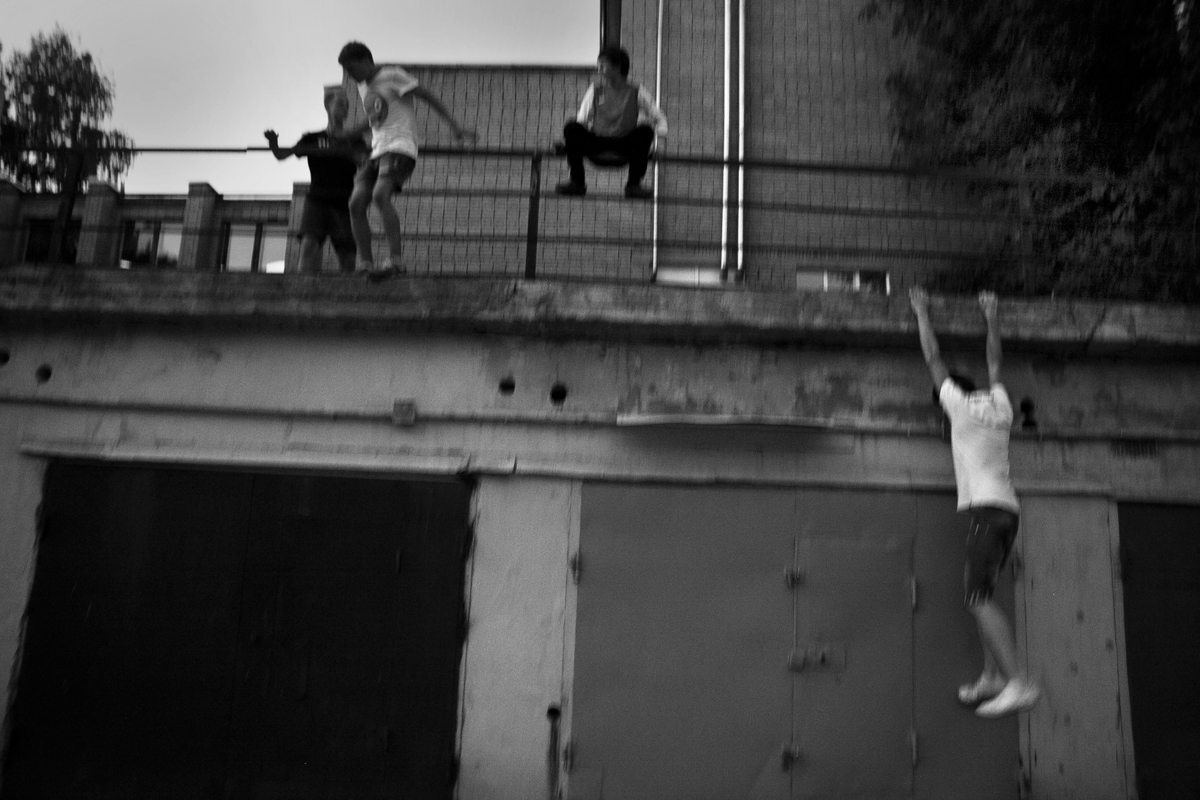
Why are Russian orphanages going to fight in Ukraine
Briefly
Orphans in state institutions from childhood indicate what to do, what to study, what to drink and, how to relax. Over time, adolescents get used to obeying authorities - and when “on TV” they say about the need to go to the front, they often succumb to these calls. The widespread romanticization of war and the promise of huge money that is difficult to earn in a provincial city also plays a role. All this makes graduates of orphanages an ideal audience for Russian military propaganda. The “line” spoke with several orphans about how and why they go to the front, and experts told how to save young people from rash decisions."Homeland said - it is necessary"
“Recently, I spoke with two graduates of the orphanage, who are now graduating from college. They said that they were going on to them, because “they pay a lot there,” besides they have nowhere to live, since housing will be given only in two years. Therefore, they will go to serve - just during this time they will give an apartment, they will earn money and it will be easier to get a job with the status of a veteran. I didn’t even have anything to tell them against it! ” - So the recent conversation with the wards describes the employee of the regional NPO The heroine agreed to talk anonymously so as not to subject herself and her fund to possible administrative responsibility for discrediting the army. who helps orphans.
Since 2009, the public organization “Childhood House” has been supporting children in difficult situations and graduates of orphanages in Samara. In May, the Director of the Foundation Anton Rubin said that his ward of an orphan was killed at the front.
“We still have no such causes of death [among the wards of the organization],” Rubin wrote. - And with the military honors of our graduates have not yet been buried. But the war came. He [the ward] was among those to whom the Motherland said - it is necessary. Do not “live”, “develop”, “study”, but - “die”. Orphans for these masters of pyrrhic victories are perhaps the most convenient material. No one will be grabbed, no one will demand compensation. No one will stop from receiving the agenda. ”
The “line” managed to find at least 19 messages about the death of orphans since the beginning of the war. So in March 2022, an orphan from Bashkiria died , in May - two of the Sverdlovsk and one of the Chelyabinsk regions , in August - from the Primorsky Territory , in September - from the Stavropol Territory , in November - from the Volgograd and Chelyabinsk regions , in January - two orphans from the Sverdlovsk region , one of the Perm Territory and one of the Trans -Baikali , from February - from February - from February - from February - from February The Trans -Baikal Territory and the Yaroslavl Region , in March - from the Kemerovo region , in April - from Buryatia , in May - from the Orenburg region , in June - from Tatarstan and the Volgograd region .
How many orphans were in the war is unknown. In groups of orphanages, news is periodically published about former wards that went to war or returned from there. They sometimes visit native institutions and speak to children.
Minor pupils weave camouflage networks for fighters, write letters to the “defenders of the Fatherland”, sing at concerts for soldiers and congratulate them on February 23. However, the head of the federal fund , the leader agreed to talk anonymously in order to be able to help help orphans in institutions. The help of orphans says that such actions cannot be called a unique feature of orphan institutions-now they are found throughout the educational system of Russia.
"I had the only goal - to remove the criminal record"
25-year-old Egor* from Novosibirsk got into the orphanage as a small child-along with brothers and sisters. He recalls how educators and mentors from the Sunny City fund taught him to be "to be a good person and not forget who your neighbor."
At 16, the young man went to college. Already at 18, Yegor was in prison, he was sentenced to six and a half years in prison - he refused to call the reason for the criminal record. When three months remained before the release, Yegor signed a contract with the Wagner PMC. He says, it was scary, but still went to war - there was nothing to lose: "There was neither income, no education, nor family, nor children."
“I got into prison by stupidity and corrected my mistake. I had the only goal - to remove the criminal record, it did not matter to me what was happening in the war. I still think that she is not needed right now. [On it] a lot of people die and does not deserve it: there is nothing to fight for, ”the young man believes.
After six months of service, the criminal record was really removed from Yegor, he returned to his native Novosibirsk. He assures that he was not ready to fight further, because "we need to start a family, set up your life." At home, he was able to get a job and now receives 70 thousand rubles a month. Yegor says that he is ready to receive much less than at the front, but wants to honestly work and be close to brothers and sisters. With a criminal record, this would be much more complicated.
The crime and the subsequent prison are one of the typical routes for graduates of the orphanage, says Anton Rubin. “I look at the conditional Vovka, which is located [in the training unit to prepare for the front], and I can’t choose words to explain to him why he does not need to be there. I know: if he returns, he will not be able to find himself and work again, because he already has a criminal record, he has nowhere to live, he does not have any skills to get a job in society. Even if he returns now, he will sit down again tomorrow. And there he has several options again: either sit, or go for a light life in some PMC. This is such a cycle of people in nature, which I can only watch and cry at. ”
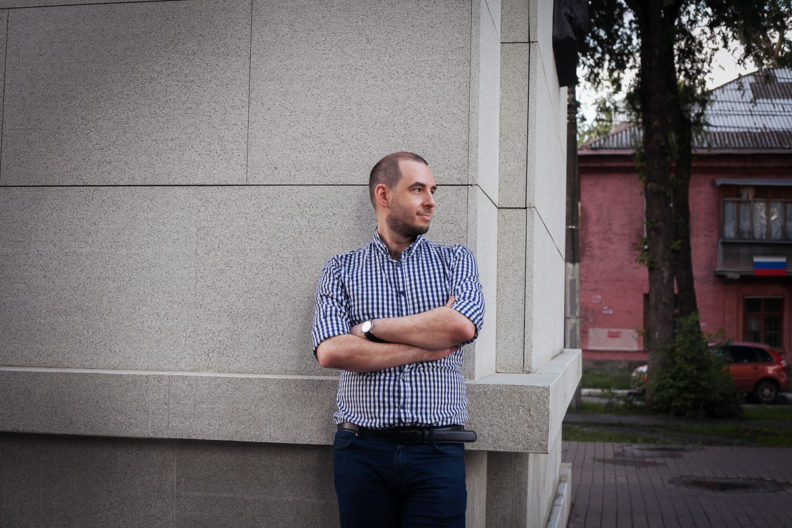
"When no one needs you, you choose to go to the front"
According to the social activists, with whom the “trait” spoke, one of the main problems because of which orphans go to fight is the lack of a significant adult. As they grow old, orphans change several institutions, because of which they do not have the one with whom they would spend most of their lives and who would become truly close to them.
“Yesterday's teenagers live in the paradigm of the lack of the value of their own lives, since no one needs globally. And then they choose to go to the front-and they find themselves in the right homeland, do something, find friends. To this is added that “you are a man”, respect appears. And if you are lucky and they will survive, then they will also make money. After all, they don’t say anywhere that you can return a cripple and get into a neuropsychiatric boarding school in neuropsychiatric boarding schools, people with mental or physical disabilities fall in the event that they do not have a guardian. because no one needs freedom, ”says the head of the Federal NPO.
The system of orphanages accustoms the pupils to obey the elders, adds Anton Rubin: “The elder is always right - if they said that you need to go for lunch, then it is necessary; If they said that we must go to die, then it really is necessary. ” Children are not taught to make independent decisions - they decide for them that and when they will eat, what time they will go to bed and where they will go on the weekend.
According to the employee of the regional NPO, comrades who returned from the front are often the authorities for graduates of orphanages: “They are very motivated by the Hyip Wojushki, for them [war]-“ Che this, let's go to war, ha-ha ”. This is a romanticization of hostilities, they have no fear. There are friends who died, but “of course, they are suckers and losers”. ”
Another problem is the money that orphans are rarely taught to handle. By the time of release from the orphanage, the pupils on the account can be money that parents who have refused from children pay a disability or disability pension. From hundreds of thousands to several million rubles. And often, young people spend this money in a few days, in addition to financial illiteracy, scammers are to blame for this, who find themselves next to adolescents immediately after their release.
Therefore, for orphans, an important motivation to go to the front becomes a reward. “This seems to be a normal way to earn. On billboards in the regions, I often saw that they immediately write the amount of one -time payment of 400-500 thousand rubles, ”says the head of the Federal NPO.
In addition to the money of orphans, they are also stimulated by promises of the accelerated receipt of housing, which is supposed to be released by the release of the age of majority of an orphan on housing with an area of at least 24 square meters in the same village where he lived or was in an orphanage. From the orphanage. According to Alexei Golovan, the head of the Charity Fund in Fate, for 2022 in Russia more than 200 thousand orphans could not get housing on time and have been waiting for their turn for years.
Deputies in various regions want to help orphans with housing - but in priority those who go to fight or have already returned from the front. So in Tatarstan , the Saratov , Pskov , Omsk , Irkutsk regions they want to provide “preemptive right” to housing. The same regions also reported an approximate assessment of the number of orphans that went to the front and claim such a measure. For example, in the Irkutsk region, 47 people have already used the payment for the purchase of housing, and in the Omsk region they approved a list of 10 orphans, which will be primely received a certificate for the purchase of housing.
The deputies of Kabardino-Balkaria even submitted a separate bill to the State Duma to the State Duma, which would additionally endow the children of the orphans who died in the war with the right to housing.
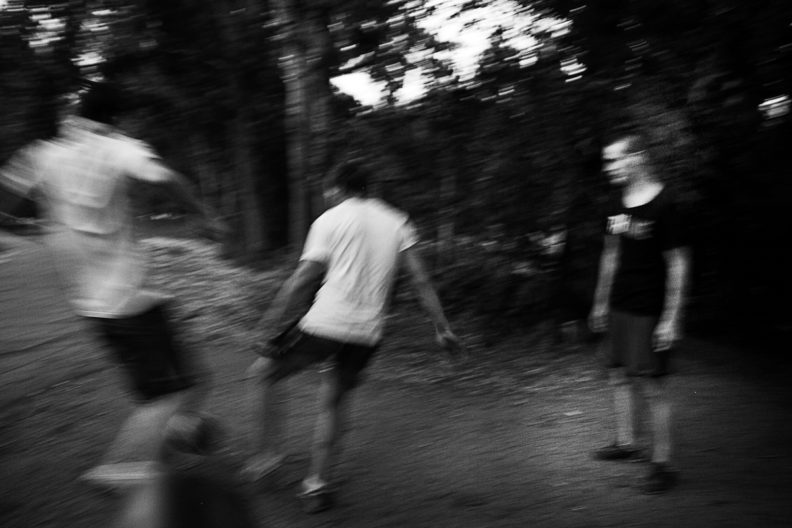
"Another housing will not hurt"
Even in previous years, many graduates of the orphanages went to the army for military service, says the head of the Federal NPO. Now, according to her, all the conscripts are “strongly crushing that they sign a contract”, but it is the orphans that “are good at this.”
Sometimes announcements with an appeal to go to the contract under the contract are published even on social networks of institutions. For example, such a message is enshrined in the group of the St. Petersburg orphanage No. 2. It says that the service is a “real male work”, and a one -time payment of 695 thousand rubles is immediately offered.
Nikolai* lost his father in childhood, and his mother was limited in parental rights, after he ran away from home several times. So at the age of 14 the boy was in a boarding school, and his brothers and sisters remained to live with his mother. After the orphanage, he entered the university, settled in a hostel, and then began to rent an apartment to live with a girl. Soon he began to skip classes, and he was expelled.
At that moment he was just 18, and in 2020 he went to the army. The young man wanted to get combat experience, but instead he had to "clean snow and potatoes." Three months later, he signed a contract to get "into a more serious combat unit." In addition, Nikolai adds, he was offered a military mortgage after 20 years of service. “[I also have housing, but another one will not hurt,” he explains.
In early February 2022, he ended up in Belarus, from where he entered the territory of Ukraine as part of the Russian troops. Nicholas himself describes the reasons for participating in the war like this: “We were very asked whether we want it [to fight] or not. At that time, it was a more order than I wanted it myself. And orders need to be followed, no matter what they are. ” Since then, Nikolai visited the Kyiv, Donetsk, Lugansk, Slutsk, Zaporizhzhya and Kharkov regions.
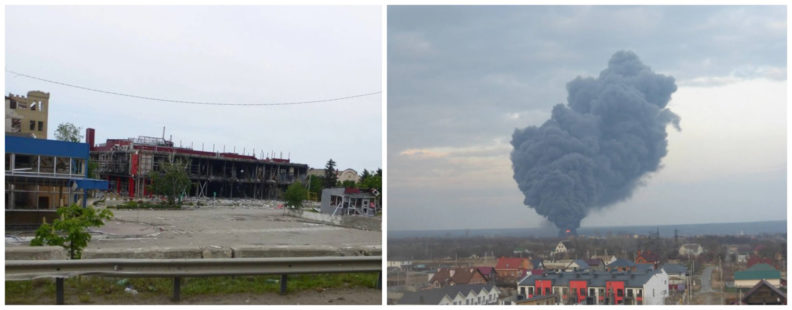
Photo: from the personal archive of Nikolai
At the time of communication with the “line”, Nikolai was on vacation in his hometown, but soon had to go on a combat coordination to train training for the training of military personnel in consistent actions as part of his unit. To Moscow. At home he was invited to his home boarding school, where he spoke to the pupils. According to him, the children were interested in listening, someone also wanted to go to fight.
During the service on the contract, Nikolai received 30-35 thousand rubles. He did not say how much he gets now, but he said that this is much more. Nikolai wants to return to the front after a vacation: answering the question of what gives him, lists: “[combat experience at the front] does not particularly help in everyday life, but gives small privileges in life: for example, I was awarded with state awards (a medal for the courage and order of Suvorov,- “ line ” ), the salary rose, became a veteran of combat operations-they should give a plot, military The pension will be. "
On the next vacation, the young man plans to get a driver’s license and buy a car. When the war ends, he wants to quit the army.
Among those orphans that have already entered into a contract, many are not going to fight and connect their whole lives with the service for a long time. The head of the Federal NPO says that one of her wards visited the front, received a slight wound and is now trying not to get there again. Now the fund provides him with legal assistance.
Among other well-known examples are the 22-year-old junior sergeant and orphan Ivan Medvedev from the Sverdlovsk region, who served on a contract. In November 2022, he left part after the command repeatedly refused to give him a vacation. According to the man, he needed him for treatment after injury and care for the guardian who was engaged in his upbringing - that is the third group of disability.
In February, Medvedev appeared in the investigative department with a confession and returned to the military unit. In June, the court found the man guilty of unauthorized abandonment of the place of service lasting more than one month (part 5 of article 337 of the Criminal Code of the Russian Federation). He was sentenced to five years in prison and to three years of the trial period, during which he should prove the correction with his behavior.
"The best option is to arrange everyone in the family"
If all the children lived in families, not institutions, they would have sought to serve less, according to the head of the Federal NPO. But this is too distant prospect, so the development of a mentoring program can be a way out. The purpose of the project is to make an orphan a friend who would help him adapt to an independent life and show life outside the orphanage.
“Mentors will help not only not to go to war, but also dissuade the microcredits, warn from crooks, and will not allow you to get into the criminal system. After all, if an orphan does not go to the front, it does not mean that he will study as an engineer and build a family, ”the social activist notes. “This is the most important trouble-wherever a person is, he, due to the absence of the one to whom he would need and who would love him, can get into some horseradish things.”
Anton Rubin notes that their ward, which went to fight to the front, went through the mentoring program - but even this did not help: “This does not solve the problem, because we already get [wards] with complexes and a huge complex of problems. All we can do is provide palliative social assistance: help not to die while we serve oxygen directly in the throat. It is worth going a little away - hoses will come off and a person will fall into a social hole. ”
In this situation, according to Rubin, a direct constant stay near the ward could help. But he immediately stipulates that this is impossible: graduates themselves do not want this, and social activists cannot afford it because of the limited budget and state vocabulary.
So, the Foundation "Childhood House" since 2022 has been left without grants from the state and support from business. “They stopped letting us into state institutions long until February 24,” says Rubin. - At the peak of the development of our organization there were more than 150 volunteers and 15 state institutions of all possible types in which we worked constantly. With such an array of observation, it is difficult not to notice the problem that we began to talk about louder about. Because of this, they stopped letting us into different institutions. ”
The doors finally “closed” after the child died in one of the institutions and the officials tried to hide it, and the social activists took it to the federal level.
“After February 24, social volunteering was in the corral. Now it is impossible to win either in grant competitions or get approval from power at the regional level. “Everything is for the front, everything for victory.” Yes, and all other topics, except for “their own” completely left the agenda, volunteering became patriotic. We can watch this, beat ourselves on the forehead and bury our guys, ”Rubin adds.
The head of the Federal NPO does not quite agree with this. According to her, volunteering in orphanages did not change too much after February 24: “There were less mentoring, like volunteers. At first I was surprised, and then I realized that it was logical-for it was an opportunity to do at least something good without any political background. ”
"We discussed that in the event of a summons, he would go to prison"
22-year-old Mikhail* from Komsomolsk-on-Amur was lucky to find a significant adult in her life-they became teacher Irina Dudchenko, who taught him English at school from the second grade. My mother refused the boy in the hospital due to the fact that her son was born with disabilities. At the age of 7, disability was removed from him.
Ирина начала дружить с Михаилом, но в 2010 году уехала из России в Испанию, где спустя какое-то время получила гражданство. В то же время над мальчиком оформили опеку — по словам Ирины, у опекунов не сложились с Михаилом отношения. Женщина продолжила общаться с мальчиком по интернету — они планировали, что после школы он переедет в Германию, где жили и учились ее дети, и поступит в университет на программиста.
В 14 лет мальчик поступил в техникум в Хабаровске на пожарного. По специальности Михаил не захотел работать, но потом поступил в вуз на программиста — хотя бы один курс университета было необходимо закончить потому, что в Германии 12-летнее обучение в школе. Параллельно Ирина помогала ему учить немецкий язык. Юноша решил закончить и второй курс в России, пока готовились его документы для поступления в Германию. В это время началась война. Он остался на третий курс и началась мобилизация.
После начала мобилизации Михаил дважды попробовал выехать в Казахстан, но оба раза его не пропустили, поскольку якобы у него была повестка. Тогда Михаил подал документы в визовый центр Германии, но ему отказали. Ирина наняла адвоката, который помог обосновать право молодого человека на выезд, поскольку он все еще был студентом Президент России Владимир Путин 6 октября подписал указ, согласно которому студентам и аспирантам дали отсрочку от призыва на военную службу по мобилизации. с отсрочкой от армии. В ноябре он вместе с женой и котом все-таки смог выбраться в Казахстан, откуда переехал в Сербию. Здесь же они с женой нашли работу помощниками повара. Сейчас они работают, учат немецкий язык и ожидают ВНЖ, чтобы снова податься на немецкую визу.
«Я буду его поддерживать и помогать всем, чем могу, — добавляет Ирина. — Судьба большинства воспитанников детских домов складывается не так счастливо. Мы должны им помогать. Вместе мы можем изменить жизнь этих молодых людей к лучшему».
* имена героев изменены