
Translated material
Flashing
The collapse of the Luna-25 space station is an additional trump card for the War Party in the division of financing for scientific and military programs
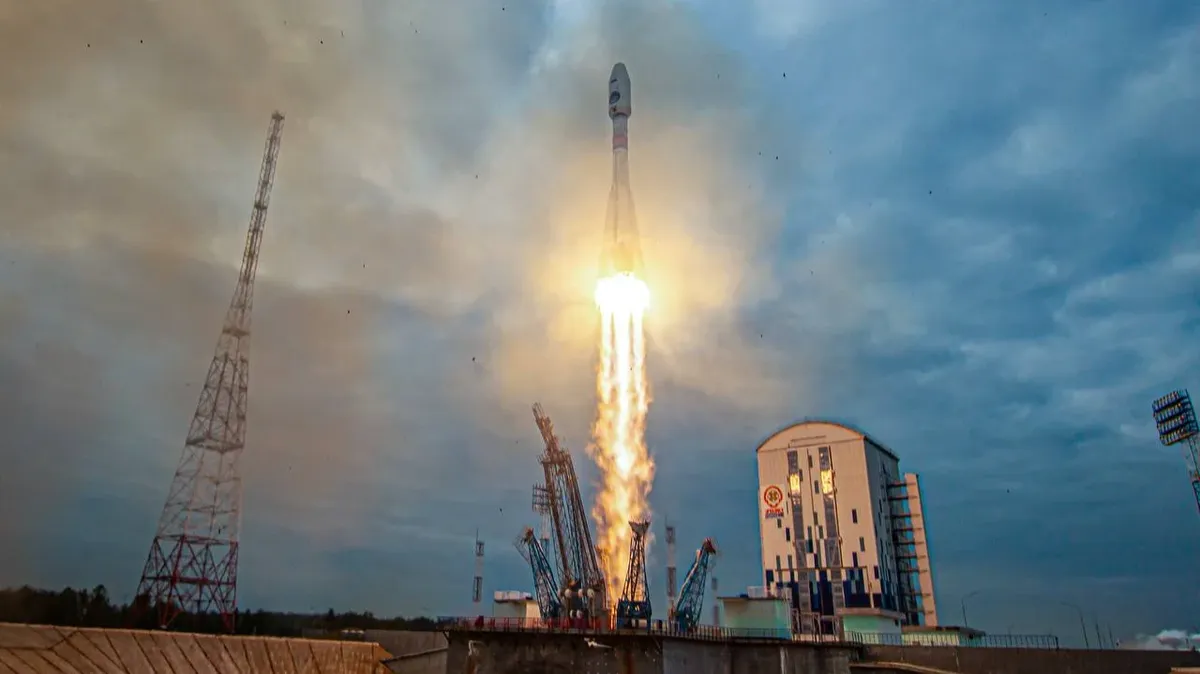
The Soyuz-2.1B missile with the Luna-25 automatic station on board. Photo: Telegram / Roscosmos_gk
On August 11, 2023, Russia launched the Luna-25 automatic interplanetary station to the moon. On board she carried a pennant with the flag of Russia and the logos of Russian scientific and space organizations, without any letters of the Latin alphabet or Balaban quotes. In this sense, the Luna-25 looked like some kind of anachronism from the past, when Russia actively developed as a world space power and did not plan to provoke the Third World War. As a result, the mission failed: on August 20, when trying to cling, the station crashed. In response, a lot of ironic and joyful comments appeared. But gloating here is inappropriate: the loss of "Luna-25" is a loss for everyone. We explain why.
Cosmonautics is a very conservative and inertial type of activity. If the station flew to the moon today, this means that six months ago it began to be prepared for the start. Prior to this, two years were conducted ground tests, five years ago they began to assemble a station from components, and a technical project was prepared ten years ago. Therefore, the start of the lunar mission is in no way connected with current events in Russia and the war.
With Luna-25, all terms should be multiplied by two, because as a project it originated back in the 90s, and financing began in 2005. Since then, the project has experienced several generations of development, when the payload, scientific goals, design, a launch vehicle and suppliers of components changed. On the “Luna-25”, the American sanctions of 2014 hit, but practically the more stringent restrictions on the 2022th (for one simple reason-all the “iron” managed to purchase before the start of the war). In 2022, the European Space Agency came out of cooperation on the study of the moon, so the Russian scientific project was more likely to suffer from aggressive actions of the Russian state, which became their space expression.
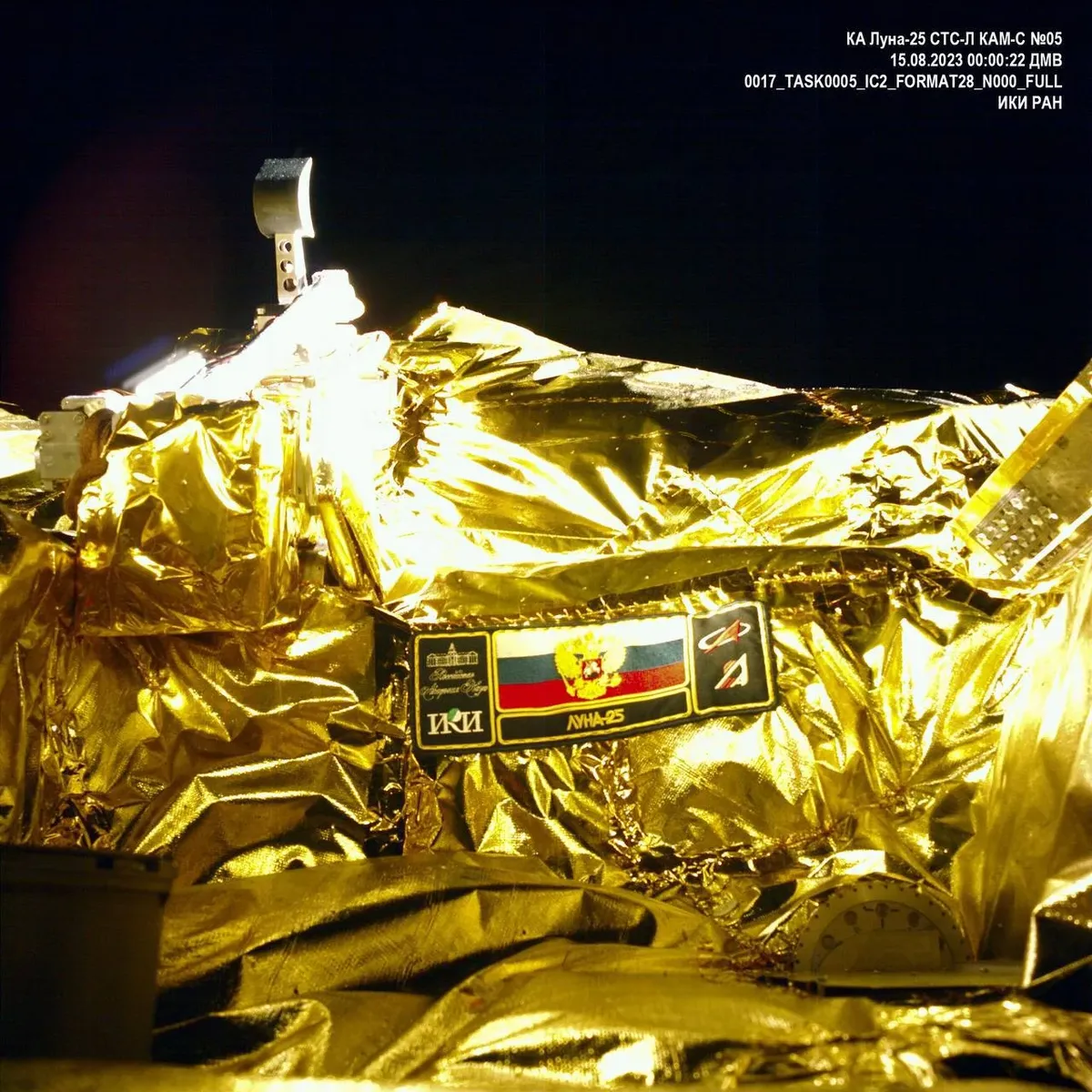
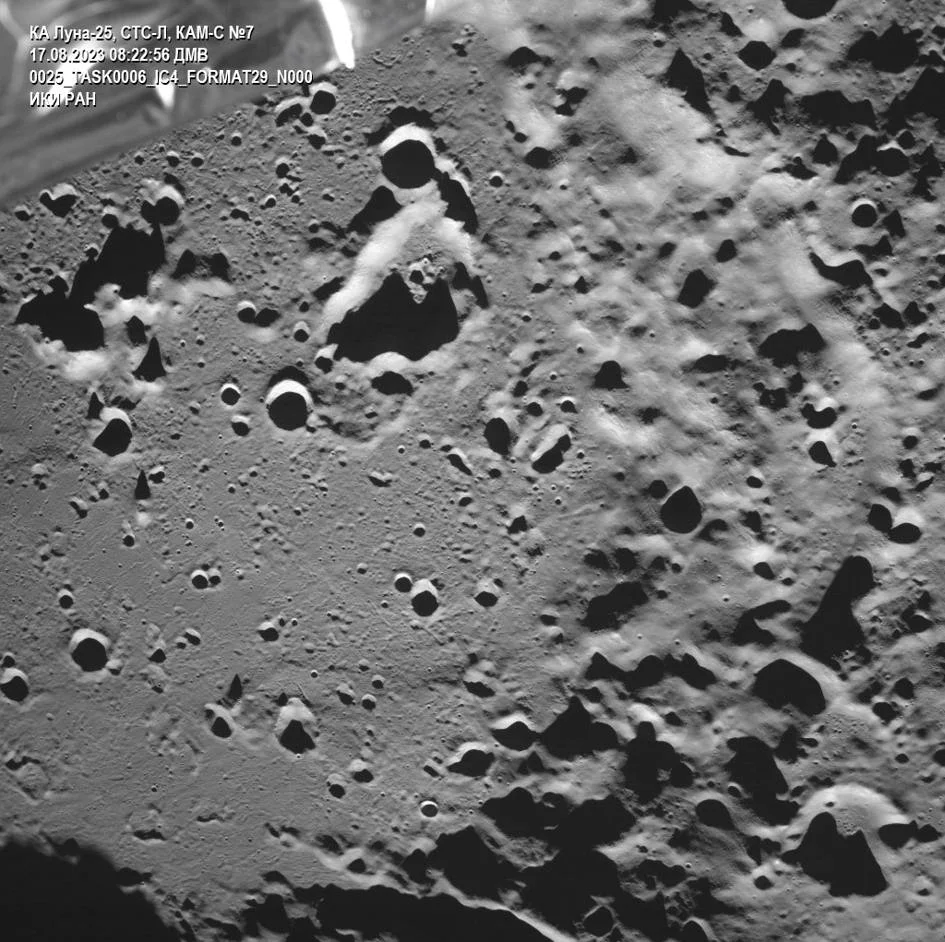
The tasks of the automatic interplanetary station had important technical and scientific significance, not only for Russia, but also for science about space. The United States, China and India also aimed at the study of the lunar roller, and the Moon-25 had a chance to take the first step in these, so inaccessible places earlier than the rest.
The lunar roller now has become interesting to all space powers. In previous years, from satellites there managed to determine the increased concentration of water in the ground. Previously, scientists thought that there was no water on the moon at all, but it turned out - it is, and it was distributed unevenly. Lunar water reserves are an important help for the future development of a human solar system. Although so far scientists are interested in more fundamental issues: how the water appeared, that it can tell about the moon and its origin, in what form it is stored and what its reserves are. The first answers should have been given to the Luna-25.
Before buried in the lunar soil, the station had to make a soft landing on the moon. This art is also not given to everyone. For example, the Chinese the first time (and then twice) managed to plant heavy devices on the surface of the moon. But Israel, India and Japan defeated its Robots-researchers. At the same time, it is clear that without the ability to sit on the moon there will be no study, development and visiting by people.
In technical terms, the Luna-25 did not even achieve the success of Israel, since it did not break at the stage of landing, but only during the exit to the orbit, with which the adjustment could already begin.
The Russian apparatus managed to occupy a circular polar orbit at an altitude of 100 km, and the last inhibition operation was needed to lower the height to 18 km at the lower point of the trajectory. But something went wrong: instead of reducing, the device simply crashed into the surface. Roscosmos still half a day hoped to restore the connection, but the day after the fatal maneuver, he admitted: the device was broken.
Russian state propaganda tried to submit a successful Luna-25 start as an outstanding achievement of modern Russia. A successful landing would be covered in the same vein. This would be a demonstration of the technological power of the country, its stable potential and powerlessness of Western sanctions. But this glee is unlikely to last too long, because the device itself does not bear any military significance or a militarist message. This is just a fundamental science, the results of which become the property of mankind, and not some individual country.
That is why the incident accident is not beneficial at all, regardless of political preferences or state affiliation. If you believe the assessment of the Agency, the cost of the entire production and launch program “Luna-25” cost the Russian budget of 12.5 billion rubles. If it could have been complained earlier that this money did not give to pensioners or teachers, now this amount can be measured, for example, in Caliber cruise missiles: more than 400 pieces. Or 12 dagger missiles that would fall into theaters or power plants.
The project “Luna-25” involves hundreds of engineers, programmers and technical specialists who were under the protection of the draft for all these fifth years. They could be sent to the front to twist the “mined” or steer drones, and they collected a scientific probe in the silence of Mika near Moscow. Ahead of Roskosmos planned the Luna-26 and Luna-27, which will also require billions of rubles and millions of High-level technical specialists. For them, this program today works as an internal emigration, freeing from the need to work for war and to kill people.
After the Luna-25 accident, the following scientific projects can be postponed for a long time or altogether canceled. With the success of the Luna-25, Roscosmos had the opportunity to knock out an increase in financing their scientific programs, and now the trump cards will be at the War Party. A year later, the formation of a new federal space program will begin for 10 years in advance, and the consequences of the Luna-25 accident will affect it in the same way as the consequences of the war, economic crisis and sanctions of Europe and the USA.
Recall: despite all the Soviet totalitarianism, the achievements of the USSR in space were appreciated by all advanced countries, and on April 12, 1961 it became a global holiday - not only allied. When the USSR collapsed, the United States and Europe made a lot of efforts to save and preserve the post -Soviet cosmonautics. Russian missiles, spacecraft and missile engines developed by Soviet engineers gave new breath to world cosmonautics, reduced the cost of launching commercial satellites and sending space tourists. The apotheosis of this general desire into space has become an international space station, collected largely with American money and partially from Soviet modules. The last Soviet module (at least in the case and engines) was the “science”, which started in 2021.
So the astronautics lives longer than political regimes, and after the change of state course is able to benefit not only to his country, but to the whole world. Sooner or later, the war will end, and the task of Russian cosmonautics is to maintain its potential in order to continue to promote the interests of not individual politicians, but of all mankind in space.