
Translated material
Fragillary Shirshov
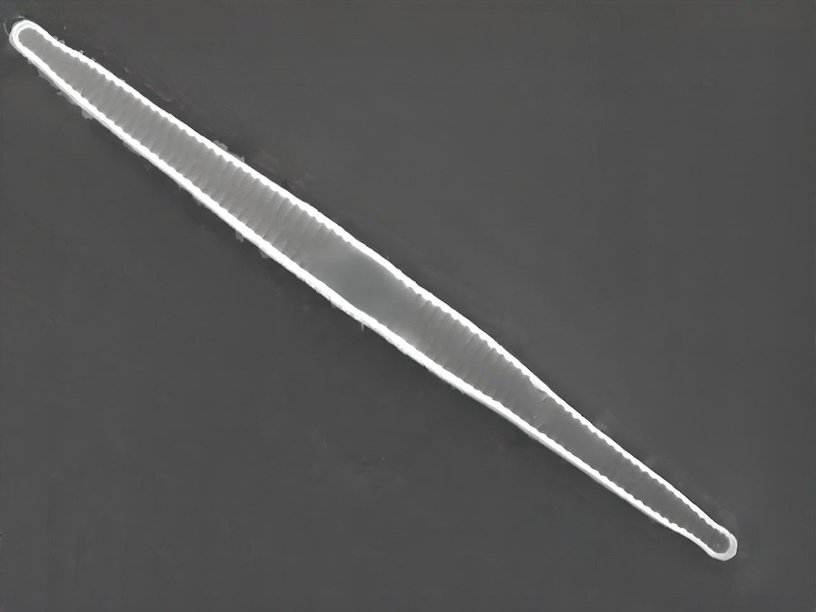
Russian scientists discovered and described a new type of micro -cone, named after one of the first researchers of the Arctic - academician Peter Petrovich Shirshov. Diathomic algae Fraglaria Shirshovii can be a promising object for environmental monitoring and evaluating human impact on the environment. The opening was announced by the press service of the Russian Scientific Fund.
Diathomic algae is a most diverse group of micro -cone, found in water, ground and air media. Their species diversity and number in reservoirs are largely dependent on the quality of the water. However, in order to timely identify problems in a particular ecosystem, it is necessary to know exactly the species composition of micro -crossbars.
The genus of diathomic algae Fraglaria is common around the world in the seas and fresh reservoirs. These micro -crossbars play an important role in ecosystems, since they serve as nutrition for many living organisms, and can also be indicators of the environmental characteristics of the environment in the conditions of changing climate and growing anthropogenic load. At the same time, it turns out to be quite difficult to distinguish the types of this kind, because they have common morphological features, that is, the features of the external structure.
Scientists from the Institute of Physiology of Plants named after K. A. Timiryazev RAS (Moscow) described a new type of diatomic algae found at the mouth of the Ob River. The Ob bay is located in the southern part of the Kara Sea in the northern Arctic Ocean and is one of the largest river mouth zones of the World Ocean. The authors analyzed samples of the surface layer of water (from a depth of 0.5–1.0 meters), which were selected as part of the scientific and educational program "Floating University". Then the researchers received a pure laboratory culture of microal -seedlings. To do this, single cells were released from the selected water samples under a microscope and they were moved to a sterile liquid nutrient medium.
Further cultivation in the climatic chamber made it possible to obtain the number of cells necessary for analysis. Experts studied the resulting material using a light, as well as a scanning electron microscope. This made it possible to consider the ultrastructural features of the structure of the shell of diatomic algae, namely the shape of cells, spikes, pores on the surface. These important ultrastructural elements are necessary for the exact determination and description of the species. Then the authors conducted a molecular genetic analysis to identify the evolutionary relationship of this group with other species.
It turned out that the investigated micro -crossbars belong to a species, which in its morphological and genetic characteristics differs from previously known ones. This new species was called Fragillaria Shirshovii .
“Biological diversity is the main natural resource that ensures the stable functioning of the biosphere and has important environmental and economic significance. From an applied point of view, it must be studied, since new species can have a high biotechnological potential and is used by a person in a wide variety of sectors of the national economy. In the Arctic conditions, where the environment actively changes under the influence of climate warming and human economic activity, the study of the biodiversity of microalorets will improve the methods of environmental monitoring, ”says the project manager Nikolai Lobus, senior researcher at the K. A. Timiryazev Institute of Plant Physiology.
The results of the study supported by the grant of the Russian Scientific Fund (RNF) are published in the journal Diversity.