
Translated material
Nanostock from bacteria
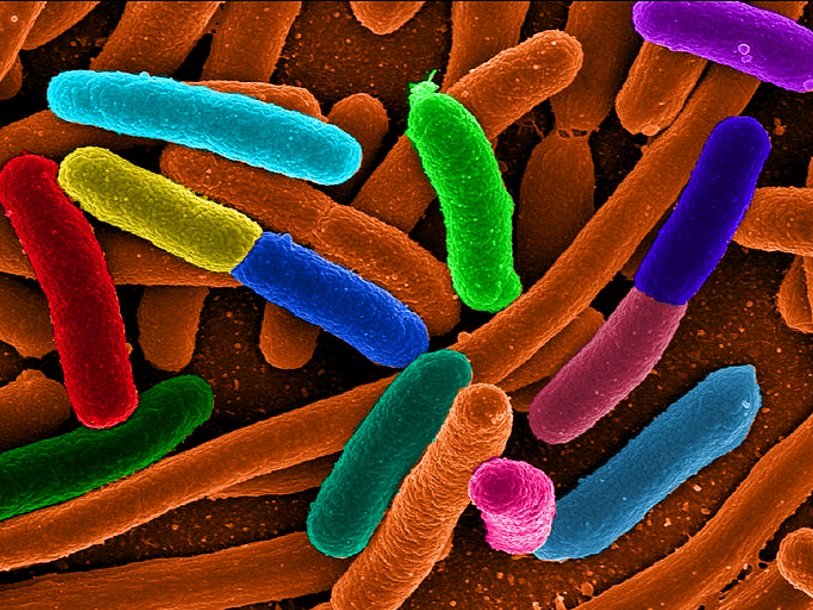
Scientists from the Moscow Physics and Technology Institute, the Institute of Biochemistry and Genetics of the Ufa RAS and the Tambov State Technical University have developed coatings that will protect the implants implanted in the human body from microbial pollution. The study was spoke about the study by the press service of the MIPT.
Implants are mainly used to replace defects in living tissues. The most famous species are prostheses for joints and internal organs, cardiac stimulants and substitutes for the walls of blood vessels. Also, implants are used in cosmetology, for example, to increase the female breast, or introduced under the skin in the form of microchips to acquire additional functions. It is very important during surgery to not be brought together with implanted material into the human body pathogenic microorganisms. The number of infections caused by such infections exceeds 100 thousand cases per year . In general, about 5 % of implants contain foci of biofilm dangerous for humans - microbes colonies.
Scientists are looking for a solution to this problem in the development of new antibacterial nanostructured surfaces. Employees of the Center of Photonics and two -dimensional MIF materials with colleagues have investigated the effect of nanostructuring parameters on the antibacterial properties of silicone surfaces.
On silicone substrates, they applied nanostolbiki icons of various sizes by soft lithography. This is a method of manufacturing using special elastic stamps. Needles prevent settlement on the surface of bacteria and the formation of biofilles.
“The diameter of the columns is 500 or 700 nanometers, and the distance between them is twice as much. Moreover, these parameters are an order of magnitude smaller than the dimensions of bacteria. Microbes "inconveniently" settle on such a needle surface , ”said Maria Barshutina , senior researcher at the Center of Photonics and two -dimensional materials of the MIFT.
The bacterium "sits" on the surface with nanostolbiks. Source: Biofouling
When the bacterium tries to “sit” on the columns, its shell stretches. At the same time, 15 % tension is enough to burst. As a result, microorganism dies.
During testing, the optimal parameters of silicone nanostructures were determined to achieve the most pronounced antibacterial effect in relation to the bacterial culture of Escherichia coli . It was demonstrated that it was possible to achieve a reduction in the bacterial population to 90 % compared to flat silicone substrates.
“The columns are too small to distinguish them with the naked eye. This requires an electron microscope. Or atomic - to evaluate them in volume. An ordinary eye will be visible to a rainbow game, similar to pearly overflows. They arise as a result of refraction of light, since the dimensions of the structures are comparable to the length of the light wave. The resulting coatings, in addition to antimicrobial properties, acquire an aesthetically attractive appearance , ”summarized Maria Barshutina.
At the present time, scientists continue research, experimenting with the form of nanostolbiks and their location relative to each other to obtain the greatest antibacterial effect.
The work is published in the journal BioFouling.