
Translated material
The holy martyr Dimitri Smirnov
The persecution of Soviet power to the Russian Church was such that it was not to say about their faith, but even silently follow it as a feat. The new martyrs and confessors, glorified in the face of the saints did not come: believed, prayed and meekly went to their Calvarys.
“Polit.ru” recalls those who gave their lives for faith and by whose prayers the Russian Church is alive - even if almost nothing came to us besides the name.
Publications were prepared by Kirill Kharatyan (included by the Russian authorities in the register of foreign agents).
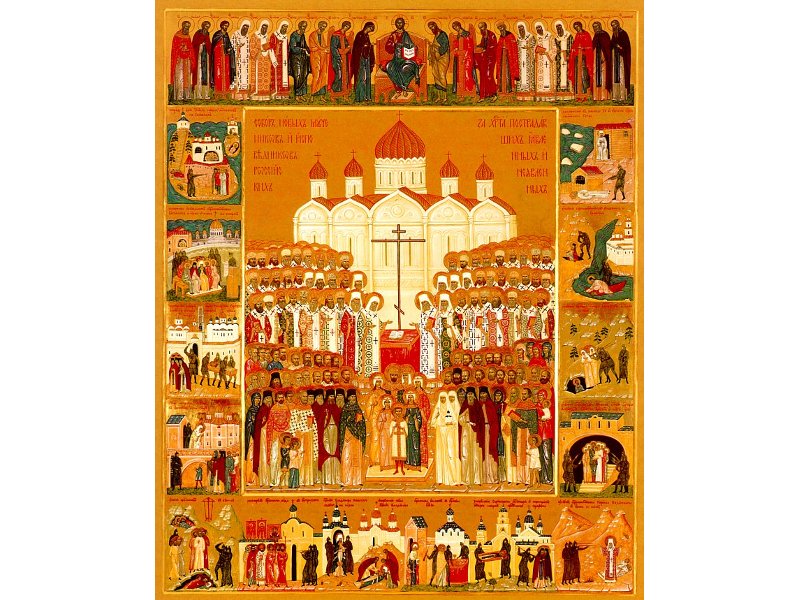
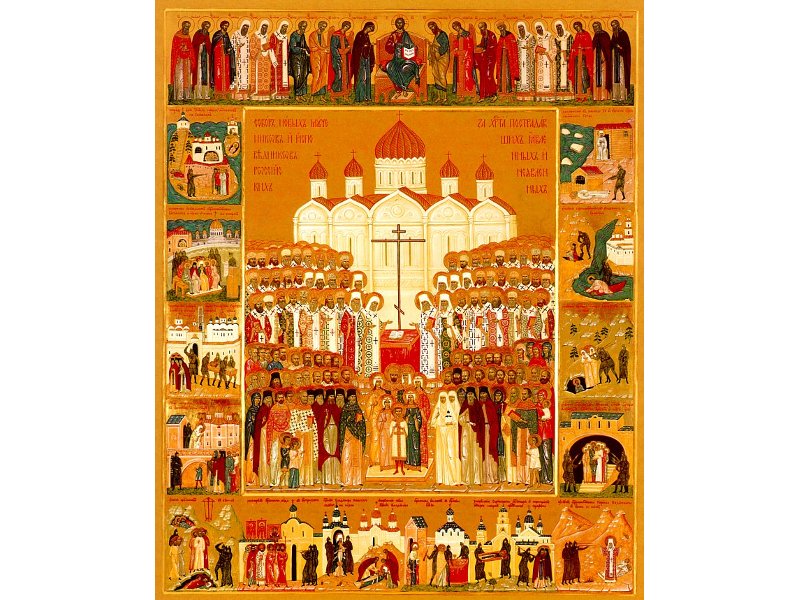 Icon Cathedral of the Holy New Martyrs and Confessors of Russian
Dmitry Smirnov is the son of a priest. He graduated from the Yaroslavl Theological Seminary. The family preserved the legend that in his youth, after the end of the seminary, Dmitry was not sure of his further life path - to be a priest or not, but he was predicted that a imprisonment was waiting for him. To avoid this, the parents insisted that Dmitry study further and prepare for the perception of the spiritual dignity, since in the Russian Empire the spiritual persons were not subject to the secular court.
In 1891, as 21 years old, Dmitry graduated from the seminary, returned to his parents and was accepted for the post of teacher in the school at the Norsonic manufactory, where he organized a folk choir and met his future wife. Dmitry Smirnov’s parents were against marriage with her for class reasons, but Dmitry convinced them and married.
In 1894, Demetrius was ordained a priest and received the place of a priest of the village of Pestov, Yaroslavl district. Along with his direct pastoral duties, Father Demetrius gave a lot of effort to organize the Pestovsky school, consisted in it as a head, law teacher and teacher. With him, this school became one of the exemplary in the Yaroslavl diocese.
In 1902, according to the petition, Father Demetrius was moved to his father, returning to Norskoye with his wife and two -year -old son Dmitry. In Norsky, he also combined priestly works with the teachers, and also fulfilled various instructions of the Holy Priest in the post of spiritual investigator and being a deputy of the clergy of the clergy.
Upon the death of his father, he continued and completed the case he had begun - the construction of the church in the village of Kurilovo a few miles from Norsky. The church was built and consecrated in honor of St. Nicholas of Mirliki in 1913, becoming attributed to Troitskaya.
In 1915, he was transferred to Yaroslavl to the place of the rector of the city crusading church. Not later than since 1918, he became the personal secretary of the Metropolitan of Yaroslavl Agafangel (Preobrazhensky) and remains to him to the death of Vladyka in 1928.
In April 1922, the commission for the seizure of church values, which came to the Crusader Church, discovered the golden brown of the revered icon of the great martyr Dimitry, hidden by the elder. Together with the golden salary, the priest’s personal belongings were confiscated, among which he was awarded the golden pectoral cross. Father Demetrius and several more people arrested. On May 24, 1922, he was convicted of the provincial Cheka to three years in prison "by detention, using public forced labor." In the same year, on an amnesty, by the 5th anniversary of the revolution, the term of imprisonment was reduced by half.
On June 13, 1927 he was again arrested for “spreading in private conversations, at meetings and from the church amvon of provocative rumors in connection with the Chinese revolution and the breakdown of diplomatic relations with England. During the interrogation, he kept his dignity, claiming that he had acted as part of the duties of an official of the Chancellery of the Bishop, without committing anti -Soviet actions. The case was closed "for the lack of compromising material."
On January 31, 1930, a new arrest followed on charges of helping exile to clergymen. He was sentenced to five years in a concentration camp, he was serving a sentence at first at a forestry for 100-200 km from Vyatka, then he was transferred to Kargopol, where the conditions of conclusion were easier for him. He was released in 1934, without the right to residence in large cities.
On May 10, 1938, he was again arrested in the village of Khopalevo, where he lived recently, and imprisoned in the Yaroslavl prison. He was accused of anti -Soviet activities as a member of the group of clergymen of the Cathedral of the Fedorov Cathedral of Yaroslavl and some other arrested clergy and laity. He did not plead guilty.
On September 26, 1938, he was sentenced by a special meeting at the NKVD to five years in Kazakhstan for counter -revolutionary activities. He was serving a link in the village of Shemonaikha. In Shemonaikh, the wife and son and his wife came to Father Demetrius. The son came in August 1939. A month after his arrival, Father Demetrius was unexpectedly arrested again and imprisoned in the Ust-Kamenogorsk prison.
On February 26, 1940, he was again sentenced to ten years in prison. The family was informed that he died in prison on June 26, 1940. Buried in an unknown grave.