
Translated material
... I will kill you
As the nature of the Putin government predetermined the demonstrative death of Evgeny Prigozhin, the sociologist Svetlana Stevenson explains
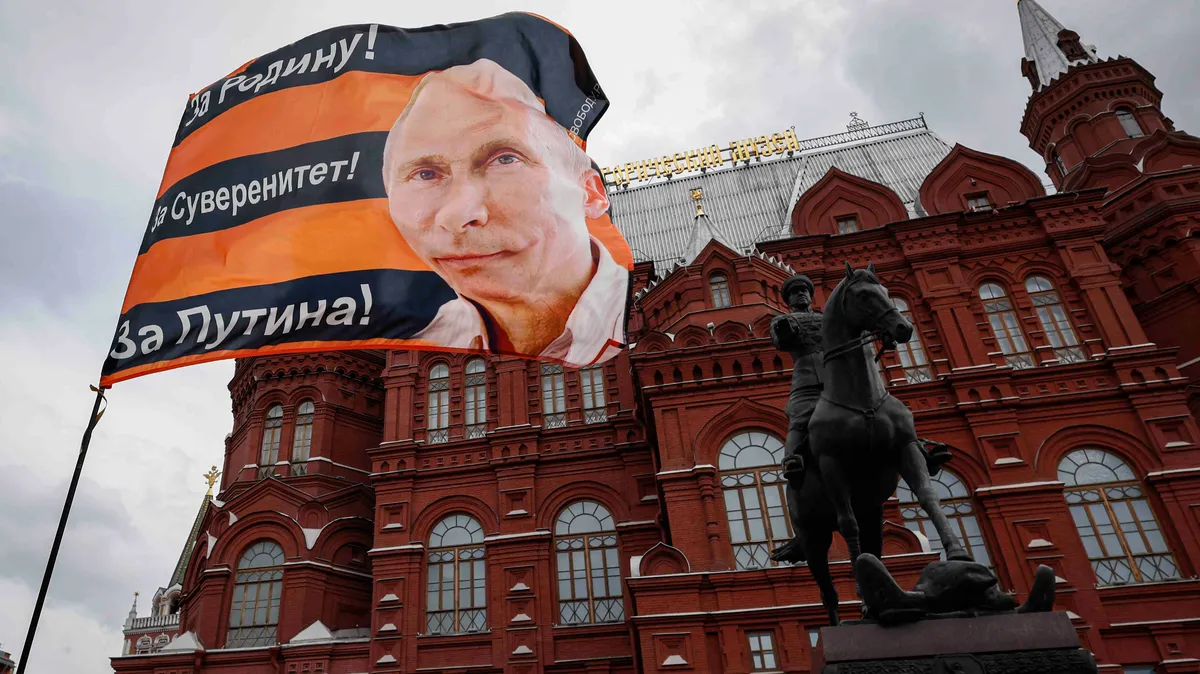
Photo: EPA-EFE / SERGEI ILNITSKY
The collapse of the business jet Evgeny Prigozhin in the Tver region on August 23, the mafia nature of the current Russian government is the best as possible. Having demonstratively destroying a member of his closest environment, who decided to rebel, Putin demonstrated that he has the strength and determination of the leader and would not tolerate any challenge to his domination.
Russian Omert
Comparisons with the mafia really lie on the surface. The criminal chapter should show his readiness to deal with any threat to his power. According to one of the members of the Kazan gangster group, interviewed in my study of the mid-2000s, "the leader must be a tough and self-confident person who loves power and is ready to fight with any methods." Any manifestation of weakness can lead to overthrow and even death of a leader.
But, on the other hand, this kind of reprisal, completely accepted in the criminal world, raises a degree of general tension and instability in the country that already lives in emergency conditions.
For some reason, Putin preferred not to use the most powerful state suppression machine and not to punish Prigozhin for an armed rebellion using the law. Despite the fact that the judicial system exists in “slow time”, in contrast to the rapid time of mafia “justice”, it is it that gives the Putin system legitimacy and stability. The mafia is forced to act by the methods of direct physical violence and reprisals, since it, unlike the state, does not have legal coercion tools.
Instead of using the judicial system, Putin at first allegedly forgave Prigozhin, returned the confiscated money to him, made it possible for some of his detachments to settle in Belarus, while Prigozhin himself continued to conduct business in Russia and Africa. He calmly appeared in Moscow and St. Petersburg, including at the Russia -Africa forum and at the end began to look almost unsinkable.
And only two months later, a demonstrative reprisal followed. Neither the Khrozhin’s combat merits, nor its benefits for potential operations on the Belarusian-Polish and Belarusian-Ukrainian borders, nor his military-commercial activity in Africa, which, as it seemed to seem during these two months and observers, and, apparently, Prigozhin himself made it an important link in the Putin system, did not matter for a lean dictator.
Cats mouse with a dictator
The seemingly manifestations of the mafia picture of the world, the actions of the Russian leader are quite characteristic of autocrats.
The trap, which Putin placed for Prigozhin and his closest associates, disarming them and depriving them of vigilance, is a common trick in the dictatorial arsenal. In the book “Mass and Power”, the sociologist Elias Kanetti wrote that genuine power violence is often carried out with a delay, leisurely, as during the game of a cat with a mouse:
“The cat gives her to run, blocks the path, makes me run the other way. As soon as the mouse turns out to be a cat and rushes away from it, this is no longer violence, although in the power of a cat to overtake it with one jump. If the mouse escaped at all, it means that it is already outside the sphere of cat power. But until the cat is able to catch up with it, the mouse remains in its power. The space overlapped by a cat, the moments of hope that mice are given, although the cat carefully monitors it, leaving no intention of destroying it, all this together - space, hope, control and intention of destruction - can be called a true body of power or simply power. ”
" Mass and power ", Elias Kanetti, 1960
A game of cat mouse, postponed punishment, the opportunity to disorient the victim and then destroy it at the moment that you yourself chose-this is what is the pinnacle of power. Not only the necessity, but also the rulers are driven by the rulers who deal with the victims at the time they chose.
Dictators often disarm the victim with a promise of forgiveness or manifestations of warmth and generosity.
Stalin was a great master of such games. Often, before destroying a prominent diplomat or party figure, he invited a man to Moscow, thanked for his excellent work and offered a new appointment. At the same time, their further arrest and liquidation were already a foregone conclusion.
Disarming fear
Entertainment reprisals, attempts and murders, including using medieval methods such as secret poisoning, in a state that has a completely effectively rebuilt judicial system acting in the interests of the authorities, seem strange exotic in the 21st century.
In its logic, such reprisals should increase the instability and unpredictability of the political regime. However, this is not entirely true.
Being an expression of absolute power, such actions of dictators do not undermine the foundations of their reign. The misunderstanding of the rules by which the regime acts, disorients, disarms, inspires fear in any representative of both the elite and the rest of the population. And under Stalin it was impossible to predict who would save life and status, and who would be destroyed.
The fate of Yevgeny Prigozhin once again showed us that the system of power built in Russia implies unconditional personal devotion, but at the same time fraught with conflicts, betrayal and treason. The Russian regime will supply us with Shakespearean plots for a long time, such as those that we have observed over the past two months.