
Translated material
Meet neo-Stalinism. Evgeniy Dobrenko - about the returning era
For anyone who remembers the Soviet era and/or, like me, is involved in it professionally, what is happening in modern Russia is accompanied by a keen sense of repetition. And although for some this is a recurring nightmare, and for others - the return of youth, the swiftness, intensity and depth of the changes taking place in Russia made many think about the fact that a country that for seven decades cherished its “Revolution” like a shrine, declaring it “the main event of the twentieth century”, and for the next thirty years, like a mantra, repeated the exact opposite: that the main thing is to prevent revolution, a country that saw the highest evil in “color revolutions” around the world and turned them in the main phobia, today, undoubtedly, it is experiencing a revolution. “In the everyday life of great construction projects, in the cheerful roar, in the lights and bells” of the last year and a half, the load-bearing structures of the new building finally began to appear.
The insightful and brilliant historian of Eastern Europe Timothy Snyder began feeling this elephant, who, just a month after the start of the war, declared from the pages of The New York Times that “Russia is a fascist state.” This statement caused a lot of noise at the time, but quickly disappeared from the front pages. Not only because it was swept away by the flow of much more relevant stories of the terrible war, but also because it turned out to be not entirely accurate. How the definition of Putinism as neo-Bolshevism turned out to be even less accurate. Let me remind you that this Orwellian term, invented by him in “1984” as a designation for the state ideology of Eurasia, began to be used to designate ultra-left political movements. What is present in Putinism is only as rhetorical vignettes.
It was Stalinism that combined the experience of Bolshevism with the practice of the conservative revolution. He gave Soviet society a common pain and trauma, thereby providing it with the basis for a common history. It is in the course of working with trauma that there is an awareness of common experience and common destiny - all that constitutes the foundation of a political nation. However, due to the composite nature of Soviet society, its artificial homogeneity and totalitarian atomization, work with trauma did not take place.
Societies, like people, begin this work with denial. Soviet society met the traumas of the revolution, the Civil War, the disruption of industrialization, collectivization, the Great Terror and the Patriotic War with denial. The highest form of this forced negation was socialist realism - the art of renouncing reality and derealizing life, which taught “to sing and laugh like children amidst persistent struggle and labor.” The further stages - anger, bargaining and depression, which had to be passed through in order to come to the last, fifth - acceptance - this society did not occur in stages, but in parallel. The first was the mode of the dissident movement, the second - the conformists of the sixties, the third - the nationalist villagers. All three types were best defined, as always, by Russian literature. The first can include Solzhenitsyn and/or Grossman, the second – the intellectuals Trifonov, the third – the depressed Rasputin old women. It is not surprising that the synthesis of acceptance did not take place. The general field did not work out.
Therefore, when the Soviet era began to crumble before our eyes during Gorbachev’s perestroika, when, in search of a fulcrum for change, it turned to the epicenter of Soviet history - to Stalinism, people who found themselves at different stages of acceptance met de-Stalinization in different ways. The trauma remained unprocessed, chattered, driven underground. But what does failed acceptance mean? First of all, the inability to understand that the new life will be completely different.
Thus, at the level of the collective unconscious, the social foundation was laid for the rejection of reality and backward movement. Then it was just a matter of getting people in power whose economic and political interests would coincide with society’s readiness for revenge, and whose degree of scruples would be high enough to take advantage of it.
In this regard, the KGB officers are the center of a perfect storm. They were not just on the same wavelength as the bulk of the population, but coincided with a massive demand for historical revenge, for self-deception, for nostalgia for one’s own greatness, for a conspiratorial picture of the world with simple answers to complex questions, for paranoid fantasies with the image of the enemy in the West - arrogant, insidious, omnipotent, omnipresent... And most importantly, they professionally spent their entire lives sublimating these phobias. Only this. Here the question may arise: but what does Stalin have to do with it?
There are intelligence agencies in every country, but political police are not in every country, although they are also not uncommon. But in the Soviet Chekist version, it was something that distinguished the Cheka-GPU-NKVD-MGB-KGB from other similar structures in the world, making it unique. And this uniqueness consisted (and again consists) in the fact that never in any country in the world has the secret police been headed directly by the head of state.
No, of course, Stalin was not the formal head of this department, just as Putin is not. He had his own bosses. The names of some of them even became household names. For example, “Yezhovism” or “Berievism”. In reality, all these people were just Stalin’s henchmen. Stalin did not deal with anything more carefully, delving into all the details, knowing the names of almost all the main investigators of this department and the cases they were conducting, such as the GPU-NKVD-MGB. He not only read their summaries and reports, but edited transcripts of interrogations, came up with conspiracies, cases and their plots, monitored their progress, assigned specific people to specific operations, told them with whom and how to “work.” And from the very beginning until the last days of life.
If someone wanted to imagine how Stalin’s brains were structured in the form of a room - with corridors, passages, offices, labyrinths, dungeons, torture chambers - he would get a building on Lubyanka. Everyone working there is a bunch of Stalinist brains. Everyone, at least to a small extent, is Stalin. Just as Lenin only inaugurated the Soviet system, and Stalin created its economic, political, ideological, cultural and other foundations, so it is with the Cheka: Dzerzhinsky only created this institution and remained its symbol, and the real creator of KGBism was Stalin.
Putin’s neo-Stalinism as an ideology is largely fueled by the political philosophy of Stalinism, which grows out of the same need for an autocrat to maintain lifelong power. Only, unlike Stalinism, in which the concentration of power in the hands of the party was justified ideologically, neo-Stalinism is much more politically flexible. He easily uses a wide variety of forms of preserving the democratic decorum - from simulating the transfer of power ("tandem") to legalistic tricks about "two terms in a row", from rewriting the constitution to resetting terms. This extreme and demonstrative legal pragmatism is very different from the Soviet one, which was based on the ritual of maintaining the leader’s power through internal party mechanisms, almost unchanged for many decades.
Like Stalinism, neo-Stalinism relies less on economic, political or military institutions than on the secret police. But if in Stalinism this basis of the regime constituted its main secret, then in the conditions of modern Russia deep The state, represented by the KGB officers, governs the country directly, without much ideological or political mediation . This, I note, suggests that following the notorious Russian historical track can no longer be ensured by simple inertia. “Direct control” from the GB is required to preserve the centuries-old foundations of the Russian regime, which are under serious pressure from a modernizing society and the world.
First of all, we are talking about nationalism and imperialism, on which, like Stalinism, neo-Stalinism is based. But if in Stalinism they were built into a flexible quasi-Marxist ideology, which allowed Stalin to position himself as the main fighter against imperialism and a champion of proletarian internationalism, which provided him with influence in the Western intellectual environment, then the rigid nationalism and aggressive imperialism of neo-Stalinism forces him to rely on the unstable edges of the political spectrum. Just as Stalinism fed on the support of the fringe left, neo-Stalinism feeds on the support of right-wing (and partly far-left) extremists. This reliance on the marginalized in the hope that they will become mainstream suggests that neo-Stalinism is based on a lingering political romanticism .
Like any romantic ideology, neo-Stalinism is based on naked and demonstratively uncamouflaged violence . Of course, violence underlay all totalitarian ideologies and political practices of the twentieth century, including Stalinism. But it was carefully camouflaged by political rhetoric (the struggle for a bright future for humanity in the USSR, the Aryan race in Nazi Germany), an appeal to world culture in the USSR and the desire for modernization in fascism. In neo-Stalinism, all positive transponders are turned off, as a result of which violence appears in the most unsightly form of direct threats, primitive bravado and cynical saber-rattling. Stalinism, inciting wars and arming itself, convinced (and quite successfully!) its own population and foreign countries (much less successfully) that it was “fighting for peace,” investing huge resources in its “peace-loving policy.” In neo-Stalinism, the word "peace" became no less dangerous than the word "war". Both are subject to jurisdiction. The slogan "Never again!" was replaced by the slogan “We can repeat it!”, and the top officials of the state spoke in the language of David Zaslavsky’s feuilletons and Boris Efimov’s cartoons.
This reliance on violence and stripping of technique resulted from extreme political utilitarianism . Putin’s Stalinism is purely applied; it is devoid of any logic or consistency and suffers from obvious schizophrenia, even when it comes to such a key factor in war conditions as the formation of an image of the enemy. Thus, the actualization of old Soviet phobias about the “revival of Nazism in the West” (which are almost the justification for the war for the “denazification” of Ukraine), on the one hand, proceeds from the fact that Nazism has been revived in the West (which, it is worth recalling, is an ultra-right, racist and anti-Semitic form of ethnic nationalism and fascism), and on the other hand, that the West denies “traditional values” (for example, the patriarchal family, which Nazism, on the contrary, cultivated), promotes the LGBT agenda (which also directly contradicts the far-right tenets of Nazism) or multiculturalism (which is generally incompatible with the racism and ethnic nationalism characteristic of Nazism).
Such inconsistency, bordering on nonsense, is based on irrationalism . Stalinism appealed to rationalism because it had Marxism in its history. He operated with “historical laws” and “scientific”, while neo-Stalinism is “spiritual” and appeals to national traditions, “spirit”, “strengths”, openly using religion and the church as an institution of influence on the population.
If Stalinism, like all totalitarian ideologies of the twentieth century, was a mobilization ideology, then neo-Stalinism is an ideology based on the depoliticization of the population . Stalinism immersed itself in political rhetoric, while neo-Stalinism is inseparable from the glamorous sparkling Moscow, the style of new wealth, the cult of luxury, social events and happenings - everything that was designed to take away from the sphere of politics. As a result, even mobilization, which is so necessary in war conditions, is carried out extremely reluctantly and selectively so as not to provoke open discontent among the population.
The latter is due to the fact that neo-Stalinism is a populist ideology . It is all based on a powerful propaganda introduction into the mass consciousness of the agenda required by the regime (as was the case with Ukraine), followed by building a political line in accordance with the mass ideas, expectations, prejudices, phobias, just introduced by the authorities. Stalinism was based on leadership, which is explained by the legitimation of the regime through Marxist teaching (the party leads the country in the direction scientifically indicated by the fathers of Marxism). Hence the intrusive education, censorship and the fight against “philistine” and “petty-bourgeois” tastes. In neo-Stalinism we are dealing with the abandonment of leadership. The regime derives its legitimacy from the “support of the people” (that’s why such importance is given to various kinds of surveys and calculating the reaction to certain steps of the government), because it seems to follow the voice and spirit of the “deep people”, whose brains are simultaneously programmed through aggressive propaganda.
At the center of the new program is ressentiment - an explosive mixture of an inferiority complex with a superiority complex. If in Stalinism the heyday of this culture occurred in the post-war era, then in neo-Stalinism its cultivation became perhaps the main task of state propaganda. All political figures who met with Putin over the years talk about the hours-long lectures they heard from him with an endless list of “grievances” allegedly inflicted by the arrogant West on deceived Russia. This discourse is radically different from Stalin's. Stalin's resentment was based on the exact opposite of an arrogant attitude towards the West, which reflects the difference between Putin, who had seen the world, and Stalin, who almost never visited his residences. Be that as it may, the emphasis on “grievances” and self-victimization indicates a deeply traumatic experience. And the fact that such experience forms the basis of political philosophy points to the deeply personalistic nature of the regime.
The discourse of resentment and “grievances” determined the retrotopia characteristic of neo-Stalinism. Unlike Stalinism, which retained at least a rhetorical connection with Marxism, which proclaimed the idea of “progress of mankind” and was imbued with modernist enlightenment pathos, neo-Stalinism is all turned to the past and does not offer anything other than the idea of a return - to tradition, foundations, bonds, values and similar archaizing constructs. The main subject of Stalinism was “scientific communism” - the doctrine of the future. If Stalinism turned to history for additional legitimation of policies, the foundations of which were contained not so much in history as in the “immortal Leninist teaching” or in the strengthening of the USSR as the “fatherland of all the oppressed,” then the revisionist historicization of politics that Putin is engaged in is almost the only justification for his actions, which sharply narrows the already barely visible horizon of the future: the Russia of the future is the Russia of the past.
This tendency found its clearest expression in the outright revanchism characteristic of neo-Stalinism. Stalinism adapted elements of the past - be it the return of the church during the war or the rejection of the historical ideologies of orthodox Marxism ("Russia is a prison of nations", "Russia is the gendarme of Europe", etc.) - into its own picture of the world. This was the integration of ideological constructs of the past into the Soviet narrative, and not a revenge of church protection or the imperial policy of tsarism. Neo-Stalinism, on the contrary, relies on revenge, appealing to the “values” or constructs of the past (be it aggressive illiberalism, the ideology of “gathering lands” or Novorossiya).
This can be achieved by the extreme instrumentalization of history , which became the trademark of Putin’s rule from the very first steps after his coming to power: the approval of the Soviet anthem with a new text, stars and eagles on the new banner of the Russian army, the preservation of Lenin’s Mausoleum amid growing criticism of Lenin, etc. At first, this was seen as an attempt to de-ideologize symbols and remove confrontation in society, until it became clear that the transformation of history into a collage was the completion of the process of transforming it into a bottomless storehouse of dangerous political allegories and allusions, suitable for any political situation and, if desired, easily transformed into justification for any action, up to the outbreak of an aggressive war.
Stalinism was based on statism - the absolutization of the state and the idea that it can and should intervene in all spheres of life. Stalin was a bureaucrat, and this philosophy of the state was fully consistent with his ideas about it as a source of “order.” However, Stalinism cultivated the “state of the dictatorship of the proletariat” as a source of equality, social justice and economic prosperity (under the slogans of socialism, Stalin created classical state capitalism). In neo-Stalinism, the state is deprived of all those functions that were socially positively labeled in Soviet times. This is a pure fetishization of the state , which provides neither social protection, nor dynamic social elevators, nor quality education and healthcare.
Systemic corruption , characteristic of neo-Stalinism, is the result of the decomposition of the management structure. If under Stalinism negligent and/or decayed leaders were sent to the Gulag, then in the new conditions they work for places to feed, which in turn expands the social base of corruption, makes it pervasive - from the president to the janitor, turns it into the economic basis of neo-Stalinism.
And, of course, all the obvious cognitive gaps and inconsistencies between political structures and reality that arise during the functioning of the regime are covered up by systemic lies and demonstrative political cynicism. Of course, Stalinism also cultivated various forms of struggle with reality, but obvious lies were always covered up in it by an appeal to what was due from the point of view of “creative Marxism” and “the eternally living Leninist teaching.” Lies were easily justified by a “correct worldview.” The Stalinist public sphere, which showed examples of unparalleled lies - from socialist realism to foreign policy propaganda, was justified by the fact that it was not a lie, but a “correct” view of “life in its revolutionary development.” And in Stalin’s time, a significant part of the population believed in it. Putin's lie is absolute : it does not even require faith from the addressee - the listeners know that Putin is lying. And he knows that his listeners know that he is lying. Stalin could only dream of such intimate contact with the audience.
The specificity of neo-Stalinism is that, unlike other neo- ideologies and political practices (neo-Nazism, neo-colonialism, neo-liberalism, neo-conservatism, neo-Marxism, etc.), it has its origins in the Russian authoritarian tradition and Russian imperial history. He's too national. This is partly why Russia is almost completely isolated in the modern world. Support from the “international of the offended” should not be misleading: it is purely situational and based not so much on sympathy for Russia, but on Putin’s positioning of himself as the new “main enemy of the West.” In recent history, many politicians have played this game. And it did not bring them many dividends: Gamal Abdel Nasser, Fidel Castro, Yasser Arafat, Saddam Hussein, Muammar Gaddafi, Osama bin Laden, Hugo Chavez... And, although for the first time this list (martyrology) is headed by the leader of a nuclear power, something suggests that it is not military potential that decides everything here.
As you can see, the power structure of modern Russia literally grew out of the political philosophy of Stalinism. And this is not surprising. Stalin was the father of the Soviet nation. Both Soviet and post-Soviet successors had and are dealing with the main products of Stalinism - the (post)Soviet people and the (post)Soviet state. They have no other skills and habits than those that were laid down at birth - in Stalinism. Therefore, neo-Stalinism is not an “ideological mess,” as many people imagine, but a completely systemic adaptation of Stalinism to post-Soviet political reality. It should be seen for what it is - one of the products of another mutation of the ideology of reaction to the modernization challenge and a new political strategy for the self-defense of patriarchal society from the demands of liberalization. It must therefore be seen in the context of the rearguard battles that the Ancien Régime has been waging for more than two centuries since the Modern Age. In France itself, this process took a century. It would be strange to expect that in Russia it will be easier or faster. The fact that today, its main beneficiaries and guardians in the person of key state security figures, who have always been hiding in the depths of the state bureaucracy, came out with their visors raised to save the regime, suggests that it is in mortal danger and its defenders are aware of the seriousness of the current situation. In such circumstances, going all-in—which is what Russia did when it invaded Ukraine—rarely succeeds. Rather, it is the shortest path to the end.
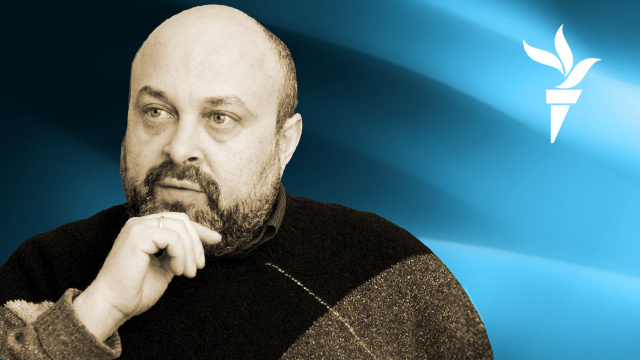
Evgeniy Dobrenko – philologist, cultural scientist, professor at the University of Venice
Opinions expressed in the "Author's Rights" section may not reflect the views of the editors.