
Translated material
Irrational grain
Experts - about how the war and exit of Moscow from the "grain transaction" will affect the world food market and how this can lead to the collapse of its own export
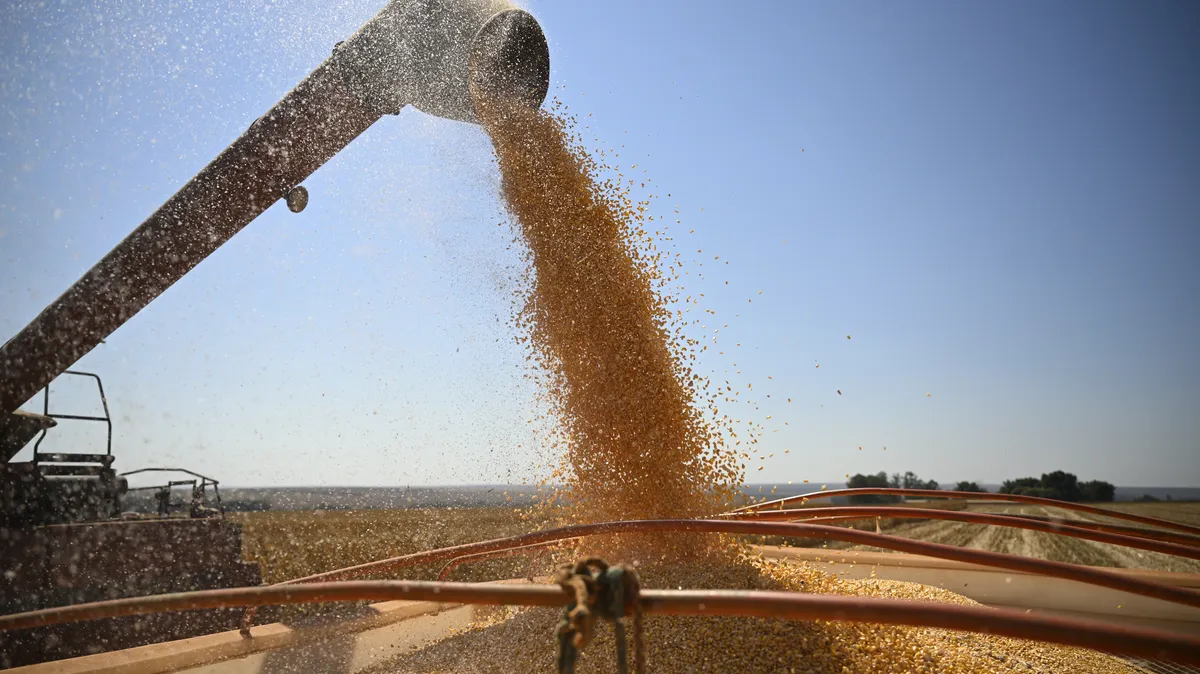
Photo: Getty images
The governments of Russia, Turkey and Qatar are preparing a new agreement on grain export after the termination of the grain transaction. Whether they will be able to prevent the global food crisis, experts told the spectrum.
The material was first published on the Spectrum website .
World leaders and humanitarian organizations urge Vladimir Putin to resume the Black Sea Grain initiative of the UN, the so -called “grain transaction”, thanks to which Ukrainian grain was safely delivered around the world, stabilizing food prices. The UN Secretary General Antoniu Gutherrish called the deal "a rescue circle for global food security and a lighthouse of hope in the restless world." But after Moscow, Russian aviation reinforced the bombing of port infrastructure on the Black Sea and objects used by Ukraine to export grain along the Danube River.
Everything was destroyed
Before the Russian invasion of Ukraine in February last year, more than 400 million people depended on food from Ukraine. One of the main reasons for this is the chernozem: in Ukraine there is about a third of the most fertile soil in the world. Before the war, the country could count on year -round access to the non -freezing harbor of the Black Sea and sent grain to consumers almost throughout the world. Now the situation in Ukrainian agriculture is extremely difficult, Mikhail Dankevich, a member of the Council of the Association of Farmers and Private Farmers of Ukraine, told the Spectrum: “That's what happened in the first days of the occupation - everything was broken and destroyed. I have friends from the farm, from the estuary, where the battles are going on. When they fell under the occupation, his farm was not so much defeated as they were pulled out. All technique. Or take the Kherson region - the farm of Khalupenko Mikola "Kuren". Depardieu came to him, studied how the farmer does wine. On the road Nikolaev - Kherson, Halupenko had a restaurant, a hotel, a household, vineyards, fruit gardens. They defeated and pulled everything they could. In general, if we take in Ukraine, there are many farmers who have suffered from occupation, from shelling. There were arrivals in warehouses, on equipment, people were blown up in the fields. Another part is those who suffered because the Kakhovsky reservoir was undermined. For them, the reservoir served as a source of irrigation of fields. This year he was gone, and people need to change technologies, even areas of activity. To grow something else that does not require watering. The situation is difficult. ”
Russian warship and starving Africa
Having blocked the Black Sea ports in February 2022, the Russian fleet did not allow to take out more than 20 million tons of grain intended for export from the country. This caused a sharp surge in food prices in the countries of Africa and the Middle East. Due to the food program, presented jointly by the UN and Turkey in July 2022, Ukraine was able to send more than 32 million tons of Ukrainian agricultural export through the Black Sea ports. Of these, almost 19 million tons were delivered to developing countries. Thanks to this, the UN was able to lower food prices by more than 20%.
Russia decided not to renew the grain agreement, and this decision has important consequences. The chairman of the Commission of the African Union Mossa Faki Mahamat said on July 28 that "the grain transaction should be extended for the benefit of all the peoples of the world, in particular Africans."
Prior to Russia from the grain transaction, such poor countries as Yemen, Ethiopia, Somalia and Afghanistan received Ukrainian grain.
In addition to the poorest countries, Ukrainian grain was exported to Egypt, Indonesia, India, Kenya, Tunisia and China. Ukrainian suppliers of agricultural products participated in the UN World Food Program. This is the largest international organization that has its own hunger fighting program. According to the United Coordination Center of the UN, 57% of food exported from Ukraine over the past year went to developing countries, and 43% to developed. The main buyers of Ukrainian wheat were China, Spain, Türkiye and Italy.
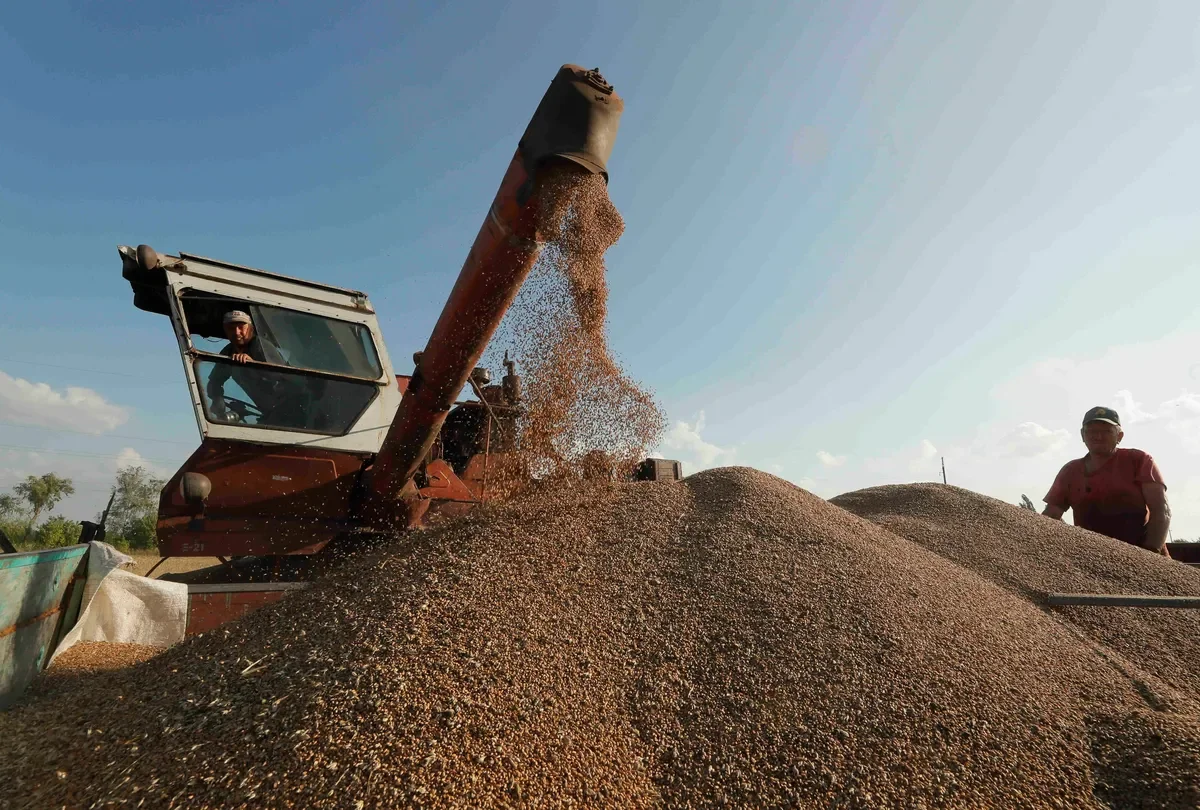
Vladimir Putin refused to renew the “grain deal”, calling it “a game of one gate” and accusing the world leaders that the poorest countries did not receive Ukrainian grain. But the UN claims that Ukraine put 725 thousand tons of grain as part of the World Food Program in Afghanistan, Djibuti, Ethiopia, Kenya, Somalia, Sudan and Yemen. “Prices rose by 10%, but quickly played growth and stabilized. There are enough grains in the world, this is confirmed by world assessments of stocks from the FAO, ”Anna Kovalchuk, an expert of the analytical cluster of the Ukrainian Thought Factory, told the Spectrum.
Blackmail
Speaking an intermediary in a “grain transaction”, the UN suggested that Russia increase the export of grain and fertilizers. Despite the fact that the Russian agriculture has not been subjected to sanctions restrictions, the Kremlin requires that sanctions were lifted from the State Rosselkhozbank and it is again connected to the SWIFT fast payments system. “Without the real lifting of sanctions restrictions on the export of Russian agricultural products ... the extension of the Ukrainian document is inappropriate,” said Russian Foreign Minister Sergei Vershinin. In response to the requirements of Russia, the UN proposed to create a subsidiary of a bank that would be connected to SWIFT. But Russia rejected the plan. The UN proposed processing payments through the African export-import bank or through the JPMorgan Chase, but the Kremlin did not arrange this plan.
The Kremlin knows that legally sanctions cannot be removed from any organization separately. After Russia's exit from a transaction that allows Ukrainian courts to export agricultural products through the Black Sea, the Kremlin took up the destruction of the main alternative export route of Ukraine along the Dunai River.
Grain attacks
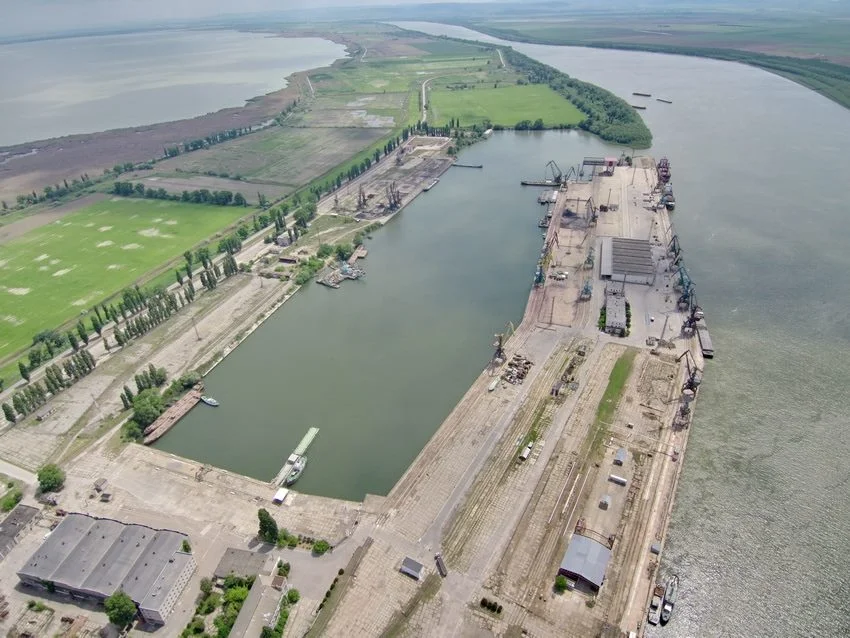
After blocking the Black Sea ports of Ukraine, Russia launched attacks on the Danube ports, which became the main hubs of export of agricultural products of Ukraine. On the river, products can be transported to neighboring Romania, and from there it is transported to customers around the world. The goals of the Russian military were storages of Ukrainian grain.
Russian drones were twice attacked by the port of Reni, located 200 meters across the river from the Romanian settlement. And Romania, by the way, is a member of NATO. If the drone, by chance or not, lost the course and hit the Romanian territory, a direct conflict with NATO would be very likely. On the night of July 24, 19 Russian drones attacked ports on the Danube, trying to destroy the river export routes of Ukrainian agricultural products. “Alternative ways of export through the ports of the Danube remain an important logistics solution against the background of the blockade of Black Sea terminals. However, they are not capable of closing a 100% need for transshipment capacities. In addition, we see that Russia concentrated attacks on the Danube infrastructure, which makes export from there high -risk (but not impossible), ”said Anna Kovalchuk.
Almost simultaneously, Russian troops destroyed two granaries in Chernomorsk of the Odessa region, destroying 60 thousand tons of grain.
According to the Ukrainian authorities, it will take at least a year to restore granaries. As a result of Russian attacks of the transport infrastructure of Ukraine, significant damage was caused.
Andrey Sizov
Expert in the agricultural market, candidate of economic sciences
We asked us to tell Andrei Sizov , executive director of the company “SOECON” about the current situation in the “grain transaction”:
- Russia came out of the "grain transaction." Why doesn't she want to renew her?
- Russia left the transaction, which was expected. A week before the exit, we said that the probability of its extension is low. This was followed by attacks on Odessa terminals. Their main goal, probably, was the desire of Russia to show everyone that this time it is seriously configured. And the entire Odessa traffic of grain stopped, nothing is shipped there. It is too early to talk about any return of Moscow, and she is not going to unlock Ukrainian Black Sea ports. On the other side,
We see the boiling activities of Erdogan, the President of Turkey. He expects to meet with Putin in the very near future, discuss with him the restart of the “grain transaction”.
Here, in fact, there may be two options for signing the agreement. The first is the old normal “grain transaction”, which includes unlocking the ports of Odessa. Option two is an alternative “grain transaction”, the meaning of which is that Moscow supplies grain, Turkey is responsible for logistics and, possibly, processing part of this grain in flour ( Turkey is the largest exporter of flour in the world - approx. Ed. ), And the whole process finances Qatar. What is important, the last option does not provide for unlocking Odessa terminals, and in fact such a turn of events means little for the global market.
- Today, Ukraine has river ports on the Danube, road and railway transport. Can Ukraine with their help compensate for the inaccessibility of marine terminals?
- It is worth saying that the significance of Odessa as a symbol of Ukrainian export is great. But from a practical point of view, Ukraine is able to fulfill its export program for the removal of grain and without Odessa ports - for Danube and deliveries on land. There are potential opportunities for export. Provided that the Eastern European countries-Poland, Romania and Bulgaria-will not put sticks in the wheels, Ukraine will be able to export about 4 million tons of grain per month, which is enough to execute the 40 millionth export program. There is also a scenario that Ukraine itself will be able to export grain from Odessa without any “grain transactions”. However, so far it is still far away. In fact, the situation is such that only one container ship came out of Odessa. It is important that he went under the flag of Hong Kong, and there is a version that China asked to ensure the passage of this vessel to Russia. Plus, there is talk about attempts to attract insurers so that they begin to provide coating by courts who go to Odessa. And nothing more so far.
- What harvest does Ukraine expect this year?
- Despite all the difficulties, the crop of 2023 will be good. Good weather helped. So far, we estimate the wheat crop in the region of 20 million tons against 21 million tons a year earlier, corn - 26 million tons against 27 million tons. This is despite the war and all other problems. Another thing is price - they are below last year. But prices in the world are below last year. An additional negative factor for farmers is the blocking of Odessa terminals, as a result of which the logistics has risen in price. This additionally presses on the price inside the country.
- Can the pro -Russian region of Moldova - Transnistria - to prevent Ukrainian export through Moldova?
- Don't think. Problems of a different kind: infrastructure. There is a Danube who was forgotten and abandoned. Before the war, thousands of two hundred per year were taken through him. Now such a volume is made in a few days, and in a year terminals are capable of exporting approximately 25 million tons. Could be more, but it is not easy to increase the power - this is a river, not to go there to large ships. There is a difficulty with the channels connecting the Danube with the Black Sea. Unloaded vessels can only go through Ukrainian channels. And loaded vessels can go out only through the Romanian side, because there is a deeper channel - the loaded vessel has much more sediment. And on the Romanian side there is a narrow place that Romania could easily expand, but so far it does not. A clear problem that can probably be easily solved is the lack of pilots.
The pilot must enter the Ukrainian ship and spend it along the Romanian territorial waters to the Romanian Danube and to this channel. Lotsmanov needs much more, then the process would go much faster.
Ukraine proposed using its pilots, but the Romanian side refused.
Perhaps this is a temporary problem that will soon be resolved. And, perhaps, after all, an echo of those friction that is between Ukraine and Eastern European countries due to grain. Despite the numerous speeches in support of Ukraine, the Eastern European countries are unhappy with the situation and even transit through their territory: it still creates competition to local farmers who, for example, can have difficulties with the export of Constanta, as it is filled with Ukrainian grain.
Another factor is the railway. And that sad fact for the Ukrainian farmer that the track in Ukraine, as in the Baltic countries and in Belarus, the Russian-imperial, since the time of the Russian Empire. In Romania, as an EU country, it is already a different width. Therefore, to make a quick composition, load with grain in Ukraine and send immediately to Germany or to Romanian ports. We will have to overload the grain on the border or change the wheels. This is an additional consumption of time and money.
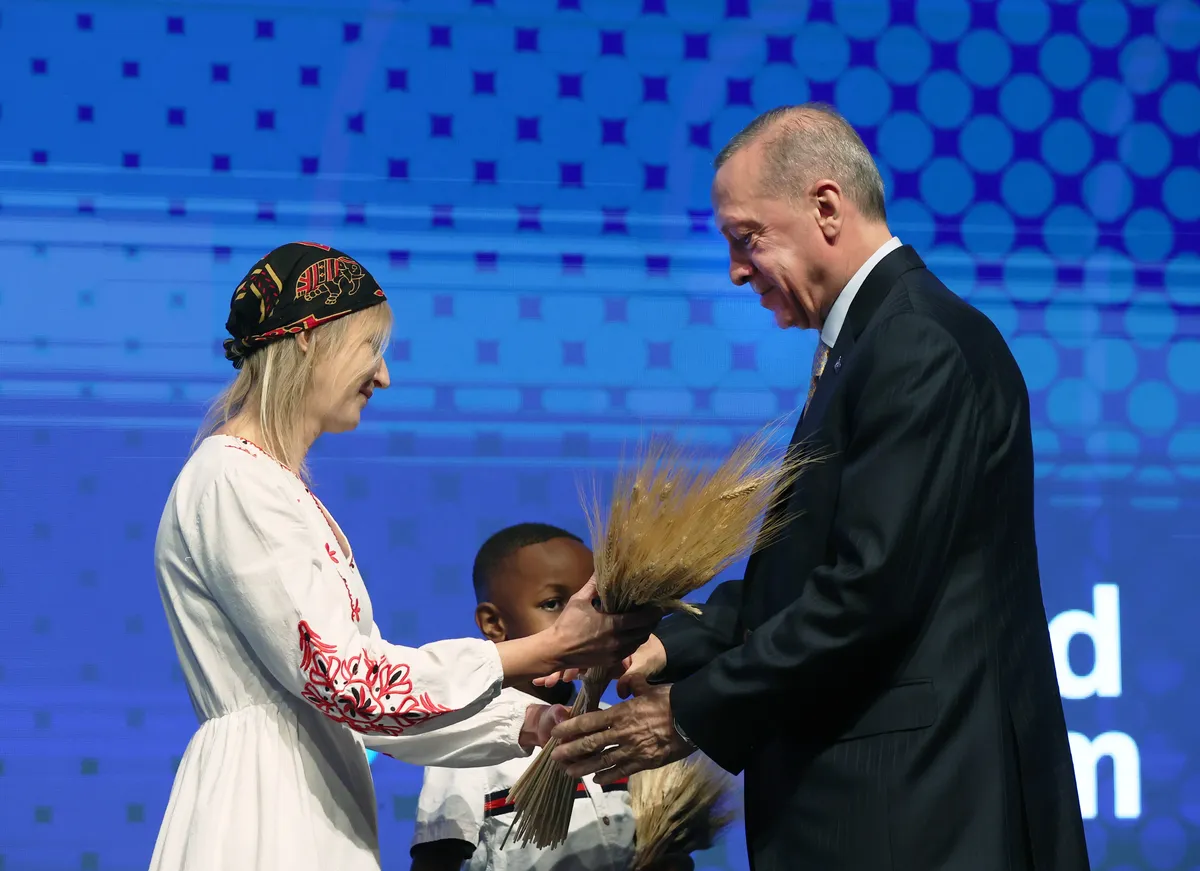
- Why is this activity of the President of Turkey in solving the problem of the “grain transaction”?
- For Erdogan, this is an important political story on which he earns glasses. Therefore, he wants to conclude some deal. We must pay tribute to him: he does not seek to cross out Ukraine from it, but insists on unlocking Ukrainian ports.
- What will happen to the global food market if the “grain transaction” is not signed in any version?
- In principle, nothing will happen. If there is a unlocking Ukrainian ports, prices may noticeably sink on a deadline. Although world politicians say that after the end of the “grain transaction” the world was on the verge of a food disaster, this is not so - the prices are now lower than the period when the deal was valid. They are now twice as lower than in May last year. Including because food supply from Ukraine continues. And this is what is angry with East European farmers. The world prices are low, and they have low, and grain reserves in the countries of Eastern Europe are large. If there is no unlocking of Odessa terminals, the prices should remain approximately at today's level and increase a little in the future.
But there is a factor more important than a “grain transaction” - an increasing military activity in the Black Sea.
If there is no unlocking Ukrainian ports, this will mean that military escalation in the Black Sea water area will only increase.
What will lead to an increase in the problem, completely not taken into account by politicians and market participants, to possible difficulties for the export of Russian grain. This, from the point of view of the global food balance, is more important. The volume of Russian exports of wheat will exceed Ukrainian this season by about five times. Russia is the main exporter of wheat. And we see an increase in military activity in the area of Novorossiysk - the main terminal of the supply of Russian grain, we see attacks on non -military vessels, constant attempts by the attacks of the Crimean bridge, which can be followed by the closure of the Kerch Strait, and this is 30% of Russian export.
If the market is frightened that problems with Russian export of grain may arise, this will be an order of magnitude more serious than the closure of Odessa terminals. Unlike Ukraine, which has a Danube, there is land logistics, Russia has almost nothing like that. And the situation will be very difficult. If the Russian grain exports stop through the Azov-Black Sea basin, it will be a rally like what we saw at the beginning of the war. In a couple of weeks, prices can take off a few tens of percent.