
Translated material
Dot
Old age and joy. The essay of Alexander Genis
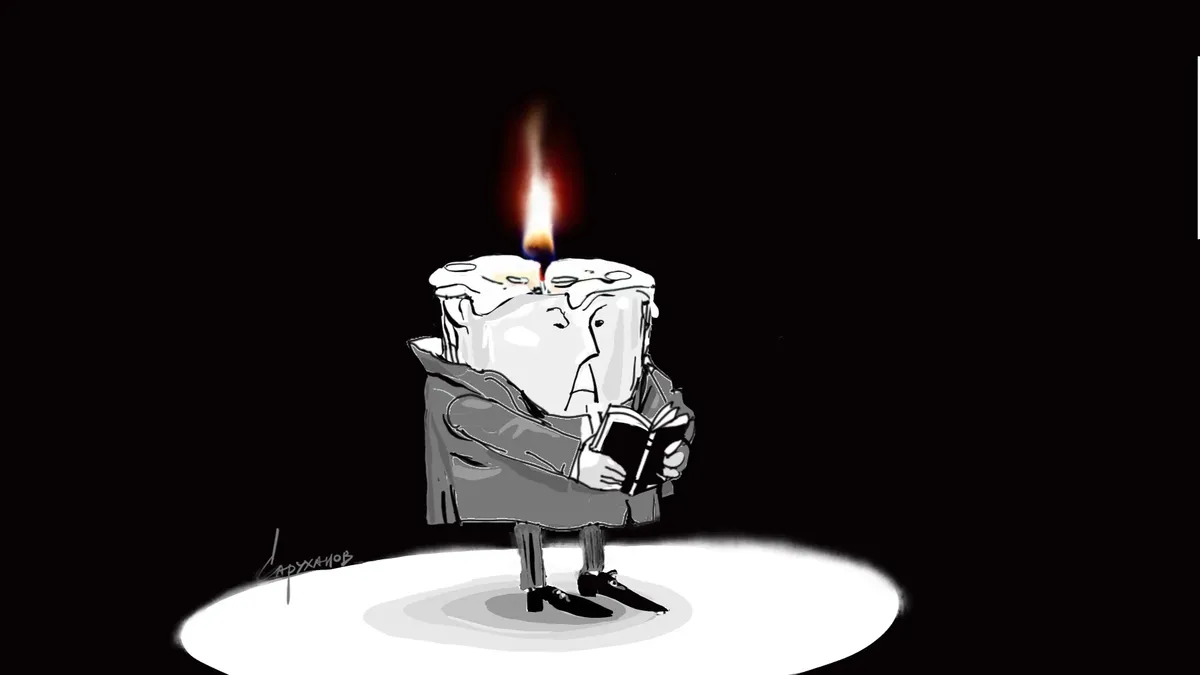
Peter Sarukhanov / "New Gazeta"
1. Mirror
Having caught the reflection, I do not recognize myself. Friends find a resemblance to Lenin, I - with my father, and it does not please me. Its features appear through the image that I, like everyone, wear inside. The mirror also did not convince his father. He was used to being different, but it did not allow him to. The father died, without reconciling with the fraud of the age with whom I am negotiating.
And this is not easy, because I managed to get into the gap. All friends, except for schools, were half a half older. At first I rejoiced at this, since I had someone to study. It became worse when they began to die, and it turned out that I, as the next in the ranks, had to write obituaries on everyone. And on Brodsky, and on Sinyavsky, and on Losev, and - many times - on Bakhanyan, and on Dovlatov - a whole book.
When the surroundings were almost empty, I remembered the Somerset Maugham. In my youth, I suffered with his heroes because of unhappy love. Then all my peers were read out “the burden of human passions”, the novel is as monumental and sentimental as its name. Having lost loving Maugham's prose, I appreciated his memoirs “Summing up”. Moreover, three times, following the author who wrote them in fifty, sixty and seventy years, saying goodbye to the reader in each part.
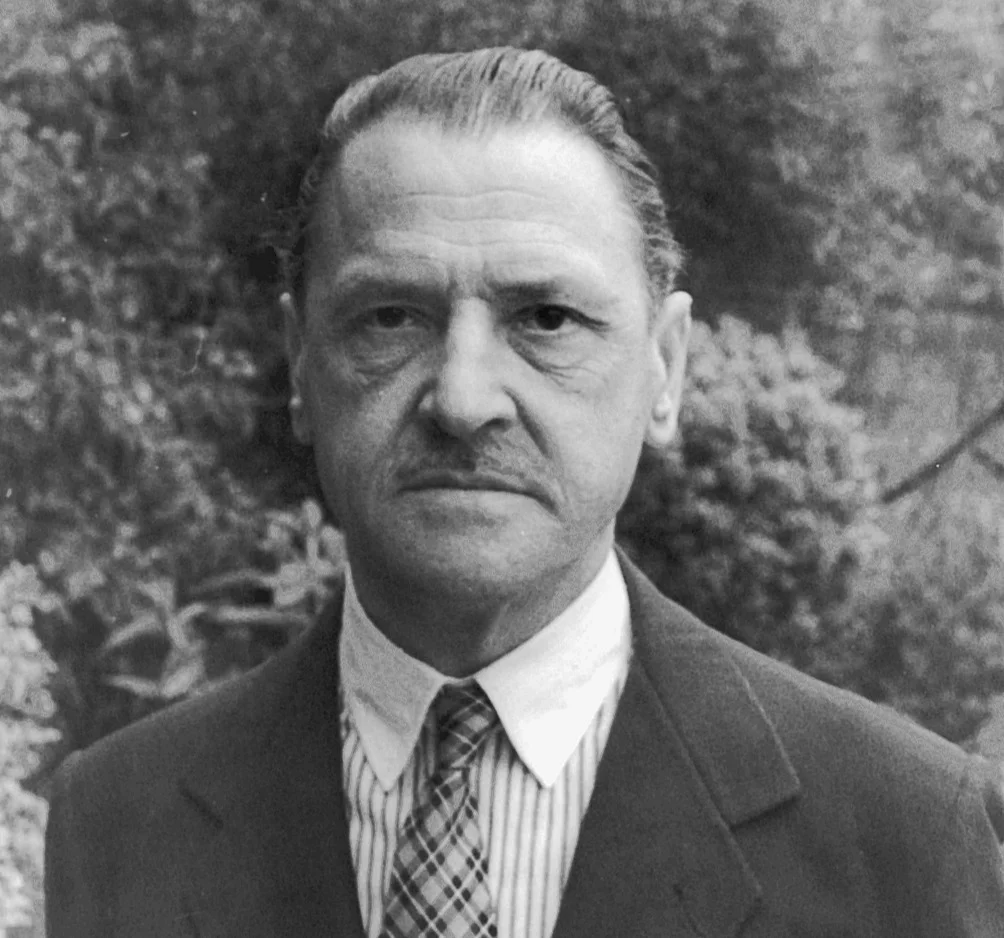
Having finally become a famous old man, Maugham discovered that young people were reaching for him, but only in order to meet, put a checkmark and not return anymore.
I seem to be the top of the mountain, admitted to himself Maugham, which many want to conquer, but no one will live on it.
Having discovered that old age is connected with loneliness, he locked himself with books, excluding, like all of us over the years, novels and replacing them with history. Basically, the great French revolution, which I have not learned to love for the fact that it looks like ours. But the story is also about the dead, and we are destined to live with them even before we join them.
2. Letters
In New York, they say that Kurt Vonnigut lowered the reporter from the stairs, who came to ask him if he was going to retire.
This is really an indecent and painful question. If for normal people old age is a hobby time, then the author usually coincides with the author.
This is a kind of nervous tic that began with the first painted page and ends, as everyone would like, on the penultimate - so that the word “end” is already put by the heirs.
And yet there was such a case. The modern classic Philip Roth, who did not wait for the Nobel Prize, which he had been tested for half a century, retired at eighty years. It turned out that he no longer wanted, as he used to spend fourteen hours at the table. But not because laziness, but because to no avail.
My mouth said: “I no longer have mental vitality, verbal energy and physical endurance, which is required to create such a complex and demanding structure as a novel.”
Instead, the writer began to help his biographer, sending notes to his future book. There were 1900 pages.
Something similar happened to another inexhaustible worker of the pen - Thomas Mann. In the collection of his correspondence, the pattern is noticeable: the older he became, the longer his letters turned out to be. “In old age,” Mann explained, “I felt my creative abilities run out, but every morning I used to sit down at the table and write something. As soon as I stopped writing novels, I began to write letters, because something needs to be written. ”
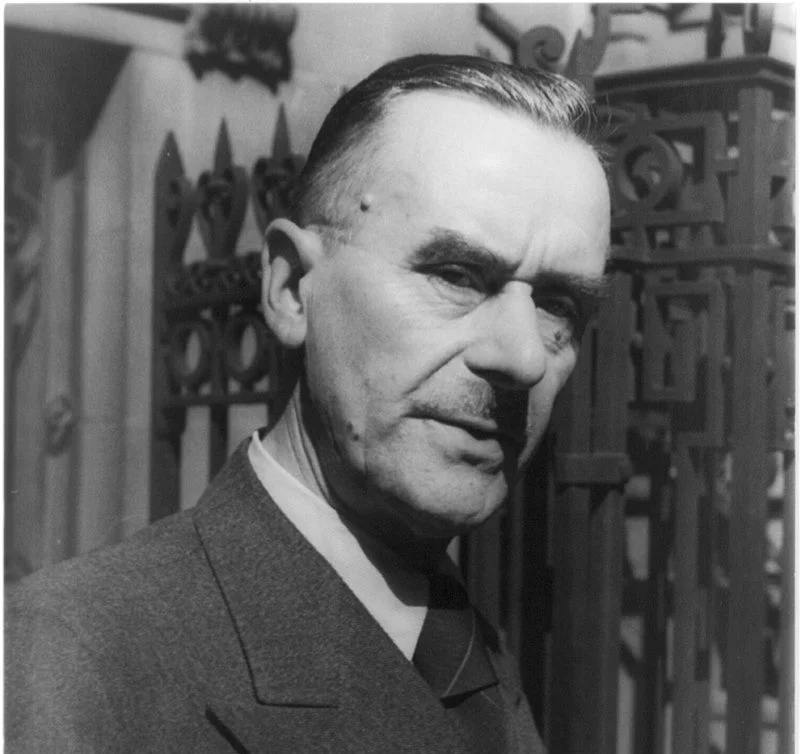
Who needs is another question, but letters are a worthy alternative to prose. Only the present knows the letter. Correspondence is closer to the body than to spirit. It reflects the most author of the author than in the book, which makes the writer immediately similar and unlike his letters.
On the day of the two hundredth anniversary of Pushkin in New York from the Carnegie Hall stage, they read Onegin in translation. It was impossible not to recognize Pushkin, but rather it was not his poems resembled, but correspondence - light, elegant, witty, optional.
Letters make the course of time visible and, like any unacceptable life, do not own the future. In his old age, he remains few, but his writer does not have to protect, but to be afraid. The wise Fazil Iskander said: “The neatness of old age is silence. It protects what is written before. "
3. Munk
Everyone knows him, and that’s why they love him. “Scream” is an icon of the twentieth century, for which the picture paid the circulation of vulgarity. What was for the artist the ultimate expression of causeless despair, like the “Arzamas horror” of Tolstoy, became a mass souvenir: a beach ball, a T -shirt, an umbrella.
The spiritual children of Munka learned from him the main commandment of contemporary art: not to portray, but to express. Having overtaken the master, Austrian and German expression masters - Kirhner, Kokoshka and, of course, Shile - went on. Munk himself in recent years, having closed in the workshop, so as not to see the Nazi occupation, spent alone, working at night.
Fury has disappeared, horror verse, anxiety became familiar, and the world fell silent.
It is generally accepted that he created all the best in the dissent and reckless youth, when immortal images of passions, temptation, fear, like his “Madonna” resembling a panel of Gogol, arose. But Munk claimed that his painting began after fifty. And he blossomed when quite an old artist considered his work through the prism of regret and condescension.
Having adopted this point of view - from the bed - we become witnesses of the last inventory. This bitter and honest lesson resembles the best play of old age - “The last Krappe tape” of Beckett. The hero in it listens to the tape recordings of his audio day, constantly returning to the short clock when he was in love and happy.
Munk also rewind the tape, rewriting the early plots. On one, he again writes the dance of three women: an innocent girl, an ominous seducer and a mournful widow. And this allegory shines the branded moon Munk, which leaves the path in black water in the form of an exclamation mark. Or a green model with arbitrarily, like Gella, lengthening limbs. A room with purple walls, where everything swims, as if from a hangover, in which Munk knew a lot, until he quit drinking.
But the central plot and nerve of the old Munch are self -portraits that allow you to see life in development. At twenty -three years old, Munk resembles young Rembrandt, who also portrayed himself with a smug dandy. Then everything became worse - and better: the path went from arrogance to despair.
In mature works, Munk still writes himself with the dignity of an artist who knows his price. He always looks straight ahead - in the mirror that we, the audience, serve him. In addition to himself, he does not see anything, so there are no things in the early self -portraits, only a vague haze of the decorative background.
Closer to death, a decisive change occurs. At the very last canvas, Munk stands between the covered bed and the large family clock, devoid of arrows, as in the "strawberry glade" of Bergman.
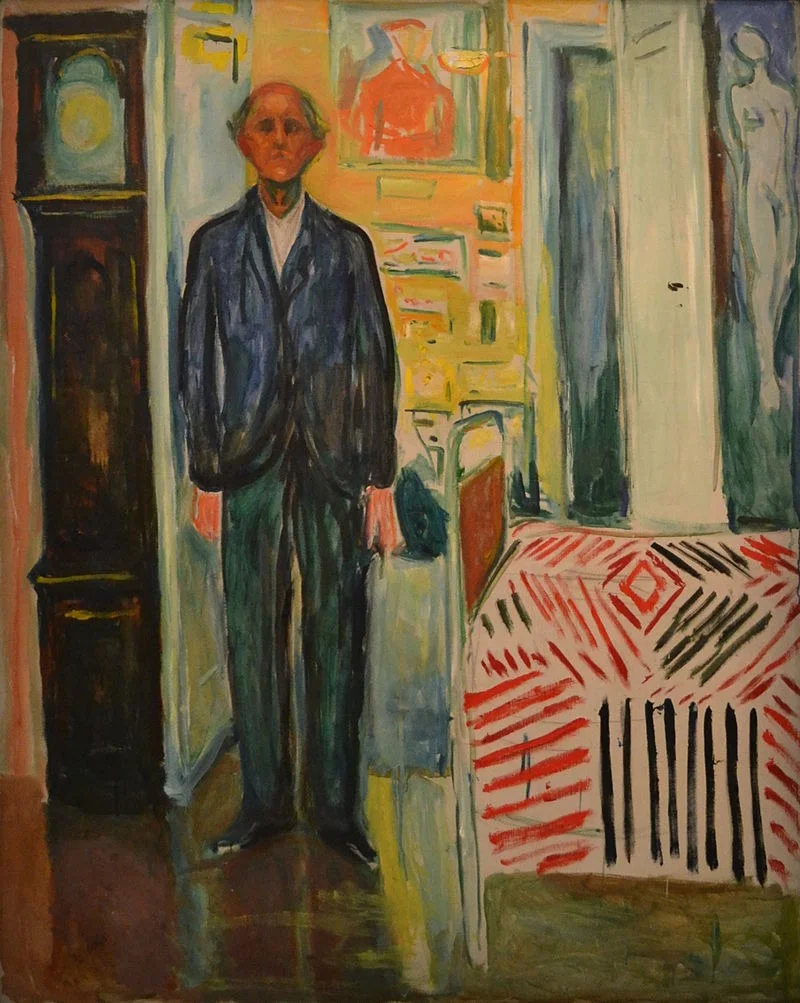
Of course, in this you can see a set of previous symbols: sleep, illness, death - and the time locked inside us. But you can look at this picture as a portrait in the interior. The old man is staring with his faithful spectators. Just these days, Munk wrote a will, leaving all his works to the museum in Oslo.
On another self -portrait, written when Munk was seventy -seven, the artist looks like Brodsky, what he would become if he had survived to these years. Curls of rare hair as a sketch of a laurel wreath, the face of mercilessly brick color, gloomy fold of lips and quiet, northern, Protestant stubbornness weathered for years. Outside the window, of course, the winter, which Brodsky called the "honest time of the year."
4. "Madaday"
In Japan, a little down was explained to me, Kurosava is considered a Western who did not penetrate deep into the national spirit, like, say, Ozu.
And in fact, when Kurosawa was a novice artist, his favorite masters were Kurba and Van Gogh. He considered Dostoevsky the main writer. In cinema, the master Western John Ford preferred the Master. The “throne in the blood” taken along the “McBet”, although it does not have a single Shakespearean line, many consider the best adaptation of the Scottish tragedy. Kurosava put even his seemingly purely Japanese “Rasomon” in the hope of reviving the poetry of the French avant -garde. Music in the film is from Ravel Bolero.
The east of Kurosava is hiding deeper and coincides with the nature of the cinema as such. The Western poet describes the languor in the chest, the eastern one - the impulses justifying this languor.
Cinema also does not describe feelings, but causes them. Each frame is an instruction encrypted in the image to experience a particular feeling.
Like Japanese hokka, the cinema is “written” not with sounds and not with words, but by the circumstances of the place and time, emotional still lifes composed of everything that can be seen and heard.
After Rasomon, Kurosawa, along with Fellini and Bergman, entered the Titanov Titans Titano Titans that gave him an undeniable authority of high art, confidently taking his place in the round dance of muses.
But Kurosawa was old, and years changed the tongue and goals. Preparing for death, the master arranged a farewell to the world, calling the viewer to his own wake. Having chosen old age as a point of view, Kurosawa said a lot of things that we have not heard about her, in the painting with the unequivocal name “Madaday” (1993) in eighty -three years.
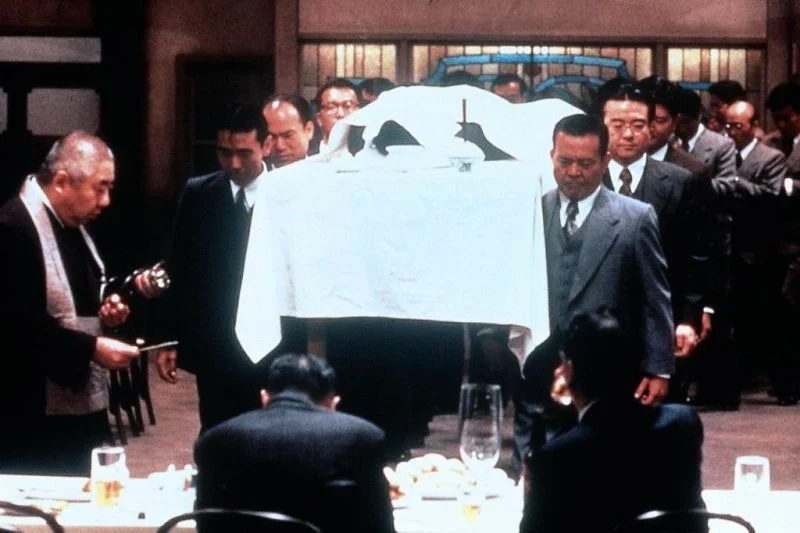
Uchido, a teacher of the Military Academy, retires and lives with his wife in a modest house of some destroyed estate, where he is visited by loyal students, celebrate his birthday every year and organize the search for the missing cat. This is all. The tragedies died out, the Shakespearean passions of the great talent died down, only modest love remained. Against the background of these, not filled with the real content of events, the central but underlying idea of the film unfolds: old age as a non -participation in life.
“In the last film,” critics wrote, “Kurosawa managed to find moral greatness in the meaningless emptiness of old age.”
But what does the strange word “Madaday” mean, which so often sounds in the film? We are talking about a hide and seek. Those who are looking for are shouting: "Is it possible to go to look for?" Anyone who is hiding replies: “Madaday” - “not yet.”
Of course, Kurosawa has in mind himself, his farewell to the audience stretched for many years. The very length of this period became the plot of the film: the hero still does not die, although he has long been ready for this. Departing from life, he looks at her from the other side. Kurosawa indulged in the contemplation of a pure duration, in which a series of do not promise days merges.
From here, life is seen differently: external circumstances cannot change anything in it. There is nothing to take away from the void, to add to it - there is no need.
Turning this thought, Kurosava subjects his hero to tests by war. Already at its very end, remaining without a bomb destroyed by a bomb, the hero settles in a tiny hut with a flowing canopy instead of a roof. Only in this episode the voice of old age sounds in full force. The war selected all unnecessary, strengthening the role of the necessary - beauty. In a dull, oldly faded film suddenly break through (accompanied by Vivaldi) blindingly beautiful paintings of the four seasons, which the Uchido sees them from the threshold of his beggarly dwelling. In these long -frozen scenes there is an apotheosis of the picture. To make out the genuine charm of the world, you must be ready to leave it at any moment.
From the burned house, the old teacher saved only one book - the diary of the medieval Buddhist monk. From military shocks, he also retired to the hut and wrote there words that justify his old age: “If human life were eternal and did not disappear in one day, like a dew on the plain, and would not be dispersed, like smoke above the mountain, there would not be so many hidden charm in it. In the world, it is precisely inconstancy. ”
5. Mountains
To join old age, I need to climb higher, literally. After all, everything works differently in the mountains, although you understand this not immediately. First there is a forest, then a meadow, then - moss and lichen. Gradually, the rainbow of the living is hiding in a prism, leaving the eye of one blinding whiteness of the snow. From here, another prospect opens, especially if nothing is visible except fog.
The top is good in that it is always located on the threshold. They no longer live here, but from here you can still return - not what it has risen.
Like the third act of the Shakespearean tragedy, the mountains expose the meaning of the first two, change us forever and prepare for a common finale for everyone, if you are lucky - with catharsis.
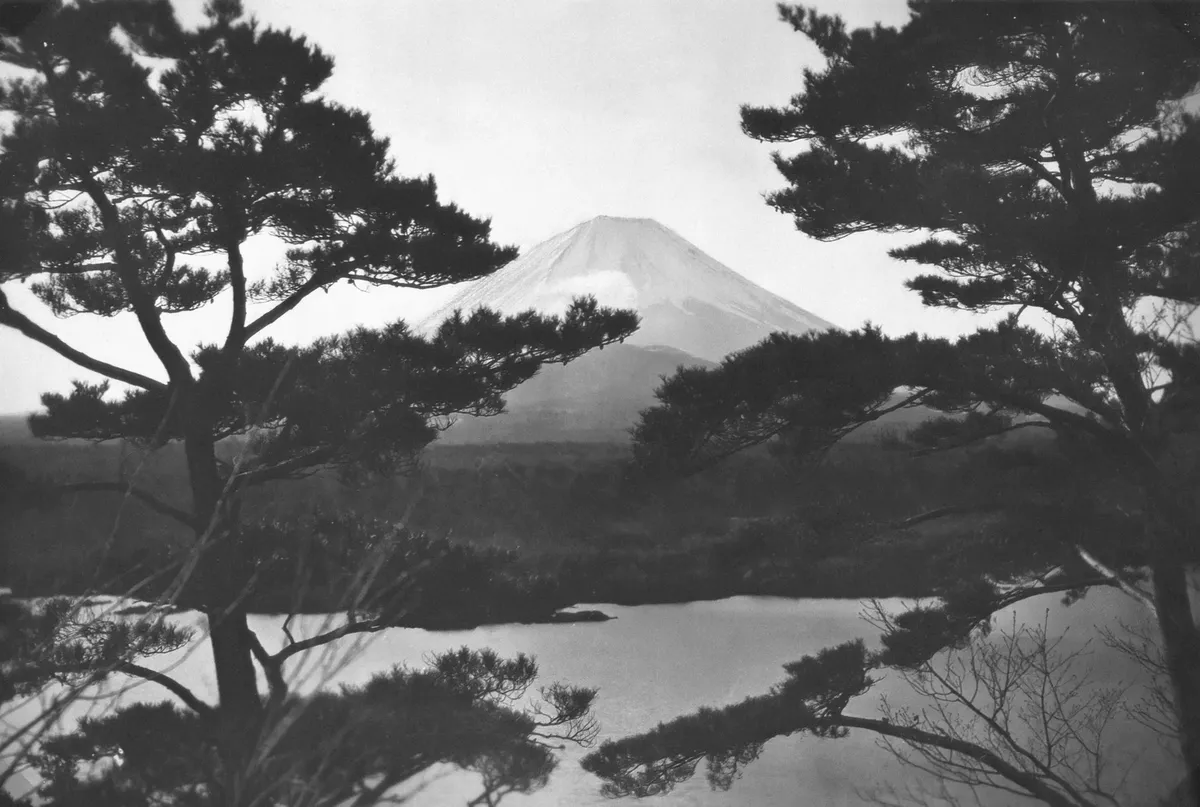
Mountains, like old age, are useful in that they all lead to sharpness. Standing at the top, like a coin on the rib, you feel inside an adventure novel that is always stomping on the threshold between life and death, like a musketeer or James Bond.
Everyone who has tried knows that it is not easier to go down than to rise: both the legs are slipping, and the new load of the found at the top pulls to the ground. This path was described by Iskander. Having lived in a Caucasian long life, filled with funny and bitter, he gave us advice.
“... I must,” he wrote, “get to the extreme pessimism, look into the gloomy abyss, make sure that there is nothing there, and slowly return. The trace left in this way will be real humor. ”
In the mountains, however, do without metaphors. The abyss here is real. And the “humor” comes when we are in the valley, feeling the awkward ridiculousness of those efforts that spent on the rise to where there is nothing.
Above everything is not seen as significant as below: the goals are represented by doubtful, the objectives are momentary, the means - which will turn up, but it is early to put the point early.
A few years ago, my chest was sawn to get to my heart. Moving away from anesthesia, I hoped that I was far enough to get new knowledge, but I did not bring anything smart from the operating table.
“Death,” I recalled the knight from the Seventh Press, “even on this side of life, and she knows no more than ours.”
From Bergman, I gratefully moved to Kurosava and, through the breathing pipe in my mouth, said “Madadayo” to myself. In my case, this means, first and interpreting the Latin proverb, “while I breathe, write,” or “while I write, I live”, which is essentially the same.
August 2023, New York