
Translated material
To emigrate on a yacht - what is it?
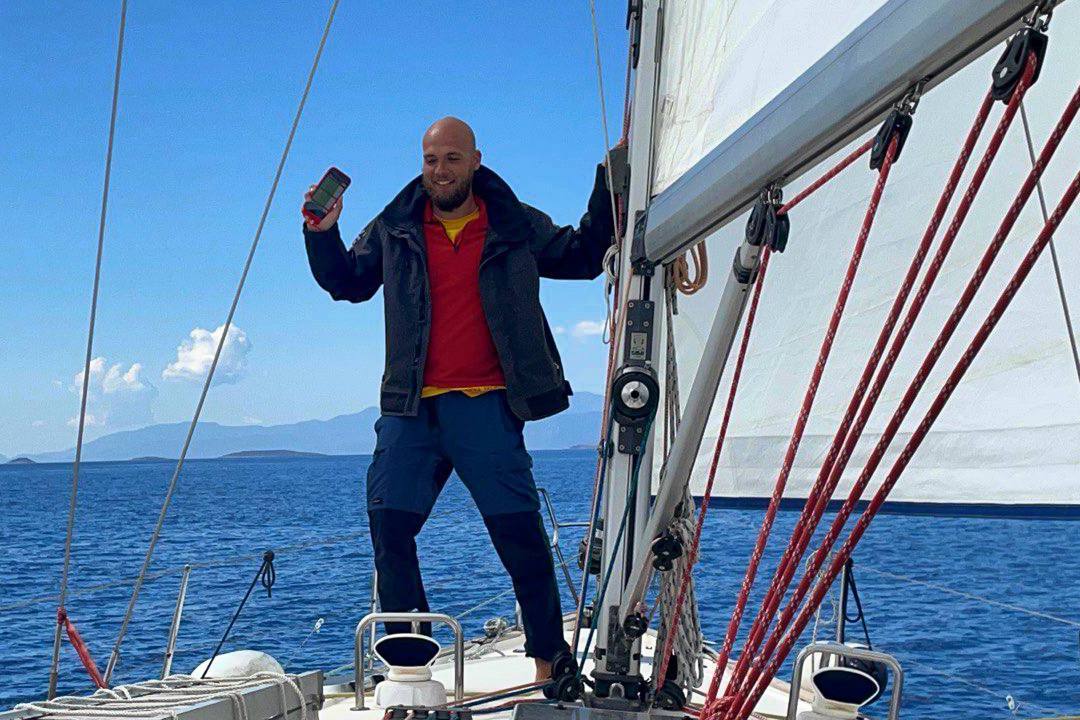
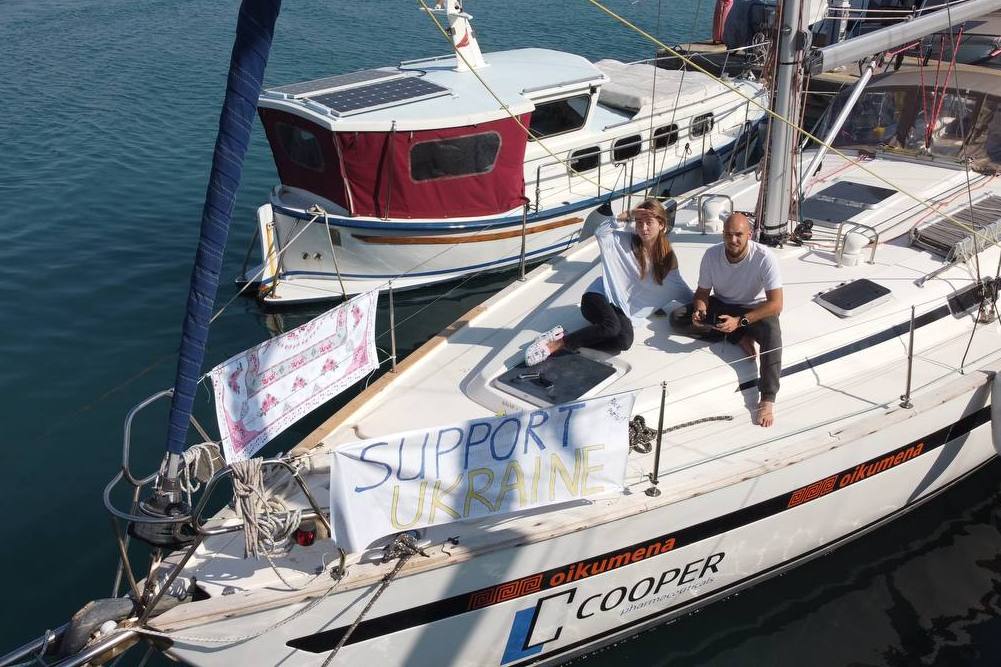
Back in 2017, the St. Petersburg journalist Arseny Vesnin launched the archaeological project “ Oikumen ”, during which he carried those who wanted to excavation. In 2021, he acquired his yacht and hoped to repeat the Odyssey route on it, making a film about this path.
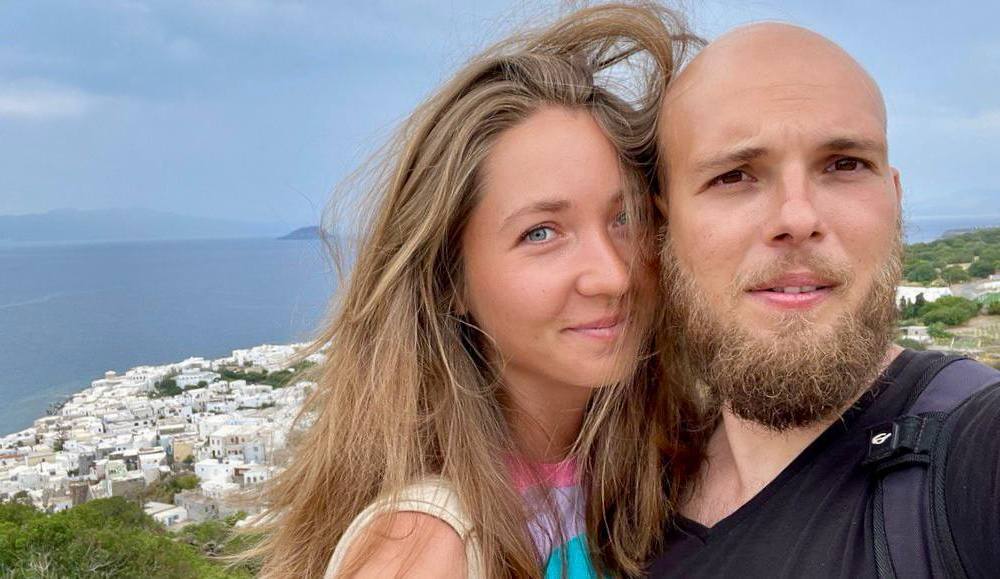
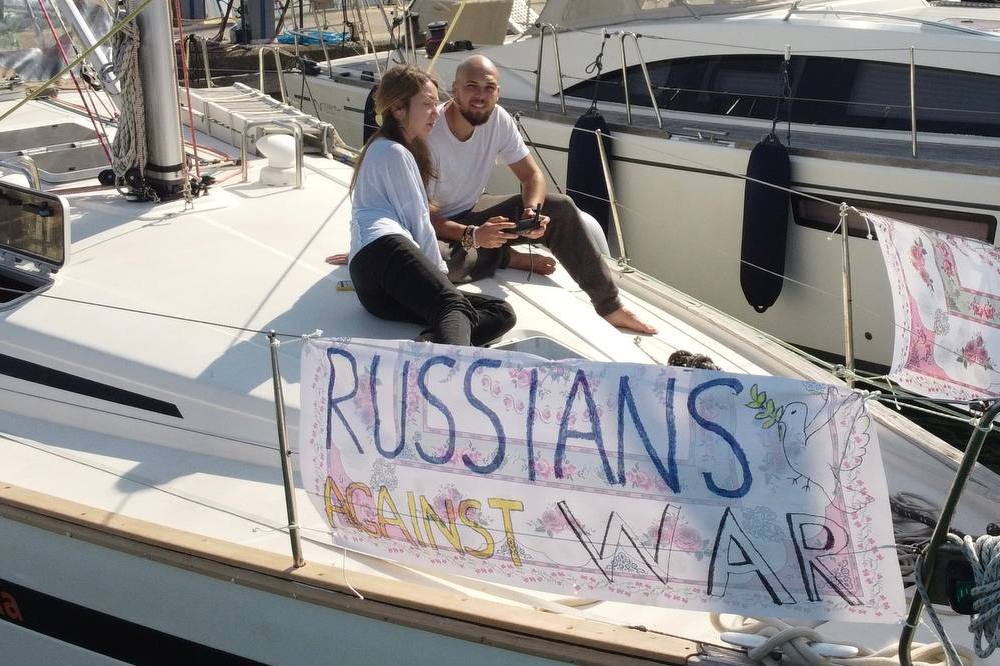
The war intervened in Arseny's plans: like most Russian independent journalists, due to the risk of persecution and military censorship, he was forced to leave Russia. He decided to emigrate with the girl on a yacht - and not just travel on her, but to fully settle in the sea. In 2023, Arseny came up with the idea of inviting Ukrainian families who fled from Russian invasion to the yacht.
How to conduct communications on a boat and collect documents for it after night journalistic shifts, why do all the plans in the sea life depend on the wind and the search for drinking water and what feelings do you experience after five hours in the middle of the storm? Arseny told Paper , how instead of ordinary emigration he chose life in an adventure novel.
Arseny regularly talks about his adventures on the yacht: subscribe to the channels of the Ochumen project in Telegram and Yetube .
Moving to a yacht, registration problems and refusing attempts to rebuild an old life
“Where did you get the yacht and why did you decide that your emigration will take place on it?”
- The story with the boat began in the first emigration. I already had to leave St. Petersburg when the Investigative Committee pursued me for covering the shares of Navalny [in 2021] - I then wrote that the police in the department ate [the gear] with the burgers from McDonald's. The lawyer advised me to dump, otherwise they will arrest.
I spent that emigration in Poland, Turkey and Greece. Then it was a rarer story, there were no emigrant chats and colleagues [abroad], there was a covid. In addition to the main work, in order to take your mind, I figured out that it would be possible to repeat the Odyssey route on the yacht and make a film.
Then I managed to return to Petersburg - it turned out that not for a long time. In December 2021, I flew to Athens and bought a yacht under my project. We planned to start in May 2022, in February there was an active training stage and in March I was going to fly to Greece to prepare a boat. By that time, I have been engaged in journalism for more than ten years, and I thought that you could take a break. Moreover, by education I am a historian, I love yachting, all this is close to me.
The war began. In the very first days, they adopted all these laws about the ban on calling war on war, about "discrediting". It became clear that it would not be possible to openly engage in journalism in Russia. The story with Odyssey went into the far plan, but I did not understand how to make journalism. Neither I nor my family also wanted to listen to the steps behind the door.
It became clear that it was necessary to dump. And I already had a yacht with which something needs to be done-this is property that requires attention, time and effort. And most importantly, the yacht is, in fact, an apartment on the water. That is, we have an apartment in Athens where we can dump. So we went, it seemed a logical decision.
- That is, the yacht has become a new home.
- Absolutely. I still continue to call our house a house in St. Petersburg, but also the yacht is our house. The girl and I left her a couple of times - for example, to get married. But in general, we constantly live on a yacht, we do not have a land space.
Of course, we put a lot of efforts to put this house in order. When we arrived in March, there was a fierce oak tree in Athens, +2 ... +4 degrees. And we have no electricity, no heating, no gas. I also have journalistic work: I’m trying to print something in five in the morning, the end of the shift at eight in the morning-and I need to immediately go to buy gas hoses, conduct a system. I am an ordinary person from St. Petersburg, I never installed gas stoves and did not conduct electricity. I don’t know anything, I don’t sleep at night, I work in the cold. In general, the first weeks were funny, but we coped.
In addition to the household problem, there was another question with documents. We had visas that allowed 90 days to be in Schengen, but we had to draw up documents for the boat. The war that had begun also struck us in this direction, because [services] who are engaged in registration refused to work with the Russians. The boat needs to be registered, entered in the ship's register, put under the flag of some country.
Only Malaysia agreed to work, which still needs to be released, to find an agent, to deal with their laws. We finally agreed on everything. But then the hackers hacked the bases around the world in search of yachts of Russian oligarchs - and broke the system in Malaysia. So the Malaysians have already agreed to introduce us, but technically could not do this. While they repaired, some [internal] investigation has passed and corruption in this system was revealed, some general was appointed, who only personally put all the signatures-it took a lot of time. We issued all the documents three days before the planned exit.
- It sounds like terrible hemorrhoids. What motivated you not to abandon your venture?
- My experience of emigration in many things, of course, is more hemorrhoids than the comrades who simply left for other countries and found housing. But I decided that since my life was so broken-and I never wanted to leave Russia-I need to try to live another life that I would not live in any other conditions. I did not have the idea to quit everything and go, for example, to Georgia.
After all, I already had the experience of emigration - I think it has become a key. I remember how I worked in Warsaw: I had an apartment, editorial office, work. I went to bars with colleagues, with local ones. Good work, good colleagues ... And, to be honest, I was sad. Because it was an attempt to reconstruct my life in St. Petersburg. I was about the same - only without my home, family and friends. I presented a repetition of this - and realized that I didn’t really want to. And, since fate gave a chance to live another life, you need to use it.
And the boat in 2021 cost about 3 million rubles - for me it was a lot of money. But in fact, I did not think about the rational component. I just made a choice that I adhered.
Combining with journalism, house longing, marine life and expenses
- You don't miss the past life, in journalism?
- I continue to engage in journalism, just in a smaller volume. The broadcasting on the channel “ Looking for a way out ” is the former St. Petersburg “Echo”. I continue to write something for " like this ." It just became a little difficult to combine [journalism with travel], because the first year I worked in a very large volume.
It is quite difficult to engage in Russian journalism - I think many feel it. I have the feeling: I have to go to Ukraine and engage in journalism there. Or you need to engage in journalism in Russia. After our departure to us, the devil knows how many times the police came: I don’t know what they wanted, but this does not contribute to the desire to return.
And [about go] to Ukraine ... I am experiencing some feeling of guilt, shame that I did not go there. But I weighed this for myself. The family remained at home: mom, grandmother. I think the information that I am in Ukraine under shelling are difficult to perceive. To go there is to sacrifice them. It was impossible for me.
I weighed for myself how useful my work is in a very large volume. Of course, I feel my benefit as a journalist in removal. I do not feel my uniqueness [as a professional]. And I decided that if I reduce the number of texts that other journalists can write in the same way, the world will not lose from this.
I miss the house in St. Petersburg, I want to return there. I miss my friends, if possible, gather in the evening in the bar. But according to the style of life, he did not have time to get bored. I live in an adventure novel. From time to time, we [go ashore], meet friends around the world, walk around the cities, walk around museums - I have enough three to three days of such an environment, after which we go further to the sea.
- Your romance of your path is obvious. What are the difficulties in everyday life? How costly and difficult to maintain a yacht, maintain a comfortable standard of living on it?
- There are two styles of life on a yacht. The first - you pay Marina, standing, you have access to the shore, unlimited electricity and water. You live in the port. The yacht in this situation is not much different from a small studio. And these parking lots cost to hell often.
Another lifestyle - and we adhere to him - it is anchored. Then there is no access to [the listed benefits]. We have electricity from the solar panels - and we have enough of this. We cannot use a powerful hairdryer due to an insufficiently powerful inverter. This can be changed to grasp power, but so far we do not see the need.
We have a restriction on the water supply. We need to get it to the tanks, which are on a boat under the beds. We have enough. I wash me in the sea, I don’t spend water on this, I can just rinse in Ograuk to wash off the salt. My wife rinses more - well, she has hair, I do not have them. But water has to be saved. It is necessary to plan taking into account the fact that it will end at some point-and know where you will get it.
Life [on a yacht] is strongly subordinate to the weather. First of all, the wind. The wind controls you, and you will not do anything about it. You have to be prepared for everything, and it takes time. In this sense, the boat management is work. You really have to think and plan a lot.
There is still a repair. A boat is a house that conditionally exists in conditions of a constant earthquake, I mean wind and waves. A house adapted for these conditions, but this is still an earthquake, salty water. So yachting suggests that you are repairs all the time. We still did not have insanely expensive repairs, but we have to do something.
It seems to me that about 300-400 euros per month is what we spend [on everyday life]. About the same amount to maintain the boat, but in some months it can be zero, and sometimes you need to lay out 2000 euros.
Vacation for Ukrainian families, beer after storm and miracles of nature
- You began to invite refugees from Ukraine to the yacht. Tell me what the idea is and how these meetings took place.
-I began to engage in journalism less, but there was a desire to do something [useful]. We do not forget about the war. We have experience of expeditions, invitations [into swimming] scientists, tourists - we thought, since we have such experience, why sometimes not to invite people who need help. We cannot do this all the time, but it is possible periodically.
Many Ukrainians fled from the war, among them there are many women with children. It seemed to us that this is a cool idea - to arrange a vacation to them. Once every one or two months we can afford to invite a family, take on their rest.
The only thing I did not know how to tell you about it correctly, so that it would not work out that a hundred applications would come, [which we cannot process]. He wrote on Facebook and Telegram that if you [subscribers] have familiar families with children who fled from bombing who want to arrange a vacation and spend time on a yacht, learn to control a sailing boat, write to me.
It turned out everything calmly and naturally, people [responded] are very good. For the first time, my mother with three daughters arrived. They lived in GOSTOL, who grabbed the full in the early days of the war. Their father remained in Ukraine to fight. It is difficult, of course, to listen to their stories. They talk about how bombs fell on them, with such everyday life with which I tell how I am looking for water on a yacht. The youngest girl at a school in Germany, where she was arranged, periodically hides under her desk during lessons.
Another family was in July - from Mariupol, live in Germany, a mother with two children. They sat in the besieged Mariupol for several weeks, traveled already when Russia, in fact, took Mariupol, only the battles for Azovstal continued. They have stories about how they were sitting in a bomb shelter, how a neighbor had to bury in the yard, went under fire.
[Implementation of the ideas with a vacation for families on a yacht] turned out better nowhere. Both families, it seems to me, had a very good time at sea. Now we will have a rather long journey where there will be many transitions, so we can’t take families with children there, but then we will have a free piece again - and we agreed that people will come at that time.
- What were the moments when you clearly felt that it was not for nothing that you chose emigration on the yacht, that it was worth it?
- I think the first time it was on the second day of our transition from Greece to Turkey. We crossed the Aegean Sea and fell into a storm in their stupidity. It was scary: large waves, a strong wind, a sail broke, diesel ended, there were rocks nearby. In general, they did not survive the most calm five hours while they got to the shelter. And when we went ashore, I ordered a mug of cold beer - and I realized that I was in a state when the adventure that I experienced is still in me, but it was already a story that it is cool to talk about. It was a powerful sensation.
There was also a moment when we walked along the sea and at some point passed through some channel. And there was a feeling that the field was flooded, the river was poured, and you are going on a yacht along it. And in the distance the mountains, and around herons. It was so strange, such a strange place.
Another bright moment was in the Turkish city of Limir. We sailed there in a terrible heat, +40 degrees were. And in the city we stumbled upon an ice river. The Roman city, fortress walls, monuments, temples - both an ice river, and goats and rams graze around. It is simply very beautiful - and I, sweaty from the heat, fall into this river.
I often catch myself thinking: what the hell are these bastards unleashed the war when they have resources on the most comfortable yachts of the world to travel and see so many sparsely beautiful and amazing.
What else to read: