
Translated material
The self -interest of selflessness
How to support others, keeping yourself. Book of psychologist Leonid Kroles about volunteering

Leonid Kroly's book cover "I want to help"
The publishing house of Alpina Pablisher published a book by the famous psychologist and business coach Leonid Krolya “I want to help. How to support others, preserving yourself and your strength "
Recently, social networks have a lot of despair, and sometimes even the indignation of volunteers and charitable foundations. Because there are few people, money and generally help as such. This can be explained by a quote by Mayakovsky, who seemed to be about our time and says: "This year has seen that they will not score a hundred ..."
Yes, those who supported the funds for years are now either forced to save while in Russia, or are faced with the difficulties of banking transfers from abroad. In addition, people who have taken help are rapidly burning out.
Why volunteers quickly burn out
Imagine the situation: a woman named Jeanne helps the refugee family. He brings them things according to the list, and each time he tries to find out what they would still like, what is missing. She tries to find out not only in adults, but also in children, but the mother of the family builds invisible boundaries, and the children do not dare to ask for something with her. Mother communicates with Jeanne coldly, thanks her politely, but without emotions, respectively, all attempts to get closer to her or joke, play with children are unsuccessful. The distance that this woman builds - as if from acute wire - Jeanne wounds a lot. She cannot understand what is happening, it simply does not fit into her mind, does not fit in her head. In fact, it helps people disinterestedly, from a pure heart, and in response, it seems to her, they look at her with a wolf.

Leonid Krole, a well -known psychologist, candidate of medical sciences, author of several dozen books:
... “But she clearly wants her to be treated with heat, which refugees who survived the experience of losses have no strength. The woman she was talking about was wealthy, had a good specialty and salary, could buy expensive toys and books to children. Now everything is lost, and she has to accept help to buy her underpants. She feels not only grief and emptiness, but also shame. Jeanne is trying to stuff her in her friends, receive acceptance from her, and not receiving, is lost and accepts the detachment of the ward for hostility. And also, perhaps, the ward subtly feels the temporary superiority of Jeanne and really begins to “watch a wolf”.
At these words, I recall the thought of Remark that pity can sometimes be the reverse side of gloating. And Lermontov, where Mtsyri throws in the face of his Savior the words about the shame of pity: “Take in the grave for himself / longing for the Holy Homeland, / Hopes of deceived reproach / and your pity shame! ..”
But, of course, there is no gloating, or even more so, the sensations of the shame of his ward in Jeanne, although, of course, maybe something like that in the soul of a person when he is seriously annoyed. But she herself suffers from a situation in which she really wants to be good, and everything turns around is wrong. Why? Because she “helps the wrong way” and does not receive rewards “in its currency,” the author of the book explains. What does it mean?
Our longtime friend and one of the authors of Novaya Gazeta, head of the Department of Personality of the Personality of Moscow State University named after M.V. Lomonosov, Scientific adviser to the Moscow Institute of Psychoanalysis, Alexander Asmolov, speaks in the entry to this book about the paradox of “selfish disinterestedness” and directly connects this with the motivation for help. He strongly recommends: “... Open this book of the grandmaster of the art of human science, coach and psychotherapist Leonid Kroles. I do not exclude that you will help yourself. ”
The Grandmaster explains everything simply:
“... There are no poor motivation, there are incorrect expectations ... If Jeanne goes to help lonely elderly people - to wear products, clean them in the apartment, help with documents - most likely, some of them will give her the positive reinforcement that she is waiting. Jeanne is ready to adapt and make friends with the wards, and many “grandmothers” do not have enough human warmth, the opportunity to drink tea with someone, discuss the weather, health or the read book.
Ask yourself the question: what do I want to get when I help? Answer him honestly. The answer is especially important if you help people for free. Waiting for remuneration is not ashamed. But deceiving yourself is dangerous. In what intangible currency do you expect a reward? "
If you can’t answer this question, you can be in the situation of Jeanne, who “helped the wrong way” and her best feelings overturned.
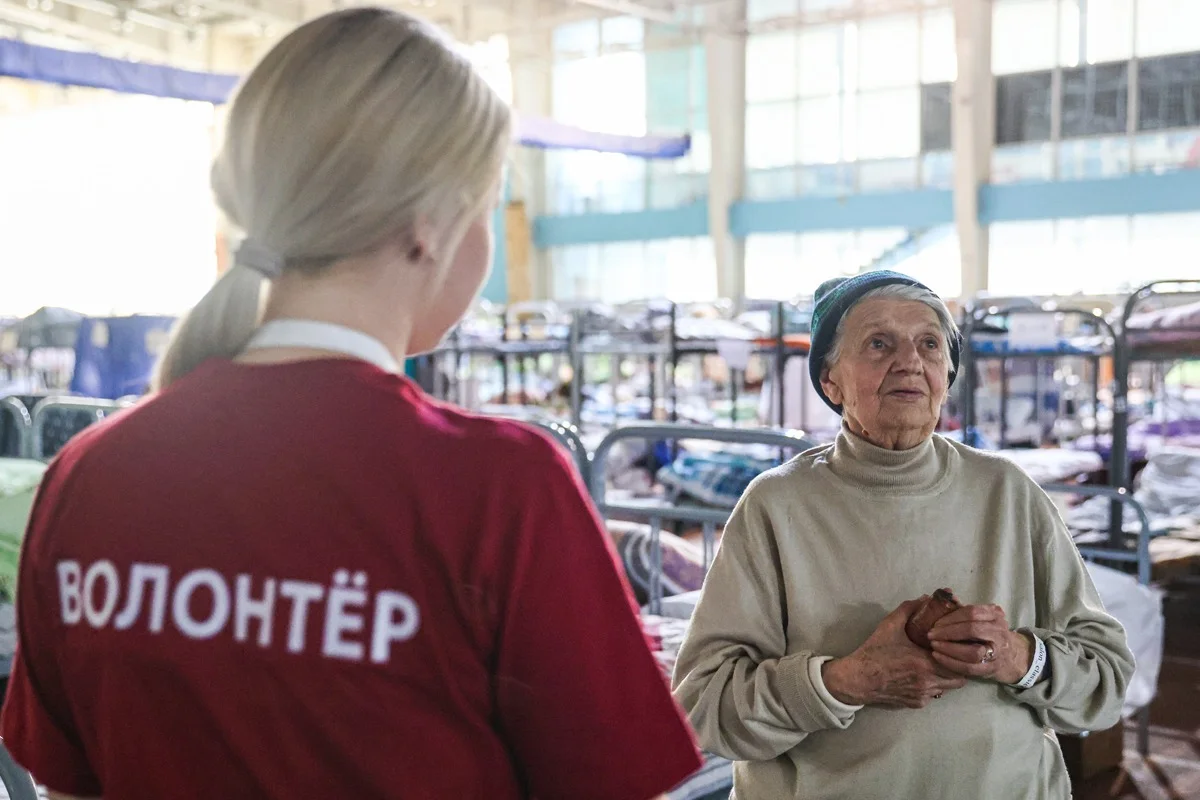
The author of the book Leonid Rabbit illustrates all his thoughts and observations with a large number of examples. He has a lot of them, because he helps helping. Such work is called supervision. In 2020, when mass protests were held in Belarus and demonstrators were beaten and tortured, he helped local psychologists and volunteers, and carried out free group sessions for them. In the spring and autumn of 2022, coaches, psychologists, doctors, psychotherapists, social workers and volunteers from Russia, Belarus, Ukraine, Poland and other countries became his wards. People told him about the controversial situations related to their wards, he listened, delved and saw “how his own injuries of the helping resonate with the problems of their customers” , found and formulated “for each individual support methods so that a person could help others successfully and remain himself.”
Examples of this free supervision have become the basis of Leonid Krole's new book. They are so deep and thin that it may well become help not only to those who are engaged in this professionally or seriously seized volunteering, but also to each of us in certain situations, when close people need help, and we try to help, but everything does not happen as we would like.
Situations
What intangible currencies of remuneration for help can turn out to be valuable for people who do something, it seems to them, just at the call of the heart, not expecting anything in return? One of the heroes of the book talks about what he feels when he helps: “I am pleased ... because I believe in karma and that everything will be returned to us - good and bad”
Leonid Rabbit :
“Its currency is karmic“ pluses, ”the author of the book concludes,“ and he can do anything, but chose a sphere that requires not so much special knowledge as endless patience and perseverance: he is a volunteer in the center of daytime for people with Alzheimer's disease. This person does not need a “return” from the wards, he does not seek to establish relationships with them, and unpleasant odors or physical labor do not scare him, on the contrary, they make “karmic pluses” larger than.
Here, in this situation, it would be bad for another heroine of a book named Maria. This is quite obvious, because the girl, when she had just begun to engage in volunteering, wanted to find her people, her company, those who are close to her. She explains: "... Together to do a good thing is great!"
Leonid Rabbit :
“Maria's currency is a sense of community, friendship, energy recharging ... It is easy to notice that it depends on motivation which object of help is better to choose. Maria, for example, does not work with people in general: her company of volunteers extinguishes forest fires and collects garbage on the shore of the bay. And this is right, because she wants to mainly "communicate and do something good." Wards here will only interfere ... "
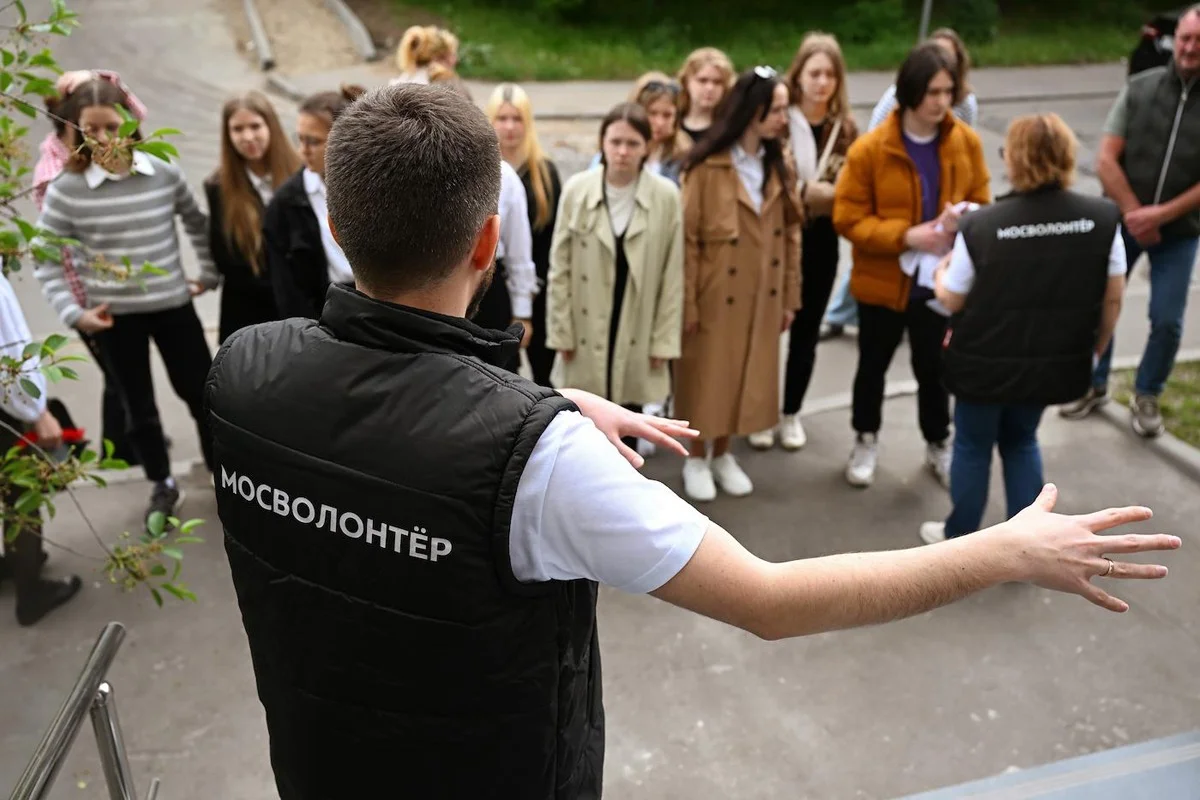
A volunteer named Yegor says that his life has become more meaningful from the moment he began to help people. This literally eliminated him from his own depressive state, because "someone is bad, and you come, and he gets better."
Of course, the currency of Yegor is the meaning of life.
Leonid Rabbit:
“People with a depressive character warehouse can often feel their own value, who is giving themselves to others. And here it all depends on the degree: after all, a person is not omnipotent, and if only help becomes the meaning of life-depression can aggravate because of any failure (“shitty I am the Savior”). But if you do not wait for some successes and do not make a crutch for yourself from helping others, then a mechanism that works completely ... "
Egor arranges clown performances in a children's hospital, of course, he sees the results of his activity right away - small patients are flooded with laughter, and it is easy for him to his soul.
So, helping for free, people receive a certain reward in their own currency, and this is possible only if the addressee is selected correctly. But helping, it is still very important to keep in the head the context of the event that occurred with the ward.
The book describes the situation of a graduate of an orphanage named Kristina. She was raped at the age of fifteen. Adults who could help her survive what happened did not behave humanly: the teacher said that the girl herself was to blame, because she was drunk after the party, a social worker felt sorry for her as if something irreparable had happened to Kristina, as before, after that, after that, after that, after that. The psychologist, however, advised to "get to study."
As a result, the girl after ten years later could not cope with the consequences of the experienced. “... This is called a fixation of injuries, or retraining: an unprofessional or unable reaction of the environment enhances, exacerbates,“ breaks ”what was broken,” the author of the book explains and talks about how important it is to train empathy in order to understand people. For this, as it turns out, there is a method of seven screens, but there will be no spoiler, because in order to understand this, you need a slow and detailed reading. In a newspaper note, it is difficult to provide such an opportunity.
Triggers, wine and pity, how to cope. Exercises for helping
On the one hand, empathy needs to be trained and developed, and on the other, it can be grown to such sizes that it is eventually capable of drowning the helper. Most often, this happens with people sensitive, and here one of the reasons is personal triggers. As an example, Leonid Krole tells the story of Nikolai, with whom he spent a supervision. The young man helped a girl who lived in one small room with a mother, sick with schizophrenia. In adolescence, Nikolai had exactly the same problem, and empathy captured him so that he simply could not think about anything else. He seemed to “save himself in the past,” and he completely abandoned himself today.
You need to know your triggers, realize them. If in a certain situation they suddenly jump out, this is an occasion to stop, think and be good to discuss with a supervisor. Help to another in such a situation can be indispensable, because no one, as you, who has already lived in such a situation, understands this person. But if the trigger is too deep, and you can’t cope with him, it is better to step aside, someone else will help your former ward.

There are other reasons for the failure of empathy: guilt - (we are sitting here in a restaurant, and people are now dying), fear, strong anxiety, shame. It is important to learn to realize these feelings and separate from the process of help. The author of the book sees them in the basis of such “ancient half -magic experiences as:
If you are in touch with grief, then how would you become infected with it.
If you are in touch with grief, then “immunize”, and it will bypass.
A man, struck by grief, is a little flawed, he forever lost part of himself (grief survivors can feel it for a long time).
Woe is a punishment for sins.
Woe is a test that makes it stronger ... "
All this can be at the level of emotions and you need to track these states, not let into the process of help: "... the help should be sober, and its own motives should be conscious, otherwise it is easy to harm yourself and the one to whom you help."
It is proposed to cope with feelings with the help of de -izing technique - this is, in fact, "a way out of the role, the ability to switch after experiencing sympathy." There is nothing in common with cynicism or egoism - this is self -preservation.
The actors do not immediately get used to their roles, they choose gestures, try to imbue the feelings, self -awareness of their heroes. Having burned in the role of a giant, a smart actor can raise such a weight that he could never take, remaining himself. And it happens so when even close actors are scared, if they see him immediately after the role played, when he had not yet managed to get out of it. Actor Shamil Khamatov once told me that immediately after the run, his wife came after him, they began to talk about something, and she looks and suddenly says: “What about your eyes? This is not your eyes! " He then played the complex role of a teenager autistic in the play “Contemporary” “The mysterious night murder of a dog”. Moreover, his wife is also an actress, she decided at that moment that something happened to Shamil ...
As an actor needs time to get out of the role and people who help others need to “turn off back into their lives,” says Leonid Krolet and notices that it is necessary to do this step by step. Helping someone, we first try to feel a person from the inside, “get into his skin ... through small inconspicuous movements, gaining new self-awareness. We literally get together with a person, and in order to return to ourselves, we need efforts. ” In the book for all this process, an exercise is proposed:
“Say to yourself:“ I ... ”(and call yourself the name of the person to whom you want to feel empathy). Mentally imagine yourself from the inside. How do you feel the body? What is your facial expression? Have you slowed down or become sharper? What do you feel? What are your thoughts in your head? Try to “move in the role”, say a few words or phrases on the behalf of this person, go, sit down, smile like him, or frown. And how would he carry the bag, was late for the bus? Having trained in this way several times, having thought out your gestures, facial expressions, behavior in different situations, you will better understand it, it is easier to distinguish your feelings from his feelings.
Now try to get out of the role gradually. Say to yourself: "I am no longer ... (the name of man), I ... (my name)." Move, “shaking off” the role, as if freeing from her. If it is really difficult for you to free yourself from thoughts and feelings about the situation, spend 10-15 minutes on such distance. Notice how you begin to fall into the life circumstances of the other again, and remind yourself that you are no more, but you yourself ... Most likely, you will find, track that your breathing, facial expressions and pose change in a certain way that you unconsciously adapt to another when you experience sympathy. It will be easier for you to fail not so deeply and easier to return to yourself.
... Be with another, remaining yourself. "
Like any good work of Leonid Krolet’s book is arranged so that everyone who will read it will feel a response to some of the situations described here, and everyone will have their own story. There are many of them, and they concern a variety of nuances in communication helping with their wards. The story of Vsevolod personally responded to me personally, maybe because I saw in my life there are many Vsevolodes who were in help were tuned in combat, actively and rationally, as it seemed to them. He came, saw, defeated the trouble of the wards. The main thing is the optimistic mood.
But this is not the main thing in situations when it comes to tragedy. Vsevolod from the book helped a family in which a 17-year-old teenager suffered in places of hostilities-the boy lost his hand as a result of the explosion. Vsevolod came to them with a clear route of actions to solve the problem: treatment, prosthetics, obtaining social assistance.
The boy’s mother agreed with him, politely thanked, but did nothing. Nothing happened after his visits, as if he were invisible. Why?
Leonid Rabbit:
“... The tragedy should be noticed, and not to be lusting and not to pretend that it is not. ... Vsevolod behaved as if he was a magician and a wizard, and a prosthesis is a magic wand that will save a person from a loss overnight. He did not feel the scale of what was happening. Is it possible to learn this? Of course, you can. As a supervisor, I suggest Vsevolod: in this situation, in order to somehow start interacting on the case, you need to unlock people's ability to listen to it. You need to get in contact with them, and do it something like the guests at the wake: you come, do not say anything or say little, ask quiet questions, look into your eyes, if appropriate, you touch your hands. You observe what a person will do, and you follow him in his emotions, a little (literally half a step) ahead of him in activity. If he is only silent, you can afford laconic questions that will give him the opportunity to speak briefly. If it cries, you take his tears. If you are ready to speak, you listen and support the conversation ...
Thus, you enter the slow pace that grief tells these people. They do not see Vsevolod, because he raises fussy spray on the surface, and they live in the depths, at the bottom, under pressure from the water column. First you need to go there to them. Once, since the funeral does not last forever, and the contact is already established, Vsevolod will be able to speak with them. И уж потом, вполне возможно, заметив его и получив способность слушать, они согласятся последовать за ним туда, где можно составлять энергичные планы протезирования, поступления в вуз и получения социальных льгот…».