
Translated material
Dmitry Butrin: "The reader now wants a lie"
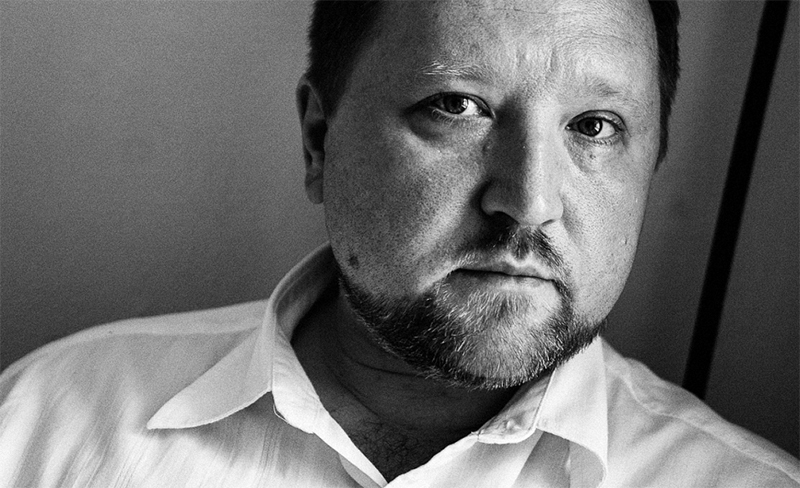
Kolta continues the project “Journalism: Revision” by the conversation of Ksenia Luchenko, who lives and now working in Berlin, with the deputy chief editor of Kommersant, Dmitry Butrin, who lives and works in Moscow.
While this material was being prepared, the bootrin became an involuntary participant in the scandal in the journalistic environment. The publication “Project” (recognized by a foreign agent in the territory of the Russian Federation) refused the editorial award, in the jury of which Dmitry works with the justification: “We believe that the presence in the current <...> jury of one of the managers of the Kommersant newspaper, de facto censorship and propaganda, throws a shadow to the work of the“ editorial board ”.”
Luchenko asked the Butvkh about what this means - to work in the overcensation of Russian media in 2023. Butrin asks the general counter question: where are the readers who need the truth about the war today?
- “Kommersant” has always been a symbol of new Russian journalism. The newspaper can trace the whole history of independent post -Soviet media. We remember the legend, we remember the gradual strangulation of the legend. The story of the departure of Maxim Kovalsky , for example, or the dismissal of the policy department almost in full force in 2019 . And if you were asked now: "What is" Kommersant "?"
-I appeared in Kommersant in the summer of 1999. And then and now the main function of Kommersant is the same. It is called Newspaper of Record - a nationwide newspaper in which national events are recorded. In Kommersant there is a traditional consideration that all recruits are informed: “If they did not write about this in Kommersant, this was not, and if they wrote, it was.”
What is Newspaper of Record for the Soviet era? There were times when the Komsomolskaya Pravda was active, or there were times when the authorities wanted to formally appoint Izvestia newspaper in Newspaper of Record , it was called the Iznestia of the Council of People's Commissars, that is, a government newspaper. But the main newspaper was Pravda. The bad "truth", a good "truth", she always performed the same function: if something is written in it, then it is; If not written, then from an official point of view this was not or it does not deserve attention.
Without any of our desires, we wrote the status of Newspaper of Record . This happened two years before I came. I can be a little mistaken, but since 1998, Kommersant is a newspaper product that performed this function further continuously.
This status requires some specific qualities from the editors. Firstly, a sufficiently tough attitude to standards that do not depend on the state of society, on the desires of society and on its problems.
Second. With our Russian device, this also implies a rather close interaction with the authorities. Since the country is state -centric, we need to understand what the authorities are doing, and tell anyone who does what it does. Until recently, the number of people, with interest and consciously reading newspapers in the country, did not exceed, according to the most inviginal assessment, four million, in realistic - 500 thousand people. And you can estimate how many of these people work in the state, on the state or earns on the state. I believe that 80 percent. Even if the authorities do not want, even if she believes that it is not necessary to talk about it, we have a basic task - to say what is happening. That is why I defined a “businessman” as part of the authorities for quite some time, a somewhat autonomous, but part of the power structure.
Somewhere in 2015–2017, we were a little moved from the state structure and began to write in a language that people in the state were not very clear. And to some extent simply lost contact with their reader. And that is why we perform the Newspaper of Record function worse.
There is a feeling that this is not Big Deal , that the country can do without Newspaper of Record at all. And not that in the editorial office someone reflected a lot about this. But no one understands what we will do if we lose this status, and what we should do then.
I have to tell you two things. The number one thing: many years ago we agreed that the leadership of the Kommersant publishing house does not discuss the publicly current editorial policy of the Kommersant Publishing House with anyone. Dot. What to consider the “current editorial policy” remains on the conscience of the discussing. But since there is no dogma in Kommersant, we take a word for each other. Therefore, I cannot and I will not discuss politics with you.
The second point: I, unlike many of our colleagues, have no experience in journalistic work in absolute freedom. I have been working for 25 years, and when they say to me: “Well, then there was freedom ...” Well, well. This is a subjective sensation. Or: “But Kovalsky was fired, the kingdom of heaven, but then yes ...” And I say: “Let's remember to Tregubov , Boris Abramovich (Berezovsky. - Ed. ) ...”
This is when the "Golden Age", when complete freedom? Apparently, before me ( laughs ). The moment when there was no bloody regime, but we freely jumped, did not find. And when they ask me: "Well, is it hard for you?" -I say: “Yes, in some aspects, of course, life was completely sore, but basically about the same thing.”
- But there is an obvious difference between what was 15 years ago, and what we came to after February 24th.
- quantitative - is. And everything is the same. What is different? What, with the presidential administration, which he headed ... Well, who is there, Dmitry Anatolyevich Medvedev, it was impossible to quarrel like that to go to jail? Yes, it was possible, it was possible! ( Laughs .) Of course, then there were much smaller red flags, now it is difficult to find where they are not. But the color of the flags is the same, the device is the same: flagpole, rag, sharp tip.
-But if everything is still, then what caused the massive closure of the editorial offices in March 2022, the general evacuation of journalists?
- Listen, you land on the island and know that there is a snake. If the island is 15 square kilometers, you do not care, it is obvious that you will not step on it, although there is some probability. And if the island is 50 square meters and there are 40 snakes, you will not land. Snakes are the same, the difference in their quantity.
- How do you understand now, what can be published and what is impossible? Can we say that you are allowed something, but something is not?
- I don’t think that the editors can be controlled differently than through the selection of people. This is the only way. And Kommersant is an extremely conservative structure. If you look at who drives with what, you will find that a 20-year-old career is normal, it is also a 30-year-old, but 10-year-old is right. We, for the most part, have a turnover in those places that cannot be suspected that they take a serious part in determining the general course. The structure of the departments has not changed for many years. The last reform, which I remember, was 12 years, or back, Igor Trosnikov still started it. She was, from my point of view, rather ridiculous, but established and works.
At the same time, the administrative structure of Kommersant is horizontal. I have never seen someone was afraid to go into the office of the chief boss, this does not happen, no one is afraid. Well, maybe some kind of newborn ...
That is, everything is built either on self -censorship, that is, on the realization that if we do this, there will be brushwood, or on censorship, which comes from within the editorial office and perceived, rather, as a measure of self -preservation. There is no person who says: "I am from a shareholder, and therefore you will do so." No, the main motivation is always exactly the same as it was with Vasiliev 20 years ago: guys, if we release it, they will devour us all. And they can, and they will devour in which case, and we know it.
- In what form can this be a groove?
- Look, there is the first aspect, it is very skinny and simple. As I have already described, a 15-year-old career in Kommersant, 15 years of work in one place is what you do half-life, and if you are 35, then the whole conscious life.
True, now it has become not very important, because in the last 20 years we have been observing a continuous, monotonous, very slow process of degradation of the social status of a journalist - and the associated material status. The 1998 journalist is wow! And now the journalist receives the average salary in Moscow, and in terms of status he is comparable to some deputy head of the department of a small company. He can open the doors with his feet with great difficulty. There has long been a long time to trips to Paris on weekends. 20 years ago it was wrong. The process of degradation of journalism began not with the regime, it is not connected with the authorities, but is associated with the democratization of the profession, with the development of social networks and much more with what.
But there is some memory of social status, there are some phantom pains, and there is a large desire: we will still work here. Another 22 buckets of shit - and our golden key, everything will be returned to us, and we will “suck the royal breasts”, excellent expression, in general, we will be happy. You can not lose such work.
For many years I think that the time will come, and I will not be here. I am ready for this at any time, it is completely normal. But not that I wanted it. And this is not even a problem of social status or income. A significant part of the journalists who wanted to get public status have it regardless of Kommersa. But still scary. I sat here all my life, and now I’ll go to the street? I have never been on the street ( laughs ). I don't know what is on the street.
- Until recently, there was a labor market in journalism, people were lured from the editorial office ...
- What are you, where will I go? No! Nobody will call me, because these are other planets. "Comers" is not interchangeable with anyone.
For example, in Kommersant there is no culture of production meetings in principle. No decisions within the editorial office are protocolized, there are no written dogmas, most of the staff communicate with each other on an equal footing. When they bring me a vacation time, I say: "Put it when a person wants." When the sick leave is brought to me, I say: “Are you a fool, or what? Throw it off immediately! ” And so on, and so on, and so on. This is a unique place of work, and it is scary to lose it.
Surely in the "New" will be told even more amazing things. Moreover, in Russia Today , amazing things will be told. Everywhere! There is nothing like leather.
The second aspect-for some reason it is important for us that this thing exist regardless of everything. Here you don’t give a damn, to fall all the light, and I can drink tea. Newspaper of Record is a stable institution, it is such a slightly academic structure. We must always exist. This is some existential idealism.
It is clear that there are options in which we will cease to exist. But this moment has not yet come, although over the past few years we have repeatedly thought: maybe it has already come and we have to get out? And a significant part of the people now believe that it is not clear to them, we are doing all this on the hell.
On the third party, I know that this can end at any time, and therefore what difference is - another day or two, another year or two, or maybe a decade. When this ends, no one knows, neither personally nor institutional.
- That is, it turns out that Kommersant just should be?
- Yes. Self -preservation, preserving their income, your self -awareness, your hopes, your history, and so on. This is a personal part. Simpat self -preservation as a collective field - and you will get a full picture.
- But this is media! And the meaning of the existence of the media is in honest and relevant information.
- Saying “this is the same media”, what are you talking about? Do you proceed from some ideal media theory? Or the media should be “not only a collective organizer, but also a propagandist” - from this, or what?
- If you compare Kommersant with academic institutions, then the difference is immediately visible. Scientists can engage in eternal, and the media is busy with the fact that here and now.
- Just the task of Newspaper of Record is to transfer the momentary to the eternal. We released the newspaper - that's it, this is eternal, we recorded.
I constantly scold correspondents when they sit and write: “In the month of March ...” I say: “Put what year!” They say: “Why? It is clear that in this March. ” I answer: “Because in five years you will be inconvenient. Put a year, you yourself will climb and look at which March! ”
The newspaper, of course, formally lives one day, and we are used to the fact that today we blew up in Kramatorsk, and tomorrow in Donetsk, and we have already forgotten about Kramatorsk. But this thing exists in order to see in 2032: A, “Kommers” then what I wrote, yes, it was like that. And by that time, suppose everyone had disappeared, fled, Fishman (recognized as a foreign agent in the Russian Federation.- Ed. ) Already in the Patriarchy, and Tikhon Dzyadko (recognized as a foreign agent in the Russian Federation.- Ed. ) UNESCO. And these in the "commerce" both fiddle and fiddle are the same. Boring, they are boring, but still write.
We are still claiming to represent everything that happened today. By the way, now the main problem is now: we cannot fully fulfill the Full Coverage function, because war is a closed topic. Not only because of political censorship that I will not discuss, but also technologically.
Even if there were no direct threat of the forced closure of the newspaper, we could not illuminate the war standard, how to cover any war, because we need a correspondent both on the Ukrainian side and on the Russian one. Like in the Chechen war: there a person sits there - and sits here. As in the last stage of the Karabakh conflict: the article from this side is an article from that. But we have no correspondents on either side or the other side. We at least cannot send anyone to Ukraine.
But no one illuminates the war, by and large. It is lit either on one side or on the other, but no more. And according to our standards, a journalist cannot be on one side, the parties must constantly be compared.
- You can call. There are OSINT (Open Data investigations and other open sources - ed. ), There are many methods that journalists use.
- We are not working with OSINT . No, it would be possible to try, but if it turns out well? ( Laughs .)
- What?
- And who will publish it? Who? They will close us!
One must understand a simple thing: the fulfillment of journalistic standards that everyone forgot about, in this war it will mean that the newspaper will lose support in any part of society.
I periodically lose in my head a situation in which we write as it should. No, impossible! Imagine a newspaper that writes what is happening on the Ukrainian side, on the Russian one, and combines it with each other. As soon as the Medusa (recognized as a foreign agent and an undesirable organization in the territory of the Russian Federation.- Ed. ) Trying a little to move towards objectivity in the coverage of hostilities ... Read the comments. They are not Ukrainian, they are Russian. They are written: “What are you doing? You deprive us of hope! You are Putin agents! " Yes, we are Putin agents, Poroshenko Agents - it is absolutely unimportant in such polarized societies. The truth is nobody about the war. We need support for one or the other side.
By the way, in the polarization of Ukrainian society and its split, we do not understand anything, we do not know anything about this. In appearance, it is monolithic, like heroes-heroes from the book, but as in fact, to be honest, I just don’t know, and no one will tell about it.
In general, I do not know who and how could all this adequately describe it. At least no one wants to read it. And this is one of the main tragedies when you write what will no one need.
- But the chronicler leaves the undistorted picture ...
“Have you ever been engaged in Russian chronicles?”
- What does the annals have to do with it? We are in the XXI century ...
-Imagine some historical period in which the annals would not be distorted.
One of my long-standing tasks, because of which I quarreled with a half of the editorial office, explain: “Citizens, God forbid, we will satisfy the expectations of readers. We should not please the reader. Because the time will come when the reader begins to say: do not hell to write your truth, write what I like - my lie! And now this moment has come. We survived to him.
In the place in which we are - and it is unpleasant to be in it, and no one is proud to be in this place - the reader wants a lie from us. The reader wants endless stories about how it will end in favor of the forces of good. The reader requires a continuous description of how we move in a narrative from bad to good. The reader wants the “warriors of the Light” to be here, and let the “warriors of darkness” be with a distorted face. And all that the reader does not like is propaganda in favor of the enemy.
Now you can’t be neutral. Are you awesome, or what? Is there evil? Eat! We know him in person: "Hello, comrade evil." And try to be neutral in relation to him.
- But here is a specific case. You have journalists who still go to the combat zone on the Russian side. There was a story with the report of Alexander Chernya from Mariupol , in which everything was cool, only it is completely incomprehensible what happened to Mariupol. The report is cool, what I saw, then told what happened?
- Here! So I, in fact, explain to you that now this is the main existential threat. We cannot write adequately about the war. On the one hand, this is self -censorship for self -preservation, and on the other, are you sure you want to know what the reporter thinks about this?
- There are not his thoughts, but the facts ...
- He set out the facts to you. And you expect definitions from him, not facts. Если есть на свете кретин, который не понимает, что случилось с Мариуполем, значит, ему это не надо. У меня этих претензий к Саше нет. Ловить кого-то на слове — не мое занятие.
Кому нужна правда? Украинским беженцам из Мариуполя, которые сидят в Европе? Родственникам тех, кто по мобилизации пошел деньги зарабатывать? Кто готов будет поддержать и сказать: «Да, Черных, ты зайка, ты молодец, что поехал с русской стороны, нам не хватало этой информации»? Узок круг этих людей. В основном все говорили: «А какого хрена он туда поехал?! Что вы тут рассказываете, москали».
Это не фигура речи, и я не иронизирую. Я действительно считаю, что сколько-нибудь приближенная к истине информация о том, что реально происходит, в настоящий момент не востребована и будет агрессивно преследоваться. И я не вижу в этом ничего удивительного. Представьте себе статью в «Комсомольской правде» 1943 года о том, что на самом деле думают о войне матери солдат вермахта.
В эмиграции говорят: мы в этом больше не участвуем — мы уехали. А вы точно в этом не участвовали раньше? А что изменилось от того, что вы уехали? А если вы уехали не 24-го, а 27-го, значит, вы три дня поддерживали Путина? Bad. А если три месяца? У вас там один бедняга на «Дожде» (признан иностранным агентом и нежелательной организацией на территории РФ. — Ред. ) открыл рот: «Мне русских солдат жалко, они по большей части мобилизованные, давайте мы им туда немножко ватничков пошлем» — и что с ним сталось? ( Смеется .) Порвали, как Тузик грелку! А ведь это очень естественная человеческая реакция. Его съели за 15 секунд. А вы хотите, чтобы я газету делал такую? ( Смеется .) Не, не получится.
— Если вы понимаете ситуацию так, то как получается у вас все равно оставаться журналистом и редактором, который отвечает за содержание подцензурного СМИ в России в 2023 году?
— Снявши голову, по волосам не плачут. Можно было, несомненно, — и это приходило в голову — остановить выпуск издания. Но мы посчитали, что статус newspaper of record сохраняется.
Мы работаем без удовольствия, я работаю без удовольствия. Правда, я уже много лет не испытываю удовольствия от этой работы, на это есть много всяких причин. Помимо войны и авторитарности есть еще много историй специфически российских, связанных с управленческой культурой. Самая главная проблема — наша практика администрирования. Дай Бог начальника, которому нужны деньги, не дай Бог начальника, которому нужна власть. Ты приходишь к хорошо знакомому человеку в некий высокий кабинет, начинаешь разговаривать, пьешь чай, я довольно часто курю, а дальше к нему заходит его секретарь, его заместитель, его подчиненный, и я вижу, как они его боятся, и это ужасно. Я очень давно не видел даже очень хороших своих друзей-начальников, которых не боятся. И это чудовищно.
— Ваша журналистская специализация — экономика…
— Это часть моей проблемы. И политика с экономикой не связаны, к сожалению, потому что неудачи в экономике, коррелирующие с автократией, были бы спасением. Если бы все работало так, что за жестокостью следовала бы бедность, никаких вопросов не было бы.
Но сейчас экономика чувствует себя существенно лучше, чем может казаться. У нас Центробанк — профессиональная команда. У меня и в отношении их предшественников не было особенно злых слов. Но в 90-х — тут мне сложно, я во многом не понимаю реальных обстоятельств. Сейчас с Минфином нам в изрядной степени повезло.
Я всегда отплевываюсь от этих бесконечных предсказаний, как экономика России навернется и мы пешком придем с белыми флагами и устроим здесь правительство уважаемого мною Гуриева (признан иностранным агентом на территории РФ. — Ред .). Или уже последние 20 лет пишут, что в экономике крах. Это ничем не отличается от хазинских предсказаний о падении доллара . Все смеются и думают: ох, Хазин сумасшедший, он предполагает, что доллар грохнется. Но экономисты, которые двадцать лет предрекают немедленный крах российской экономики, — такие же.
Если все, что нашему обществе предлагают почитать, — это только про то, что Путин завтра закончится, а экономика России навернется, то, извините, вас обманывают. В лучших целях, но обманывают. И вы можете посмотреть всю эту историю от начала и до конца, как предполагали крах Путина в 2001 году, в 2003-м, в 2008-м, в 2012-м, в 2015-м, в 2017-м…
— Журналисты, которые работают в медиа за пределами России, говорят, что страна превратилась в черный ящик. Стало очень мало источников, а прежние или ничего не комментируют, или реально ничего не знают. Решения принимают буквально два-три человека. Вы находитесь внутри, у вас такая же ситуация? Или, например, по экономике все источники остались?
— Если честно, никакие источники не нужны. Количество открытой информации, которая, с нашей точки зрения, достоверно описывает происходящее, на порядок превышает ту информацию, которая нужна, чтобы сделать выводы о том, что это, куда идет и чем закончится. Но я еще раз говорю: нашим читателям в настоящий момент не нужна никакая объективная информация о том, что происходит, она их злит. Это проблема информационного спроса.
А сама информация в изобилии, мы живем в ситуации, при которой страна — с точки зрения действий — абсолютно информационно прозрачна. Мы все знаем до мелочей, но нам знать надо же что? Вам что надо знать? Вам лично нужно знать, хотел ли Путин придушить Пригожина своими руками? Извините, я этим не занимаюсь, и мне это не кажется очень важным. Но это то, что всем интересно.
— Важно понимать, например, что получилось в июне с Пригожиным, почему он развернулся.
— Объясните мне: почему это важно? Когда Пригожин здесь буйствовал, я сидел в городе Екатеринбурге, на конференции по сталинизму, и мне нужно было лететь обратно. Я, конечно, беспокоился, как улечу, а сам себе говорил: слушай, какая разница, я знаю, что нет у Пригожина никаких 50 тысяч, а есть тысяч 8 от силы, и что, эти 8 тысяч Москву захватят? Ну перестаньте. Это абсолютно неважно, и это сейчас прекратится. Ну, вот оно и прекратилось. А то, как российская власть на это отреагировала, — это гораздо интереснее.
— Или важно, например, понимать, что случилось с Каховской ГЭС, кто ее взорвал и почему.
— В случае с Каховкой мне вообще, строго говоря, неважно, кто конкретно нажал кнопку, русский или украинец, потому что документально подтверждено, что русские там что-то минировали, а украинцы, документально подтверждено, по этой плотине долбили. И какой конкретно снаряд попал по Каховке, предположим, что русский, что от этого изменилось? Для чего важно знать, чей снаряд попал окончательно? Для того, чтобы поддержать ту или иную сторону.
Что летописцы в XIV веке в таком случае писали? А кто туда попал — татары или русские, то Бог весть. Вот что они писали. Важны последствия: реку разлило, кучу народу утопило, наступление украинское теперь через эту точку невозможно, путинских солдат там залило. Конечно, неплохо было бы знать, заминированы ли остальные плотины. Но с точки зрения текущей конъюнктуры ответ на вопрос, кто конкретно нажал на кнопку «пуск», никакого значения не имеет. Могли и те и другие, и пробовали и те и другие. А этот вопрос нужен только для одного — чтобы в очередной раз сказать «слава России» или «слава Украине», и больше оно ни за чем никому не нужно.
— Но наличие даже пары источников страхует от пристрастности. По классике, их должно быть даже три.
— Есть такая теория-теория. Она, на самом деле, идиотская. Знаете, как это действует? Что делает источник, которому звонит условный Перцев? Он им манипулирует. Либо он хочет вас обмануть, либо он повторяет то, что он слышал. Слышал от кого?
Информация — это одна точка, а дальше она распространяется по трем следующим точкам, от этих трех она уходит в девять. Дальше вы звоните одной точке на втором уровне и одной на третьем. А сколько источников? А источников, на самом деле, один, только он врет.
Мы это еще десять лет назад заметили: кому ни позвонишь — они знают все, а на практике — все врут. For what? А им просто приятно. Из «Коммерсанта» звонят — как это я не знаю? Мы звоним человеку и говорим: «Васю увольняют?» Тот говорит: «Увольняют». Мы звоним другому: «Васю увольняют?» — «Увольняют». — «А ты откуда знаешь?» — «От Пети». — «А, это тот, которому только что звонили?» Все, вот ваши независимые источники! В кругу из 20 человек это всегда так! И в автократии это всегда так. Как по-другому будет? It won't. Это узкий круг, и всегда есть искажения, нет независимых источников. Мало того, они сами ждут, что вы им расскажете, что происходит.
Ну и какое отношение это имеет к реальности? Это прекрасный пузырь. Не работают в нынешней реальности эти два источника. Do not work!
— Конечно, в нынешней российской не работают, понятное дело.
— Так они и в украинской не работают, они нигде не работают. Когда в нынешней цивилизации каждый стремится урвать свои пять секунд славы в Телеграме, чего вы хотите? Человек, чтобы удерживать ваше внимание, будет врать вам бесконечно.
— В чьих интересах работает «Коммерсантъ»?
— Очень хороший вопрос…
— Журналист все-таки работает в интересах читателя…
- In no case! Для меня пока актуальной остается задача летописца. У этой задачи нет конкретного адресата в обществе, это чистый фиксинг. Возможно, теперь это бессмысленно, потому что и так все фиксируется.
Второе (и мы по-прежнему не отказываемся от этого), наша основная функция — рассказывать людям, работающим во власти и около власти, что они делают и что у них получается.
У прессы есть политическая функция, и мы от этого никуда не отъедем. Всякий раз, когда говорят: «Да нет, мы просто освещаем текущие события объективно и беспристрастно», — ничего вы не обсуждаете нигде. Вы участвуете в политической борьбе. Нет, ребята, вы занимаетесь политической деятельностью. СМИ непременно являются субъектом политического процесса, и журналисты — это власть. Поэтому всякий раз, когда вы говорите: «Да, нет, мы нейтральные!» — кому-нибудь другому расскажите. Даже ваша нейтральность — это политическая позиция. Это центристская позиция, стандартная. Поэтому, как правило, newspaper of record — это центристы.
Третье — мы гарантируем, что, если где-то что-то происходит, мы, по крайней мере, это фиксируем на общеизвестном языке. У нас все-таки есть некоторый интеллектуальный уровень. Мы его применяем к текущей ситуации. Если вам это ценно, читайте.
Но, к сожалению, мы действительно не можем объяснять войну. Поскольку война является главным сейчас событием, то мы немножко бессмысленны.
— Большой слон в комнате, которого все игнорируют.
— Да, а мы на него не смотрим. И это, конечно, базовая проблема. Что будет, если этот слон куда-то уйдет или разложится на молекулы, — черт его знает. Это непонятно. Ничего сильно хорошего ждать не приходится по многим причинам. Вполне вероятно, что надо просто учиться или горловому пению, или громко орать.