
Translated material
Google to help
Why humanity cannot part with the main search engine of the planet after 25 years of marriage
Photo: PA-EFE / FILIP SINGER
On September 4, Homo Digitalis celebrates 25 years of dense cohabitation with the main search system of the planet - Google.
When I met WWW in 1994, everyone was looking for information in the Yahoo!, Infoseek and Lycos catalog. Next came the Looksmart catalog and Altavista search engine. Then Hotbot came. The Yandex search engine has opened. In 1998, two graduate students from Stanford University Larry Page and Sergey Brin launched their Google.
In 1998, Altavista was standard, and no one disputed her championship. However, a year later, Google received a lot of money from investors. Then again, again and again. Very, very, a lot of money. From Sun Microsystems, from Amazon, from Kleiner Perkins, from Sequoia Capital ... Google began to develop rapidly.
The temptation is great to say that it was the abundance of investments that ensured Google dominance in the market for search engines of the Internet. But that would be unfair. Google defeated competitors because his search engine was better than others.
It is for this reason that in 2000 the king of structured information is the catalog of Yahoo !!!! - Refused the Inktomi engine in favor of Google.
After Google, a lot of wonderful search engines came (and left): Duckduckgo with an emphasis on privacy and refusal to collect information about users; Bing (Microsoft); Quant is the pride of French IT thoughts, which puts at the forefront of the struggle against the “filter bubble”; Dogpile search aggregator; search engine for physicists and technologies Wolframalphas; The dream of Startpage conspiracyologists, which does not fix even the IP and MAC address of the user computer, and many more useful and interesting. But never over the past decades, none of the competitors managed to shake Google's unconditional leadership.
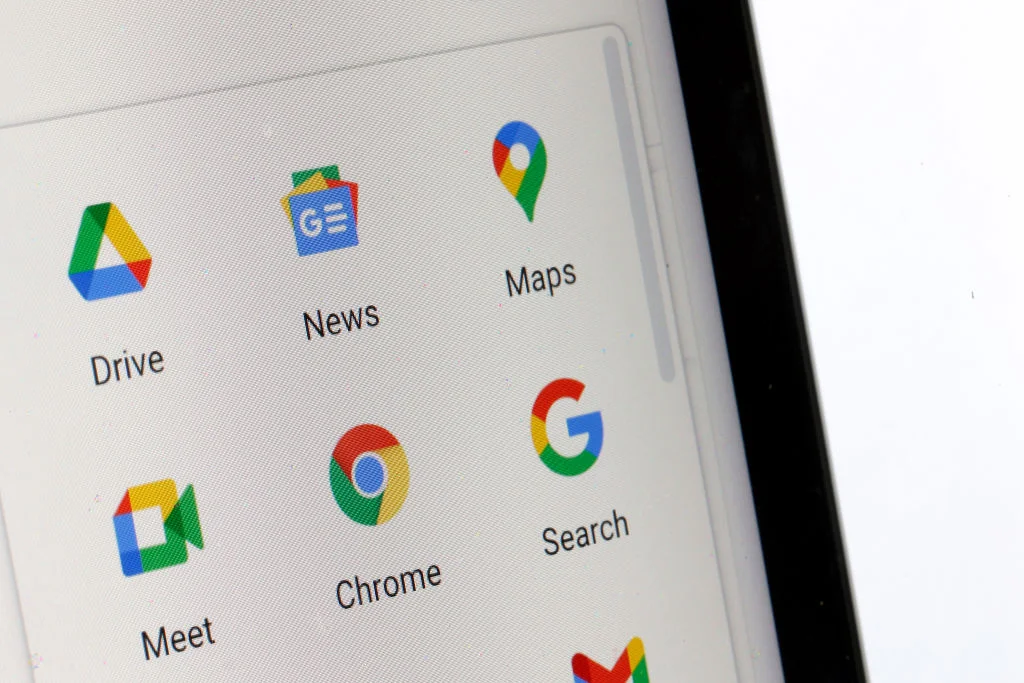
Today, Google (or rather, its umbrella company Alphabet Inc.) demonstrates quite respectable monopolist manners in all directions where the hands reach. Leader in digital cartography (Google Maps); The largest postal service provider (Google Mail) and Office online applications (Google Docs); The third major cloud provider (Google Drive, after AWS and Azure); The leader in artificial intelligence studies (PathWays Language Model 2) and the most popular online translator (Google Translate). The most popular mobile operating system (Android); The most popular browser (Chrome); cult smartphones (Nexus and Pixel); Light workstations (Chromebook); columns with a voice assistant (NEST); A fiber operator (Fiber) and many more different things - this is also Google.
It is significant that no one can reproach Google for the use of non -market methods of struggle. Everything was always honest. Google began small, turned into a giant and became a leader only because the user market itself, which said: Google, was the best. It is unlikely that the Chinese Baidu or Bing, owned by a company with inexhaustible avoirs, had fewer resources and levers of public influence, but nevertheless they could never approach Google in popularity.
Why did Google become a giant? The answer will seem paradoxical: because Google is a monopoly. The monopolist manners did not arise because the corporation imposes something on users (how can you impose something on the Internet at all? Do not want to use, alternatives-a spilled sea), but because Google is everywhere and everywhere. This circumstance allows Homo digitalis to use Google services on the machine , which, in turn, meets the key need of people to delegate basic actions to reflexes. The more it is possible to delegate, the easier it is for a person to live. Neuropsychologists even say that otherwise our ancestors would never have learned not to think, but just walking on two legs.
I understand that the maxim “Google is large, because popular and popular, because large” will satisfy few, so we will try to find the chicken that demolished the first egg. I propose to do this apophatically (already tradition!), That is, moving from negation. To begin with, I do not like in Google an intellectual public, accustomed to think critically.
The intellectuals have two main claims to Google. Firstly, the filter bubble that occurs due to the personalization of the search. It, in turn, is based on a huge information database collected for each user. Secondly, total surveillance , without which a personalized database cannot be collected.
The easiest way to deal with the filter bubble. The frenzied popularity of social strokes (likes on social networks), the fierce reluctance of most Internet users to enter into verbal and ideological confrontations, voluntary self -isolation in “interest groups” and “part -time”, which do not allow the slightest dissent - everything unequivocally indicates that most of the non -zenes perceive the filter bubbles as manna as manna Heavenly, not an attempt on information freedom.
Now about total surveillance.
It is important to understand that Big Data is not espionage for each of us personally, but a tool for hypersificative marketing.
Individual surveillance on the Internet is carried out by completely different methods (in short, through the introduction of the Troyans into the victim gadgets).
Every state has a wide range of possibilities to force it to share IT- and communication companies on individual users: the history of search queries, geolocation and dynamics of movements, the log of phone calls, the content of a smartphone, etc. In the Russian Federation, such coercion is an unquestioning norm, in the USA- also a norm, although it still requires a court decision. From time to time, the American state even encounters unexpected reward of corporations, but this is rather an exception to the rules than an example of the effectiveness of mechanisms that protect private data. After the 2001 Patriot Act, no private data on “state security” exists in nature.
So, the vast majority of the inhabitants of the planet repeatedly and colorfully demonstrated their absolute indifference to digital and information security issues. Especially if the proposal to share the data is reinforced with some gingerbread or exhibition souvenir. From fresh examples: mass voluntary scanning of the rainbow eye shell in a truly Armageddon gesheft from Worldcoin in exchange for 25 cryptopantics of the same name (read about this in the next article).
So it turns out that today's digital security issues are concerned today except perhaps post -apocalyptic ciphers and journalists.
Google has another claim. It is perhaps less significant than the previous two. Nevertheless, it has become key to everyone who is engaged in professional survey work on the Internet, for example, for journalists or OSINT specialists (Open-Source Intelligence, open sources intelligence). We are talking about the consistent primitivization of Google's own search syntax.
Once Google had exemplary opportunities for finding information using a rich language of requests and arguments of formal logic. In 2015, my students on the Minoa course (methods of finding, accumulation, processing and analysis of information) learned to make complex search queries using dozens of Buleans, inclusions and exceptions, stop-words, synonyms, searching in a given range and other things.
Today, Google has replaced the possibility of direct use of complex search syntax with a set of simplified “tools” built into the interface, which, according to the company’s idea, are enough for the eyes to meet the needs of the mass user.
I have no doubt that closed codes are lurking deeply in the bowels of the search engine for access to full search work, but the documentation for the new syntax is removed from the public domain.
In fairness, it must be said that more than one Google succumbed to the temptation to primitatize the search work. Yandex and other alternative and little -known search engines had magnificent proprietary search syntax, but they all chose to get rid of the “extra” opportunities to “simplify” the user's work.
At the end of the first decade of our century, in addition to top search engines on the Internet, alternative systems of advanced search appeared. The Nigma project was especially distinguished, which allowed to rank information on thematic clusters in the process of survey work.
It seemed that the idea of cluster thematic search was the future of search engines, but where is there! Nigma, an intelligent metapoic system, developed jointly by Moscow State University and Stanford University, and safely played in the box and after a series of closes, discoveries and repeated closures magically turned into a Vietnamese web browser CốC Cốc.
Now - attention! -We take out a rabbit from the illusionist’s hat: Google, who lost all the trump cards attractive to professionals, which intensified the filter bubble and strengthened the collection of personal data, remarkably retained the dominant role in the online market: 88% in January 2015, 84% in July 2023!
Today, Google shows the only competitor on the horizon - the microsoft Bing (9% of the market), the success of which is explained almost exclusively in the search for the AI engine ( and preset in the latest versions of Windows as a search engine by default . - Ed. ). If you recall, however, that the proprietary LLM Palm 2, launched by Google in May 2023, involves 3.6 trillion of the words chains, and LLM Megatron-Touring NLG (joint development of Microsoft and NVIDIA) is only 0.34 trillion, reasonably assume that in the coming months of Google is not He only makes up for the missed, but will also increase the separation from the nearest competitor.

What did we get in the dry rest? The mass user convincingly demonstrated that he is not interested in any safety issues, nor filter bubbles, nor search syntax, nor the problem of data concentration in corporate and state adhesions. 84% of user requests leave no doubt about the preferences of the public. What then does Google take his flock?
The power of Google is precisely that smart people living on the planet are blamed for him: in monopolization, standardization and simplification.
The originality and emphasis of personal uniqueness, claims to an individual approach, the need for excessive functionality, concern for private boundaries in real life and safety in digital space are attributes, alas and ah, the marginal part of humanity. Maybe 5%. Maybe 10%. No more in any situation.
The whole vector of humanity development in the era of “uprising of the masses” - a process launched in the first quarter of the twentieth century - is not aimed at individualizing consciousness, but only at the removal of a person’s communal characteristics to a new qualitative level.
The collective memory attributed to Andy Warhol a winged phrase about “15 minutes of world glory”, allegedly awaiting every small person in the future. In the 1960s, it was believed that this little man would finally achieve social justice, get his 15 minutes of Prime-Time, would go out under the rays of the spotlight, and then ...
And then what? Well, what about: a little person boldly tells the world about his uniqueness, the originality of his voice, opinions, positions.
And then the Internet came and gave each little man his “15 minutes of world glory”. How did little people dispose of this chance? Necaled in different nooks of the digital universe: "Vasya was here!" One bad thing: Vasya, sing, John and Johanov no one heard.
Why? Because the Web 1.0 architecture itself, built on scattered user pages, did not allow.
Then they came up with Web 2.0. The interests of interests in the “cozy” format of Livejournal were born, where anyone could graphomaniac with the benefit of society and be heard. Facebook came, creating a common “board”, on which everyone could write their innermost: “There was a name here.” Google came, which united all the separate pages of the Web 1.0 era and thereby gave the second life to unrecognized masters of the penknife.
And now a small man, inspired by the phenomenon of social networks, rushed to scratch his “life credits” with tenfold energy. It was then that a miracle happened, which was not expected by the visits of the 1960s with their illusion of a 15-minute self-expression. The little man stopped engaged in nonsense (“I was a name”) and began to affirm his self, defiantly refusing individuality and emphasizing his belonging to society.
"I love Britney Spears!" - Here is the quintessence of the revolution Web 2.0. I adore her, you adore her, he loves her, millions adore her, billions adore her too. “I am the same as everyone else, and it sounds proud” - not just the foundation of the modern culture of memes, but also the main channel of the viral spread of information.
If we abstract from the disappointment that has befallen the apologists of the “uprising of the masses”, forced today to contemplate the collapse of hopes for the individualization of private consciousness, you can notice an unexpected technological twist of the plot. The community of a small person, embodied in a meme culture, has opened truly unlimited possibilities for manipulating public consciousness.
It is one thing to give a common impulse to the crowd, in which everyone chants: "There was a name here!" Another is to make a crowd chanting the crowd: “I adore Britney Spears!”, That it was she, the crowd, invented such a meme herself.
The technology of creating memes turned out to be so simple for the operator, at the disposal of which the boundless access to Big Data, structured by dominant trends, which I will not be surprised if Google still does not realize the scale of the happiness that has used it.
Of course, I will ironize. Google realized everything perfectly. He realized and actively uses, ranking the answers in users' requests in such a way that they go and sought only what is needed (which is considered correct, political correct, safe, geopolitically justified, etc.). And in order not to climb where it was not necessary, and they didn’t find what should not be, Google kindly hid a full -fledged search syntax.
What specifically attracts a mass user in the Google search engine? I would venture to assume that this is Knowledge Graph - the “knowledge base”, which the system displays in a separate window on the right on the page results. By definition, Knowledge Graph is an “infobox” containing relevant information in addition to the list of braces.
Who determines what is relevant and why is information from the information is important for the user? Google determines. Google Knowledge Graph is very proud that its “knowledge base” contains almost 600 million articles and 18 billion facts. At the same time, no open documentation for the selection of sources and - most importantly! - There are no priorities of their ranking in the “knowledge base”. Google says that he uses “different sources”, for example, CIA World Factbook or Wikipedia.
What is the bad thing in KnowLEDGE GRAPH? After all, the book of world facts of the CIA and Wikipedia are quite nothing in the role of sources of information ...
It is bad that Google periodically “forgets” to indicate in its information source the source of information. But even worse, for the overwhelming number of users, Knowledge Graph has become a synonym for the search process itself.
This does not happen because the information in the information is especially of high quality, but because the lion's share of requests belongs to the category of the so-called “philistine search”: I heard something fashionable somewhere and went to google. This whole audience will never go further than the information plot further into the search plot. Not even clicks on Wikipedia Link. Because all this is already somehow difficult. And you don’t need when there is Google Knowledge Graph, which will always slip the most “relevant” information.
25 years of monogamous cohabitation were not in vain. And it doesn’t matter that Google today is so big and surrounds from all sides. It is important that Google is an ideal search tool for Homo digitalis of the Web 2.0 era, because it covers 90% of the information needs of this Homa .
It turns out that we do not have a mezalliance at all, but an idyll "they lived in the soul for a long time and happily." I hasten to congratulate - both ourselves and our narrowed!