
Translated material
Caplon Archipelago
Why Solovki is the fate of Russia and its cross. Conversation with Yuri Brodsky-the author of books about the prison-camp history of the island
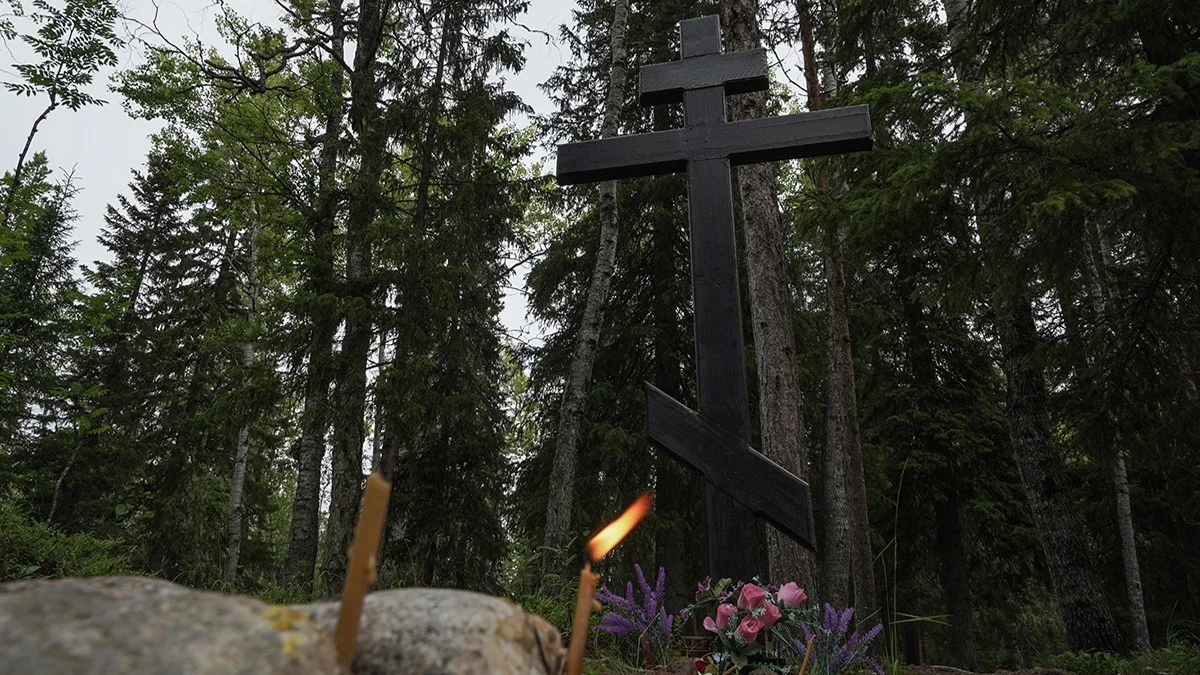
Photo: Anastasia Tsitsinova / "New Gazeta"
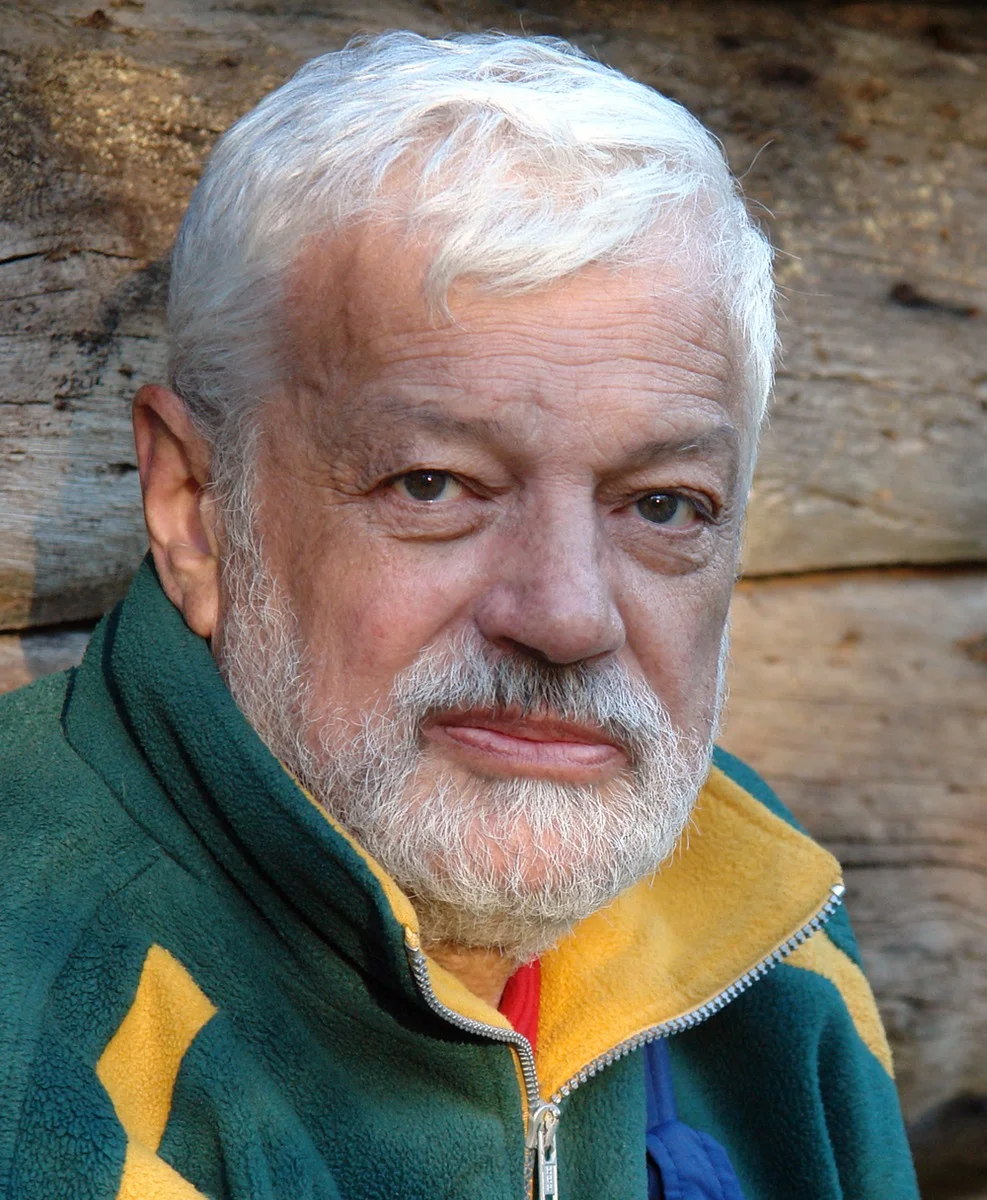
- How did the history of repression on Solovki begin?
- From the so -called miracle of beating, as the annals of the 15th century write. Two youths of an angelic species attacked the wife of the Karelian fisherman and carved her "cruelly and with anger." The “Korel wives” were not scored to death, they only warned that the islands were intended exclusively to the monks. Whoever remains will die an evil death. The mountain in honor of the miracle of beating was called a security mountain, and the forceful solution of the problems became the cornerstone of the internal and foreign policy of the Solovetsky monastery.
Mountain is a sectic, already marked with a manifestation of cruelty, became the center of dissenting murders in the 20th century. Behind the strong bars on the second tier of the temple on a sequirium mountain, security accumulated a group of suicide bombers. They were connected and dragged to the site in front of the altar of the Ascension Church. There, today you can see traces of stone calculation - features, in front of which executioners put prisoners.
The land at this feature is nourished by blood, but it is not customary to talk about it. Researcher Yuri Dmitriev from Petrozavodsk, while he was free, recorded hundreds of pits on the southern slope of the mountain with the bodies of victims of state terror.
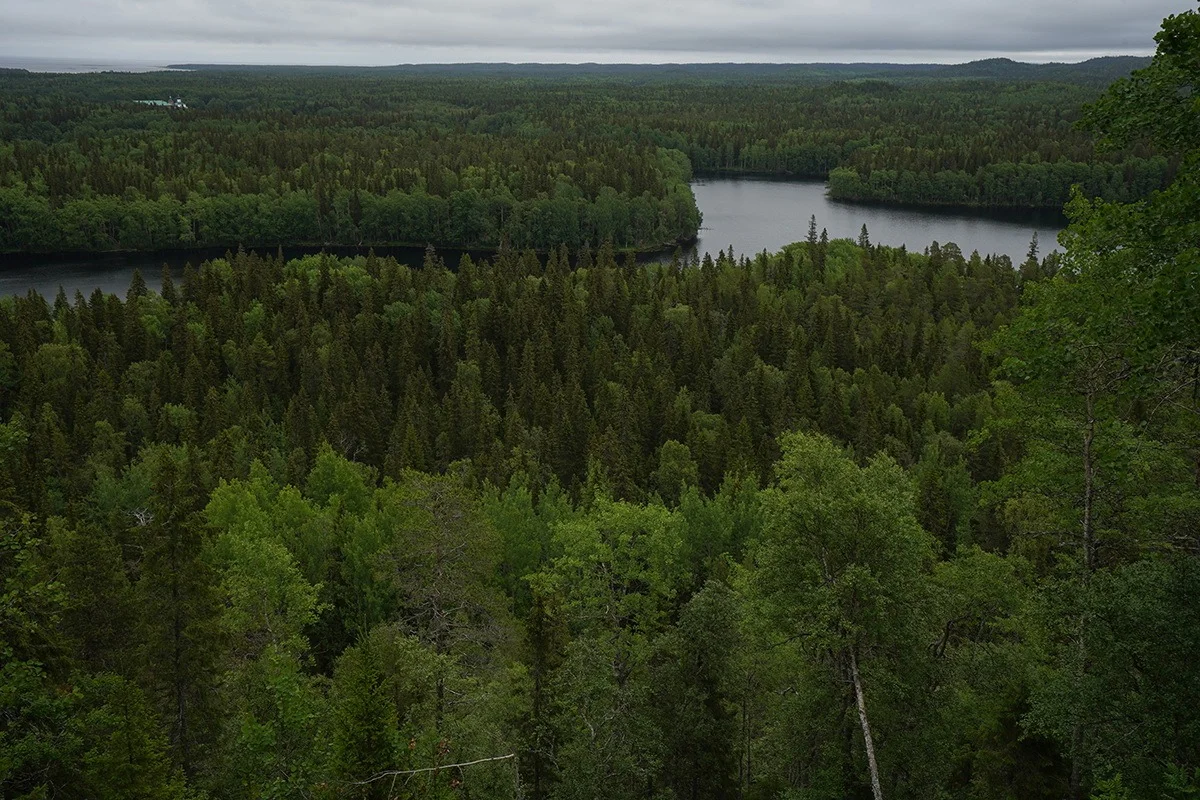
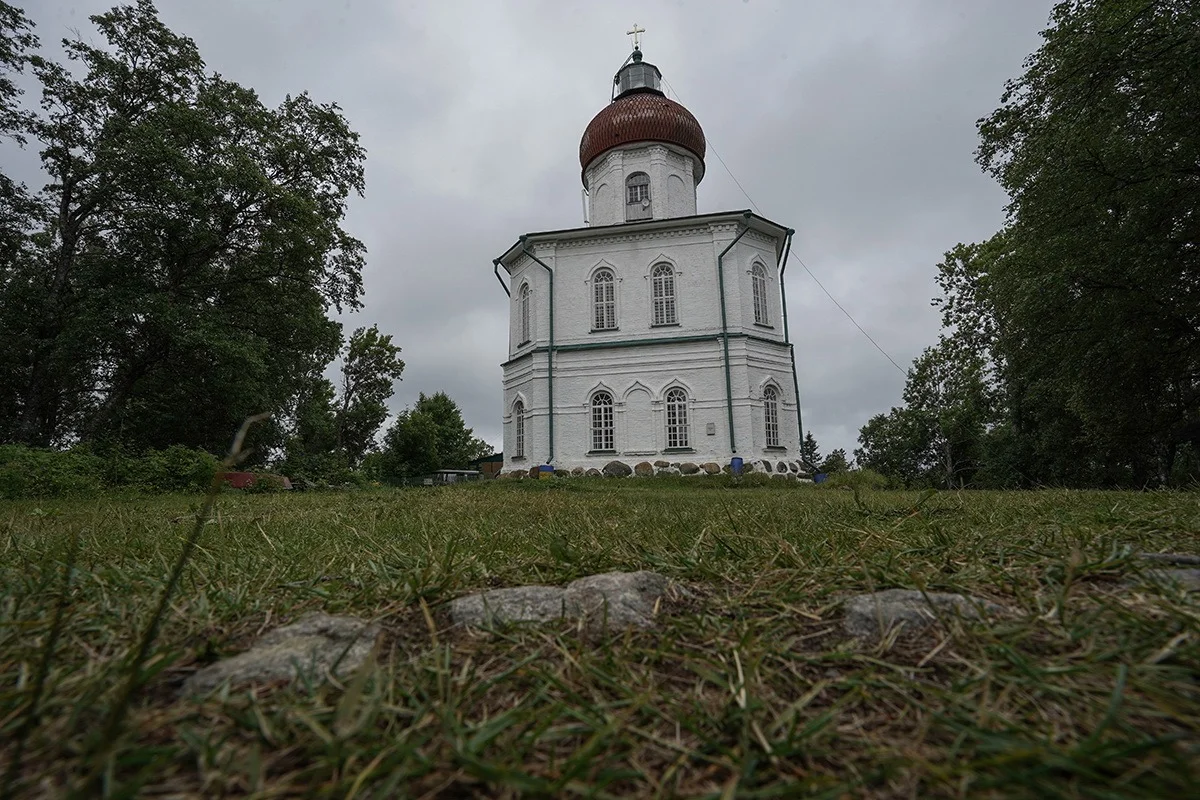
Already in the first century of the existence of the Solovetsky monastery in it, by the will of Ivan IV, a prison arose. Solovetsky monks turned out to be so zealous jailers that their cruelty overshadowed the glory of all other church casemates of the Russian Empire. When, after the Decembrist uprising, Emperor Nicholas I wished to place a hundred prisoners of the officer rank in the Solovetskaya prison, the commandant of the Peter and Paul Fortress drew up instructions for the maintenance of state criminals. The Solovetsky stroke monks, having received instructions, sincerely surprised her softness-the destruction regime in the monastery, where the prisoners had expired from damp clothes, was much more inhuman than in the capital's prison.
The prison in the monastery lasted until the beginning of the twentieth century, and in 1920, immediately after the arrival of Soviet power to the north, Solovki again turned out to be a zone of repression in the form of a concentration camp for prisoners of war. In 1923, this camp grew to the mustard (control of the Solovetsky special forces). The island became a landfill, where the domestic system of destruction of potential opponents of the regime was formed. How many calories are needed per prisoner, how many guards are needed and how many sexes are at a hundred prisoners, where to shoot during executions, how to use the work of prisoners, how to hide the corpses of the dead-all this and much more had to be invented.
Under the sector mountain, the first nursery of guard dogs arose. The first boards of honor to encourage labor drummers for the first time saw the light on Solovki, and the poster "Through labor - to freedom!" He decorated the Nikolsky gates of the Solovetsky concentration camp 10 years before such slogans appeared on the gates of fascist destruction camps. The monstrous machine of Nazi concentration camps willingly used the experience of the elephant. But Solovki did not receive a patent to destroy people in gas chambers. Dr. Nikolai Zhivov in 1929 arbitrarily spent the entire supply of poisoning gas of chlorpicrin, for some reason delivered to Solovka. During the Tif Epidemic, the doctor came up with a whisper, where the clothing of prisoners was disinfected with a poisonous gas.
- In the first years of the elephant, his contingent was special. These were camps for people, socially alien to the proletarian power, for the intellectual elite. Moreover, the prisoners, according to the memoirs of prisoners, influenced the worldview of people who guarded them. How did this happen?
- If a prisoner is a strong personality, he always affects the guards. For example, in the prison of the Solovetsky Monastery, the bailiff of the well of the “Tsar of the Skoptsov”, falling under the influence of the prisoner, barked themselves. And the stroke monks, guarding the former chamberlain-college of Peter Saltykov, themselves hit the sorcery, for which they suffered.
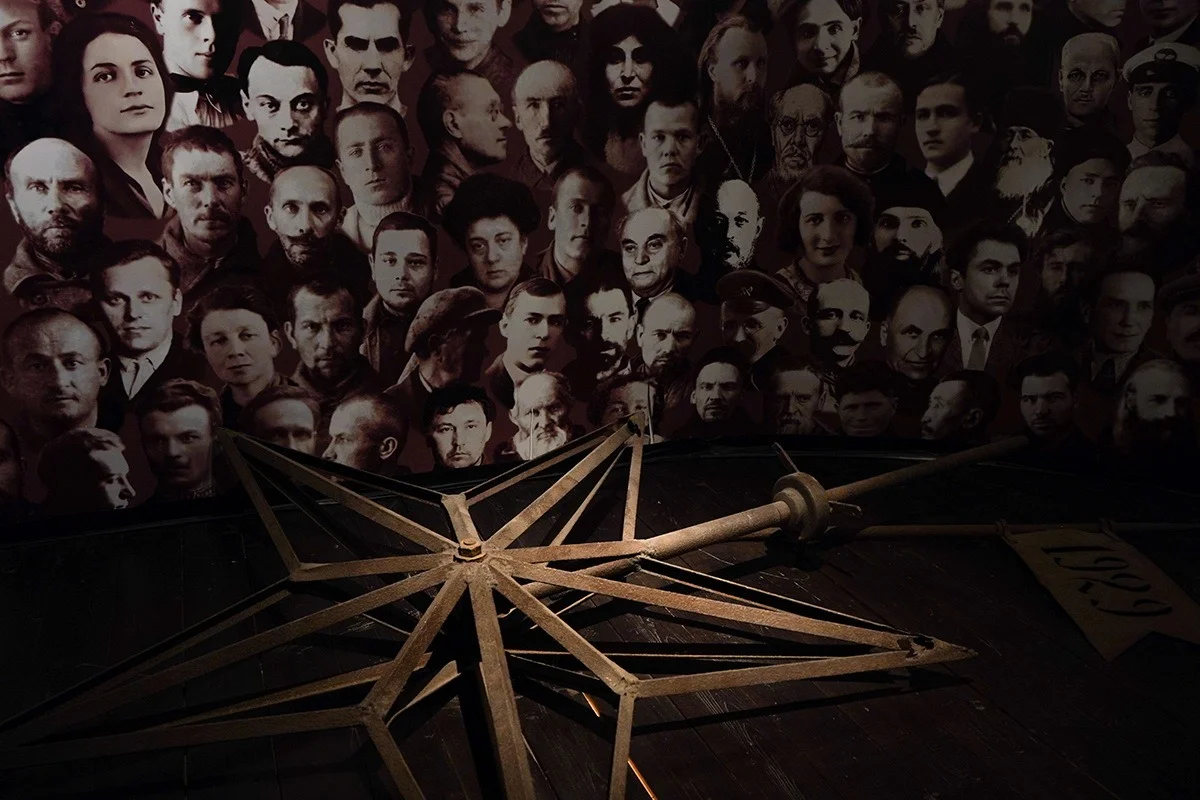
On Solovki, the Bolsheviks, for the sake of strengthening their power, concentrated hundreds and hundreds of outstanding personalities, fearing their influence on the surrounding society. This was a conscious stunning of the country's population by criminal destruction of the most educated part of the people. On the three islands of the Solovetsky Archipelago of the NKVD arranged polyskis for the temporary isolation of members of political parties, who recently were allies of the Communists in the struggle against the Russian monarchy.
In Soviet Russia, the Chekists destroyed the people who picked up the weapons or printed leaflets.
Solovki became, first of all, the place of expulsion of citizens, albeit not committed by crimes, but socially alien to the owners of the country due to their origin or education.
Lenin and his team considered them a potential threat to their regime.
Officers, nobles, professor-historians, lawyers who understand the crime of Soviet laws of revolutionary expediency. And writers, musicians, scientists, artists of imperial theaters, priests, inventors of new technologies. They were driven into Solovki with stages.
These people created 7 theaters on Solovki, a symphony orchestra in full force, their own newspapers and literary and artistic magazines, two libraries. The museum created by prisoners saved hundreds of icons and rare books from the plunder. The Solovetsky society of local history with sections in many branches of knowledge published collections, which to this day have not lost their scientific significance. Prisoners were invited to give lectures to guards, to educate and teach children of the camp authorities. Dynamo sports teams were exceptionally prominent athletes from among prisoners. Large officials and members of their families were brought to the island to the island. Children and wives of civilian employees took part in theatrical productions of camp theaters.
A lot of group photos have been preserved, in which the Chekists and the prisoners of their shoulder to shoulder pose in front of the lens. There are cases when the Supreme Solovetsky bosses married the prisoners, having received approval in Moscow for marriage. In the camps of the Gulag, there could no longer be such manifestations of liberalism.
- For the first time, prisoners as labor began to be used on Solovki. What work did they do?
-In the 1920s, the harvesting of the forest became the main fishing of prisoners. And working conditions can be considered torture. The prisoners worked in the cold in the bast shoes, they were left overnight in the frosty forest, if they did not fulfill the norm, two -thirds of the prisoners had frostbitten limbs and died very quickly.
Professors and poets were not born lumberjacks. They could not work efficiently. And they began to be sent to work on the mainland, on the laying of roads, for the construction of channels, for mining. The pre -war bam was also built by Solovetsky prisoners.
Since the 30s, when the Solovki yelled into the Gulag, any large construction had its own camp, which supplied the gift labor.
The history of places of imprisonment in Solovki will end, when Ordzhonikidze asks Stalin's human resources necessary for the construction of a copper-nickel plant in Norilsk. Most of the Solovetsky prisoners in the fall of 1939 were transferred to the port of Dudinka.
- What of the Solovkov inherited a modern repressive machine?
- The essence of the places of conclusion is then and now - to make all prisoners the same, similar to each other. Moreover, monsters are destroyed in the same way as the most beautiful people, because everyone should become medium.
The system of meaningless bullying came to the mainland from Solovki. The punishments were completely unpredictable. They could choose the most released from the mass of a person at the stage and suddenly shoot him for no reason, just to catch up with the rest of the horror.
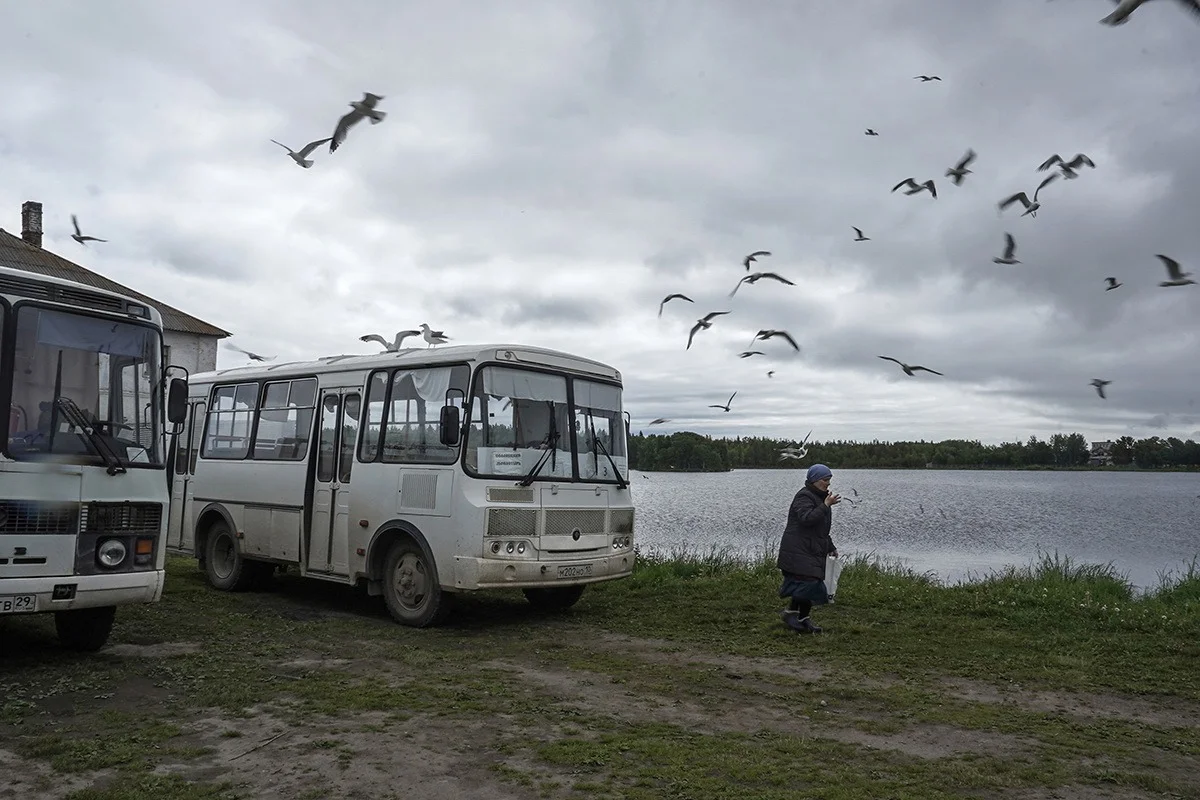
They forced to wear water from one hole to another in the palms in the palms in winter, to consider aloud flying gulls. If a person was tired of counting loudly, he was beaten.
In a camp, where there was no drinking water, they forced people who were tormented with thirst, to urinate each other. It was important to intimidate, suppress the will to resist, because the guard was afraid of the mass of prisoners.
When, from the mid-30s, prisoners began to be transferred from camp to prison mode, the pressure on the psyche of innocent people took other forms. Complete isolation and absolute secrecy. Instead of names, the prisoners had numbers. The light is constantly turned on. Hands and face should be constantly in sight. You need to sit on the bunks with your hands on your knees, the back is straight. It’s soundless to walk along the camera, while walking at the heels ahead of the walking. Letters or statements can be written only at a certain time and only with a pencil seal without a frame. Any violations of the routine were punishable by a croak. A completely recognizable story, if you ask how it is now kept in prisons.
- How did people retain dignity, what did they do?
- Oleg Vasilievich Volkov spent 27 years in camps and links. When he was asked how he retained himself, he replied: "I tried to wash my hands every day and not swear." One of us smiled, and Volkov said: "Do not think that it was simple." It is noteworthy that many of those who knew how to adapt, who tried to become “their own” for criminals or for the administration did not survive. And those who retained their spirit and moral principles survived to freedom. Preserving dignity in prison is the basic law of survival.
Those who, in conclusion had the opportunity to engage in at least some kind of business, were easier to endure captivity. For example, one of the prisoners-an outstanding biologist-achieved the opportunity to explore the shells of the White Sea, someone tried to grow Canadian wild rice, someone was hatching the electrification of all Solovki and a giant oceanarium.
Here, for the first time in Russia, an ondatra was acclimatized. It generally happened curious. The Finnish communist Karl Tuomainen was in the camp, he was appointed coachman of the camp, and in his last life he was related to the furry economy. And at the same time, an article appeared in the magazine “Karelo-Murmansk Territory” that on Solovki you can breed the muskrat-both edible meat, and the fur of the animal is valuable. But the article was so written that the impression was created that the ondatra was already on Solovki.
And there were requests to the camp from different ends of the country: send us two pairs of the ONDAR in exchange for two pairs of black-brown foxes. But there are no ondaters. First, they unsubscribed to the requests: they say, wait, you are put in line. Then, when the head of the camp found out about such answers, I had to urgently breed the rat.
By the way, the prestige of hats from the ondatra in the USSR - from Solovkov. For the first time, hats for the Moscow curators of the camp were sewn on the island, then an order was received from the leadership of the OGPU, then the order was only for the government! So it took root.
Yuri Serov, who created the Solovetsky Encyclopedia in Canada, wrote about the phenomenon of the halpes. He talked about Boris Linder, who came up with a pattern of a little woman, who came up with a pattern. Before him, prison hats of tsarist times were worn in Solovki. The style and cut of the camp ears from Solovki spread around the world - and is produced abroad in quantities incomparably large than any of the brands that came from Russia.
- Are there shoots from the camp?
- There were shoots, although it is very difficult to escape from Solovki through a harsh white sea. Many unsuccessful shoots from the island are known from investigative materials. Successfully fled mainly from the camps of the camp on the mainland. In the case of a successful escape, people changed their names and carefully hid their past. Not all successful fugitives wanted to write about themselves, afraid to harm relatives.
Here is what the former Solovetsky prisoner Dmitry Likhachev recalled about the shoots from Solovkov in an interview for the film “Solovetskaya Power”: “They fled from Solovki. They fled mainly due to their firm character - Ukrainians.
They sat on the log. The log was turning, but they rowed with their hands and reached some kind of island. We rested, caught fish and birds. Having reinforced, they sailed again. I appreciated the persistence of Ukrainians.
These are magnificent warriors for a specific purpose. Here we say: Ukrainian stubbornness. Stubbornness is a stupid word to designate the will. Will, gained in military battles with enemies. Will is a wonderful quality of Ukrainians. Therefore, they fled, not wanting to live in captivity. Beautiful and strong in spirit Ukrainians! "
Thanks to the efforts of Dmitry Likhachev, Marina Goldovskaya was able to show the painting “Solovetskaya Power” on the night of November 7, 1988, in fact underground, to show Mikhail Sergeyevich Gorbachev. We received a permit for rental in all cinemas of the country. This meant that Gorbachev lifted the ban on any public references to Solovetsky camps and prisons.
- Solovki in our modern world ended?
- No, they continue, without a doubt. The ball is again rule the spiritual heirs of the executioners. Culture and education in decline. Relations with European culture are broken. In a short time, the country has lost about a million fellow citizens who did not want to be behind the iron curtain under the rule of criminals trained to kill and rob. Torture in our prisons is also a legacy of Solovki. During the filming of the film “The Power of Solovetskaya”, director Marina Goldovskaya persuaded the former prisoner to answer the question: “Why did you make yourself so ridiculously during interrogation?”
He did not answer for a long time, was silent. And then: “Yes, everything is simple, you will clamp the eggs with the door - and you will sign everything. And if you have suffered, they will bring a wife, and then a daughter, so that they look, and again will clamp the door. ” And cried. And we also cried.
Marina, Vitya sheets, Sasha Hasin and me. This episode did not enter into the picture.
The episode has not yet entered, where Volodya Loskutov - a professor, psychologist - recalled how at seven he ended up in a camp for children of enemies of the people near Murmansk. There he and his peers did not grow his hair due to hunger. But his most terrible memory is about the first day in the camp. All newcomers whose parents were recently killed forced to drink a glass of castorks. And then they were stuffed into bags and hung on a sports ground. In children from Kastorka, diarrhea began. And now the child hangs in a dark bag, does not understand anything, and older children beat sticks on bags. The child in horror and in his stool lost the idea of time. So they broke the psyche and will. This was called a "registration".
- Who and why come to Solovki now?
- Each for his own. I remember two very rich people who came to Solovki, but did not go anywhere, were not interested in anything. For hours they played the cards and swore loudly on the veranda of the road of the hotel. The pilgrims and lovers of hallucinogenic fungi are traveling, different sectarians and bikers go, Yoongi in Krasnoflot form walk along the same paths with great age uncles dressed in the form of guards imperial regiments. St. Petersburg artists seek the forest on the blueberry diet - believe that local blueberries fabulously improves vision. Someone makes money, someone dreams of relaxation. There are many real scientists and a lot of search engines with equipment for detecting drowned bells and serfs. Everyone has their own nightingales, and there is enough space for everyone.
- How to talk about Solovki today?
- The official policy on this score has not changed much since Soviet times. The Communists tried to destroy the memory of repressions. In 1959, the KGB chairman Alexander Shelepin specifically warned the head of the Communist Party Nikita Khrushchev that the storage of tens of thousands of cases of executed threatens to redspring special operations with all the consequences undesirable for the state. In the acts of burning the archives of the Solovetsky camps, bags appear as a unit of measurement of exterminated memory. Dozens of bags with documents.
There is no need to wait for serious scientific activity from the State Museum. Researchers, like technical workers, are completely dependent on church authorities.
The director of the museum is a bishop, a person, in my opinion, is decent, unlike his secular predecessor, but he does not care about understanding the history of the camps.
The policy of historical research on Solovki is inconsistent and contradictory. The emphasis has recently been fraught with the success of the successes of the local garrison during the Crimean War and to prepare for the defense of the archipelago from the Nazis. And in information about camps, full -time guides are invited to talk about confessors of faith and new martyrs, but to be silent about who the tormentors were. Forget, fake - all the methods are the same.
The material traces of the presence of the Soviet concentration camp are already destroyed almost all. Even brown and red lichens, similar to blood spots, are pulled out on the fortress wall with pesticides. The memorial plaque to the Decembrist Alexander Kostozhansky, who was tormented in a monastery prison, was allegedly removed due to repairs a few years ago. I ask if the board will be returned in the end? And they answer me: "This is a political question."
- What is the symbol of Solovkov for you?
- The island itself. The word "Solovki" in itself is already a symbol. The symbol, according to Pavel Florensky, is a reality that is more than itself. Причем в отличие от эмблемы, символ всегда многозначен. Для меня Соловки — это символ государственного террора. А если вам нужен зрительный образ, то это полярная крачка, небольшая белая птица с черной шапочкой на голове. Она прилетает на Соловки из Антарктиды, по меридиану, через весь земной шар. Это самая длинная в мире миграция. У нас летом самая большая в Европе колония крачек.
— В чем святость Соловков?
— Давно, еще в 90-е, кемские братки попросили меня показать Секирную гору паре карельских прокуроров, кураторов по надзору мест заключения в их республике. Чтобы я просветил их. Прокуроры походили, посмотрели, послушали, потом спрашивают меня: «Ну, а покажи, где здесь святость? Мы на Валааме были, там точно показали. А здесь где?» Я показал им на землю у каменной черты, омытую кровью неповинных людей, у верующих разных вероисповеданий такая земля свята. Но тогда, кажется, впервые осознал, что
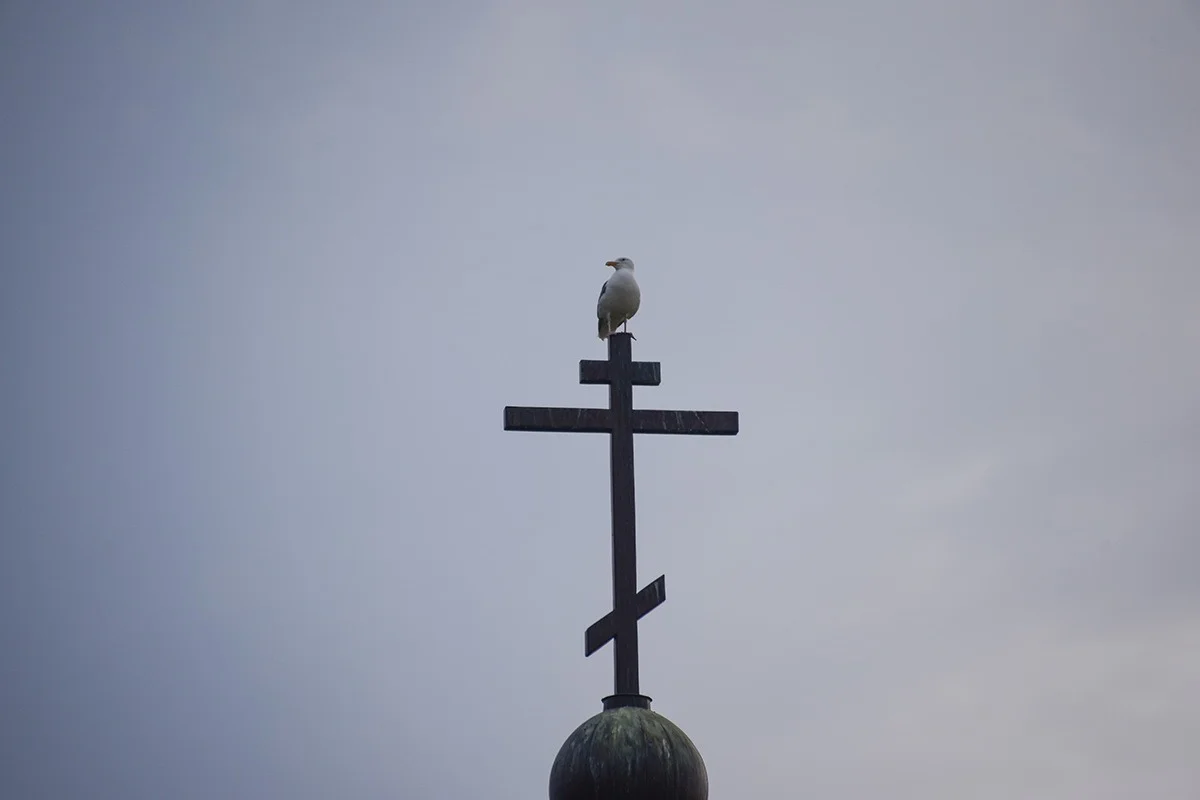
Соловки не только остров смерти, что здесь в общих ямах лежат люди разных национальностей, разных религиозных воззрений и политических взглядов. Соловки забрали их внешние различия, объединили кровь с кровью и прах с прахом. В этом единении и есть святость.
Это как крест, который до Распятия воспринимался как орудие мучительной казни, а после — стал в сознании людей символом спасения.
— Соловки создали фольклор?
— Огромное количество слов, поговорок пришло в современную речь из лагерных Соловков. «Блокпост», «блат», «филон» — фиктивный инвалид лагерей особого назначения… Это чисто соловецкие слова. И выражение «Бог не фраер…». Мне это выражение дает надежду на будущее.
— У Варлама Шаламова в воспоминаниях есть выражение, что лагерь делает всех хуже. Is that so?
- I think yes. Потому что стремление выжить любой ценой, болезни, которые человек зарабатывал в лагере, потери близких и переживание всех зверств никого не улучшали. Все становились хуже. И охранники тоже, потому что кровь и убийства развращают.
— А почему церковь стала сотрудничать с чекистами? Как это связано с христианской концепцией?
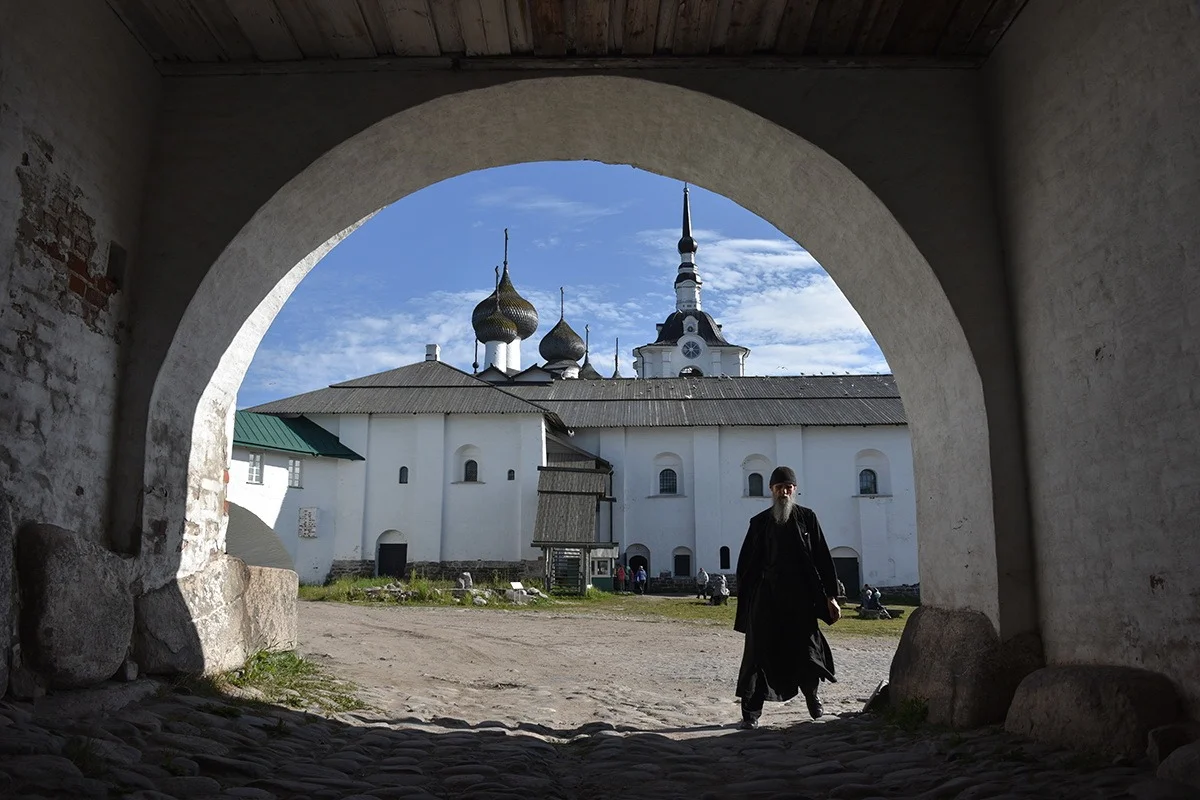
— Никак, совершенно никак. Первый узник Соловецкой монастырской тюрьмы монах Артемий во времена Грозного устыдил своих мучителей: «Нигде и никогда, ни словом, ни делом, ни буквой, ни знаком, не велел Христос мучить людей». Но монахи, служившие приставами в тюрьме, разделяли для себя евангельские заповеди и реальную жизнь. Если в обители появлялись те, кто протестовал против церковного лицемерия, то их уничтожали. А в 1927 году, в десятую годовщину советского режима, 112 монахов Соловецкой обители являлись инструкторами и проводниками лагерной политики ОГПУ, они числились вольнонаемными сотрудниками администрации Соловецких лагерей особого назначения.
Эти иноки получали обмундирование НКВД первого срока, монашескую пайку и денежное содержание два раза в месяц по 30 серебряных рублей.
— Каким должен быть памятник жертвам Соловков?
— Очень не хочется здесь пафоса, вроде предложения скульптора Зураба Церетели поставить на Секирной горе самую высокую в мире статую Христа! Это неуместно.
Я бы предложил расчистить на берегу моря площадку, чтобы каждый, кто захочет помянуть погибших, мог принести свой камень и положить его в пирамиду. Юрий Рост нарисовал мне эскиз приспособления, типа колодезного журавля, для незатруднительной укладки камней любым человеком в любое место. Вечно живой памятник. А когда память иссякнет, камни рассыплются по берегу, и не будет проблем, как с огромными монументами советской эпохи.