
Translated material
Murderer
As in the Vologda prison for life -sentenced prisoners, not the local administration punished, but the divine
Illustration: Anastasia Kshishtof, especially for Novaya Gazeta Europe
For more than a hundred years of the existence of the “Vologda pyatak”, not a single escape was committed from this colony. This was the only zone that the "owners of prisons" was afraid of - thieves in law. And not only because the zone has always been “red” and is located in the middle of the lake, but because, according to the legend, unexplored prisoners (and the “thieves' share” who chose the way of life rarely repented in their deeds) there are tormented by the spirits of the monks. The faces of the saints, appearing through the rough plaster of 400-year-old monastery walls, for prisoners, as it turned out, worse than any master of interrogation.
With this patient, the doctor of medical sciences, the judicial psychiatrist Maria Fedorova did not develop. From the criminal case of a sentence to the death penalty, which was replaced by life imprisonment, 34-year-old Chechen Alim N. It followed that he cold-blooded killed three villagers. Fyodorova, familiar with the customs of the highlanders, perfectly understood why the Alim’s mental examination was appointed four times before the court. For Chechens, killing members of his own teip (actually blood relatives) is unthinkable. So the police officers, the prosecutor's office and the Supreme Court of the Chechen-Ingush Autonomous Soviet Socialist Republic doubted that Alim is mentally healthy. But the examination again confirmed: she is fully aware of the consequences of his actions, she does not suffer from mental deviations.
- And Ivan the Terrible really killed his son? Alim asked unexpectedly.
- What did you say? - surprised Fedorova. Usually, Alim was extremely closed and finished with monosyllabic answers, not going to talk. And suddenly he asked a question, and even like that! Alim looked down and did not repeat the question. And the psychiatrist, realizing that she had a chance to make contact with the patient, considered it for the best to answer, not asking unnecessary questions.
-Someone believes that he killed, and someone-that he himself died of illness. They have not yet come to a consensus.
- And how did you kill?
“There are also different versions,” she frantically recalled everything that she remembered about it, Fedorova. - The Italian ambassador, who was in Russia at that time in Russia, described that the king had quarreled with his son, became strong and scored by the prince to death with a staff. Why are you interested in this?
“He comes to me,” the Chechen said quite calmly.
- Who? Ivan the Terrible?
“Yes,” Alim nodded, “his Sa , the spirit in your opinion.” With the staff and in the hat, this is gold, the cross from above and the fur below. He says that my native blood can not be shed and there will be no forgiveness to me either here or there, ”the Chechen shook his head up.
He did not utter a word more at that meeting.
Three months later, Fedorova found out that Alim committed suicide, hanging himself on the rope, which he weaved for several weeks from threads extracted from a variety of things.
The security was not aware of the preparation of suicide: in 1995, video surveillance in the ITK-17 of the Vologda region was not even in the corridors, not to mention the cells. In the note, the Chechen wrote: “This is my choice. I ask you to blame anyone for anything. ”
Over the 29 years of the colony for the prisoners of the Vologda Pyatak prisoners, this was the only case of suicide. But Fyodorova has heard more than one hundred times in the premises of the former monastery about the premises of the former monastery about the premises of the former monastery.
Holy place
The future colony for the Vologda Pyatak convicts has been leading its history since 1517. It was then that Hieromonk Kirill Novozersky founded on the island of Krasnoye (later renamed the island of Fire) in the new Lake Skith for monks and elders who wanted to move away from the worldly fuss and who wanted to be disturbed as little as possible. The temple on the island, located in the deaf forests, was suitable for hermit life as well as possible.
The church books (“Life of the Saints”) say that Cyril, who was in 1516 in the Tikhvinsky Assumption Monastery (currently the Leningrad Region), was awarded the phenomenon of the Virgin, which indicated the 35-year-old monk to the Vologda province, where it was necessary to build a monastery in a holy place. Moreover, the Virgin, according to the annals, came to the monk twice: either the first time did not reach Cyril, or clarified the coordinates. Be that as it may, and in 1516, the fairly young, by church standards, Hieromonk went to the indicated address, where a year later he laid two large cells and two churches at once, from which the construction of the monastery began.
The opportunity to spend the rest of their lives in a distance from the secular world, where ordinary people constantly need something from the righteous, attracted quite a few true saints of that time to the monastery. Hieromonk Kirill, who received the prefix of Novozersky during the canonization, died 15 years after the founding of the monastery, at the age of 51. But he managed to become famous for some miracles, and therefore the monastery did not go out even after his death.
Among the local residents there is a legend that in 1584, Ivan the Terrible gave the monastery a thousand rubles (the cost of living at least at that time amounted to about 20 kopecks a month), rich in church utensils and joined 11 closest to it to the monastery estate. Allegedly, Ivan IV in a dream was Kirill Novozersky and forbade to go to the Communal Chamber the next day. The king did not go, and the roof collapsed to the boyars gathered at the meeting.
Most likely, the financing of the monastery in 1584 was laid in the budget in advance and had nothing to do with the collapsed roof. But she is the legend that the truth is mixed in it with fiction. But the truth is that Ivan the Terrible really took an active part in the development of the monastery. But for Ivan IV, this was in order of things. Despite his nickname, the king was a deeply believers, and besides, also a very well -read theologian, thanks to the books of her grandmother Sophia Paleolog, which she took out of Byzantium a few years before she was captured by the Turks.
Under Ivan the Terrible annually, from the country's budget, up to 5% of money was spent on paying for funny prayers on “innocently killed”, the lists of which Ivan the Terrible was personally, entering them in them either on his direct order, or as a result of the oprichnina.
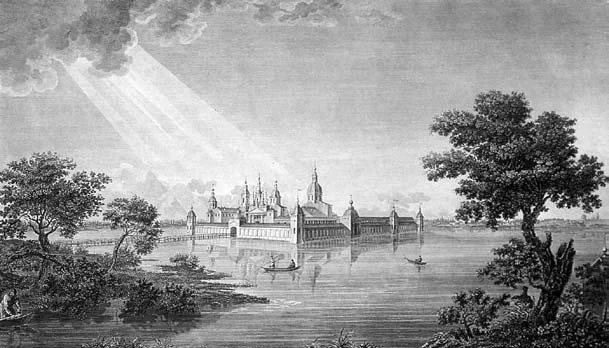
In general, the Kirillo-Novozersky monastery among Russian kings was popular. In 1685, the sister of Peter I (and his rival in the throne of the throne) Princess Sofya Alekseevna financed the repair of old buildings and the construction of new ones. And in 1721, Peter the Great himself and his wife Catherine himself came to the monastery; They left rich gifts.
In 1764, Catherine II signed a “manifesto of secularization”, which laid the foundation for the reform, which was called “destruction of monastery estates”. The purpose of the manifesto was to turn to the treasury up to 70% of the lands belonging to the monasteries, which led to the total reduction in the monasteries in Russia (three quarters of them simply closed, and the monks partly went into the remaining ones, and partly organized in completely deaf places and closed monastery). The reform did not bypass the Kirillo-Novozersky monastery. In 1793, when his new abbot Feofan (Archimandrite Feofan Novozersky) arrived in the monastery, only seven monks lived there.
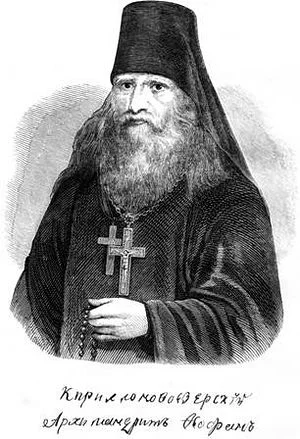
Before his appointment in the Vologda region, Feofan served in the Alexander Nevsky Lavra Kelenik. In terms of secular language, deputy of the Metropolitan for the economic part. Feofan has established himself as a successful crisis manager. In particular, with the participation of Feofan, a monastic way was restored on Valaam, in Tikhvin, renovated and received a second life of the Nikolo-Peshobshsky monastery and Simonov P at the Donn (Moscow Region), the Klopsky and Modensky monasteries (Novgorod region) were rebuilt. It is not surprising that it was he who was instructed to revive the Kirillo-Novozersky monastery.
In the Vologda region, Theophanes issued the ultimatum to the secular authorities: either the governor and other officials are looking for funds to restore the monastery and the hiring of workers, or he takes the priests from rural parishes for the repair work. This meant that the indefinite time in the province would simply have no one to fulfill the functions of the current registry offices (keep records of those born and dead, baptize newborn and catch up with the elderly, to crown married couples).
The secular authorities tried to restore the monk, but too powerful ties turned out to be too powerful. As a result, the governor established an additional tax and shaved the amount required by Theophanes
From the Vologda merchants and "breeders" - owners of their own manufactories.
Hieromonk did not destroy the old walls and build new buildings in their place. He simply laid a new one over the old brick, which led to the fact that in some places the thickness of the monastery walls reached one and a half meters.
The indispensable "red" zone
After the October Revolution of 1917, the Bolsheviks closed the monastery. The last service in it took place in November 1918. By this time, the monastery was already almost converted into prison for the “enemies of the revolution” (that is, political prisoners): barbed wire was stretched along the perimeter, observation tower was installed, chamber -type premises, quarantine rooms, etc., up to the death of Stalin, contained exclusively convicts under political articles.
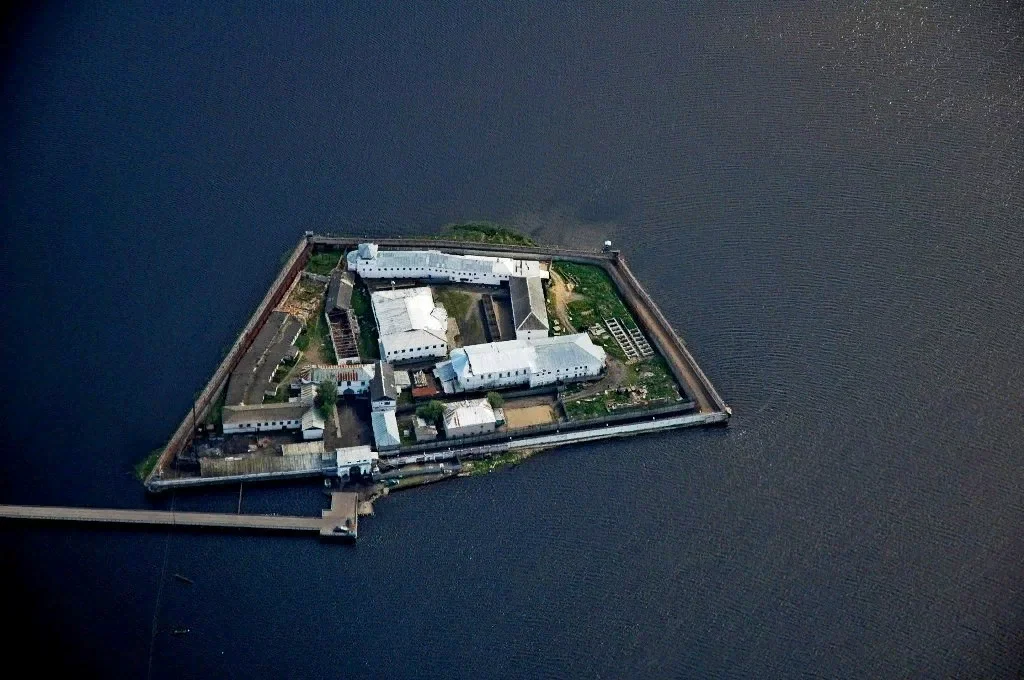
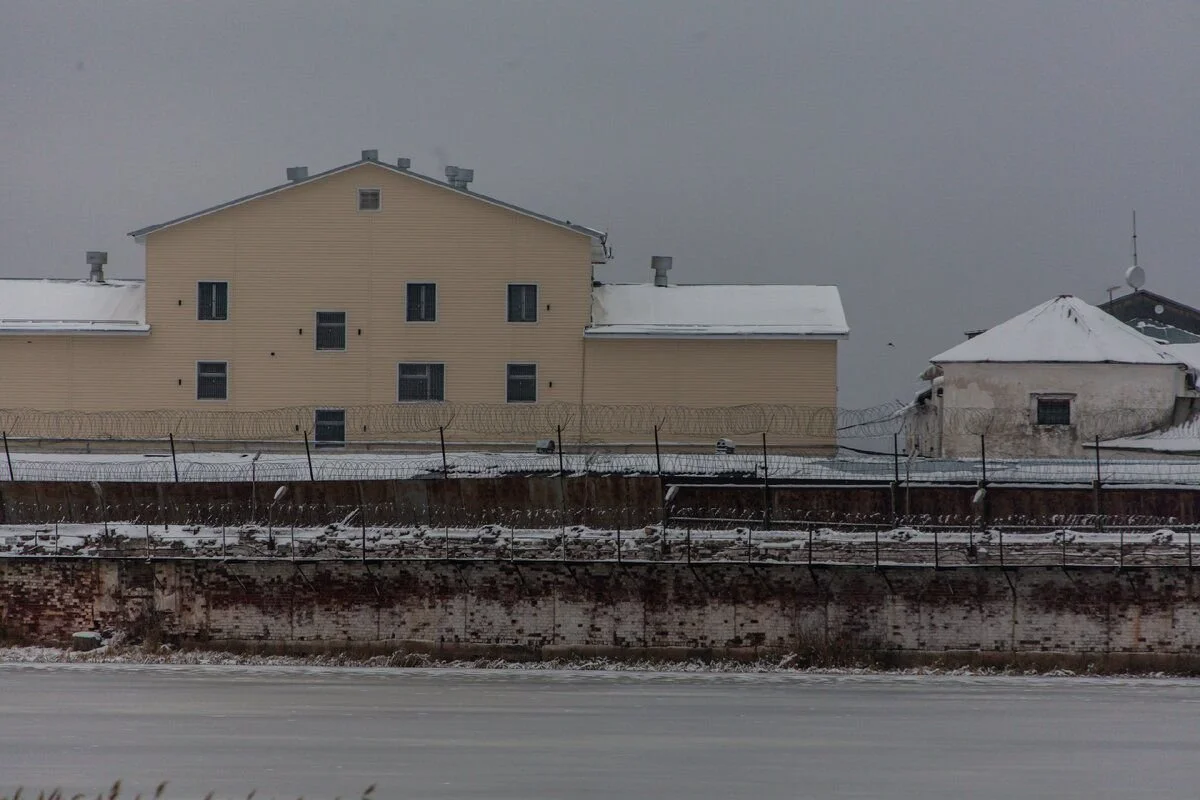
If you look from a bird’s height, then the colony is an irregular quadrangle. The longest side is divided into two parts of the protruding gearbox. This entrance/exit forms the “fifth corner”, which gave the colony the name “Vologda Pyatak”. In this zone, with a strict regime, since the 50s of the last century, those who were convicted for the first time, but under “heavy” articles were serving a term: robbery, murder, banditry, rape. By the way, these factors (“first -hand” and articles of the Criminal Code) were an additional obstacle so that the elite of the thieves' world would not get there. In Soviet times, “thieves in law” rarely personally killed someone, not to mention rape. And of course, then they usually “crowned” only those who thundered to the zone not for the first time. That is why the “Vologda pyatka” has always been a “red” zone. The “red” zone is a colony in which the administration establishes the orders, and among the prisoners not “thieves” (representatives of the thieves' community), but “activists” (cooperating with the colony administration) are dominated. And throughout history, this colony never even tried to repaint into the “black” (a zone where the first violin plays “black suit”, as thieves were called then).
In 1994, that is, two years before the emergence of a moratorium on the death penalty, a department with a “special” regime of detention was created in the “Vologda Pyatak” for the first time in Russia. It is on the "special" mode that the "panties" are serving, that is, sentenced to life imprisonment. Since 1997, the Vologda Pyatak has become a prison for life prisoners.
“The first stage of those to whom the death penalty was replaced with a lifetime came in March of the 94th,” Nikolai Samoilov told Novye-Europe, who in 1994 served in the internal troops, who remained for another ten years and served just in ITK-17 (after the FSIN reform of 2009-2010, the official designation of the Vologda Pyataka-- IK-5). - There were 17 of them, mainly 35–40 years, there were older, there were no young people at all. And they were all inspired, even happy. Well, still! Some of them for three or four years expected that this night (in the USSR, sentences were carried out mainly at night) would come for a reinforced convoy and lead the “bright tunnel” (as the prisoners called the path to shoot). And suddenly the death, which was breathing into the back of the head yesterday, was replaced by a lifelong conclusion. There were no problems with the first “panties”. All the requirements, even seemingly idiotic, they fulfilled without any disputes and enthusiasm. They didn’t squash, they didn’t swing the rights, they didn’t scare the Eurosud. For them, the most important thing was to live, and the conditions are not so important. In general, they were just silk.
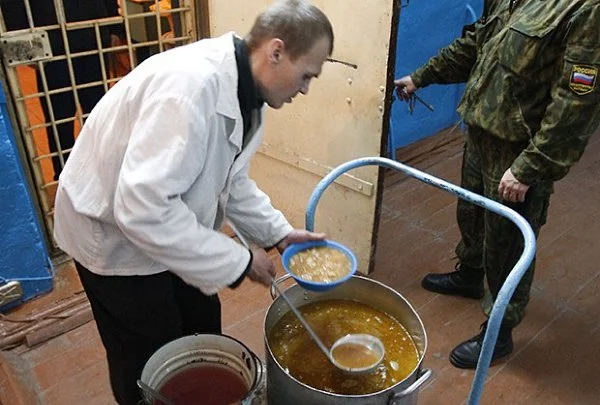
Therefore, the content in the "Vologda pile -up" was (and is still considered) the mildest among all the "special" zones. Neither the “swan” poses (the prisoner bends to the waist, lifting his hands as high as possible upwards), nor the “train” (lined with each other in the “swan” pose, invented in the “black dolphin”), nor porridge on the shovel (supply of food on a one and a half meter shovel, also the custom of “black dolphin”) we did not have. Although there was no sewage system in the first time and the need was handed into buckets, for a year under the zone they laid pipes and equipped cameras with toilets. Now there is even hot water in almost all cameras. Well, the “bath day” is always with the park o M: the boiler room is one for both staff and prisoners.
Nicholas speaks about the “Pars O K” by chance. In the 90s, prison corps and houses on the neighboring island of Sweet (there lived colonies, their families and some pensioners who came to the Vologda Pyat on the distribution decades, and after retirement here the remaining ones) were heated from a prison boiler room working on firewood and coal. For the sake of saving on ordinary days, water was not heated to boiling. But on a bath day, the boiler room was unknown to the full. Currently, the supply of heating on the sweet is stopped. The colony administration claims: this is due to the fact that the water pipes connecting the islands of fiery and sweet have become unusable. But the inhabitants are sure that the true reason is that in the village of sweet there are very few residents. Pensioners are dying, and new zone employees prefer to overcome 50 km on a country road to Belozersk (district center) every day than to live next to prison walls.
"... and even wretched from the walls stare ..."
Time does not spare the thick prison walls. Even despite the fact that at the end of the XVIII - beginning of the 19th century, Rev. Theophanes increased them. The new masonry was imposed on top of the previous exclusively outside, so as not to destroy church paintings on the walls of the premises. In Soviet times, on top of the frescoes they put a plaster and applied several layers of paint. And now church restorers are constantly coming here to clear the meter or two of the wall, on which after which the face of the saint manifests itself. Some frescoes managed to carefully hide it with a piece of wall and take away. But basically the faces of the saints are carefully restored, photographed and left in the same place. An attempt to extract can lead to the destruction of frescoes.
Five years ago, a letter came from the Vologda diocese to IR No. 5: the priests asked the jailers to assist in the search for the remains of the Monk Theophanes, whom they are going to canonize. In this regard, rumors again strengthened about the possible return of the prison to the bosom of the church and the new institution of the monastery on the site of the Vologda Pyatak.
In the Vologda diocese, they refused to answer the question of the resumption of the activities of the Kirillo-Novozersky monastery. However, in a private conversation with Father Gregory (rector of one of the parishes in the Leningrad Region), the Novo-European correspondent managed to find out that this issue was rising more than once among the churchmen. He has both defenders and opponents.
- Those who insist on the resumption of the monastery’s activities, first of all, indicate that the Mother of God herself indicated this place to St. Cyril,
- says Father Gregory. - The island is not just called fiery: in good weather in the evening you can clearly see when the sunset burned down and is already twilight everywhere, and only over the island the air glows. Mirsky people prove that the cause of this glow is the relief and reflection of light from water. We believe that there is one of the places on Earth, where heavenly light pours on the earth. In such places, religious objects were always placed: we have churches and temples, in the east of the mosque, in the west of the Kirshi and Councils, in Africa and pre -Columbian America sacrificial altars or pyramids. And in that place, real holy ascetics lived and prayed for 400 years. Can you imagine how much this place is prayed?

Opponents, to whom I attribute myself, believe that to restore the monastery in the walls of a defiled monastery, which was not just impaired, but daily desecrated for more than a hundred years, makes no sense. If earlier it was the Holy Land, sanctified not only by prayers, but also by the relics of saints, now there is a lot of dark essence. I was on fire and felt both the holiness of that place and something completely opposite. There, after all, many of those who performed terrifying things found the last refuge and did not repent of them. The current youth for the most part as they think: he committed sin, then he came to the temple, told everything to the priest, jerked the Kagorchik, bit his cookie-and-legged, made a donation to the temple-and that’s all, forgave you everything. And if you give a lot of money, but not for one temple, but for several, so you will get a place among the saints. Yes, just M about rock is all a fiction. You can’t buy the way to the kingdom of God for the “loot”, but a person should not repent to the public, but in the soul. Truly and sincerely repenting, to realize the sin of sin with all its notes. Всей глубиной души боль, тобою принесенную, прочувствовать. Чтоб аж волосы чесались и коленки наружу выворачивались от осознания совершённого тобою. Только тогда Господь, может быть, и простит.
Нераскаявшихся в «Вологодском пятаке» как минимум половина. Таким был «вор в законе» Солёный (Григорий Михайлов, ставший сенсацией еще при жизни как единственный «законник» в России, получивший «пыжика»; через несколько лет к нему присоединится Артур Ерошевский по кличке Одессит). Михайлов воровскую карьеру начал лет с десяти, в 14 первый раз попал за решетку, а потом «командировки» (как называли «воры в законе» пребывание за решеткой) пошли одна за другой, иногда с интервалом всего в несколько дней. В 1987 году, в возрасте 27 лет, Михайлов был «коронован» в «воры в законе», получив кличку Солёный. Но в 1992 году его коронация была подвергнута сомнению. Один из «крестных отцов» Солёного, «вор в законе» по кличке Узбек, «накосячил» (сильно нарушил воровской закон) так, что от него отрекся даже его друг и второй «крестный» Солёного Аркан. Третий «крестный» Сергей Бакинский к тому времени уже был мертв: погиб в перестрелке с милиционерами.
— Я как-то был старшим наряда, который сопровождал Солёного в больничку, — вспоминает Самойлов. — Вот тогда он и рассказал мне, как «пыжика» получил. В 92-м его в Ангарск этапировали, где многие воры не выдерживали пресса и корону теряли. Кто-то работать начинал, кто-то вину признавал, а кто-то и своих сдавал. Солёного туда как раз, чтобы сломать, и доставили. Сперва, как он мне говорил, Солёный не планировал вступать в серьезные конфликты, а просто перетерпеть и свалить при первой возможности в другую зону. Таких вариантов масса. И вдруг получает «маляву» от Япончика (Вячеслав Иваньков, один из самых знаменитых и авторитетных советских и российских «воров в законе»). Мол, ты пока не объявляйся вором, потому что твоя коронация под вопросом. Подожди до большой сходки, там пусть общество решит. И тут многое сплелось в один узел. Япончик в том же Ангарске за пять лет до Солёного сидел, и его тоже нагнуть пытались. Так Япончик бригадиру из активистов, который пытался заставить вора работать, ножницы в глаз воткнул. Ему добавили срок, но из Ангарска перевели в Тулун. Так вот, Солёный решил провернуть тот же финт. Только напал не на активиста, а на начальника производства, майора внутренней службы. Говорил, что убивать никого не хотел, но заточка попала майору прямо в сонную артерию. А двоих активистов, бросившихся защищать майора, уже сознательно «замочил», осознав, что терять ему больше нечего.
Михайлов умер от рака 13 июля 2014 года, проведя в «Вологодском пятаке» чуть меньше 20 лет. И все эти годы Солёный сперва требовал, а потом уже просто умолял перевести его в любую другую колонию, но не оставлять в бывшем монастыре.
Он постоянно говорил, что здесь его мучают кошмары, что он начинает слышать голоса даже днем, «да еще и убогие теперь со стен пялятся».
Сперва с переводом в другую колонию, а при удаче с заменой «пыжика» на другой срок взялся помочь сам Япончик. По словам Самойлова, летом 2009 года к Михайлову приезжал адвокат, после встречи с которым Солёный радостно объявил, что скоро уедет из «пятака». Но всего через две недели пришла новость о покушении на Япончика. Михайлов посмурнел, но вплоть до октября продолжал надеяться, что Иваньков выживет.
Через три года после смерти Япончика за Солёного решил похлопотать еще один знаменитый советский и российский «законник» Дед Хасан (Аслан Усоян). И тоже не смог выполнить свое обещание: погиб от пули снайпера через пару месяцев после взятых на себя обязательств. Свою последнюю надежду покинуть неприятные стены бывшего монастыря Солёный пережил всего на полтора года. И хотя Михайлов часто беседовал с приходящими в колонию священниками, о раскаянии речи не шло.

«Божественный» бизнес в «намоленном» месте
Вряд ли раскаялся в содеянном другой «постоялец» «Вологодского пятака» — Лом-Али Гайтукаев, организатор убийства журналистки «Новой газеты» Анны Политковской. До сих пор не понимает, за что его приговорили к пожизненному лишению свободы, Артём Ануфриев, «Иркутский молоточник», вместе со своим подельником убивший шесть человек. Зелимхан Аушев, участник подрыва «Невского экспресса», унесшего жизни 28 человек, по-прежнему настаивает на своей непричастности к теракту. Вряд ли сильно жалеет о своем прошлом Евгений Николаев, «соавтор» Михаила Круга (мы рассказывали об этом в статье «Кресты на всю жизнь») и активный участник банды Юрия Шутова, признанный виновным в убийстве пяти человек. Как и его «коллега» и нынешний сосед, правая рука Шутова Айрат Гимранов. Оба рассчитывают примерным поведением заслужить УДО (условно-досрочное освобождение) через 25 лет отсидки.
Среди отбывающих пожизненный срок есть те, кто утверждает, что искренне раскаялся. Во всяком случае, они строго соблюдают все посты, часто молятся, встречаются с батюшками, ведут активную переписку с другими священнослужителями и монастырями, куда планируют отправиться после досрочного освобождения. Однако бывший начальник «Вологодского пятака» Владимир Горелов в апреле 2018 года рассказывал корреспонденту «Московского комсомольца», что эти «раскаявшиеся» лишь спекулируют на вере. Две трети заключенных, в 2018 году их было 180 человек, при возможности заполнения до 505, не работало. Хотя в колонии имеется пошивочное производство, работать в котором может любой осужденный.
— У нас есть такие, кто зарабатывает по 15–18 тысяч в месяц, — рассказывал Горелов «МК». — 25% остается им на расходы, остальное — в счет погашения исков потерпевшим или на оплату коммунальных услуг колонии. Миллионные иски имеют почти все. Но вот платить по ним две трети не хотят, потому не работают.
А себе на чай-колбасу-сигареты в тюремном ларьке они зарабатывают, спекулируя на вере в Бога. Пишут в какой-нибудь монастырь, что вот мол, уверовал, а денег на духовные книги, карандаши, носочки шерстяные да масло лампадное нету.
Священники переводят на лицевой счет осужденного кто 500, а кто и 10 тысяч рублей. Некоторые осужденные переписываются одновременно с 30–40 храмами, имея постоянный доход от 30 до 100 тысяч рублей, из которых мы по закону не можем ничего вычитать на выплату исков потерпевшим. Да еще и бравируют тем, что, мол, головой надо деньги зарабатывать, а не руками. Тот, кто реально раскаялся, не попрошайничать станет, а будет пытаться честным трудом вину загладить.
В следующем году «Вологодский пятак» будет отмечать свое 30-летие «особого» режима. По мнению Николая Самойлова, это будет последний юбилей знаменитой зоны. Заключенных там становится всё меньше, стены ветшают, электропроводка и водопроводные трубы требуют замены. Последним, кто обещал «Вологодскому пятаку» капитальный ремонт, был Александр Реймер, возглавлявший ФСИН с 2009 по 2012 год. А теперь проверяющие лишь сокрушенно качают головами и никаких ремонтов не обещают. Да и зачем, если в стране имеется совершенно новая «Снежинка», не заполненная и наполовину? Или «Полярная сова», в которой корпуса для «пыжиков» возвели в 2004 году — и они тоже не забиты до отказа.