
Translated material
Hamlet in Russian Troubles
Aleksey Makushinsky’s novel “Dimitri” about Russian unrest of the 1600s and 1990s, historical chances and “cold, like helium”
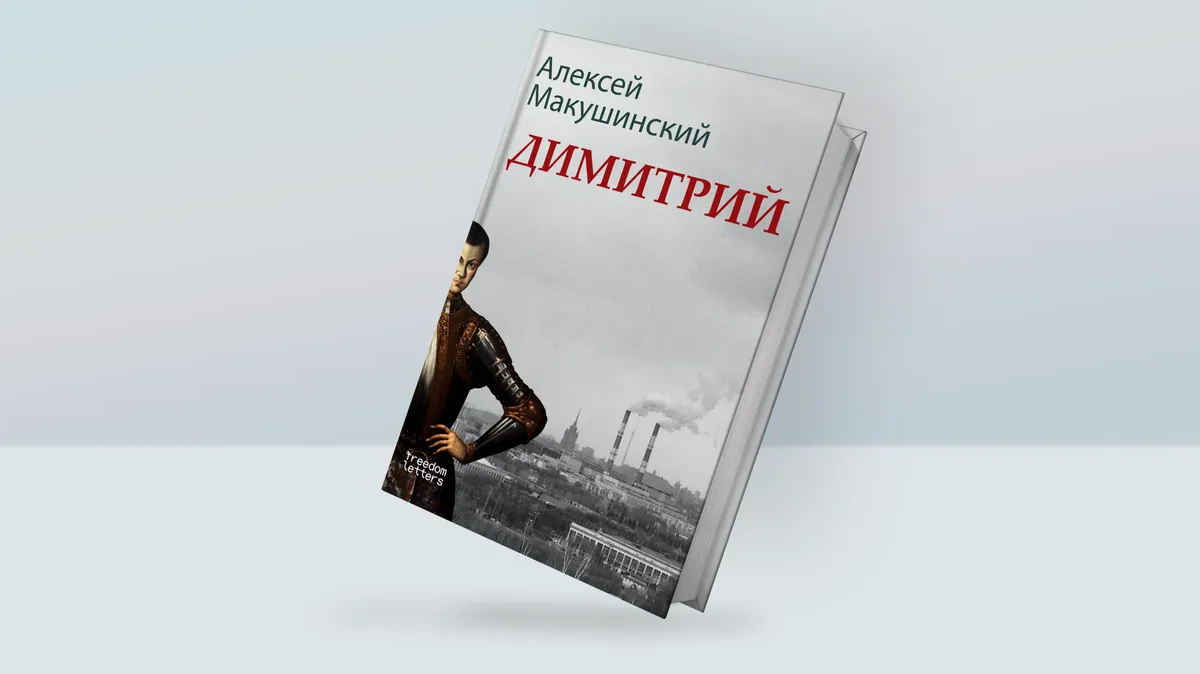
Layout: Freedom Letters Publishing House
The novel “Demetrius”, published by Freedom Letters, is difficult not to be interested. There are several reasons. The author - a famous prose writer, poet and literary critic Alexei Makushinsky - decided to write this book more than 20 years ago. For a long time he carried the plan, took, put off, returned, and then finally let his hero go to the reader. The declared hero is another reason. False Dmitry I, who ruled the Moscow kingdom from June 1, 1605 to May 17, 1606, is a difficult figure. Researchers are still arguing about who he really was. His biography sinks in the fog, but visible fragments allow you to find out in it almost the forerunner of Peter I, a reformer who simply did not have enough time to turn the helm of Russian history. And the events of Demetrius are connected by two very interesting periods: the Time of Troubles (1598–1613) and the line of the 1980-1990s with perestroika, the collapse of the Soviet Union and great hopes for the incurred democracy. All of the above, perhaps, creates a picture of expectations. Only the ratio with reality is exactly the same as in the Meme "expectation / reality".
The book is really unexpected. First of all, Demetrius is not quite prose. Rather, it is a poetic prose: musical, sometimes excessive in a good way, moved not by the plot, but by the special rhythm of the author’s internal dialogue.
The reader from the first pages is involved in a dashing and even slightly hypnotizing cycle of thoughts of the hero. At the same time, the epithets are “serious” and “stuffy” here are completely inappropriate.
Firstly, because the text is ironic, although the irony is not very funny, rather protective. And secondly, the mentioned “redundancy” and the liberty of the handling of the language are only a consequence of author’s internal freedom, which cannot be admired at some point.
However, in whose, in fact, the reader will have to get involved? Protagonist "Dimitri" - he, in fact, who? The hero is in no hurry to open to the reader. But it's not about evil intent - he himself does not know who he is. Makushinsky also does not have an unambiguous answer - either a well -known serial actor who played Dimitri in his youth in the performance, or a sad inhabitant of a psychiatric hospital; But one does not interfere with the other. Or maybe this is Dimitri himself - his spirit, archetype, idea? As expected, the impostor recognized by historians, the main character is unknown. One could try to calculate it according to the style of speech, but the cautious Makushinsky and here presents the secret of the character: the prose writer freely mix modern language, archaisms and pseudoarchisms. However, to guess, perhaps, and there is no need - the hero himself admits: “No one knows who he is actually; And the one who pretends to know, he deceives others and himself. ”

The plot is the story of the play about Demetrius, which is staged in a small experimental theater at the very turn of the 1980-1990s. The writer calls the actors mainly from roles: the associates of Demetrius, the governors Pyotr Basmanov and Vasily Mosalsky, the opponent and conspirator Vasily Shuisky (Shuisky-Muysky), the surviving daughter of Tsar Boris Godunov and, possibly, the concubine of False Dmitry I Ksenia, his failed wife Marina Mnishek, etc. ordinary names. Among them, a rather caricature Makushinsky appears (a bore constantly wiping glasses). He is the author of the play. Discussions and rehearsals are interspersed with a love line, whose heroines alternately turn out to be that experienced actress Maria Lvovna, then young Ksenia Godunova. Political events are invading the chamber space of the theatricalities: echoes of publicity reach, Yegor Kuzmich Ligachev appears, threatening to show everyone his grandmother (Kuzkin’s mother, of course), rumors about the mushroom nature of Ilyich, finally, demonstrations of solidarity in Latvia and Lithuania, the State Emergency Committee, the protection of the White House, the protection of the White House, the captain of the captain Not that Surkin, or Sukrovkina, sent against the protesters. Signs of the era arise in abundance - according to eyewitnesses, very accurately reproduced.
Soviet and vague times in the text are woven almost to indistinguishability. They can stand nearby in one small, page head or completely merge: for example, when the government “memberships” “rushed out of the oprichnina to Zemshchina” along Kutuzovsky Prospekt, and who had overcome False Dmitry, of course, by the battle, Vasily Shuisky, unexpectedly begins to talk to Stalin's voice. In parallel and immediately in both eras, the fate of Demetrius develops, whoever he was (just not a fugitive clerk Grigory Otrepiev!). Makushinsky does not pretend to be historical reliability, constructing the author’s version of reality. However, it introduces genuine fragments of life of False Dmitry into the text: for example, the fact that he refused to live in the gloomy Kremlin palace and ordered to build a new, small in size, before which he established the figure of Cerberus; Or the fact that, unlike his predecessors, he refused to sleep after dinner and quickly, not in a kingdom, went, of course, disturbing the boyar elite.
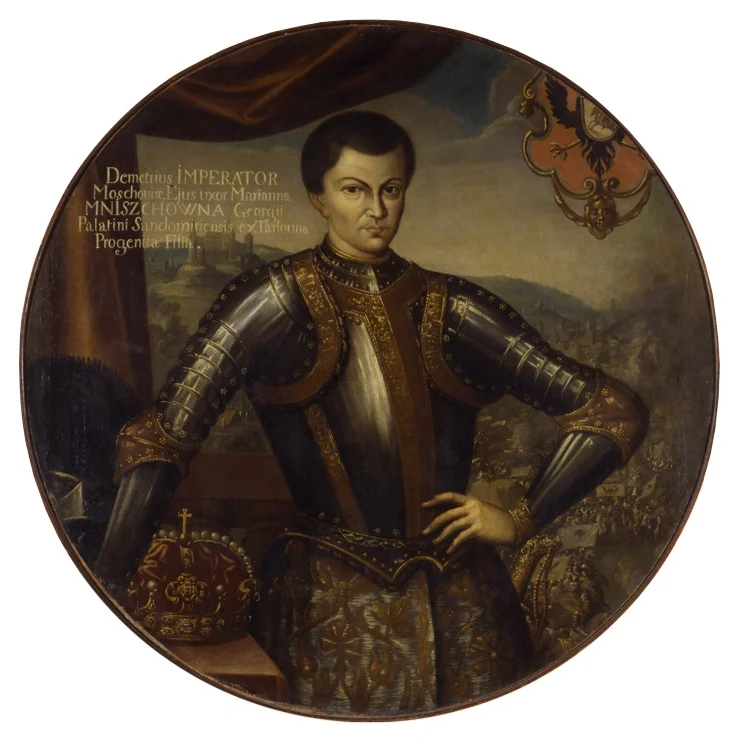
The historical novel by Makushinsky can only be called a number of reservations. The epithet “political” is suitable as if even less, although the book explores, among other things, the phenomenon of power. Still, Dimitri is too lyrical prose. The problem of the human place, self, the eternal question "Who am I?" They pure history, politics, and countless associations with modernity. Vasily Shuisky puts on propaganda, knows how to “treat” with the people, and in the “Stalin” speech, he devotes a lot of places to the ring of enemies that allegedly surrounded their homeland. The boyars are shattered, but intrigues are weaving behind the king. Citizens who have comfortably settled in dubious stereotypes do not want changes: neither external nor internal. All this is important and does not matter. In the emotional tone of the text, somewhere, they replace each other, then the great youthful hopes and great disappointment, sentimental nostalgia for itself and thoughtful, seemingly hopeless confusion, merge into one complex feeling. “Demetrius”, of course, is a conceptual, philosophical novel, but personal, human intonation in it overpows everything else. And this, I think, is quite good - a scarce product, in the present time.
Makushinsky clearly makes it clear: Demetrius is Hamlet. Reflecting, the hero writes: “Peter, my successor and imitator, did more ... Because he was alien to himself, he did not hesitate, torture, he loved to execute. Because he was a fortetin -bros. Fortinbraus wins in history. ” Doubts are constrained by Demetrius Gamlet-a man who is too deeply bogged down in internal complexity and therefore lost the ability to action. The first and main question has already sounded. In the text, it is repeated again and again, as if structuring the stream of the novel.
A runaway monk? Miraculously the surviving son of Tiran Ivan IV? One of the Uglich boys, taken after the death of the prince, to replace him on the throne? “What is there under this mask?
- Dimitri asks himself. "Is there anything there?"
From this original, hopeless point only new doubts grow. Dimitri from the past is inspired by the Megaproject of “Reducing of Russia”, the main thing in which is its release. To create a Senate and the first university, to protect the people from external slavery and get rid of the internal - in fact, to defeat the ghostly predecessors who walked the country into the foundation of a well -known power pyramid for us. The ancestors are a formidable father (?), Ivan III and the blinded Vasily Dark, intimidating, look at the hero already from theatrical scenery. It is these ghosts that do not allow Demetrius to settle in the old Kremlin Palace. They, it seems, will be embodied in the conspirators to complete the begun in Uglich. This is probably not the main in the novel, but a very strong image. Ghosts are alive, yes! Alive - and still hover in the Moscow air between the ships of the Stalin's houses. Vasily Dark Watchs the impecution from an empty store quarrel. Terrible speaks a strict parental/teacher's voice. They impregnate the skin, get stuck in the lungs. To defeat, drive them out, maybe the most difficult thing. Is it possible for one streaming Demetrius?
And it seems that this is why the passers -by watching the anti -Soviet demonstrators whispering them: “Pidaras!” Speaking anger, so that one day, when the familiar “strong hand” returns, to take revenge - they similar to the novel to the crowd, trying and raping the Poles after the murder of the “impostor”. But especially this frightening similarity is read in the scene where the metro employee, which is painfully similar to the “conductor” from the picture of Samokhvalov, reports Demetrius and Ksenia for “immoral” love, interfering in the cursed West and Zhigimont with the Latins, threatening the police and archers at once. Hence, the conflict between the “own” and “foreign” passing through the entire book. Many got well with their native ghosts, and the fear of parting with them is stronger than the dull pain of humiliation.
And any megaproject has a price, and the reflective Demetrius understands this very clearly. In the place of solemn oaths, on the Sparrow Hills (hello to Herzen with Ogars!), He gives his associate Basmanov a promise to capture Moscow without blood. Blood spils against his will, but this inner breakup costs him not cheaper than the damned question about the Self: “Yes, Sudaric-Subtark, now you have to live with this. So you lied, telling Basmanov that you will not stroke your hands in the blood. Already the blood is dripping from them ... It has already spilled, as always spilled ... And you can’t change this, you can’t cancel, you won’t do the dead corpses live ... It all went, and it went right away - not so ... But we still hoped that everything could go in life - so; We were still young, stupid. ”
Youth and maturity in the book of Makushinsky are clearly opposed. The first strives for power to change life, to arrange it in a more fair way, but does not know about the price. The second understands the price well - respectively, or in indecision, hesitates, or coldly agrees to it. The Boyar opposition does not like Demetrius primarily for his unwillingness to play by the rules. It, in general, will destroy it. After all, the king was supposed to execute Shuisky-Muysky, who was attacked against him, but replaced the execution with a link, and soon forgave and returned to Moscow. Shuisky, after a year, was the initiator of a new, this time a successful rebellion. His strength is that he knows how to play by the rules, knows how to “handle” with the people, and the boyars, and with archers - and most importantly, maybe with enemies. In other words, he perfectly pleases the ghosts from theatrical scenery. Demetrius is suffocating in a ghostly order and, violating all the customs established by the “raging ancestors”, is not able to pretend to be “his own”. The rules also imply the readiness to pay a bloody price, for which the young king is not at all ready.
Another important refrain that penetrates the book through: “The questions of faith are the most difficult in the world, the most difficult in the world.” At the very beginning, analyzing Schiller's play “Demetrius”, Makushinsky says:
The belief of the impostor is that he is a real heir to the throne, and, of course, the organicity arising from it really turns him into the prince, miraculously surviving in Uglich.
While this is so, he succeeds, and fate obviously favors him. But it is worth the False Dmitry to be talked and try on the role of the usurpator, as Fortune turns away. At the very beginning of the novel, another, very simple, but significant thought sounds: “There is no need to do what you secretly know that you should not do this; But we always and again do what, we know, do not have to do, and this is all our troubles, from this all our misfortunes. ” This, perhaps, is just about organicism, it’s easier - about being in the wretches with yourself and in general with reality, about the ability to hear the inner voice of intuition and, perhaps, even the voice of your own nature.
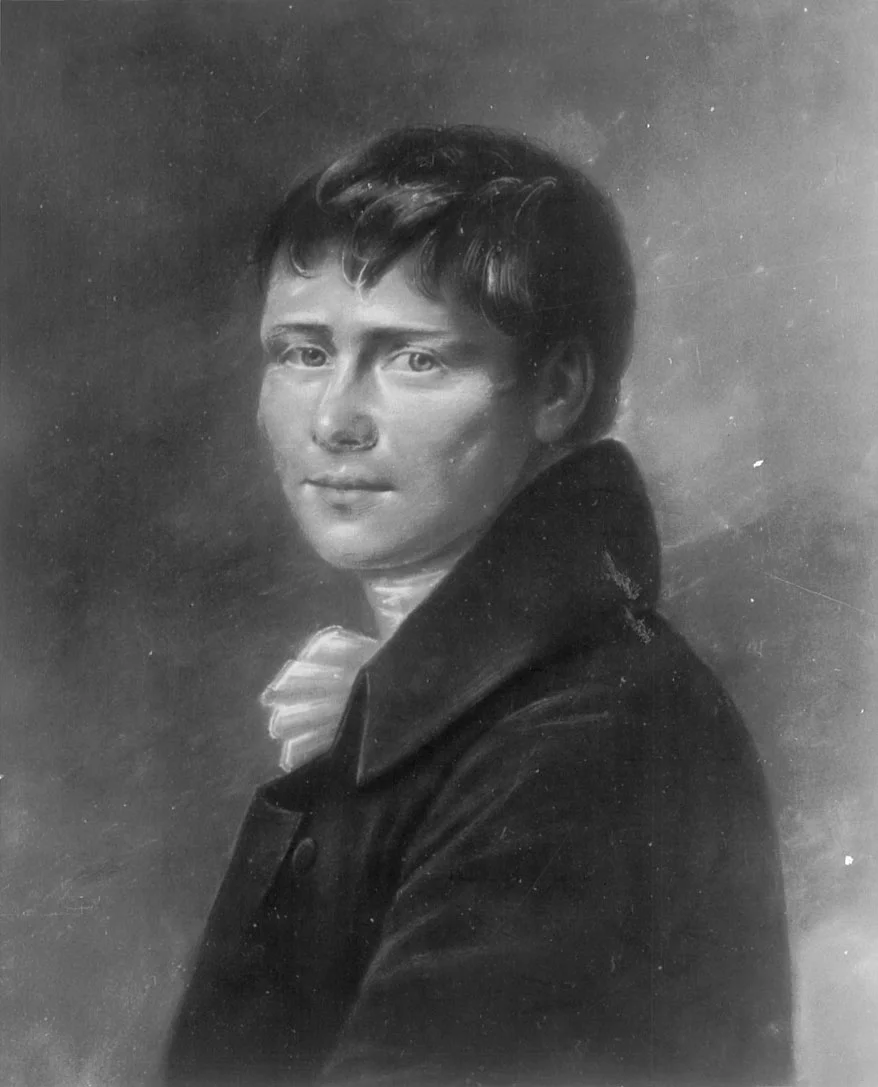
Involuntarily recalls the essay of Henry von Kleist “On the theater of puppets” and the thoughts of the famous modern prose writer Philip Pulman (the author of the “dark principles” - approx. Ed.). If in short, they are talking about the fact that the charm of childhood is just in organicism and direct communication with the world (Eden), which over time are inevitably destroyed as a result of social processing. Thus, a person is doomed to longing for organicism, but there is no return track. Nevertheless, the German-romantic and the philosophizing science fiction science of the British, jointly, find a “back door” in Eden-wisdom or internal balance. In essence, the confused Demetrius is just in such a situation. All his royal adventure is an attempt to recognize himself and finally answer the ill -fated “Who am I?”. Having doubted his self and recognizing the price of the tsarist throne, he lost confidence in his own nature and in reality, in fact, repeating the fate of the Schillerovsky Demetrius. However, an eternal painful question, an insatiable thirst, keeps it from temptation to the vertical of power, so poorly combined with its own purpose. False Dmitry II very accurately formulates the reason for the defeat of his predecessor: "And you did not like power itself and for the sake of it." Such embodied power (or perhaps constrained by her) is a detached and prudent, “cold, like helium” Marina Mnishek.
In 1991, taught by bitter historical experience in 1991, in fact, freezes in confusion. So Makushinsky creates a very accurate and relevant way of thinking in Russia, who is hardly representing how to unravel the centuries-old knot of socio-political problems, but also clearly understanding that it will not be possible to cut it. At the same time, the tragic image of the “impostor” is, of course, the fate of the reformer in a country where a noticeable part of society got used to the native “bestial” ghosts. And yet, I think, more importantly, another. Still governing the country, then, in 1606, Demetrius tries to instill an element of the game to society and thus as if to liberate it. The king arranges a funny battle in the snowballs: “Look at the children, always ready to throw a friend’s snowballs. And how fun, how the sun shines, the frost is cracking, the snow creaks, how blood sings in the veins, life in the shower ... No, Moscow people, no pebbles in the snowballs were drowned by the Latin residents with the Lutherans; Everything seems to you. ”
In essence, these words about the same thing: about organicism and such unusual, such a difficult confidence in reality, which, after all, is now not enough Russian society, constrained not only in power vertical, but also with hierarchical models. The tear, overcoming, victory over nature and “vulgar” common sense, and finally, a chronic distrust of the world and people, brought up among the same incredulous, “beating first” - all this, of course, is much more familiar. Will Demetrius be able to get out of confusion in 1991? Or maybe who knows, already in 2023? And not only to him, of course. There were happy cases in history. “Russia will be free,” is understandable, and I want to believe that in the foreseeable future. Another question is that she can not do without an internal balance, the same scarce Clayer-Pulman wisdom. Otherwise, apparently, new, and by no means Eden circles are loosened on the horizon.